

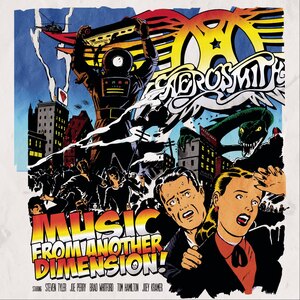
When I first stepped into the studio to work on Aerosmith’s fifteenth studio album, “Music from Another Dimension!” I knew I was about to embark on an unforgettable musical journey. Engineered and mixed during 2011–2012, this album marked not only a long-awaited return for the band after “Honkin’ on Bobo” (2004) but also a personal milestone in my career.

A Time of Transformation
The period leading up to the album was charged with a spirit of revival, as the band returned to the production methods that had defined their classic sound. Embracing the approach pioneered with Jack Douglas, Aerosmith went back to recording live off the floor with minimal overdubs—a method that captured the raw, unfiltered energy of their early days. We took it a step further by tracking live to tape using the innovative CLASP system, which transferred the tape-recorded sound immediately from the repro head into Pro Tools. This fusion of vintage technique and modern technology set the stage for an authentic, electrifying record that paid homage to the golden era of rock.
How I Got The Gig
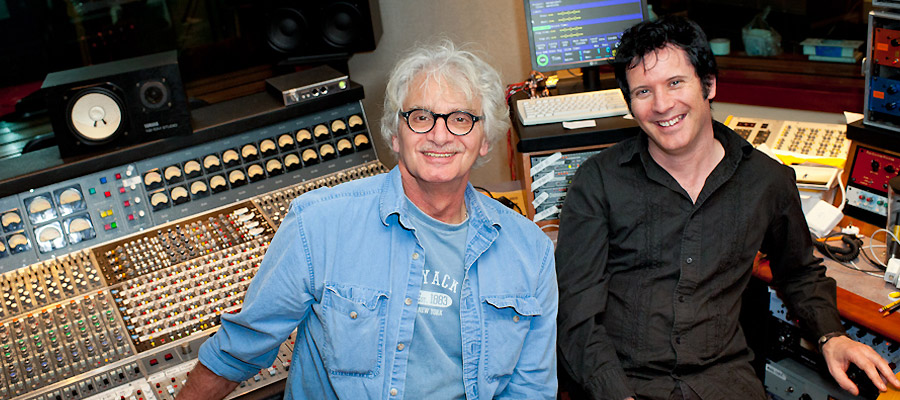
One of the most pivotal moments in my career came courtesy of Jack Douglas himself. I vividly remember him handing me a copy of Aerosmith’s classic album Rocks and telling me, “study this.” After immersing myself in the record, I couldn’t help but call him and ask, “What room did you record this in?” The album’s cohesive sound spoke volumes, and from his reaction, I knew I’d passed the test. I had met Jack at my studio, Swinghouse—he was a familiar face there, always popping in between the Neve and API rooms as he tracked and produced albums with Michael Monroe and other great artists. That encounter not only solidified our bond but also paved the way for my involvement with Aerosmith.


The Studio Experience – Boston – Joey Kramer’s Drums
Arriving in Boston at Aerosmith’s own studio, Pandora’s Box, set the stage for an unforgettable session. Jack Douglas, along with ‘Super Tech’ Marco Moir, had transformed the massive, cavernous warehouse into a studio with a notably dead live room. In fact, they did such an amazing job that the space was so acoustically inert that we ended up pulling up carpets to inject a bit of life and warmth into the room. I like to use two sets of stereo room mics, with this room with such high ceilings I had one set high pointed down on the kit, the Shure KSM313s proved exceptional for that. When it came to capturing the drums’ low end, I mic the floor, pointing the capsules down to get a reflected sound, we relied on our (at the time) new Lewitt mics that emulate the classic AKG 414 style, delivering the precise warmth we needed. We tailored the overhead setup to suit each application, employing a matched pair of Peluso P67s, styled after the legendary Neumann U 67, which provided fantastic clarity. Depending on the session, I would either arrange these overheads in an XY configuration or as a spaced pair. Additionally, I positioned an RCA 44, or a similar (we tried several) ribbon mic as a mono unit to create an equilateral triangle over the drums to capture kit accurately. Once Joey Kramer’s drums were mic’d, we took the Kick, Snare, and Toms and routed them through a huge PA system in a hallway behind the live room. We captured that unique, controlled “shells only” natural reverb, a technique that Jack had employed on ‘Toys In The Attic’ and ‘Rocks’ which added an organic natural depth to every beat. On ‘Love XXX’ to placed Joey in an adjoining wharehouse and used just three mics a la Glynn Johns and used a Blumlein at one end with a pair of Neumann Transformless 67. Working alongside legends like Jack Douglas and the band I was fortunate to witness firsthand how every session pulsed with a mix of meticulous craftsmanship and spontaneous creativity. We recorded tracks that would eventually become anthems, “Legendary Child,” “Lover Alot,” “What Could Have Been Love,” and “Can’t Stop Lovin’ You”, each imbued with the spirit of rock ‘n’ roll.
The Studio Experience – Los Angeles
After three months of basics at Aerosmith’s studio “Pandora’s Box” and Joe Perry’s personal studio “The Boneyard,” we went to LA, to one of my home base studios “Swinghouse.” Swinghouse was an enormous studio located in West Hollywood with both rehearsal and recording rooms, where in the halls we would bump into artists such as the Red Hot Chili Peppers, Iggy Pop, and Marilyn Manson. Recording Joey’s drums here was a blast, I had recorded The Fray’s ‘How To Save Life’ drums here, James Blunt and endless amounts of other albums so getting great drum sounds was by this stage second nature! In fact we tracked a lot of songs using my Blue Ludwig Vistalite and Supraphonic snare, drums I still record with to this day!
I remember the long nights in the studio vividly. There were times when Steven would start his day at 10am, heading off to film American Idol, and then return for late-night sessions, diving straight into recording until the early hours of the morning. The pressure was immense, but every moment of fatigue was rewarded with breakthrough after breakthrough. We were chasing that perfect live-in-the-room vibe, a nod to the gritty, unfiltered sound of Aerosmith’s heyday.
I also engineered three songs produced by Marty Frederiksen that captured our live, raw energy perfectly, and they were later mixed by the legendary CLA, whose masterful touch brought clarity and depth to those recordings. Marty’s approach is refreshingly modern—a meticulously tuned, heavily edited production style that adds a crisp, contemporary sheen while still preserving the heart and soul of the performance.
Recording Joe Perry’s Guitars
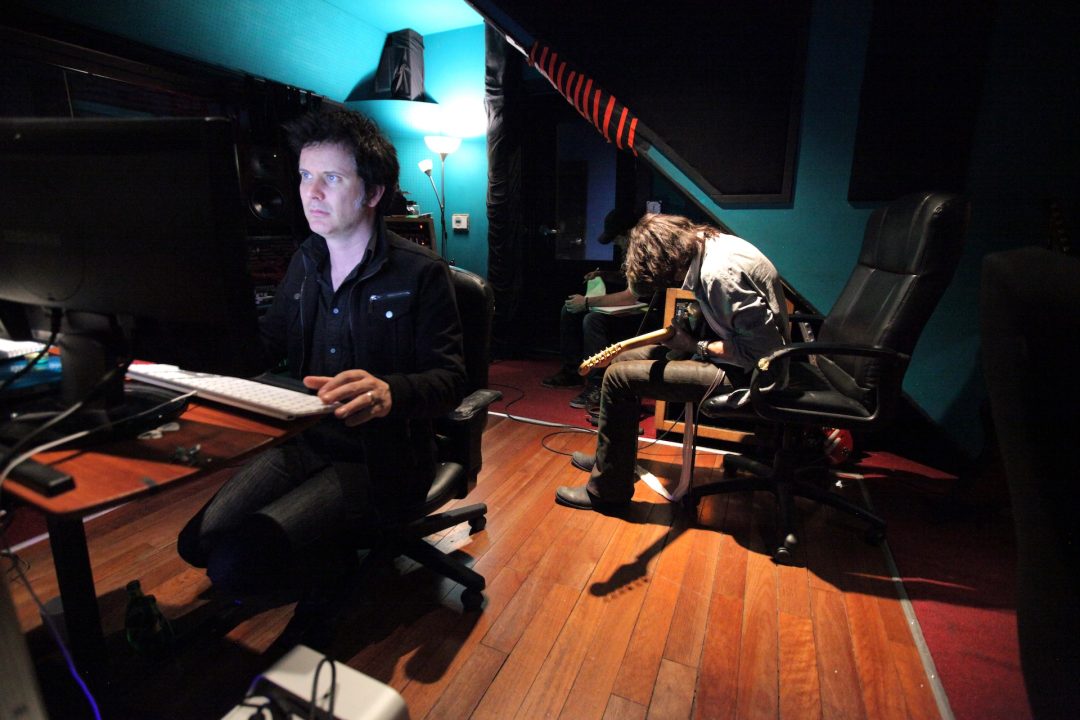
From the outset, we always let Joe take the lead. Jack understands that Joe is dedicated to crafting a unique, defining sound for every part—there’s no settling for “good enough.” If there’s an opportunity to push the boundaries and explore new ideas, Joe is always game. When he picks a guitar, selects an amp, and adds an effect or two, it gives us a clear glimpse into his creative vision for the track. This is an artist’s record—not a producer’s record—so the first voice we want to hear is that of the artist. Joe confidently states, “I have this in mind,” and then we work together to shape that sound, sometimes tweaking it or exploring a slightly different alternative to perfectly fit the track.
On the technical side, recording Joe’s guitars was a multi-layered process. We double-close-miced the wide variety of amps he used—ranging from Fender Princetons, Deluxes, and Champs to Marshall Plexis, Vox AC15s and AC30s, as well as Bogen and RCA P.A. heads modified to serve as guitar amps. For the close mics on these cabinets, we typically used a combination of a Royer R-122V tube ribbon and a Shure SM57, ensuring that every nuance of his tone was captured. In addition to these close mics, we always recorded room mics and a direct signal for extra flexibility in the mix.
We ran multiple setups simultaneously in the studio—one in a large room with a full stack or half-stack for that expansive sound, and another in an overdub room dedicated to capturing the subtleties of Joe’s performance. On some occasions, we even took a DI signal, routed it through a 1073, and overdriven it. Recording the direct signal after his pedalboard gave us more control during mixing, ensuring that if we needed to accentuate certain elements later, the pristine signal was right there. This comprehensive approach allowed us to preserve the raw, authentic energy of Joe’s playing while offering every possible nuance for the final mix.
One unforgettable day was devoted entirely to nailing the guitar tone for the main riff of “Legendary Child.” We loaded up our full stack Marshall JMP and set it up in the huge “blue stage,” carefully placing a Royer 122v as the close mic while surrounding the amp with two full sets of room mics to capture every bit of ambient detail. At the same time, we experimented with another rig: a Fender Champ mic’d with a Sontronics ribbon, then routed through an Arbiter Fuzzface into a BAE 1073 driven hard. It was a marathon session of tweaking, listening, and fine-tuning until we finally captured that perfect, bold, and dynamic tone that truly encapsulated Joe’s vision for the riff.
But Joe is never one to rest on his laurels. After capturing that incredible guitar sound, we were convinced we could easily apply it to another song—yet Joe had other ideas. We pulled the entire setup down and started fresh for the next track, embracing the spontaneity and creativity that have always defined his approach.

Recording Brad Whitford’s Guitars
Brad Whitford is equally attuned to the nuances of his instruments, revelling in the unique sound and texture each one offers. For capturing Brad’s distinctive tone, a Shure KSM313 ribbon mic was indispensable. We layered its rich capture with a combination of 421s, SM57s, AKG 414s, and our other trusted mics to create a sound that truly resonated with his style.
Recording Tom Hamilton’s Bass
Capturing Tom Hamilton’s bass was a meticulous and fun process of trying a variety of approaches designed to capture every nuance of his dynamic playing. After much experimentation we routed his signal through two powerhouse amps, an Ampeg Flip Top and Marshall JMP with a 4×12 Guitar cab, which delivered that deep, punchy low end we needed plus the grit and aggression of a proper Rock Bass sound. We then carefully (the SPL was huge!) mic’d these cabinets using our favoured Sontronics Delta ribbon, to capture the warmth and character of the Ampeg and a trusty sm57 and a Shure KSM32 on the Marshall cab. In parallel, we ran his signal through a Radial DI, our top choice after blind auditioning other units like Demeter and Countryman, which provided a clean, pristine signal that maintained all the intricate detail of his performance. All of these sources were printed to a Studer A80 MK2 with a 16 track headstock running at 7 1/2 ips, the low end was huge! On the album, Tom’s tone came from a diverse palette: his original [Fender] Jazz Bass was a mainstay on many tracks, but we also featured a Duesenberg for the cover of “I’m Not Talking” (a song the Yardbirds covered, originally written by Mose Allison) and his blue Sadowsky Tele Bass for an extra burst of tonal colour. This blend of carefully selected bass amps, precise micing techniques, a top-notch DI, and a variety of bass guitars truly anchored the record with a robust, resonant low end.
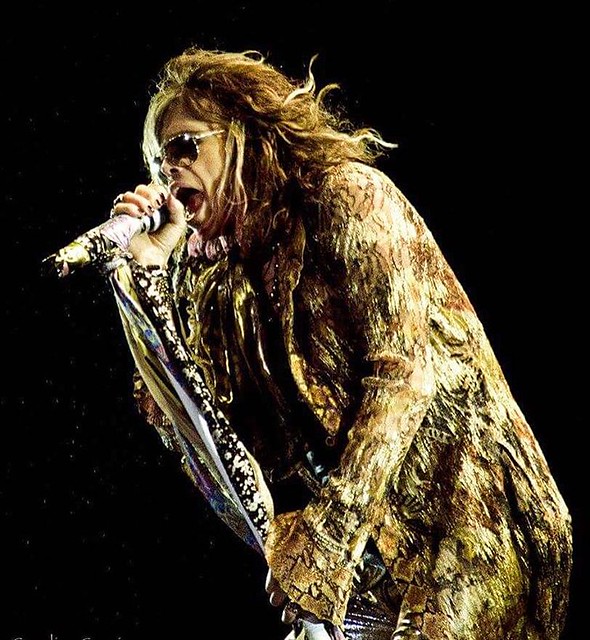

Capturing Steven Tyler’s iconic vocals was a masterclass to his both technique and artistry and I was right in the thick of it. Most of Steven’s keeper vocal takes were cut at Swing House using a Neumann U 48 that I had previously used on projects for The Fray, James Blunt and others. I built the signal chain carefully: after the U 48, his vocals were routed through a BAE 1073, then split into two parallel compression paths using two DBX 160 VU’s set lightly at around 2:1 or 3:1. Each channel was sent into an 1176 limiter—one dedicated to capturing the softer, more delicate verses, and another dialled in for when Steven let loose with his louder, wilder energy. I then blended the channels back together to create that huge, fat vocal sound that became a signature of the album. To top it off, I used the BAE 1073 to ride the gain settings dynamically, adjusting up or down depending on the intensity of his performance. It was pretty old school, and as an engineer, working with a singer of Steven’s caliber made my job an absolute pleasure. Steven would ‘self comp’, he would sing, then stop when he heard a mistake or a phrasing he wanted to improve, on the tracks Jack and I recorded we never used or needed Autotune, Steven would just re-sing it.
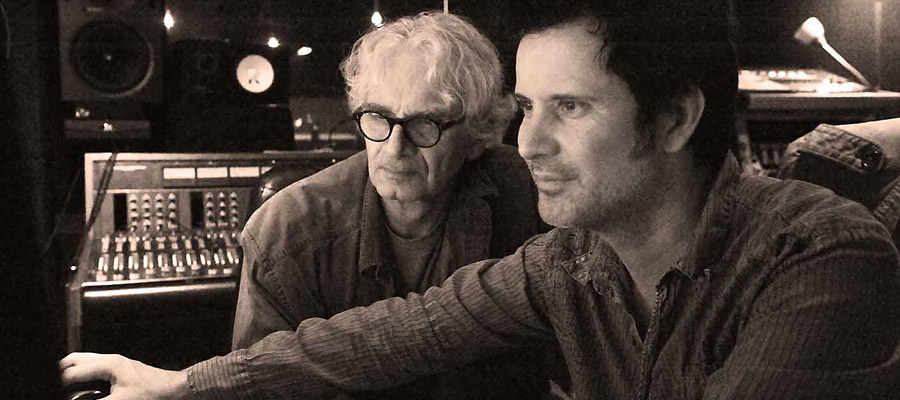
Working with Jack Douglas was and is an experience I always treasure and will never forget. A true titan of rock production, Jack’s illustrious career includes shaping Aerosmith’s iconic albums such as Toys in the Attic, Rocks, and Draw the Line defined a generation of music. His commitment to capturing live, unfiltered energy through minimal overdubs and innovative techniques set the standard for what rock should sound like. For me, having Jack as a friend, mentor, and collaborator was nothing short of incredible. His insight, passion, and uncanny ability to bring out the best in every performance not only elevated this project but also left an indelible mark on my own approach to engineering and mixing.
Mixing the Magic
Mixing this album was an adventure in itself, fortunately trough Jack’s expert guidance we had spent time recording the parts as we heard them, applying compression and EQ where needed so that we could have the tracks come up as close to how they would be in the final mix as humanly possible. Every track demanded its own sonic personality, and I had the privilege of sculpting the intricate layers of sound, from the pulsating guitar riffs and thunderous drums of the huge room sound of the hall of ‘Pandora’s Box’ and large drum room of Swinghouse’s ‘Blue Stage’, to the soaring, unmistakable vocals of Steven Tyler. Due to our hectic impending deadline, my friend Neal Avron started mixing the first half of the album while we were still tracking. We would work all day and then, in the evening, head to Paramount, where Neal was camped out and we would review the mixes, before returning to Swinghouse to keep working.
Once we finally finished tracking and with 50% of the album already mixed courtesy of Neal, we headed to my home studio, Spitfire, in Laurel Canyon. Spitfire was equipped with a ton of analog equipment I had acquired over 20-plus years of making albums—most notably an SSL 4000. There, we mixed the remainder of the album while also adding extra layers: I laid down additional guitars with Joe, captured more vocals with Steven, and even cut the duet “Can’t Stop Lvin’ You” with Carrie Underwood, a wonderful artist with whom my wife Kasia and our young son bonded instantly. Working with the raw material captured during those intense sessions, we aimed to create mixes that were as dynamic and timeless as the band’s legacy.
There was a unique thrill in balancing the classic Aerosmith sound with modern production techniques. It wasn’t just about polishing a recording; it was about preserving the spontaneous energy and excitement that filled the room each time we hit “record.” Every knob turned and fader moved was a tribute to decades of rock history and the enduring spirit of creativity.
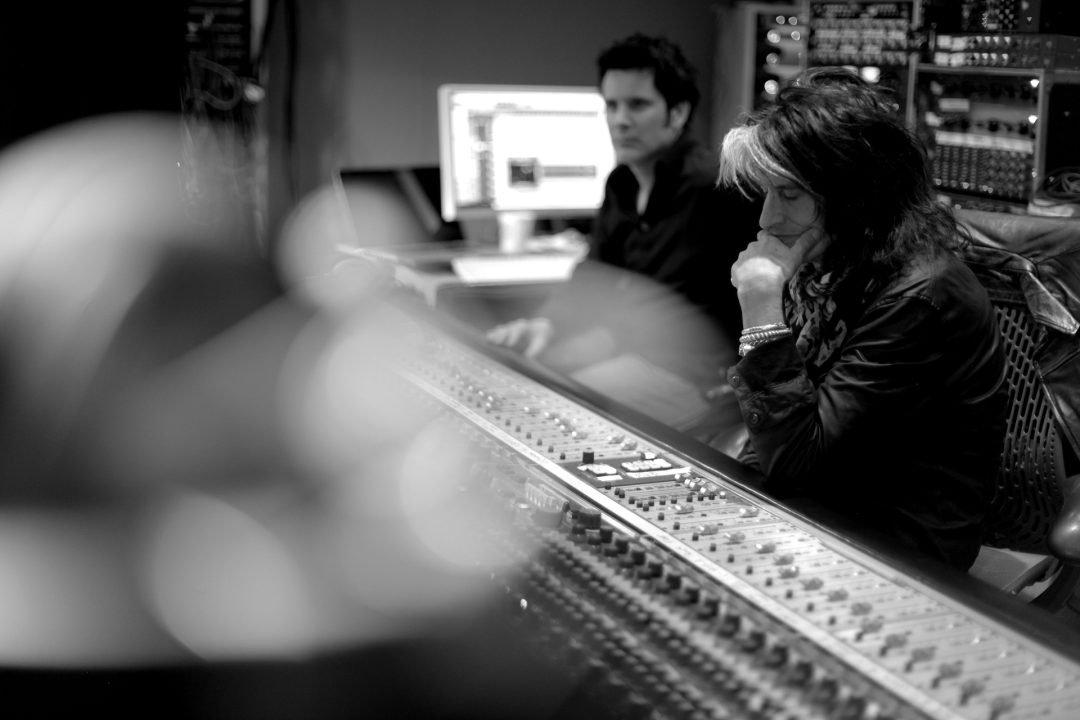
Looking back, engineering and mixing “Music from Another Dimension!” was more than just a technical challenge, it was a deeply personal experience. Amid the hard work (often 18 hour days) and the high level of creativity was unforgettable moments of camaraderie, I found myself inspired by Aerosmith’s relentless drive and passion for music. The album stands as a testament to their resilience and the magic that happens when talented artists and dedicated Producers and engineers come together for the pure love of music!
As you listen to the album, I hope you can feel the pulse of those late-night sessions and the vibrant energy of the studio. It’s more than just a record, it’s a snapshot of a time when Aerosmith’s love of raw rock ‘n’ roll was reborn, and I’m proud to have been a small part of that journey.
Rock on and enjoy the dimension beyond the ordinary!