

Download The Chandler Limited Mixing System Demo Tracks Here: https://producelikeapro.lpages.co/chandler-limited-mixing-system-demo-form/
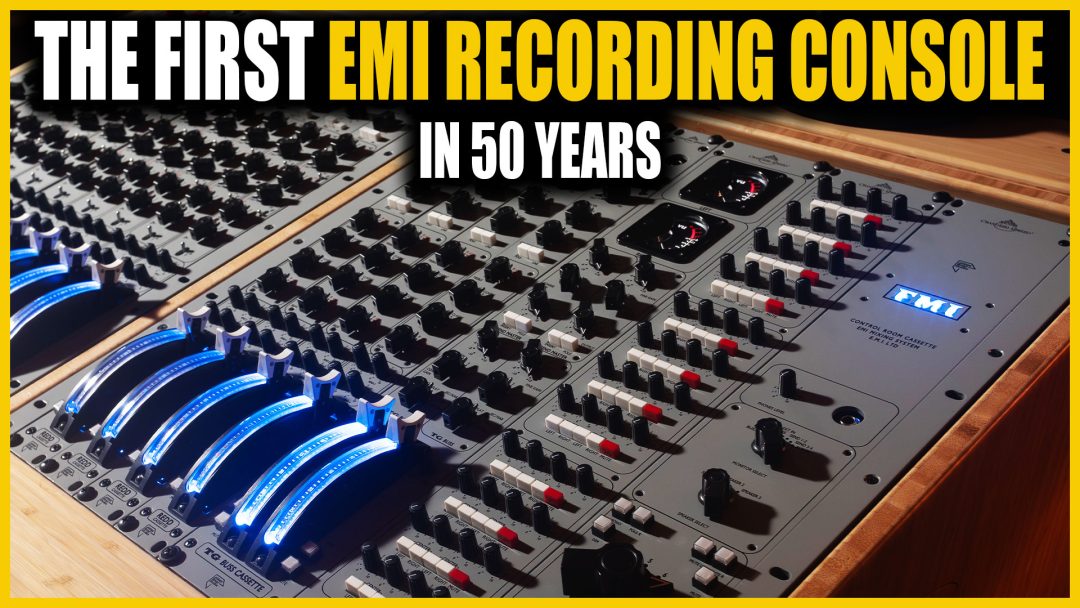
A modular console that unites REDD, TG and RS in one expandable, hand built platform, the first EMI recording console in over 50 years
Hi everybody, hope you are doing marvellously well.
Guess where we are. We are at Abbey Road, with Wade Goeke from Chandler Limited, and Mirek Stiles from Abbey Road. There are a few horns going off in the background, which feels oddly perfect, because what we are looking at is not just a new piece of kit. It is a proper moment.
This is the REDD Mixing System, the first EMI recording console released in over 50 years, and it is the result of a long, obsessive, six year collaboration between Wade, Mirek, and the wider Abbey Road team. There was plenty of conversation before that too, so it has been a long term project in every sense.
The big idea is simple to say, however it is massive in practice.
This is a fully modular console system that lets you combine REDD, TG, and RS inspired channels and busses in practically any configuration you want. Tube and solid state can live side by side. You can build something small for a personal room, or scale into a serious control room setup. You can start with a couple of channels for tracking, then expand over time, without being locked into a single fixed format.
And where better to showcase a console built from Abbey Road history than inside Abbey Road itself.
What it is, in plain English
Wade sums it up early on, it is “a mixture of all of our stuff in one.”
That means you can have:
• REDD tube preamps and EQ, with the classic EMI curves
• TG style Class A preamps and Curve Bender EQ
• TG and RS inspired buss designs
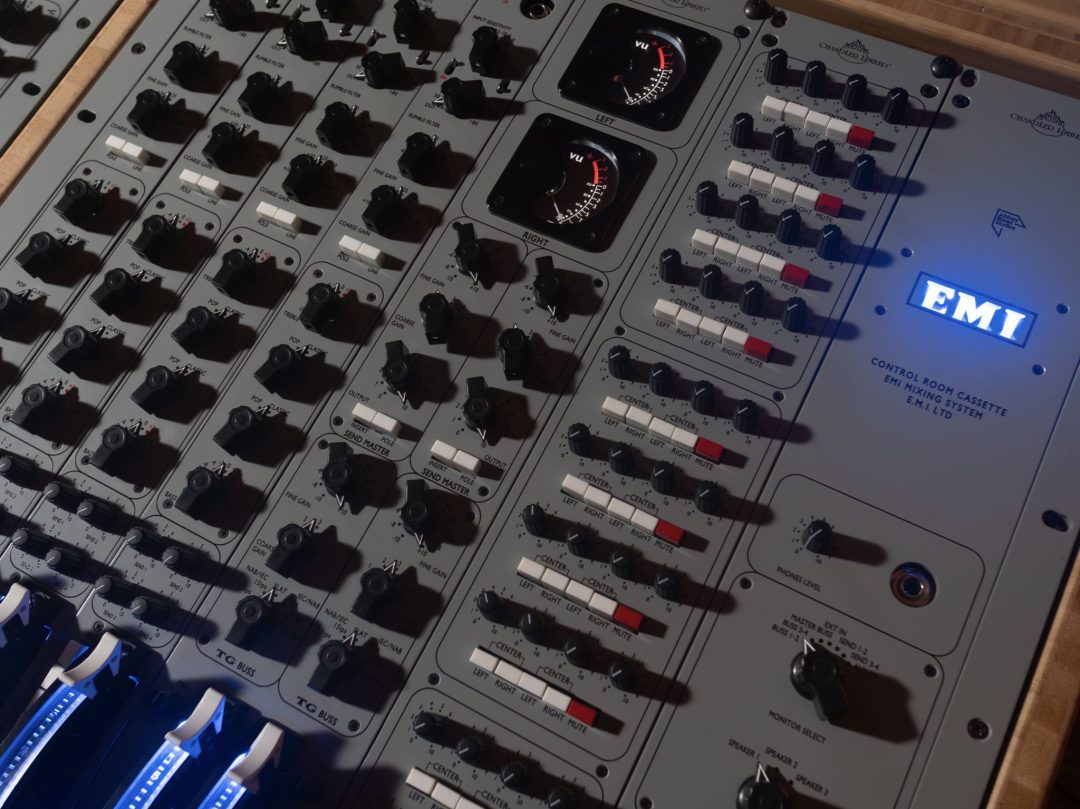
• A modular frame that fits into standard rack bays, so it can live in modern studio furniture
• A system you can assemble, disassemble, and reconfigure quickly, without the usual pain of moving a traditional console
It mounts into a 12U rack unit frame and can expand across additional bays. So if you have a Sterling Modular desk, a JamRacks mastering style desk, or similar rack furniture, it drops right in. You can grow it one cassette at a time.
That is the philosophical shift here. This is not a boat anchor you are forced to buy all at once. It is a system you can build into the exact console you want.

Six years of collaboration, and a “design of a lifetime”
This system was six years in the making, developed through constant experimentation and listening between Chandler Limited and Abbey Road. Wade calls it a labour of love and a design of a lifetime, aiming to include the different sounding gear Chandler makes with Abbey Road, while embracing a modular approach that suits modern recording and mixing workflows.
And that modern workflow part matters. This is not just about tracking into a desk. It is about hybrid mixing, reamping, inserting pedals, shaping busses, and having flexible control room features, all built into a coherent system.
Mirek’s perspective is the perfect bridge between history and present day. He first encountered TG and REDD desks at Abbey Road when he was 18, and he talks about being blown away by how musical they were, and how producers and engineers would use them to colour recordings and mixes in a creative way. He also points out something very real, the original desks are rare, and the opportunity to bring those engineering ideas back into daily use, with a modern twist, is a big deal.
Handmade, hardwired, and built like the originals
One of the most striking things in the announcement is how the system is built.
Every cassette, every channel, every buss, is made the way you wish everything still was.
• 100 percent hardwired and hand assembled
• Transformer balanced in and out
• Switches hand populated using eyelet style wiring
• PCBs hand soldered and hand loaded
• No surface mount components
• No ribbon cables
• No PCB mounted switches
Each cassette is truly handmade, and that is not marketing fluff. It is part of the sound, part of the longevity, and part of the philosophy.


Walking through the REDD cassette, from the front panel
We started at the left, because there is so much goodness happening here, and Wade took us through the REDD cassette in detail.
The DI, an EF86 tube straight into the grid
One of Wade’s favourite details is the DI input. It is built around an EF86 tube, and crucially, it is set up like plugging into an old amp. No FET front end. It is that direct, immediate, high impedance feeling, like an AC15 or AC30 style approach. If you love the character of EF86 designs, you already know why this is exciting.
Input sensitivity, the pad that helps you get the best out of the tube stage
The input sensitivity is a passive circuit, a variable pad and sensitivity control right at the front. That matters because on a lot of tube designs, the input is the most sensitive part of the whole chain. Wade made the point perfectly, with some classic tube modules, if you cannot pad them properly at the front, they fall apart instantly. This gives you control where it counts.
Bass lift, originally a compensation circuit, now a creative weapon
There is a bass lift switch inspired by the old REDD desks, originally meant to compensate for bass loss when switching microphones into omni or figure of eight. Wade describes it as a 10 dB boost in the low end. It is extremely low, and it is huge.
What is brilliant is how it has become an “effect” in modern use. On kick drum it is deep, resonant, and unmistakable. Mirek even mentions using it upstairs on the REDD.17 desk as an effect today.
Rumble filter, variable and clever
The rumble filter was on original REDD modules as a single jumper setting. Here it is made variable, with a wide spread of usable points. Wade also highlights a very EMI detail, the engineers used the inductance of the input transformer with a capacitor to create a filter, a clever solution that feels very much like the old EMI way of thinking.

Fine gain, not just trim, it is a tone control
This is one of the best insights. The fine gain started as a screwdriver trim used to line up channels. However as they experimented, they realised it changes harmonic distortion, clipping point, headroom, and overall tonality. So it becomes a flavour control, cleaner at one end, more driven and colourful at the other, even into clipping if you push it.
Pop and Classic EQ curves, and you can combine them
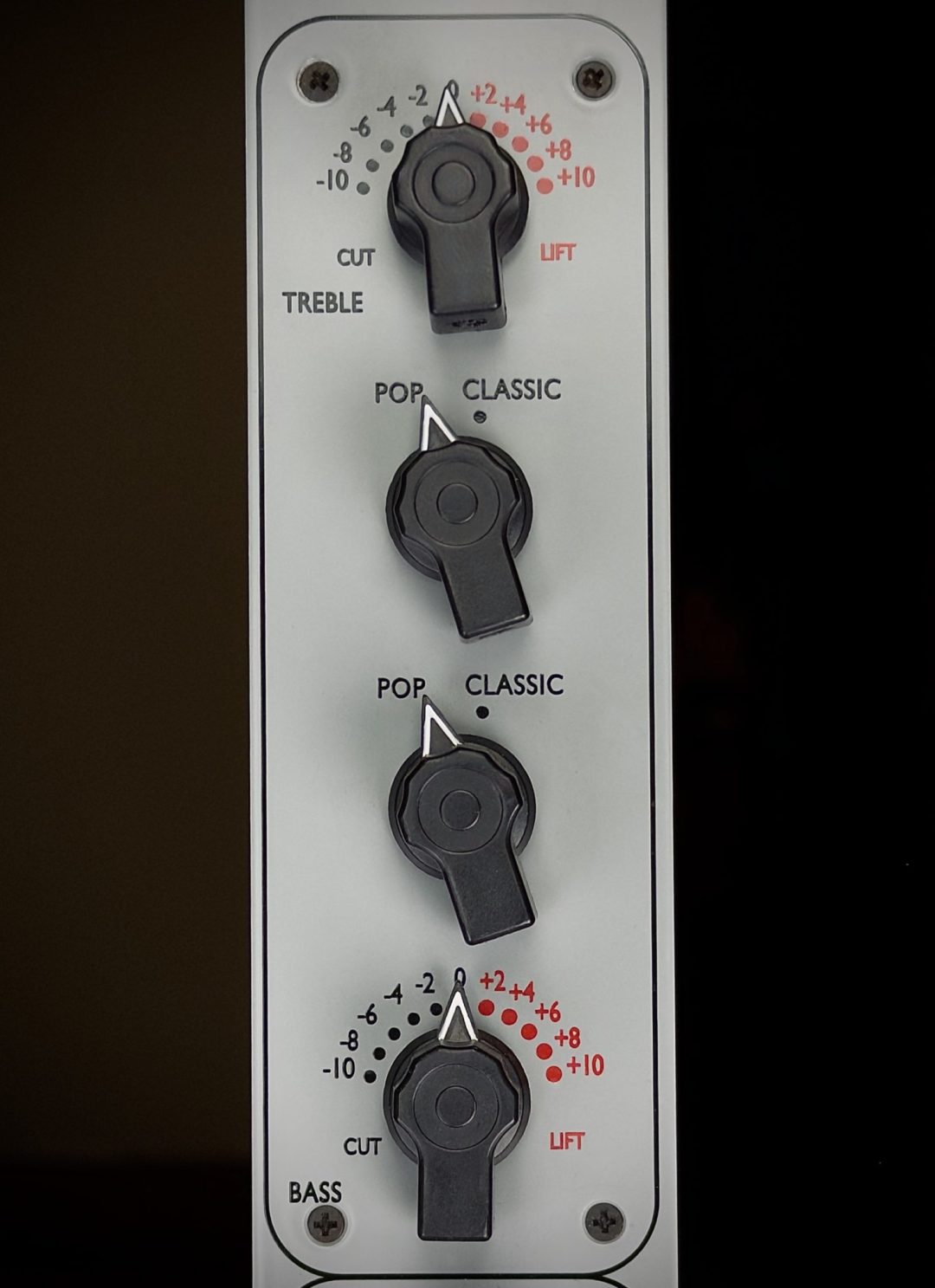
The REDD EQ section includes the old passive inductor based high and low EQs, with both Pop and Classic curves available on the front panel. Historically, you would open the desk and swap a cartridge to change curves. Here you can switch instantly.
Wade describes Pop as “more fierce” in the EMI documentation, more aggressive, digging further into mids, lows and highs, with extra presence on the treble boost. Classic is more traditional, more like the familiar smiley shape.
The fun part is that you can mix and match, Pop treble with Classic bass for example, which they had on the kick.
The faders, rebuilt from scratch, including the glow
If you have ever touched an old EMI fader, you know they feel special. Wade and his colleague Seth, with help from Seth’s father, rebuilt the mechanism from the ground up.
The goal was to match the look of the vintage desk, including the backlit style, while improving reliability, serviceability, and keeping it practical to manufacture. Wade says they redid them three or four times. It is one of the reasons the system took so long, and you can feel the care in the result.
And yes, the glow in the dark faders are real, and it is not a gimmick. In a dimly lit room, that tactile, visual feedback is part of the creative experience.

Sends, busses, and the low level insert that changes everything
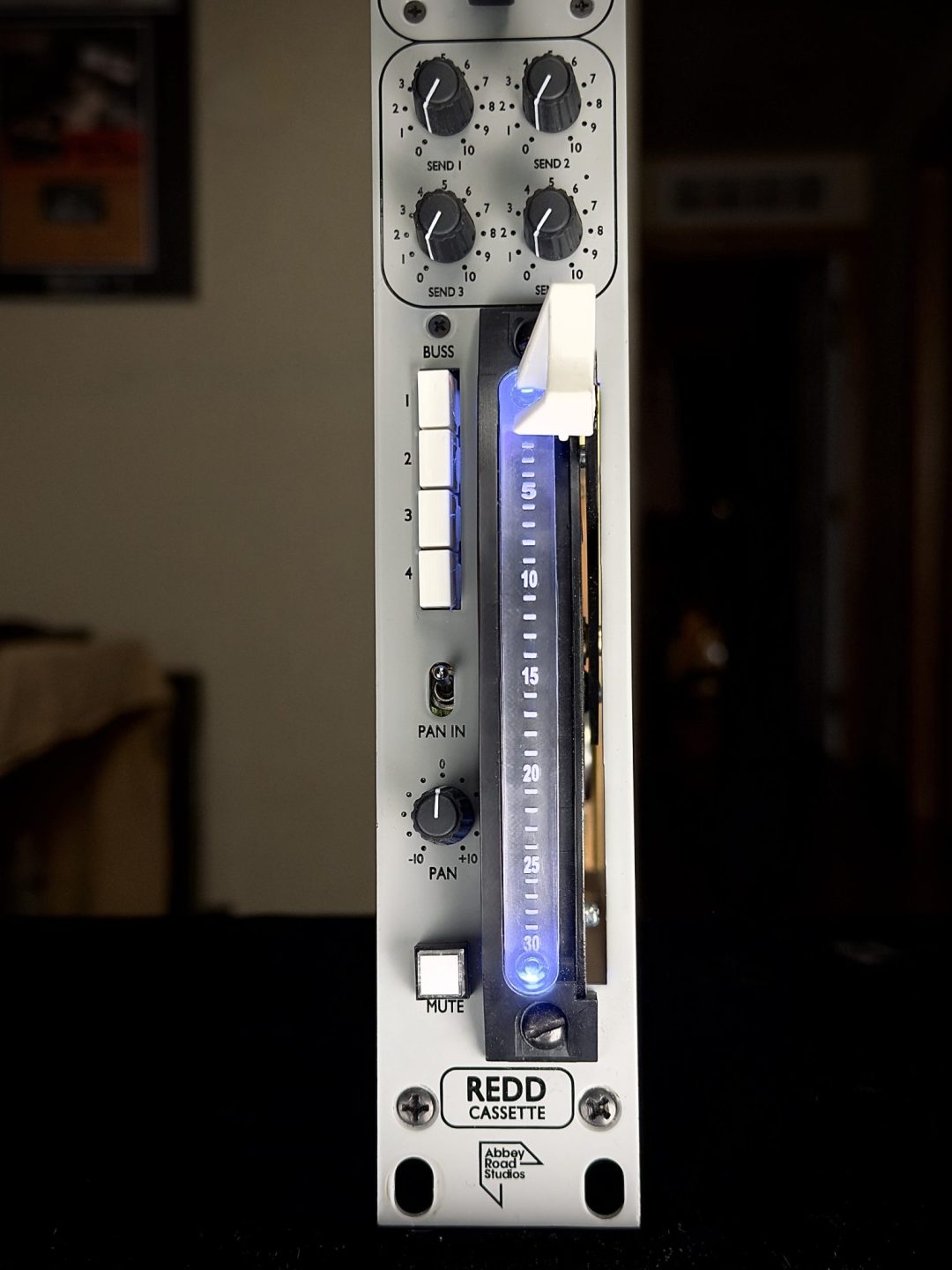
Every input cassette shares the same sends and bussing section, four sends, four busses, and that iconic fader workflow. However there is a feature built into the sends that I love because it is so practical, and so creative.
Low level insert on each send
There is a low level insert point designed at the correct impedance for pedals and low level devices. You hit the insert button on the send, and suddenly you can insert a Tube Screamer, a fuzz, an old analogue delay, whatever you like, directly into your console workflow.
Even better, if you hit the insert and take only the output, you can reamp instantly. No extra reamp box. No guessing about levels and impedance. It is built into the system.
Wade’s point is spot on, it is not just convenience, it changes how you work. You can have your pedals patched permanently, you can create distortion busses, you can feed a chamber, you can set up pre echo into the chamber, and you can do it without leaving the sweet spot.
Also, they added polarity switching here for a very real reason, a fair number of pedals are out of phase, especially after repairs. The system keeps you safe.
TG and the Curve Bender approach, plus the upcoming MKI TG cassette
Alongside the REDD tube cassette, there is a TG style cassette that combines a TG2 style preamp with a four band Curve Bender EQ. It keeps the classic TG feel, however it adds modern flexibility, including tighter Q options and selectable boost ranges that can be set for finer steps.
Wade explains it beautifully, the down position can be set to a lower boost range and a tighter Q, so you can do precise, narrow moves, even down to tiny increments. That is the sort of “do it here and be done” convenience that keeps you moving.
Then there is the cassette many people are going to be watching closely.
A new cassette based on the earliest TG desks installed for the Abbey Road album era. Wade refers to it as the Mark I cassette, based on the first solid state desk designs from 1969, with germanium, and a distinctly different sound to later TG era designs. It is planned for release in Q4 2026.
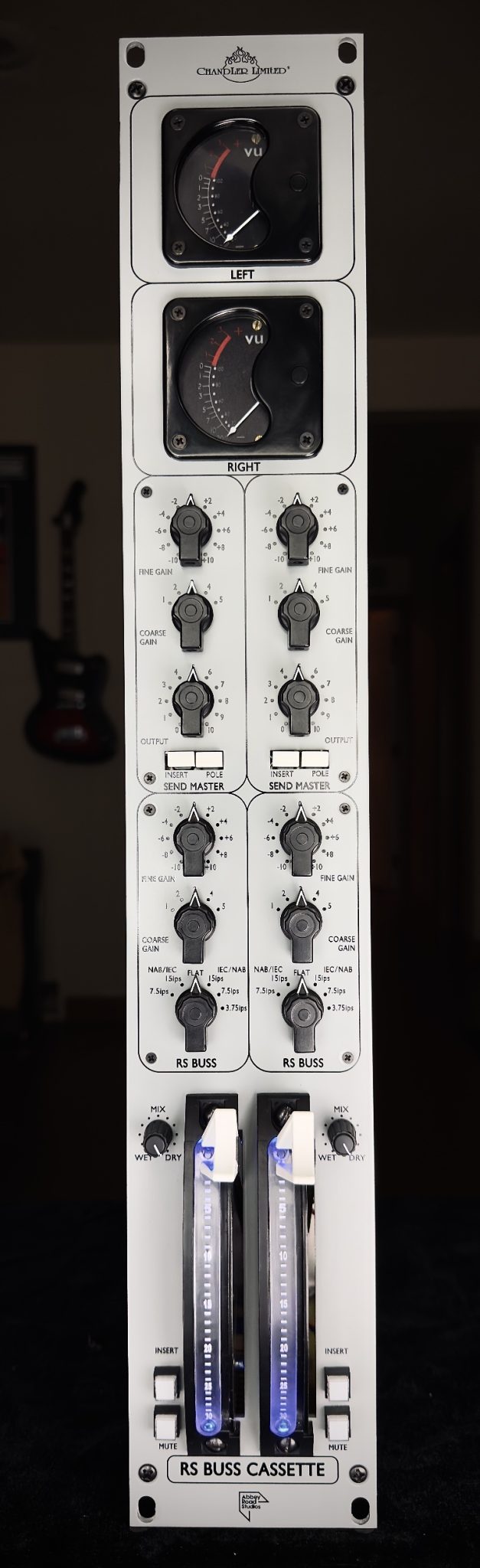

Buss cassettes, RS tube, TG style, and built in parallel options
The buss section is where the system becomes a full mixing environment.
The announcement includes two buss cassette types:
• Class A TG2 style buss circuit
• Tube buss based on a newly developed RS61 type circuit
In the video, Wade walks through the RS buss concept, referencing the RS61 amplifier used in auxiliary racks at EMI whenever gain needed to be made up or passive EQ was patched. It is part of that broader EMI ecosystem, not just the main desk.
Each buss cassette includes features designed for modern mixing:
• Wet dry mix on the stereo buss
• Switchable insert point
• NAB and IEC style stereo buss EQ curves
• Coarse and fine gain for driving or managing buss gain structure
• Low level inserts for creative routing and pedal integration
The wet dry mix is particularly exciting because it encourages musical parallel processing without eating up extra channels. You can smash a compressor on the insert return, then blend it in right there, fast, simple, creative.
Expanders, master buss, and the control room
For larger systems there is a 12 channel Expander cassette, 12 Class A TG2 style circuits, 12 transformers, designed for big mix in the box workflows or for extra instrument and effects returns.
There is also a master buss cassette for folding larger systems down to stereo output.
And then there is the control room cassette, which brings proper studio monitoring and talkback into the modular format:
• Switching for three sets of speakers
• Monitoring for busses, sends, master, aux, and external inputs
• Talkback routing options for headphone systems
• Discrete op amp headphone amp, ultra clean with discrete tone
• Discrete op amp speaker output, ultra clean with discrete tone
• Mute, mono, dim, polarity checks
• LED backlit EMI fader design
The point is, this is not just a rack of channels. It is a system that can become a complete console environment.

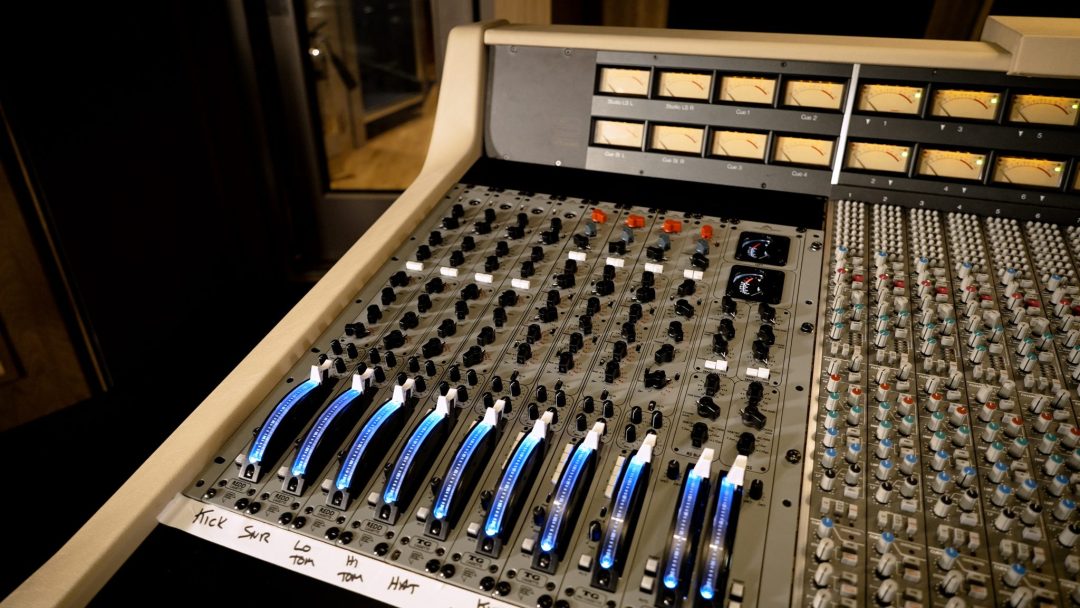
Recording at Abbey Road, the room, the mics, and the “simple is best” moment
We set up and recorded a drum kit, and one of the joys of the day was how quickly great sounds showed up. There is a reason Abbey Road is Abbey Road. The room helps, the history is palpable, however the real lesson was how much you can achieve with simple decisions executed well.
Wade showed a drum approach influenced by Dave Cobb, focusing on the core relationship between kick and overhead. Get that right, and everything else becomes optional, not mandatory. When you bring the full kit in, the phase relationship stays solid, and the sound has that satisfying record like cohesion.
We also got deep into Chandler’s TG microphones, including the smaller TGL, with its dual voicing system. In B mode, it can take a huge amount of SPL, which makes it perfect for close drums and loud sources. We used those on snare, toms, and kick, and they held up beautifully.
And then there is the REDD microphone, which is a whole story in itself. It is the REDD preamp circuit adapted into a microphone design using Chandler’s patented approach, with a capsule that has a 67 style character, and a platinum skinned membrane instead of gold for a smoother tonality. It also has up to 33 dB of gain built into the mic, so you can plug straight into an interface and go.
That “plug in and make music” theme runs through everything here.

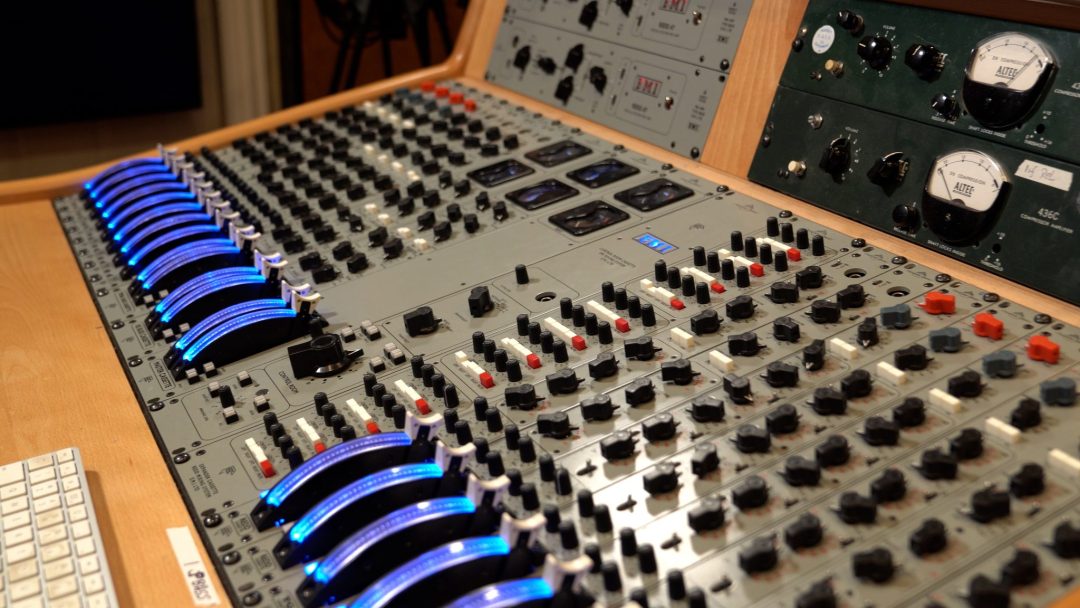
Back in Iowa, tracking guitars and bass, and the low level insert in real life
The transcript also takes us upstairs at the Chandler workshop in Iowa, tracking guitars and bass through the new console.
The guitar setup was refreshingly direct, a TG cassette, mic placement, and off you go. No EQ, no tricks, just a cabinet and microphones.
Then we leaned into one of the most inspiring parts of the REDD Mixing System, the low level insert workflow. A Rockman stereo echo was inserted using the send insert point, and Wade showed how he creates feedback loops and recirculates the signal like classic slapback tape techniques, turning a pedal into a living, interactive effect inside the console.
On bass, Seth played a beautiful 59 P style instrument, plugged straight into the REDD cassette DI. Wade explained how the fine gain control can be used to keep things cleaner or more driven, and how the coarse gain can be used to push a different kind of character. Then it ran into the REDD EQ section, Pop treble with Classic bass, and then into an RS124 style compression setup.
The takeaway was clear, it is all right there. DI, EQ, tone, routing, and creative options, in one cohesive system.
Release and availability
The REDD Mixing System is launching as a soft release initially in the United States, available through Chandler Limited as special order.
Because every unit is handmade in America and the system is highly configurable, Chandler Limited is establishing the infrastructure for building and sales. Special orders are being taken immediately, with expected delivery beginning August 2026. Wider distribution will be determined later.
If you want setup options, pricing, and availability, the contact is office@chandlerlimited.com.
Why this matters
A lot of products promise “vintage tone” or “classic character”. This is not that.
This is Abbey Road and Chandler Limited taking the deeper idea behind EMI’s greatest consoles, the circuits, the ergonomics, the creativity, the engineering mindset, and rebuilding it as a modular system that fits the way we actually make records today.
Tube or solid state. Tracking or mixing. In the box or hybrid. Pedals, reamping, parallel busses, mastering style EQ curves, control room workflow, all in one expandable platform, hand built with the kind of construction that rarely exists anymore.
And if you want the best part, it still feels like making records. You pull up a fader and it sounds like a record.
Have a marvellous time recording and mixing.