


Tucked away in San Francisco’s Mission District is a small, fireproof room that holds decades of sonic history. It’s not a museum, though it could be. It’s a studio—one filled with stories, songs, and the unmistakable fingerprint of an artist who has quietly influenced generations of independent musicians. Welcome to the working world of Chris Von Sneidern.
If you’ve never heard of him, don’t worry. A documentary literally asked the question: Why Isn’t Chris Von Sneidern Famous? The answer may be complex, but the music tells you everything you need to know.
From Syracuse to San Francisco
Born in Syracuse, New York, Chris’s musical journey began in earnest in the early ’80s, playing in a band called the U-Turns. Like many who felt the magnetic pull of the West Coast scene, he relocated to San Francisco in 1985. There, he found a vibrant underground community brimming with jangle-pop guitars, Rickenbackers, and melodic ambition. He played bass for The Sneetches and guitar in Flying Color, sharpening his skills not just as a player, but as a craftsman of harmony and hook.
When Flying Color split in 1990, Chris hit the road with Paul Collins, frontman of the legendary Beat, before returning to San Francisco to pursue a solo career. That decision would result in a body of work that won him a dedicated cult following, especially among power-pop devotees who recognised the brilliance of his songwriting and the clarity of his sonic vision.
The Vault: Where History and Harmony Collide
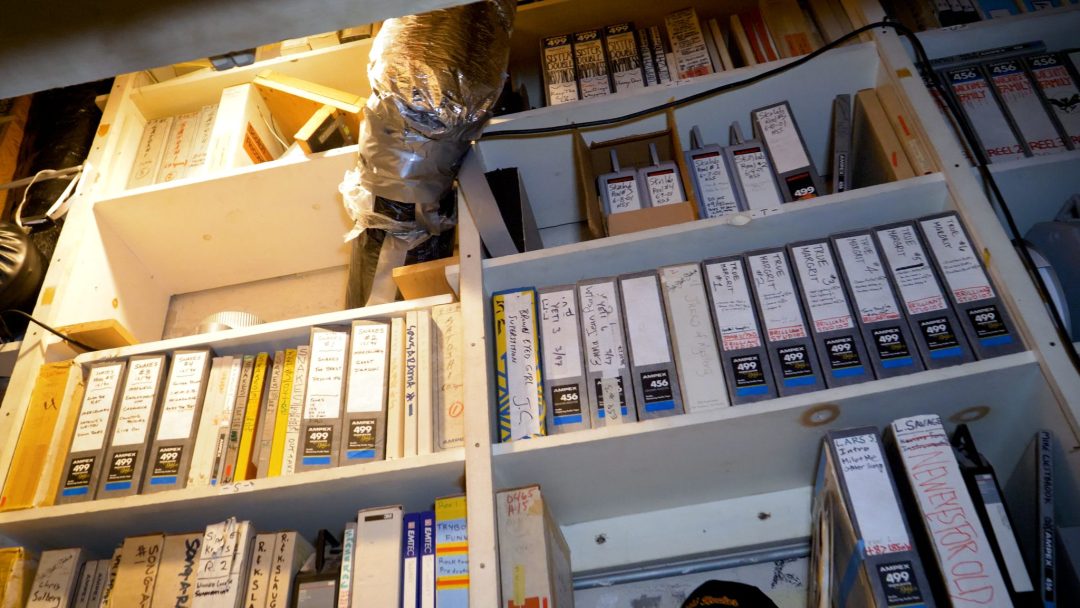
Chris has been working out of his current studio space for over 15 years, but his connection to the building runs even deeper—he’s been a tenant for more than a quarter-century. The space was once a nitrate film vault, and it still wears its history like a badge of honour. The walls are thick, the doors heavy, the energy tangible. You feel the past here. But instead of vintage film reels, the vault now holds reels of tape—half-finished songs, forgotten projects, and creative outbursts waiting to be rediscovered.
“There’s no Dead bootlegs here,” Chris says with a grin, “but there’s plenty of ghosts in these tapes.”
The Independent Spirit
Chris’s 1993 debut Sight & Sound was self-produced and released on the Heyday label. It drew critical acclaim and began a streak of well-regarded records that followed in quick succession. Albums like Big White Lies, Go!, and Wood + Wireshowcased his knack for classic songcraft, often drawing comparisons to everyone from Alex Chilton to Todd Rundgren. Yet Chris never chased fame—he chased feel.
In 1999, he pivoted slightly, forming a soul-infused band called The Sportsmen. Their album Spirited was released in Japan, and by then Chris had established his own label, giving him the freedom to follow his muse wherever it led. Sometimes it was idiosyncratic: London Payne, which set poetry to music, and 2-cute 2-be 4-gotten, a moving exploration of teenage girl diary entries set to melody. Other times, it was raw and live, like Live Start Lifting, which documented performances from 1998–2000.
He even found himself in pop culture history when his voice appeared in SpongeBob SquarePants singing “That’s What Friends Do” in the episode “Wormy.” Yes, really.

Gear That Tells a Story
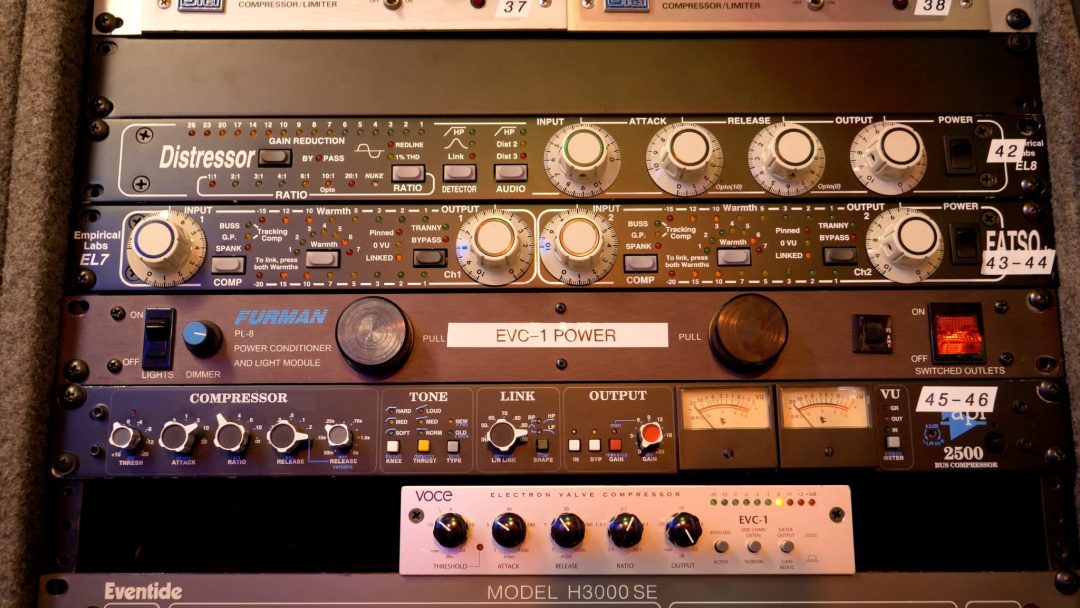
The studio itself reflects Chris’s career—compact, character-filled, and quietly brilliant. It’s packed with gear, but not in a “pro studio” way. This is a musician’s workspace, a functioning laboratory of tone. Among the highlights: four LA4s, a Fractal Audio unit, a beloved Eventide H3000, and a set of prized Sanken CU41 microphones.
“I’ve made albums with barely anything,” Chris says. “But the right piece of gear at the right time can save the day.”
He’s fond of ribbon microphones, especially for their ability to soften transients, and his preamp collection includes vintage V72s and other unusual finds, many acquired through savvy trades and resourceful deals. It’s not about prestige. It’s about purpose.

Instruments as Companions
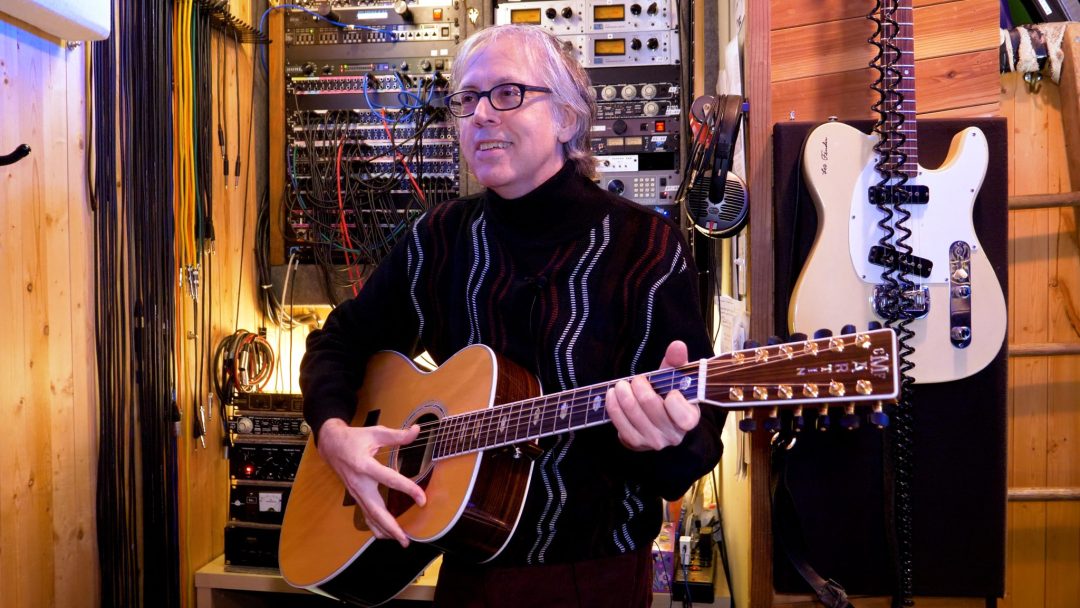
Guitars are everywhere—hung on walls, propped in corners, close at hand. His 12-string Martin is central, not just physically, but emotionally. It’s a writing partner, not a prop. The G&L guitar that’s been with him for over 30 years still gets regular use. These aren’t collector’s pieces. They’re part of the daily ritual.
Chris’s relationship with gear mirrors his broader philosophy: the more you have, the more likely it is that you’ll lose focus. He’s learned to strip back, to simplify. It’s a lesson many producers come to eventually—less gear, more music.
Room Tone and Mic Placement: The Unsung Instruments
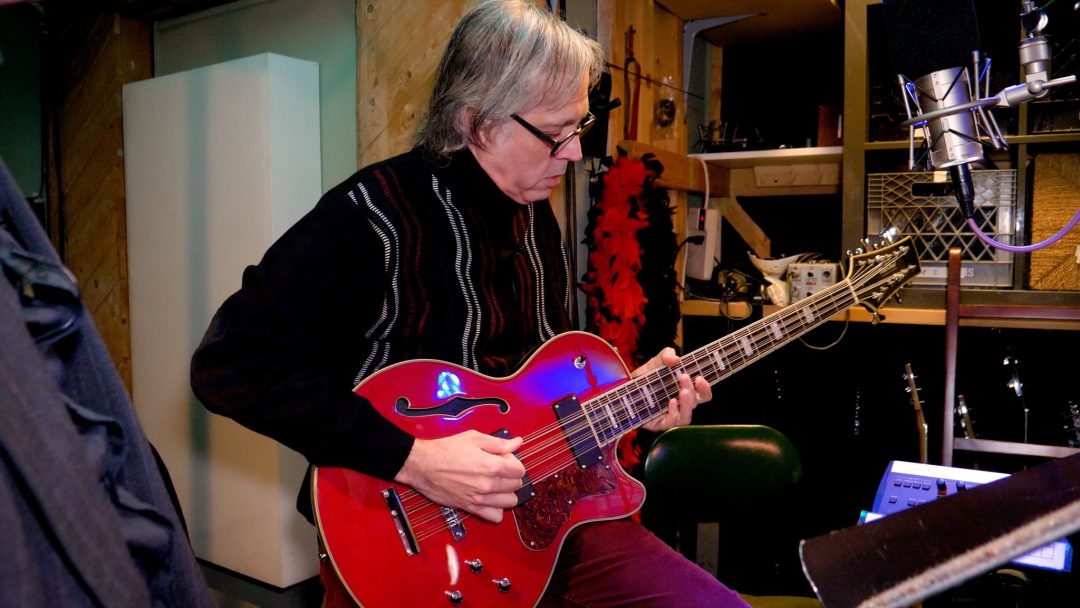
The studio may not boast a million-dollar drum room, but that hasn’t stopped Chris from getting great sounds. He has a deep respect for acoustics and understands how mic placement can transform a mediocre take into something magical. Through trial, error, and experience, he’s learned how to work with what he has—and that’s often more than enough.
Collaboration Over Competition
While the studio is intimate, it’s far from isolating. Chris thrives on collaboration. Whether it’s working with new artists, transferring old recordings, or lending his production expertise to others, his door remains open. Music, for Chris, is a community effort—even when he’s the only one in the room.
In 2017, he joined the Flamin’ Groovies as bassist for their reunion tour supporting Fantastic Plastic, bringing his studio-honed sensibility to the stage. He left the band in 2023, but the spirit of that tour—raw, classic, and deeply rooted in rock history—still echoes in his work today.

Final Notes: Why the Music Still Matters
If there’s one takeaway from Chris Von Sneidern’s studio, it’s this: gear is just a means. The real magic lies in the music. His space, like his career, is driven by a love for songcraft, not spectacle. Whether it’s a home-recorded demo or a full-band production, the goal remains the same—to make something that moves you.
In a world of fleeting fame and algorithmic hits, Chris Von Sneidern is a beacon for what it means to live a life in music. Uncompromising, generous, and endlessly curious, he reminds us that greatness doesn’t need to shout. Sometimes, it just needs a good mic, a better melody, and a room with a story to tell.
Chris Von Sneidern’s studio isn’t just a recording space—it’s the intersection of craft, curiosity, and independence. It’s the kind of place where you don’t just make music. You remember why you started in the first place.