
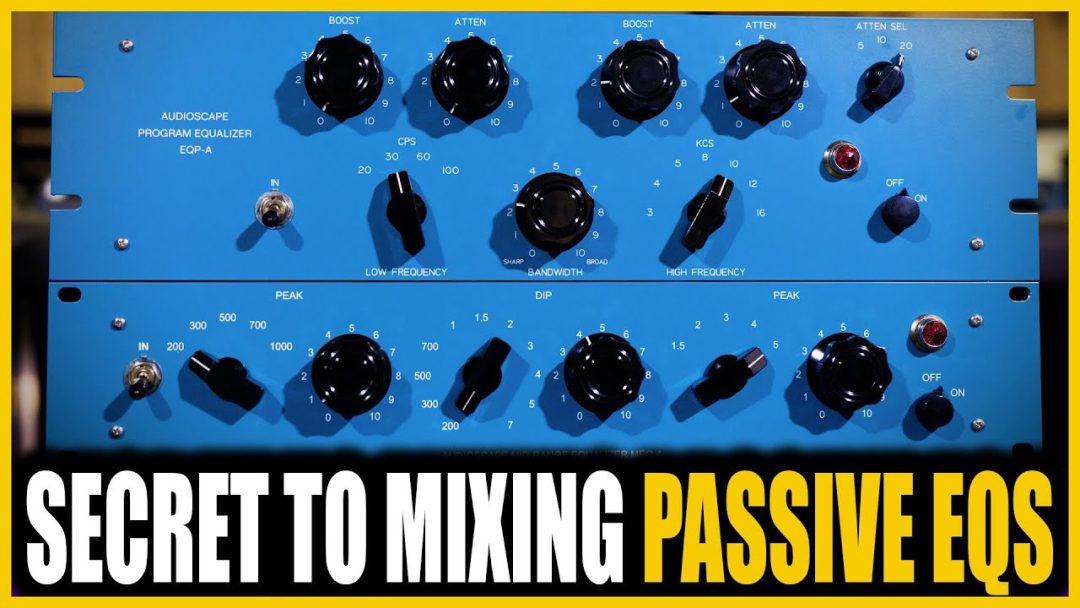

Check Out Audioscape’s EQP1-A HERE
Check Out Audioscape’s MEQ-A HERE
In the realm of audio engineering, the tools we use can significantly shape the sound we create. Among these tools, equalisers (EQs) play a crucial role, especially passive EQs, which have a distinct character and functionality. This blog post and accompanying video, delve into the intricacies of passive EQs, specifically the EQP-1 and MEQ-A Pultecs style passive EQs, as discussed by Joe and Chris during their engaging conversation.
Understanding Passive EQs
Before diving into specific models, it’s essential to grasp what a passive EQ is. A Pultec Passive EQ refers to a series of analog equalisers, primarily the Pultec EQP-1A model, originally developed by Pulse Techniques in the 1950s. These equalizers are iconic in audio engineering for their warm, musical sound and are often sought after for mixing and mastering. The “passive” in the name refers to the EQ’s circuit design, which relies on passive components—such as resistors, capacitors, and inductors—without using active amplification stages in the EQ section.
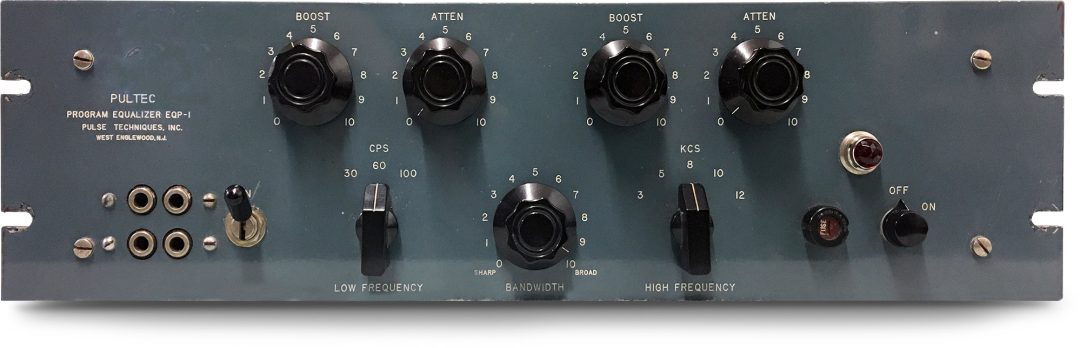

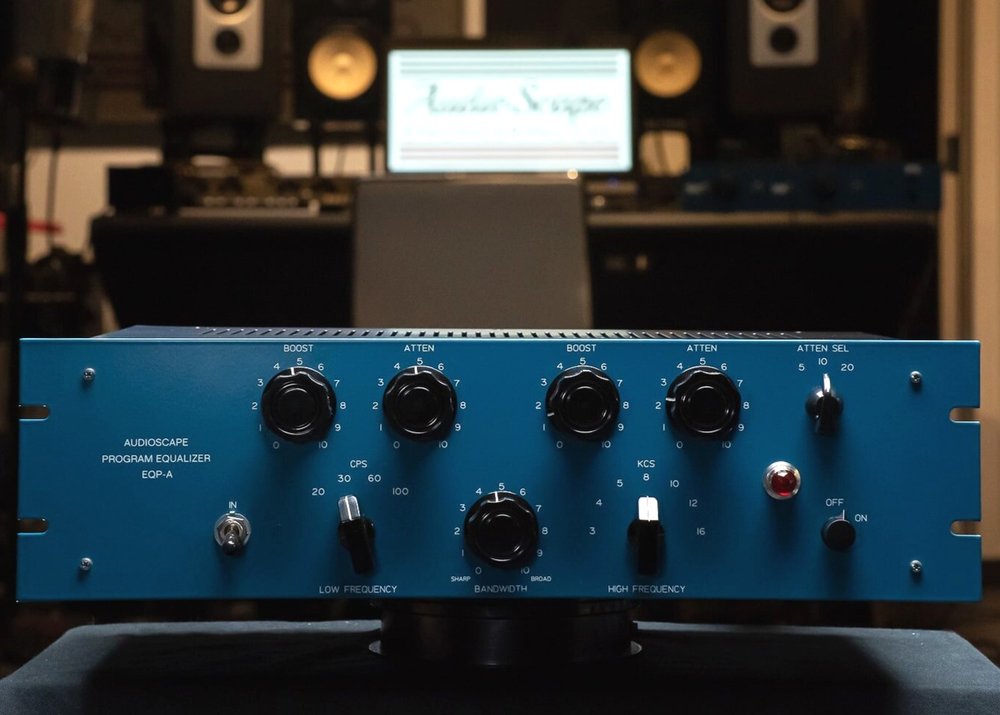

The EQP-1 is a classic piece of equipment that dates back to the early 1950s. It’s remarkable how this design has remained relevant for over 70 years. Chris emphasises that the EQP-1 is not a precision equaliser like those used for mastering, but rather a tool for shaping tone in a more musical way.
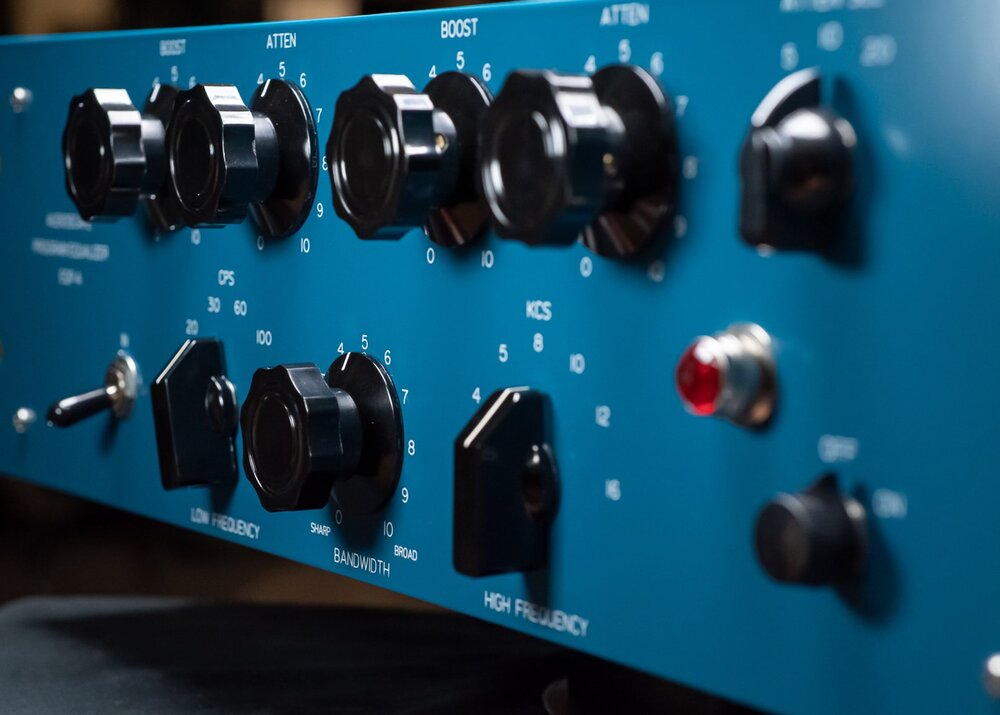
- Unique Circuit Design: The EQP-1A is famous for its distinct, all-passive equalisation section paired with a tube amplification stage. This combination imparts a warm, smooth character to the audio, which is a hallmark of vintage analog gear.
- Boost and Attenuation on Same Frequency: One of the defining features is that it allows you to both boost and cut the same frequency band simultaneously. For example, at the low end, you can boost around 60 Hz while also cutting in the same range, which creates a natural, rounded bass response that’s been called the “Pultec trick.”
- Smooth High-End Shaping: The high-frequency section lets you select a specific frequency (e.g., 5, 10, 12 kHz) to boost while offering an attenuated shelf for the highs, creating a soft and non-harsh treble enhancement.
- Musicality: The overall sound is known for adding body and warmth without sounding clinical or harsh, which is why it’s still popular in modern recording studios.
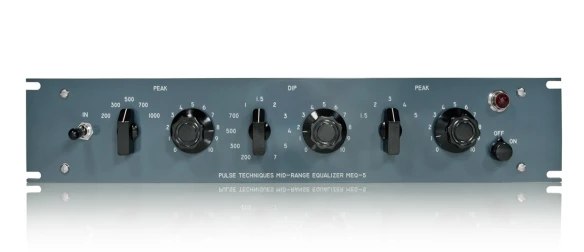
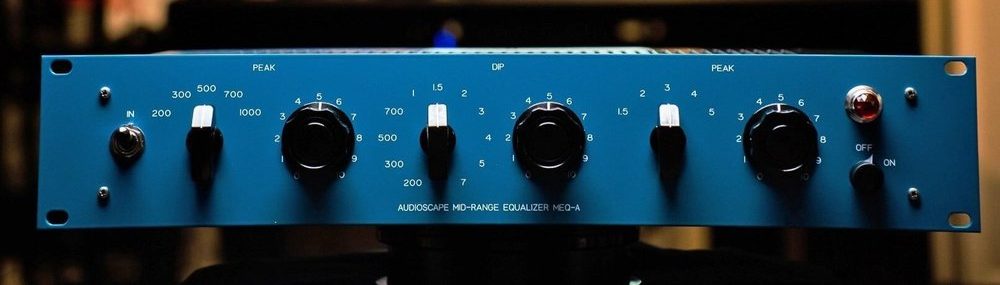


The MEQ-A: A Mid-Range Master
In contrast to the EQP-1, the MEQ is a mid-range equaliser. Unlike the EQP-1A, which focuses on low and high frequencies, the MEQ is specifically designed to target the midrange, allowing for more precise shaping of the crucial mid frequencies.
Here are the defining features of the Pultec MEQ:
- Three-Band Midrange Control: The MEQ has a unique three-band configuration:
- Midrange Boost: Allows boosting of specific mid frequencies, selectable at 200, 300, 500, 700, 1000, 1500, 2000, 3000, and 4000 Hz.
- Midrange Dip: Designed to cut specific mid frequencies, selectable at 200, 300, 500, 700, 1000, 1500, 2000, 3000, and 4000 Hz.
- High Midrange Boost: This band is intended to emphasise the high mid frequencies at 1.5, 2, 3, 4, 5, 8, and 10 kHz, which can help to add presence.
- Passive Equalisation Design: Like the EQP-1A, the MEQ is a passive equaliser, so it relies on resistors, capacitors, and inductors, which contribute to its smooth, musical sound. A tube stage often follows the equalisation section in classic models to restore gain.
- Musical, Smooth Sound: The MEQ excels at carving out space in the midrange without adding harshness, making it ideal for vocals, guitars, and any elements where midrange clarity and presence are essential.
- Notable Midrange Sculpting Tool: Engineers often use the MEQ in tandem with the EQP-1A to handle the full frequency spectrum, where the EQP-1A focuses on the lows and highs, while the MEQ addresses the mids. Together, they create a complete tonal shaping toolkit with a signature warm, analog character.
The MEQ is popular in both analog and digital emulations and is a classic choice for midrange sculpting in mixing and mastering. Its unique frequency targeting and passive design create a character that’s gentle yet effective for enhancing the mix’s central tonal elements.
Boosting and Cutting Simultaneously
A common misconception about EQs is that boosting and cutting frequencies simultaneously can lead to undesirable results. However, Chris clarifies that this technique can be quite effective, especially with the EQP-1.
When you boost and cut at the same time, you might think that they would cancel each other out. However, this is not the case. Instead, you can end up enhancing the overall sound by selectively boosting certain frequencies while cutting others. This technique is particularly effective when working with low-end frequencies, where you can add heft without introducing mud.
Practical Applications of Passive EQs
Chris and Joe discuss various scenarios where passive EQs shine, especially in mixing and tracking. Here are some key takeaways:
- Vocals: When working with vocals, passive EQs can add air and presence without harshness. For instance, boosting high frequencies while cutting some lower ones can create a more balanced vocal sound.
- Drums: The EQP-1 is particularly effective on drums, where it can enhance the kick and snare while maintaining clarity. Boosting low-end frequencies can give the kick drum a punchy presence.
- Instruments: Instruments like guitars benefit from passive EQs as well. For example, using the MEQ to dip around 300 cycles can clear up muddiness, allowing the instrument to sit better in the mix.
Check Out Audioscape’s EQP1-A HERE
Check Out Audioscape’s MEQ-A HERE
Demonstrating the Sound
To truly appreciate the capabilities of these EQs, Chris and Joe provide demonstrations using various audio sources. They highlight the differences in sound quality when applying the EQP-1 and MEQ-A to a female lead vocal, acoustic guitar, and drums.
Lead Vocal Processing
Starting with a lead vocal, they showcase the effect of boosting high frequencies. The result is a stunningly beautiful sound that enhances clarity without introducing harshness. This demonstrates how passive EQs can elevate vocals in a mix.
Acoustic Guitar Enhancement
Next, they turn to an acoustic guitar, where the MEQ is utilised to bring out the sparkle in the high end. By carefully adjusting bandwidth and frequency boosts, they achieve a bright and engaging tone that enhances the instrument’s presence.
Drum Processing
Finally, they apply the EQP-1 to a drum mix, showcasing how the low-end boost can create a powerful kick drum sound. The ability to boost and cut simultaneously is highlighted, showing how it can enhance the overall punch of the drums.


Final Thoughts
Passive EQs, such as the EQP-1 and MEQ, offer unique tonal characteristics that can elevate any mix. Their ability to boost and cut frequencies simultaneously allows for creative sound shaping that can lead to impressive results. Understanding the intricacies of these tools is essential for any audio engineer looking to achieve a polished and professional sound.
Incorporating these passive EQs into your workflow can open up new possibilities for sound design and mixing. Whether you’re working on vocals, drums, or instruments, the magic of passive EQs is undeniable.

