
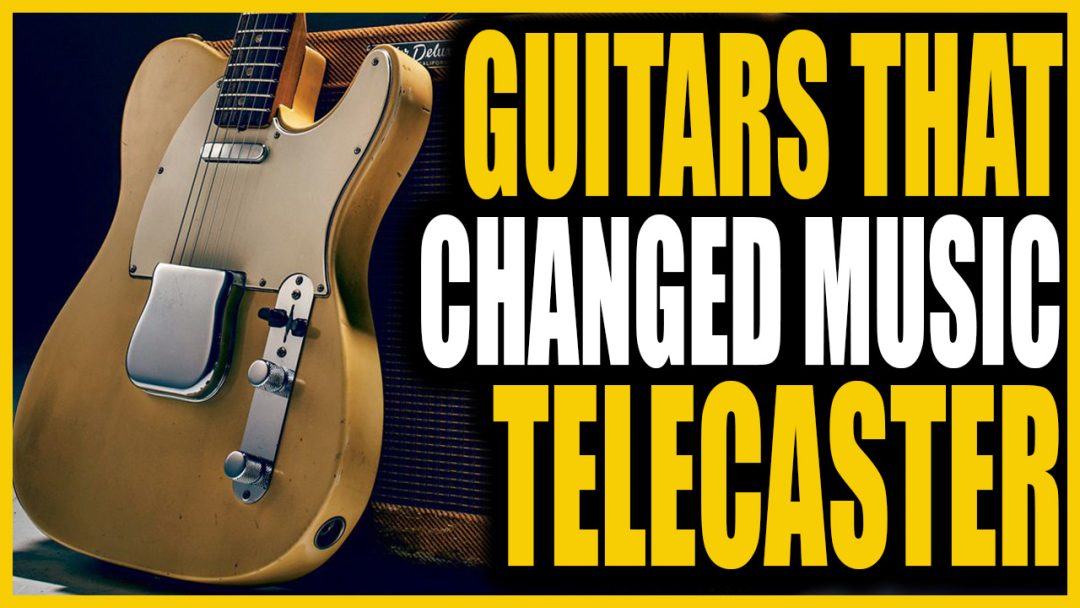
The Fender Telecaster is the very first mass-produced solid-body electric guitar, and one of the three iconic first-generation solid-body electric guitars. The other two are the Fender Stratocaster and the Gibson Les Paul. The Telecaster came on the market in 1951, while the first Les Paul was sold in 1952 and the first Stratocaster in 1954.
Given the pioneering nature of the Telecaster, it is astounding how much Fender got right with the instrument, so much so that it’s still being made more than 70 years later. It means that it is also the most successful mass-produced electric guitar in history.
The unique characteristics of the Telecaster make it possible to coax a wide variety of sounds from the instrument, that all tend to be bright, powerful and biting, and that easily cut through a mix or the din of a live band.
The Stratocaster and the Les Paul also have distinct sounds and characteristics. Together the Telecaster, Stratocaster and Les Paul have laid the foundations for pretty much all solid-body electric guitar styles of the 20th century.

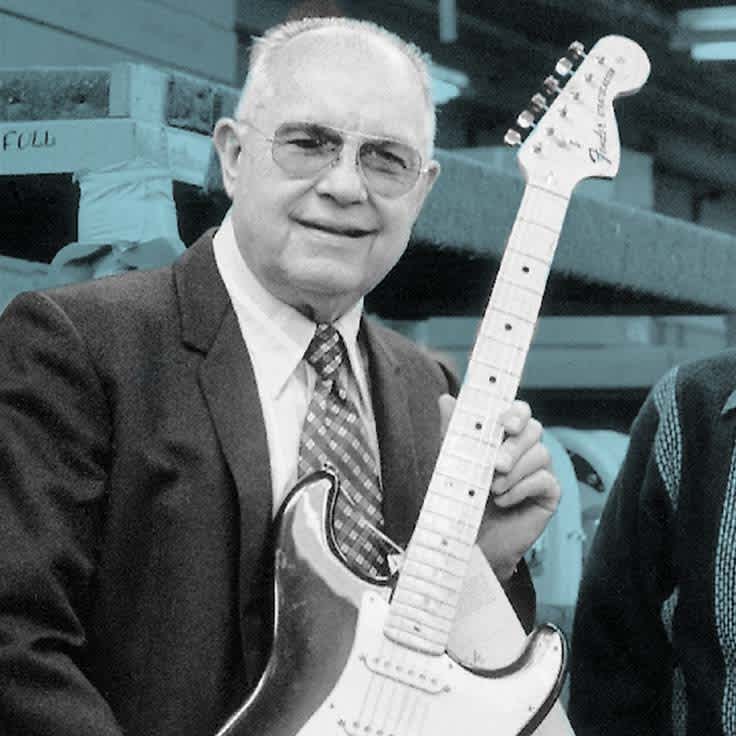
Leo Fender
HISTORY
In the 1940s, Leo Fender was collaborating with Clayton Orr Kauffman, an inventor who had worked for Rickenbacker. When the two made a rough prototype solid body guitar to test their newly-designed pickups, it proved very popular with local country players, not only because only of its volume, but also its unique tone.
It inspired Leo Fender to a vision that would change the world: a mass-produced solid-body electric guitar that was not purely an attempt to solve feedback problems, but a unique instrument in its own right. Fender first developed a prototype of the Telecaster in 1949 that only had a bridge pick-up. The model would go on the market in 1950 as the Esquire. Less than fifty were made.
That same year Fender released a two-pickup upgrade that was called the Broadcaster. When Gretsch protested because it had copyrighted the name Broadkaster for its drums, Fender took the name off his guitars, and produced less than 500 guitars with no name at all, which became known as Nocasters. In 1951, Fender renamed his guitar Telecaster, and the rest is, well, a lot of history!

WHAT MAKES THE TELECASTER GREAT
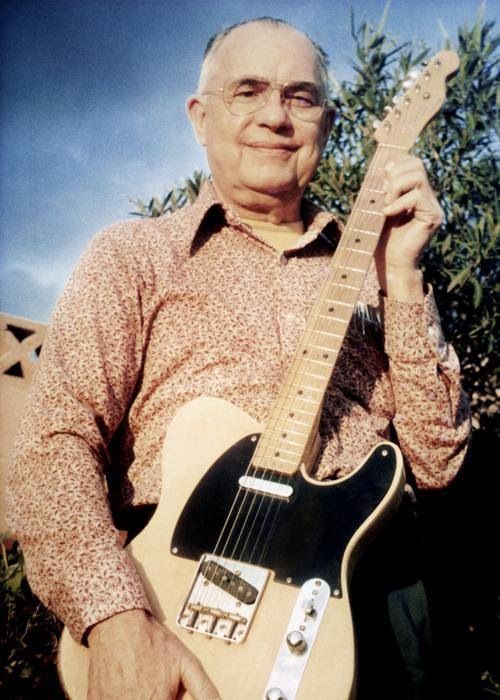
The Telecaster is easily identified by the single cutaway, narrow headstock, large scratch plate, large bridge pick-up array, and a metal strip that has a volume knob, a tone knob, and a three-way selector switch: two positions for each single-coil pick-up, and the middle position when both are in use.
The single coil bridge pick-up was originally adapted from a pickup Leo Fender had developed for laptop steel guitars. The pick-up is taller and longer than other single-coil pickups, which is why it is positioned at an angle, and it has more windings, resulting in a higher output. The angle gives the pick-up more treble on the high strings.
Moreover, the bridge pick-up is mounted on a large metal plate, and the strings go through the body, all of which add sustain and high end, or ‘twang’ as many people call it. The base metal plate originally had a cover, but almost all guitarists take it off for access closer to the bridge pickup and string damping with the palm of the hand.
The Telecaster’s unique rich, bright, cutting tone, that is the result of its bridge pickup and the way it is mounted, was very much created by Leo Fender with country players in mind. The mellow-sounding neck pick-up that was added for the Broadcaster, Nocaster and Telecaster is shorter and has fewer windings, and the tone has less definition and character.
The bottom line of the Telecaster’s success is not only that it is easy to play and has a unique tone, but also that it is easy and cheap to mass-produce and repair. As a result, the Telecaster quickly became omnipresent in the fifties, and changed the sound of country, bluegrass, blues, and early rock ‘n roll, and in the sixties and beyond the sound of rock, folk, funk, and even punk and heavy metal.

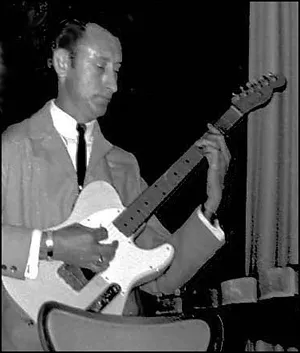
Luther Perkins
THE FIRST TELECASTER PLAYERS WHO CHANGED MUSIC
The Telecaster initially had the most impact on the country genre. Luther Perkins (1928 – 1968) was Johnny Cash’s guitarist in the fifties and sixties. In 1954, he picked up a beaten up Fender Esquire, with tone and volume control knobs that did not work. It led him to dampen the three bass strings to control the low end. The guitar helped him to develop the boom-chicka-boom’ style that was at the heart of Cash’s music.
The next four guitarists all played a central role in the most important new development in country in the fifties and sixties, the Bakersfield sound. The Bakerfield sound was strongly influenced by the emerging rock ‘n roll and electric instruments in the fifties, particularly the Telecaster, as well as by honky-tonk music. The style was hard-hitting, with a strong backbeat, and became a strong influence on all country music that came after it.
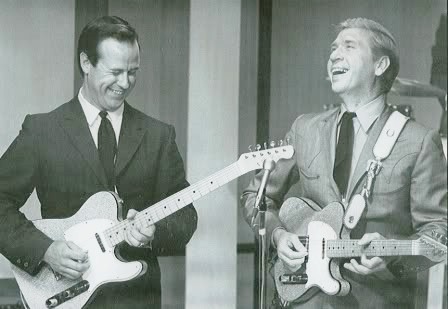

Buck Owens & Don Rich
Singer and guitarist Buck Owens (1929 – 2006) discovered the Telecaster in the early fifties, and it immediately led him to develop a brash, twangy, virtuoso style of playing. In 1958, Owens met another Telecaster guitarist called Don Rich (1941 – 1974), and together they set up the legendary band The Buckaroos, which became known for the duelling and aggressive sounding Telecasters of its two leaders.
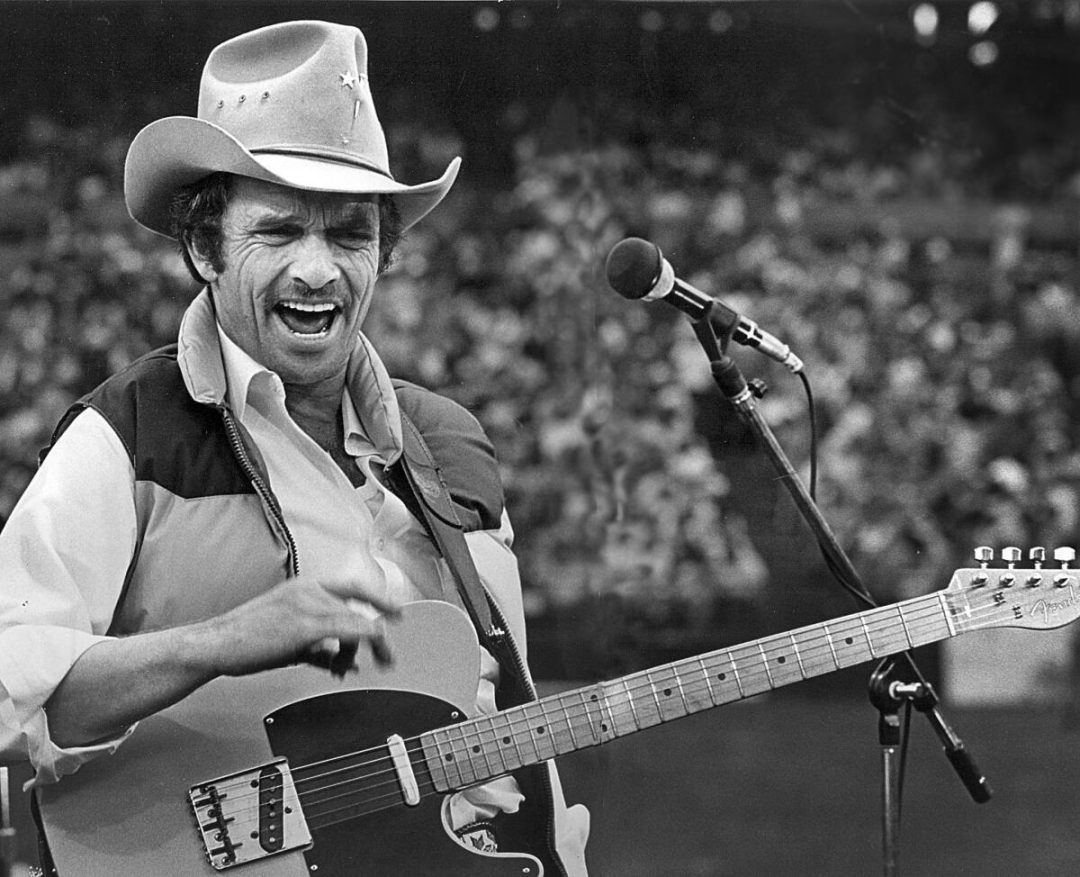

Merle Haggard
Merle Haggard (1937-2006) was another famous singer and guitarist central to the Bakersfield sound who revolutionised country music with his twangy Telecaster. In 1966, he founded The Strangers, which also featured Telecaster player Roy Nichols (1932–2001), who had also backed Johnny Cash.
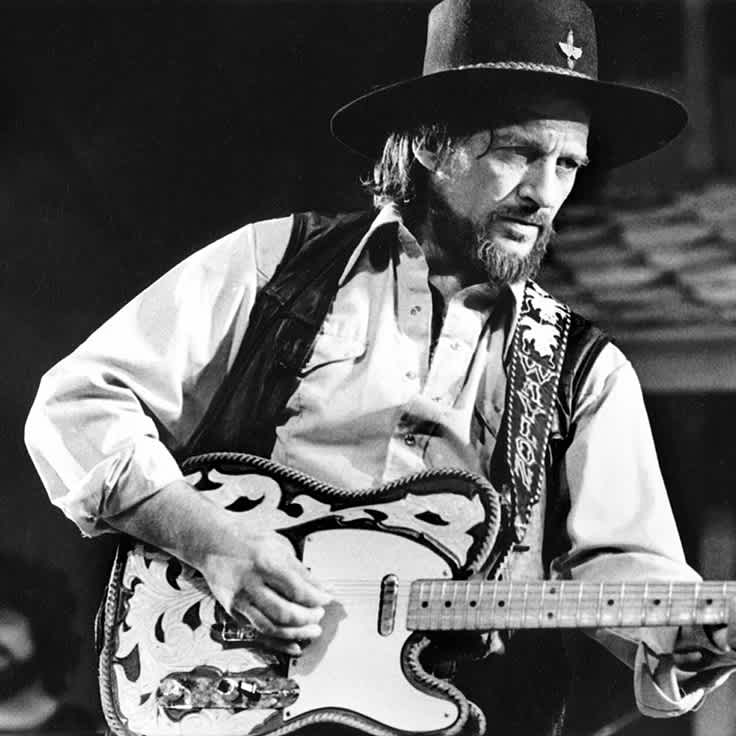

Waylon Jennings
Waylon Jennings (1937–2002) was part of the outlaw and progressive country movements, which were a continuation of the Bakersfield sound. Jennings worked with Buddy Holly, Johnny Cash, and Willie Nelson and released many albums as a solo artist. He had five Telecasters, three from 1953, one of them covered with white-and-black leather cut in oak leaf and floral shapes.
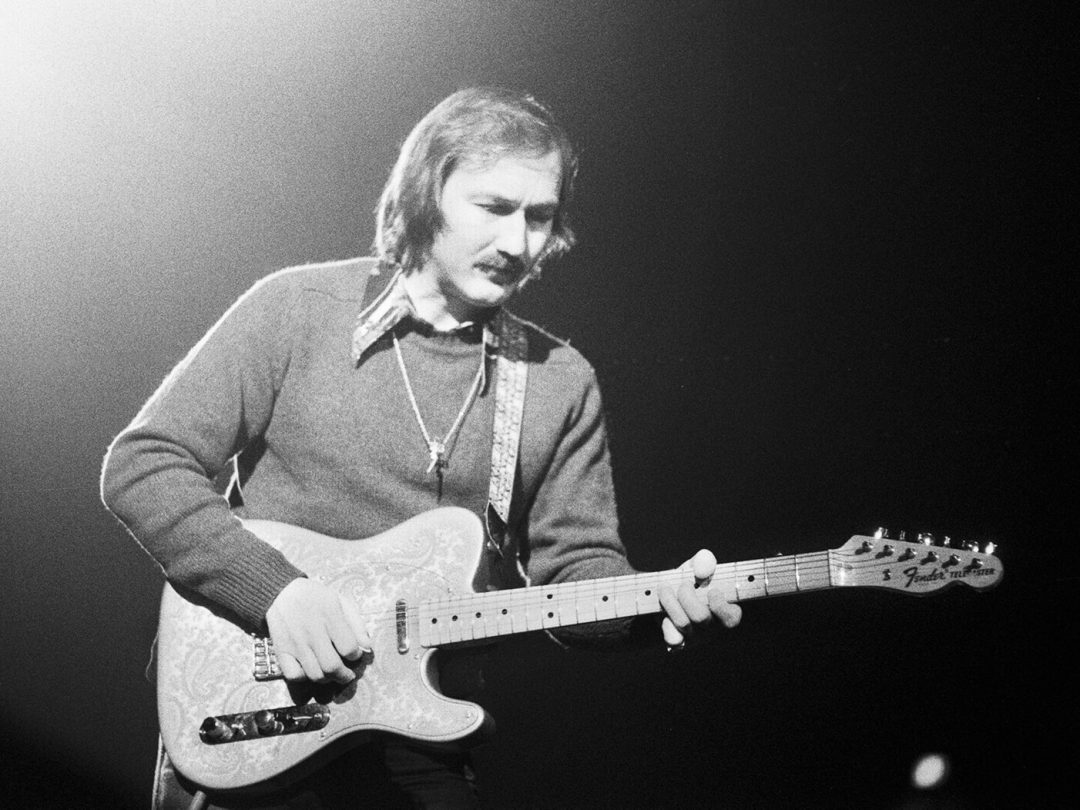

James Burton
James Burton (b.1939) has been called “one of the best guitar players to ever touch a fretboard” and “the guitar hero’s hero.” He was a sideman to Rick Nelson, Elvis Presley, Emmylou Harris, Elvis Costello, and countless others. Burton started on a 1952 Telecaster bought for him by his parents, and has used Telecasters over since.
Burton is credited with inventing the chicken-pickin’ style that is at the heart of electric country guitar style. It is mostly a right-hand technique, characterized by alternating muted and normal notes, often popped, played very quickly on the same string or adjacent strings, with fingers or hybrid picking, and it sounds best with the Telecaster twang.
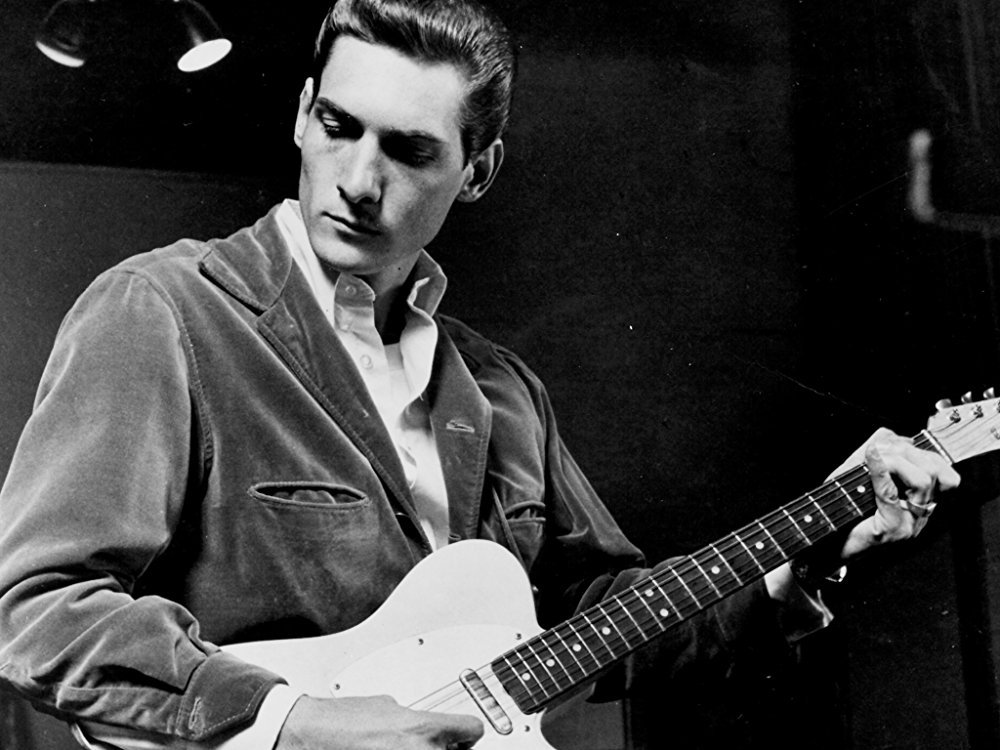

Steve Cropper
While James Burton is a country guitarist who crossed over into R&B and rock, Steve Cropper (b1941) is a soul, rhythm & blues, folk, blues and rock Telecaster guitarist who uses country techniques on his playing. He started out as a member of Booker T. & the M.G.s., the Stax Records house band, and has worked with Otis Redding, Rod Stewart, Jeff Beck, John Lennon, B.B. King, and many others.
Cropper wrote classics like Wilson Pickett’s “In The Midnight Hour” (1965) and Otis Redding’s “(Sittin’ On) The Dock of the Bay” (1968), and was also active as a producer. Cropper became most famous for being a member of The Blues Brothers band, and appearing in the classic movie of the same name (1980).
MORE TELECASTER PIONEERS
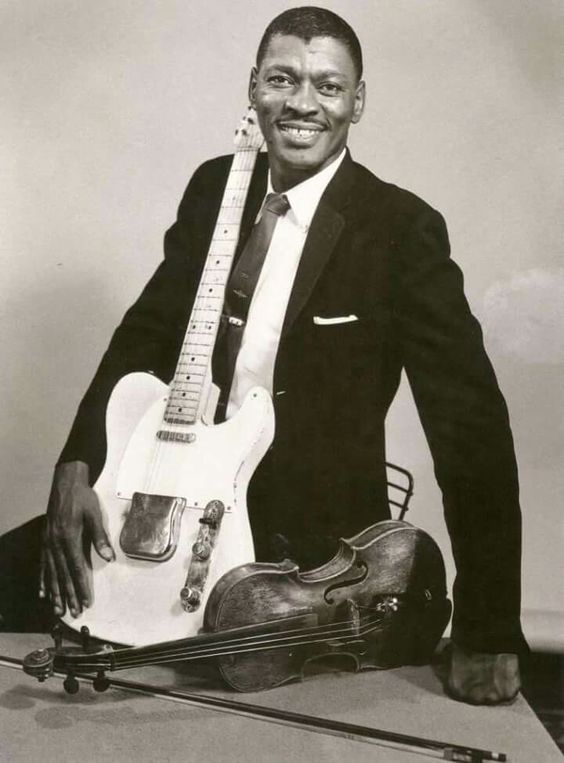

Clarence “Gatemouth” Brown
The Telecaster also had a strong impact on the emerging electric blues genre. Its biting tone allowed players to play powerful lead lines. The legendary Clarence “Gatemouth” Brown (1924 – 2005) played an Esquire in the early fifties, which was witnessed by Albert Collins (1932 -1993), who went on to become one of the most famous Telecaster blues players, so much so that he’s been nicknamed “Master Of The Telecaster,” and influenced an entire generation of players after him. Collins was also called “The Ice Man,” because of his sharp, clean tone which was very different from the warm, mellow tone that blues guitarists had pursued until then.
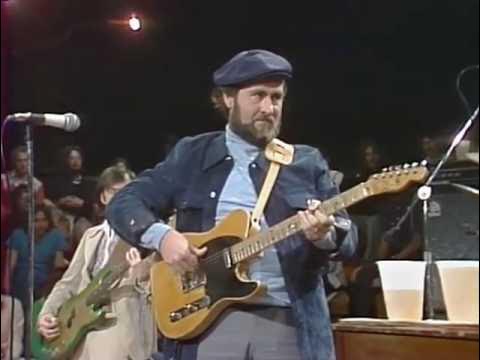

Roy Buchanan
Another major blues-influenced exponent of the Telecaster was Roy Buchanan (1939 – 1988). While coming from the blues, he went on to become one of the most admired rock guitarists of all time, also using many elements of folk and jazz, and Jimi Hendrix’s playing, by who he was strongly influenced. Buchanan’s most important guitar was a 1953 Telecaster with serial number 2324, which he called “Nancy.” Buchanan was a highly original player, who created tons of effects and different tones purely with his hands, using a pick and his fingers, including pinch harmonics, even during tremolo picking, a wah-wah effect purely using the Telecaster tone knob, extreme note-bending, flamenco-style rasguados, and extensive volume swells with the volume knob.
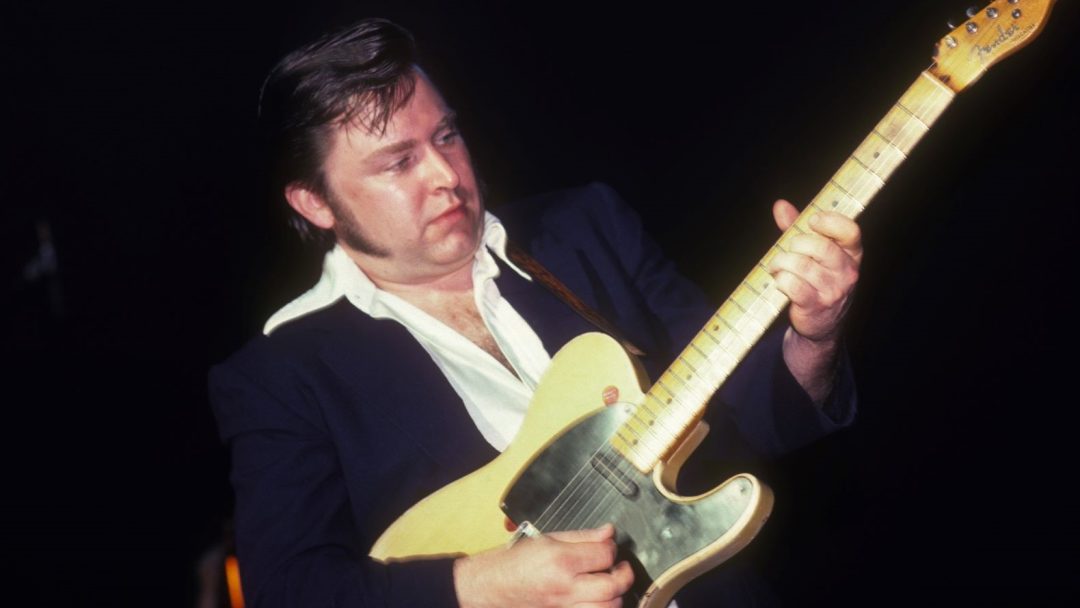

Danny Gatton
Danny Gatton (1945 – 1994) was nicknamed ‘The Telemaster.’ He was also called ‘The Humbler’ for his capacity to humble other players with his astounding chops. Les Paul once commented, ‘when Danny comes on, he’ll have you for lunch.’ Gatton worked mostly in the country and rockabilly genres, but was a master of any genre, including rock, jazz, blues, and more. He blended many influences together in a style he called “redneck jazz.”
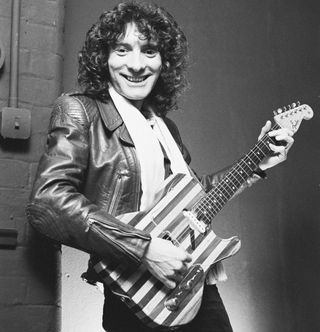

Albert Lee
Albert Lee (b 1943) is another major hero of the Telecaster, who combined many styles in his playing, but focused mostly on country rock. Nicknamed Mr Telecaster, Lee was born in London to a Romani family, and became known for his astonishingly virtuoso hybrid flatpicking, also using other right-hand fingers. Lee moved to LA in 1974, and has since played with many famous artists, including the Everly Brothers, Emmylou Harris, and Eric Clapton.
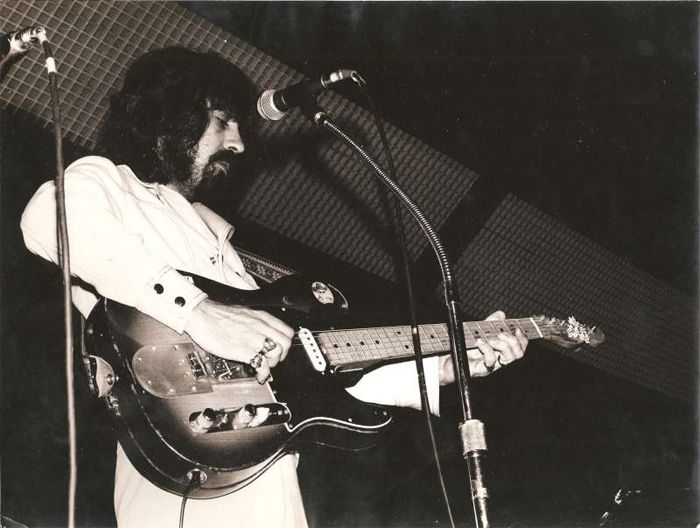

Clarence White
Clarence White (1944 – 1973) was a prominent guitarist in the bluegrass and country genres, who pioneered both the use of the use of the acoustic guitar as a lead instrument and the Telecaster in bluegrass. He was a member of The Byrds from 1968 until 1973, regularly duelling on his Telecaster with Roger McGuinn on his 12-string Rickenbacker. He invented the B-Bender in 1968, together with drummer and guitarist Gene Parsons. It B-Bender makes it possible to imitate the sound of a pedal steel guitar.
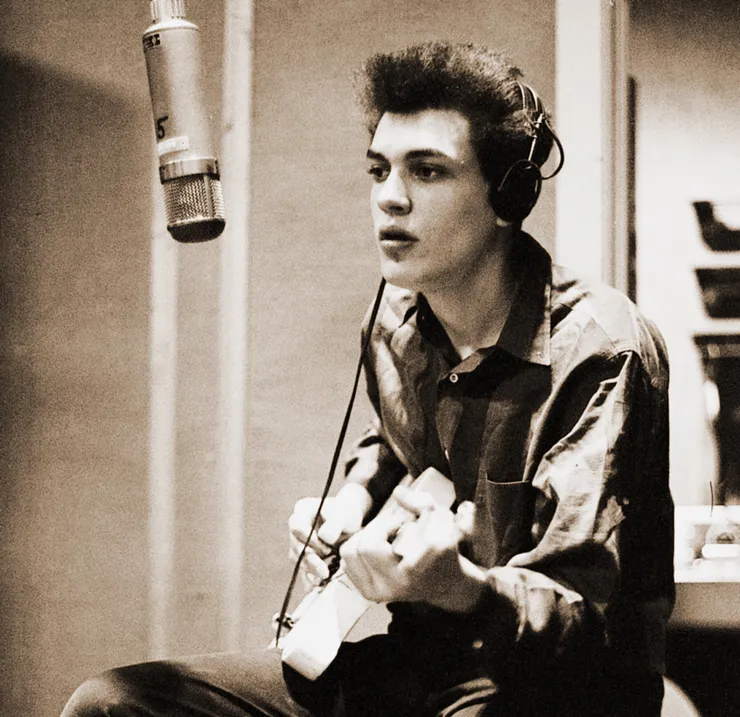

Mike Bloomfield
Another important guitar player influenced by the blues, and crossing over into folk and rock, was Mike Bloomfield (1943 – 1981). Originally from Chicago, Bloomfield was during the sixties regarded as the best white American blues player, and a member of the Paul Butterfield Blues band and The Electric Flag. He also worked extensively with Al Kooper, and as a session guitarist, and released several solo albums.
Bloomfield played Les Pauls and many other guitars, but became famous for a white 1964 Telecaster that he used on the classic debut album by The Paul Butterfield Blues Band (1965), and on Bob Dylan’s classic Highway Revisited (1965). Most legendarily, Bloomfield played his white Telecaster during Dylan’s historic set at the Newport Folk festival in 1965. It was Dylan’s very first public electric performance and generated a lot of controversy.
BRITISH TELECASTER GUITARISTS
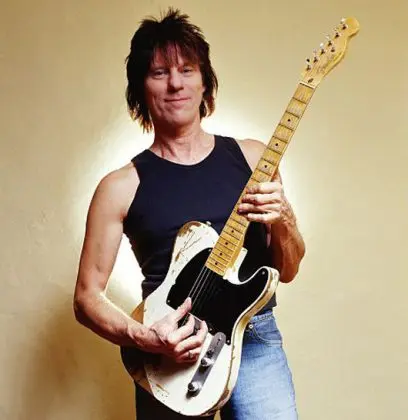

Jeff Beck
Meanwhile, over in Great Britain, there were several pioneering guitar players who were strongly influenced by the Telecaster, although few of them used the instrument exclusively. While playing with the Yardbirds, Beck bought a white swamp ash 1954 Esquire. The body of the guitar had a forearm and stomach shape cut, similar to the Stratocaster. Beck later also acquired an ash 1959 Telecaster that he used as a backup.
Beck used a modified 1959 Telecaster called “Tele-Gib” on his signature track “Cause We’ve Ended as Lovers,” on his Blow by Blow (1975) album. The Tele-Gib was modified by Seymour Duncan, who installed two Gibson PAF humbuckers.
In 1966, Beck gave his 1959 Telecaster to Jimmy Page, when the latter took over from him at The Yardbirds. Page used the album for all his guitar parts on Led Zeppelin’s first album. Although Page switched to a Les Paul for Led Zeppelin’s second album, he kept his 1959 dragon Telecaster for a while, and used it occasionally in the studio, most famously for his solo on “Stairway To Heaven.”
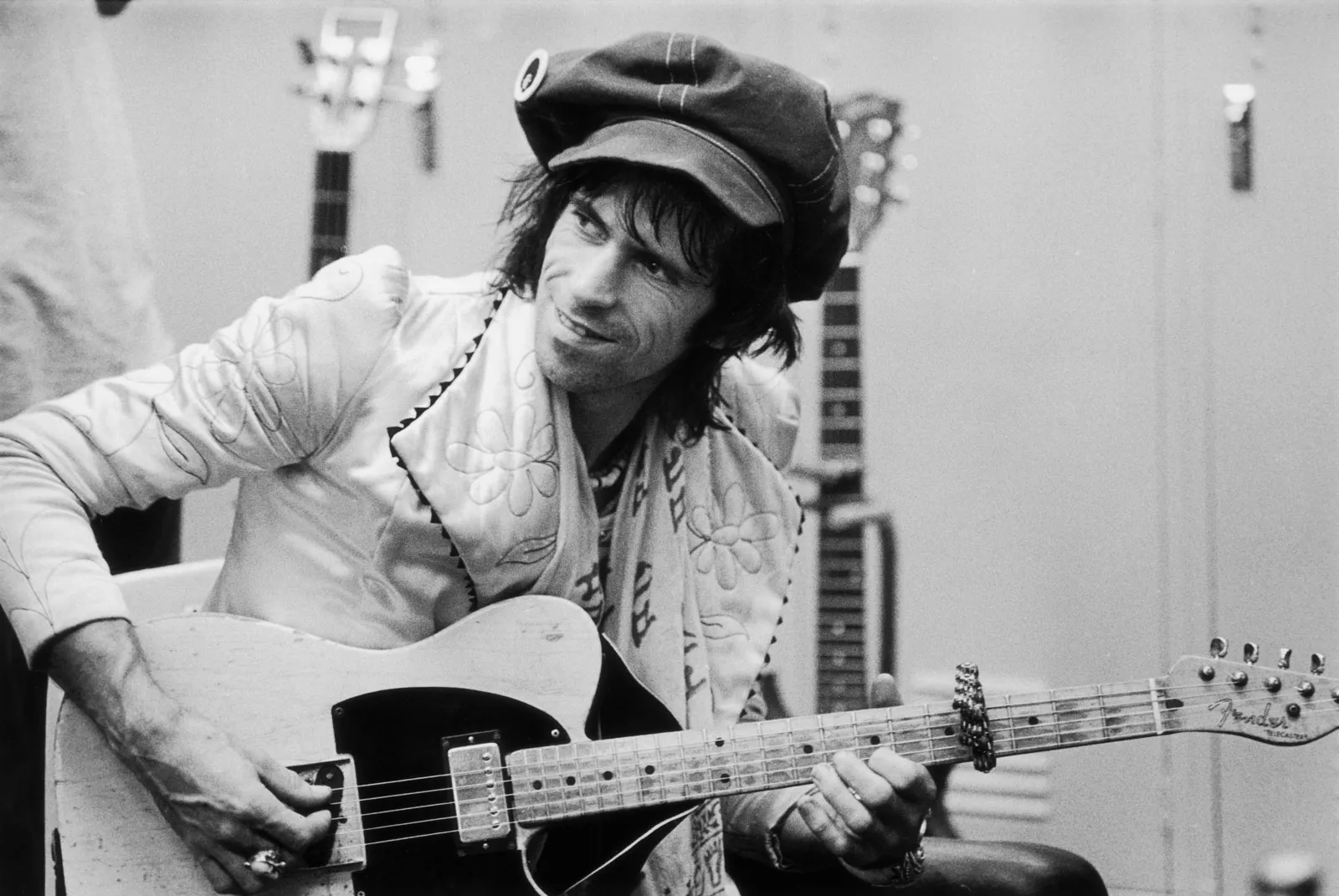

Keith Richards
Keith Richards is another legendary guitarist whose style owes a lot to the Telecaster. Although Richards owns over 3000 guitars, his main guitar is a butterscotch 1953 Fender Telecaster. He calls it Micawber, the name of a character in the Charles Dickins novel David Copperfield. The guitar’s bottom string is missing, with the five remaining five strings, tuned to open G, ie GDBGD, which is the tuning of the 5-string banjo. The Telecaster is perfect for Richard’s expressive style of guitar playing, in which he alternates between choppy syncopation and letting his strings ring, with him interweaving his parts with the other guitarist in the band, in an approach influenced by Chicago Blues.
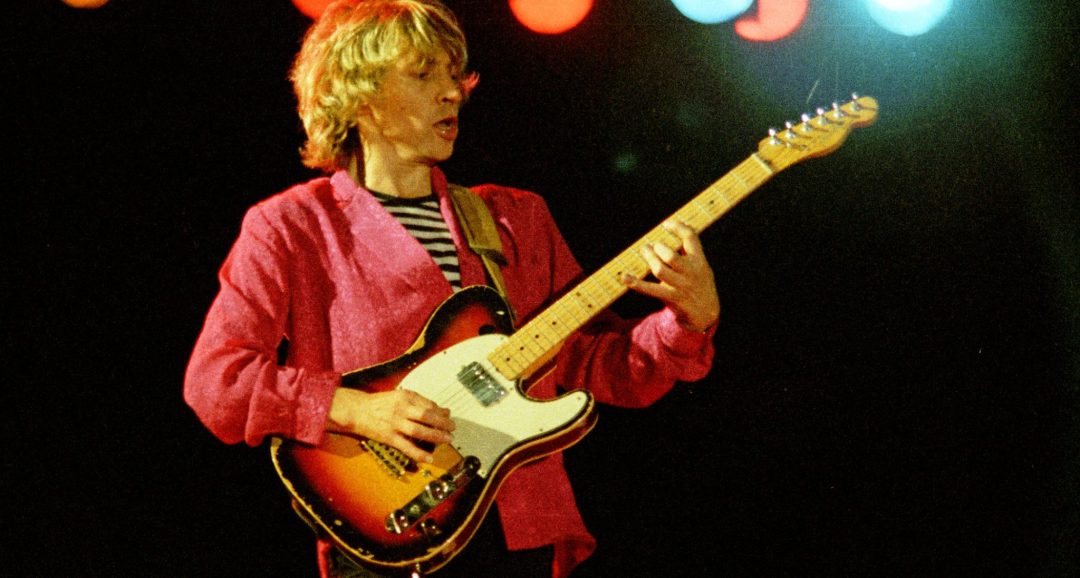

Andy Summers
Another famous guitarist for who the Telecaster was a crucial part of his style is Andy Summers (b1942). In the early seventies he bought a beaten-up 1961 Telecaster, which had been extensively modified by its previous owner, including the fitting of a PAF humbucker neck pick-up, a toggle phase switch, and a built-in overdrive unit controlled by a third knob at the front.
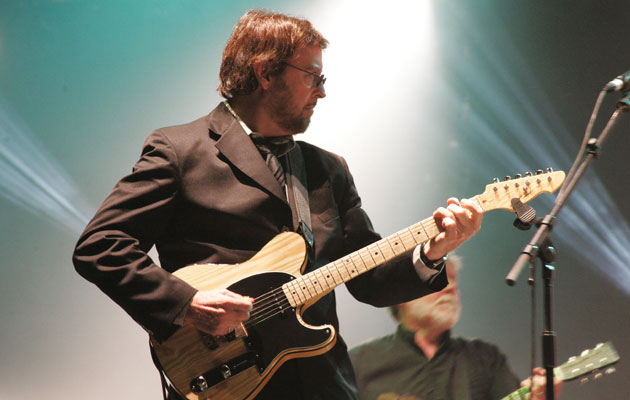

Jerry Donahue
Another Telecaster legend who earned himself a nickname was Jerry Donahue (b.1946) aka “Bendmaster of the Telecaster.” Originally from New York, Donahue became most famous for his work with
British folk bands Fotheringay and Fairport Convention. Donahue, who has been unable to play since a stroke in 2016, was most famous for his extremely musical and lyrical playing, often using extreme string bends. Donahue was a member of The Hellecasters, a band featuring three Telecaster players, the others being Will Ray and John Jorgenson.
AND FINALLY…
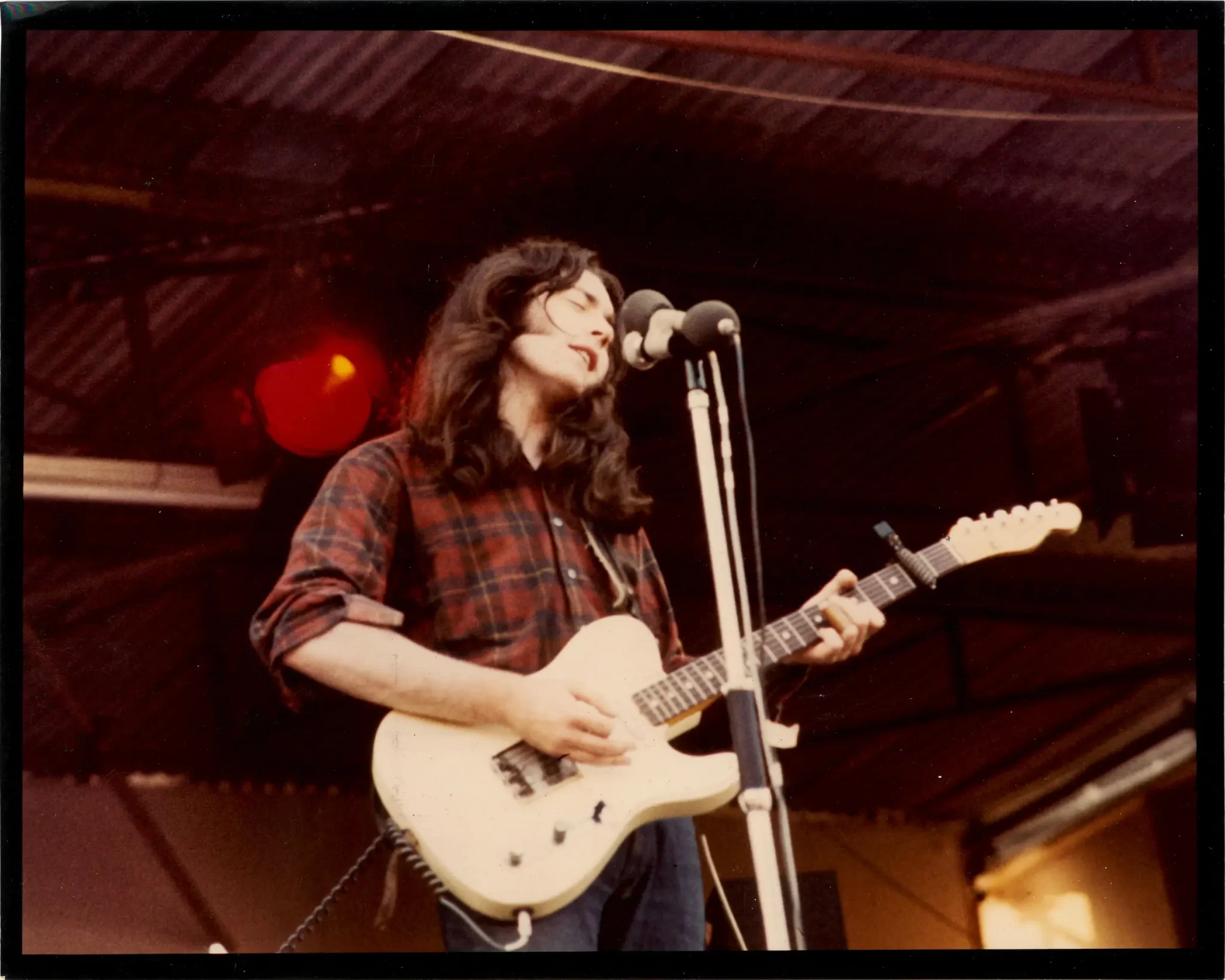

Rory Gallagher
We don’t have much space here to go into all Telecaster guitarists who changed music, but quick, honourable mentions have to go to a number of important players.
For most of his slide playing the great Rory Gallagher (1948 – 1995) used a white 1966 Telecaster, and later a black late fifties Esquire that also had a neck pick-up, which in essence made it a Telecaster.
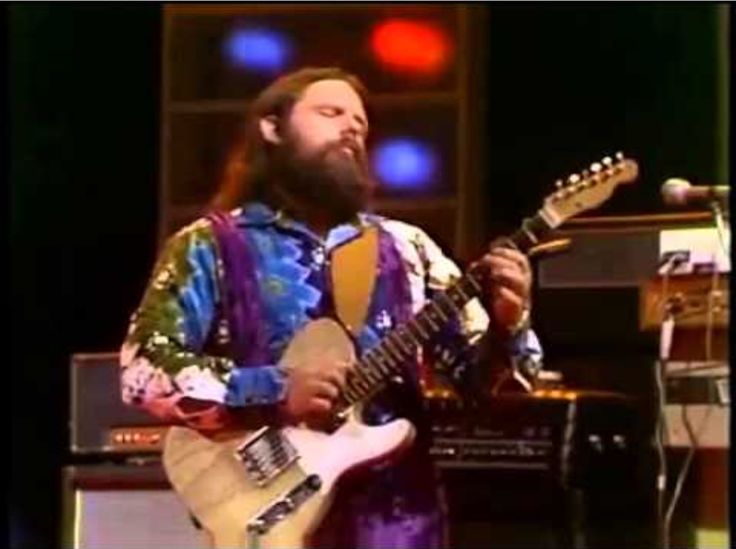

Denny Dias
Steely Dan’s Denny Dias played a heavily modified 1972 Telecaster, with two humbuckers and a Stratocaster bridge, which contributed to a seventies trend to fit humbuckers on Telecasters.
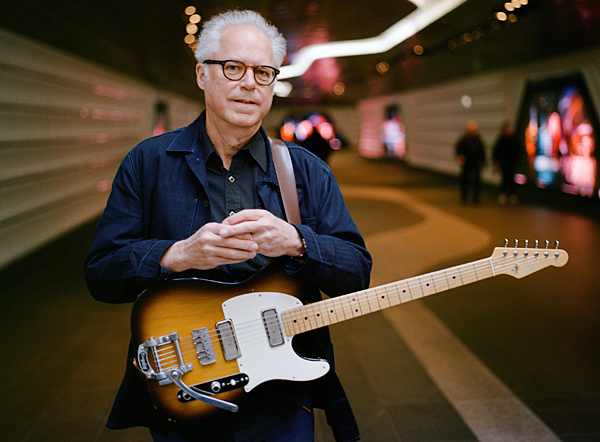

Bill Frisell
Jazz greats like John Scofield, Larry Carlton, Bill Frisell (b.1951) and Robben Ford (b.1951) are known for using Telecasters. Famously, Frisell owns several heavily modified Telecasters and Telecaster-type guitars, that are ideal for his highly original, expressive style, while Ford discovered the Telecaster later in his career. Ford’s 1960 Telecaster has become legendary, and graces the covers of two of his albums, Blue Moon (2002) and Pure (2021).
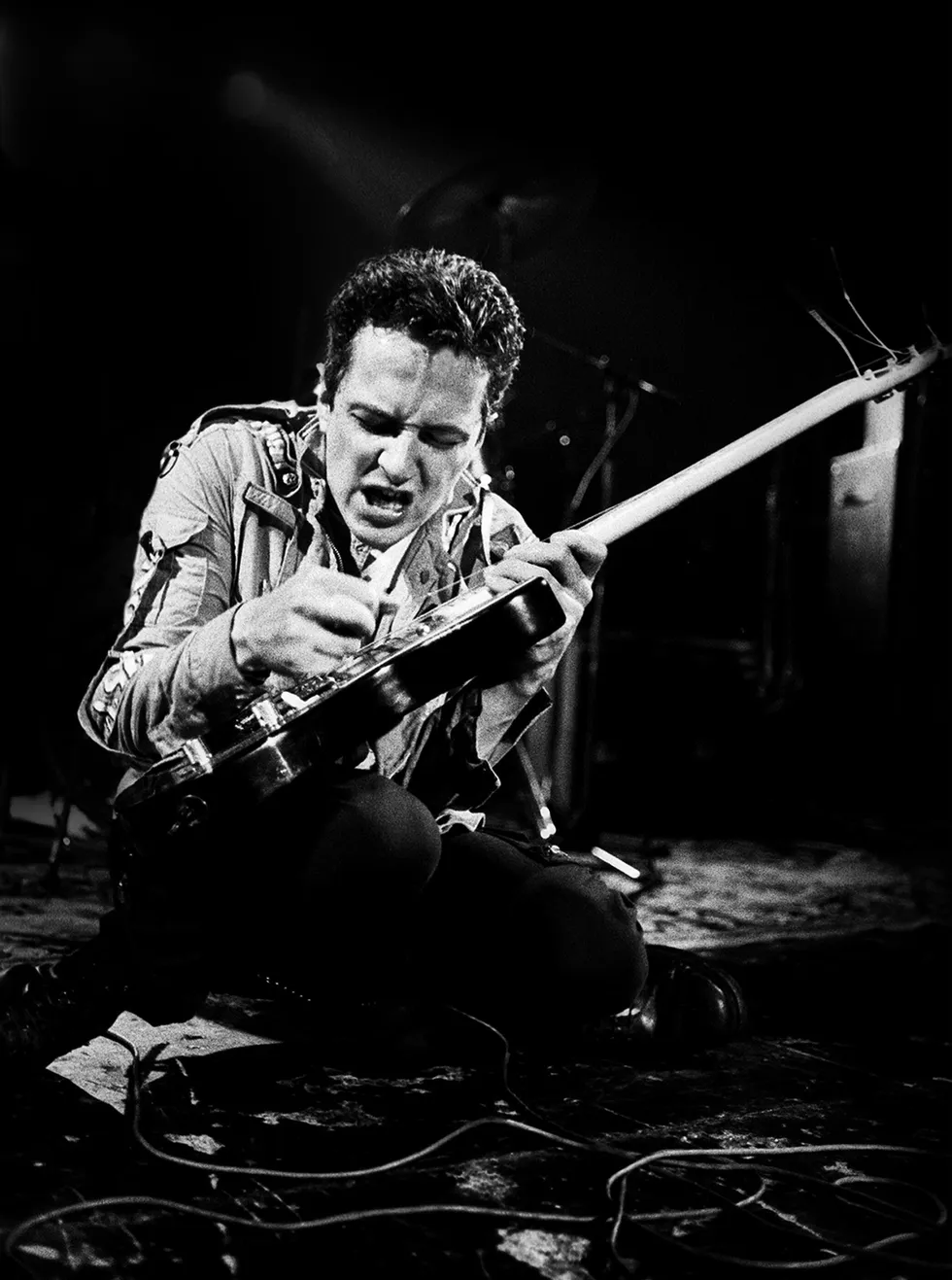

Joe Strummer
Joe Strummer pioneered the Telecaster in punk rock with The Clash, particularly on London Calling (1979), and Chrissie Hynde’s Telecaster is one of the main foundations of the music of The Pretenders. Rick Parfitt and Francis Rossi of Status Quo both played Telecasters. Radiohead’s Johnny Greenwood owns several Telecasters, and put in particular a Telecaster Plus with Lace Sensor pickups to extensive use on the band’s albums and his soundtrack albums.
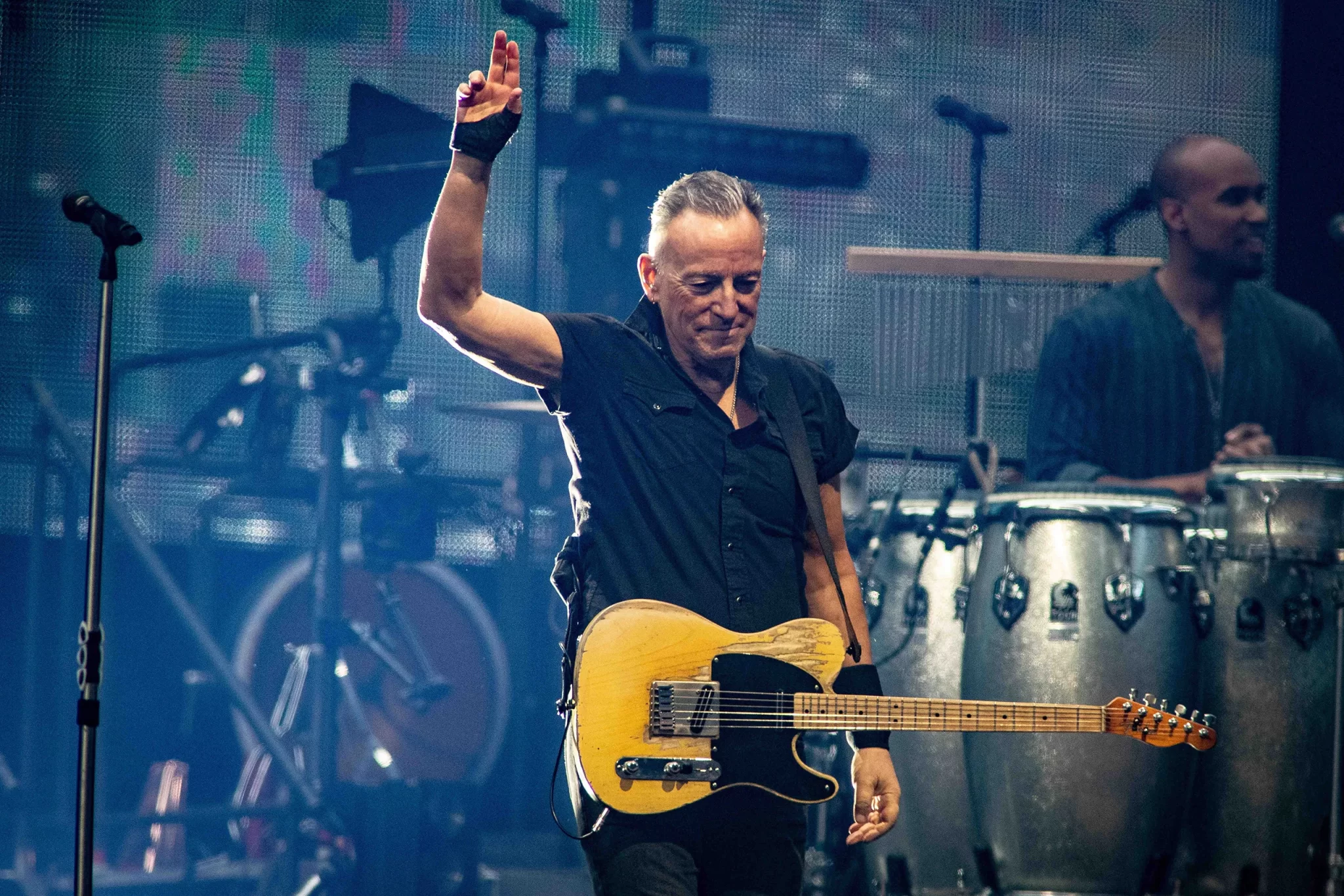

Bruce Springsteen
Bruce Springsteen is famous for using a Telecaster, and the cover photo of Born To Run (1975) contributed to making the instrument widely accepted as a cool rock guitar. Jim Root has since 2007 been using a Telecaster signature mode with heavy metal band Slipknot.
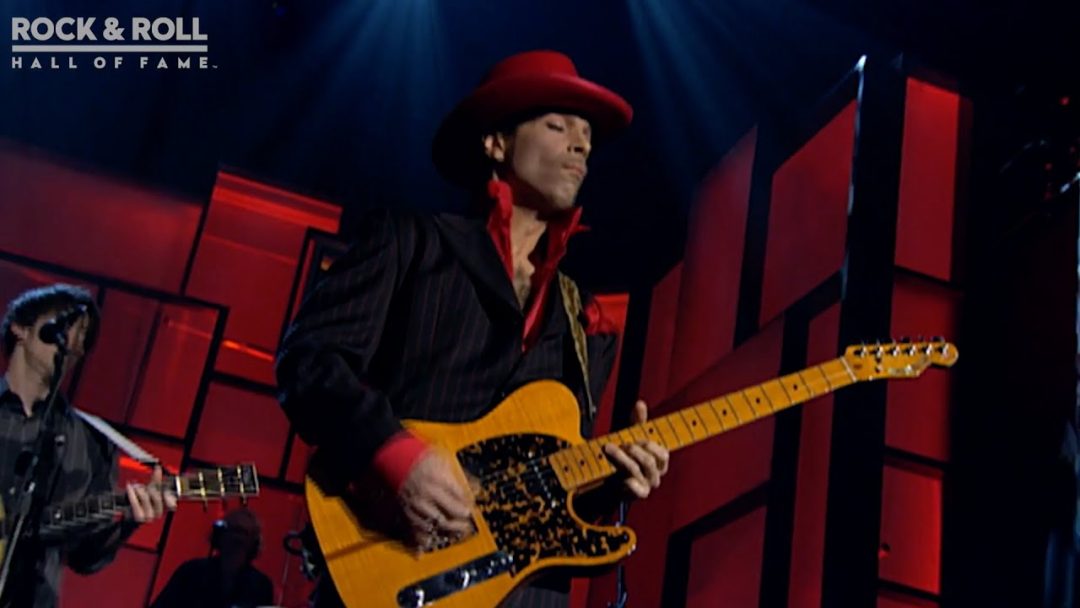

Prince
Countless other great players regularly used or use a Telecaster, including David Gilmour, Alex Lifeson, Joe Bonamassa, Keith Urban, Mark Knopfler, Joanne Shaw Taylor, and Prince.
During the 2004 ceremony for George Harrison’s Induction in the Rock and Roll Hall of Fame, Prince joined a stellar band with Jeff Lynne, Tom Petty and Steve Winwood for a performance of “While My Guitar Gently Weeps.”
Prince stole the show with a spectacular solo played on a Hohner Madcat Telecaster copy. The solo has gone viral on YouTube, and has ingrained the Telecaster’s iconic image as one of the coolest guitars in the world in the minds of millions of people.
At the end of his performance, as he walks away, Prince throws up his Telecaster, and it never seems to come down again. It truly is a magic guitar…