
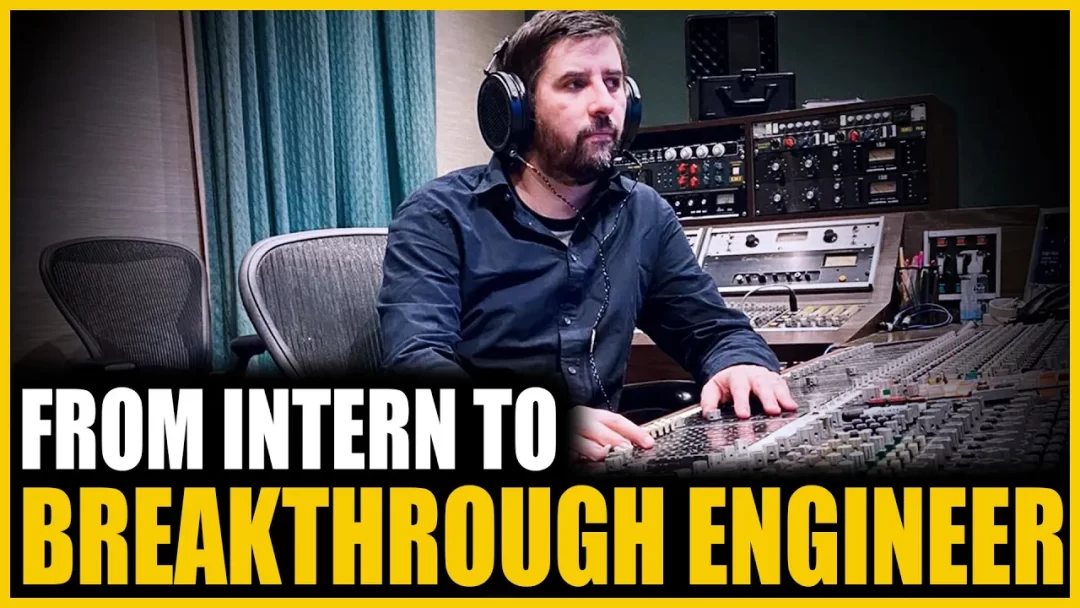

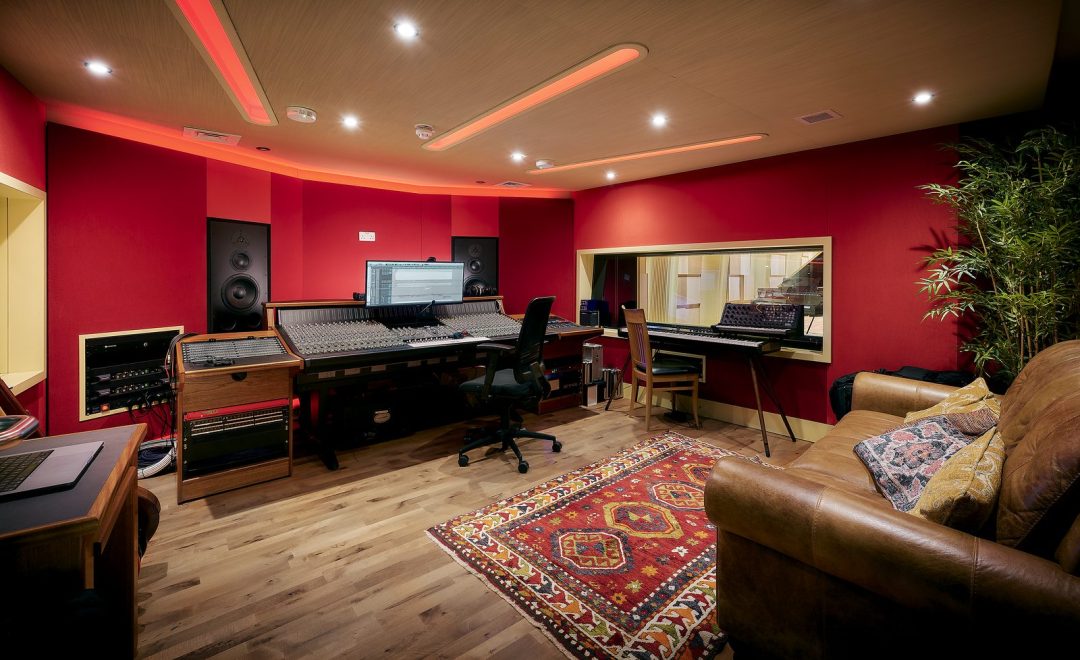
When you walk into the control room at World Heartbeat Studios in London, the first thing you notice, before the SSL Origin’s glowing meters or the patch-bay spaghetti, is the calm assurance of the man behind the desk. Robbie Nelson is now the studio’s manager and head engineer, yet his path to that swivel chair began more than two decades ago on the other side of the room, literally wiping coffee mugs and labelling tape boxes as a runner at the legendary Wessex Studios.
Baptism by Fire at Wessex
Nelson joined Wessex in 2001, just as the revered north London complex was approaching its final curtain. Far from a slow fade-out, the studio’s last years were incandescent. Producer Mike Hedges had moved his Dark Side of the Moon-era EMI TG Mk IV console into the room, parking it beside an E Series SSL. For a 20-something kid fresh from a music-tech course, it was sonic nirvana and a crash course in high-pressure engineering.
Only six months in, Nelson was thrust behind the glass when Hedges was stranded in Dublin finishing sessions with U2. A full string date was booked, the clock was ticking, and the only person available to run Pro Tools and place microphones was the new runner. With arranger Sally Herbert guiding him and a sympathetic tape op at his side, Nelson cut his engineering teeth the hard way. “You sink or swim,” he recalls. “Luckily, I survived.”


Two Decades at RAK Studios
When Wessex finally fell to London’s relentless property boom, “like so many good studios, flats now,” Nelson sighs, he moved across town to RAK. Nominally a freelancer, he spent nearly 20 years as part of the furniture in the family-owned facility, a place he describes as “home, not corporate.” While others chased the latest DAW upgrades, RAK quietly held on to its vintage Neves, APIs, and E Series SSLs, decisions that, Nelson jokes, were made partly because founder Mickey Most “didn’t want to spend the money on anything else.” That thrift paid artistic dividends when the analogue renaissance arrived, producers flocked back for the sound and the vibe, and Nelson was there to capture it.
RAK was also where he forged a lasting working relationship with the Rolling Stones. What began as a low-key session in Studio 2, “probably the smallest room they’d been in for years,” he laughs, turned into years of overdubs, archive rescues, and new recordings. Nelson helped digitise and finish unheard outtakes for the Tattoo You reissue, then watched the same process inspire Ronnie Wood and Rod Stewart to resurrect classic Faces material. “You forget who you’re talking to until you tell Mick Jagger you need one more take,” he says. “But that’s exactly why they hire you, they don’t want yes-men.”
On the Road and in the Box
Studio loyalty never stopped Nelson from roaming. He logged time as a guitar tech with Rough Trade indie darlings The Delays, travelled between London and Paris to track Jarvis Cocker’s first solo album, and endured a transatlantic “three-day kick-drum mix” for British multi-hyphenate Labrinth. The latter, he insists, was worth every obsessive minute. The song Misbehaving ended up powering an Apple keynote and remains Nelson’s proudest mix.
Though capable of working entirely in the box, he still prefers a hybrid approach, summing stems through a small SSL at his attic-room mix space or, better yet, pushing real faders on World Heartbeat’s Origin. “Moving a knob a millimetre with your fingers beats mousing a plug-in any day,” he says. “And you spend less time staring at waveforms and more time listening.”

Coming Full Circle at World Heartbeat
After two decades of freelancing, Nelson recently accepted the role of studio manager and chief engineer at World Heartbeat, a community-focused music charity that pairs a state-of-the-art facility with free tuition for young players. It is, in many ways, the perfect culmination of his trajectory, big-room expertise married to an environment that still feels like “home.”
He arrived fresh from producing Manchester indie newcomers Better Joy alongside his longtime mentor Mike Hedges, a project tracked between the Isle of Wight’s Chale Abbey and Liverpool’s gear-lover’s haven, Soundhouse. These days, when he’s not chasing Stones overdubs or triple-checking Labrinth stems, Nelson can be found mentoring the next generation, demystifying microphone placement and reminding fledgling engineers that sometimes the studio gods demand a little baptism by fire.

The Art of Not Standing Still
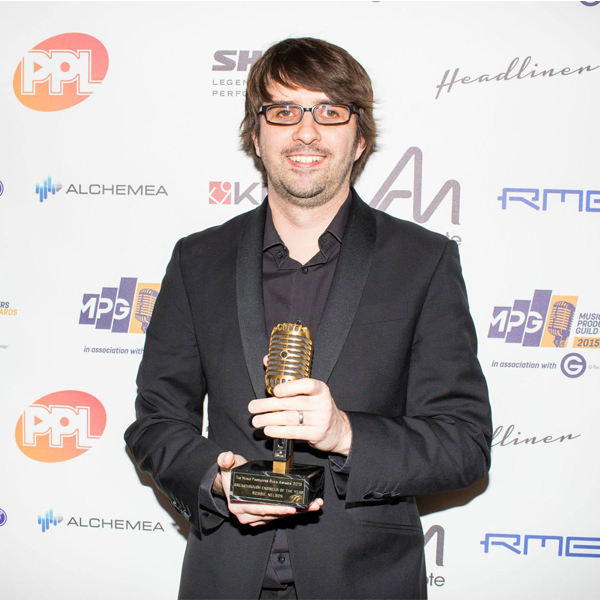
Asked what keeps him motivated after countless sessions, Nelson points to the variety. One month it’s a 30-piece string date, the next, a sweaty rock band or a pop super-producer’s sonic jigsaw puzzle. And although London has lost “80 percent of its really good studios” since his Wessex days, he believes the tide is turning, thanks to hybrid rooms like World Heartbeat and die-hard survivors like RAK.
More than anything, Nelson remains a musician’s engineer, part technician, part therapist, always listening for the magic take. “After all,” he says with a grin, “we’re a blues band at heart, every session is about feel.” Whether coaxing character vocals out of Mick Jagger, layering labyrinthine string parts for Labrinth, or handing a pair of headphones to a teenager cutting their first demo, Robbie Nelson’s career is proof that passion, humility, and a willingness to dive in head-first can still carry you from runner to the big chair, and keep the music rolling long after the red light goes off.