
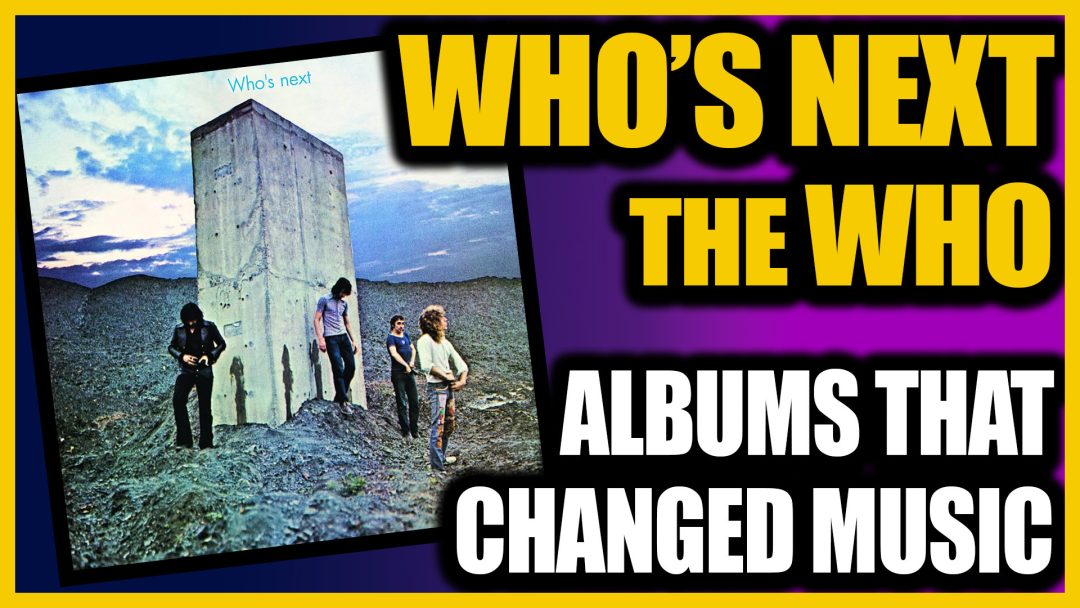

In the wake of their groundbreaking rock opera, Tommy, Pete Townshend and the Who spent most of 1970 teasing their next project to the press – the ill fated Lifehouse.
The project was a massive undertaking that intended to bring together music, film and live performance through a post-apocalyptic science fiction narrative. The band spent months demoing, performing, recording and re-recording songs intended for Lifehouse. But by the spring of 1971, the film project had been abandoned and the remnants were repurposed as the band’s 5th studio album, Who’s Next. Coming out of the ashes of the Lifehouse project, the album received immediate popular and critical acclaim. With a powerhouse collection of innovative songs and sounds, Who’s Next, is now largely regarded as one of rock history’s greatest albums.
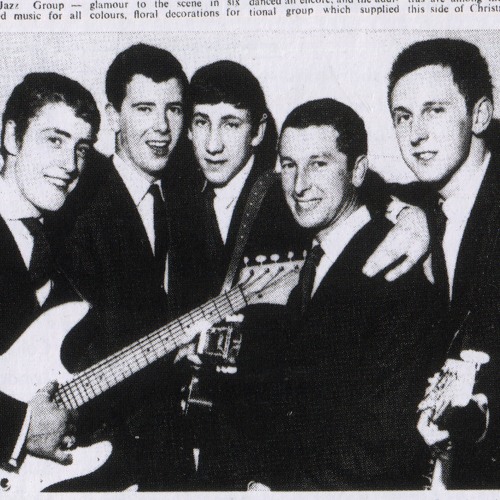
The Who were formed in the early sixties in London but three of its members had actually grown up together in the fifties. Roger Daltry, John Entwistle and Peter Townshend had all attended Acton County Grammar School together. Entwistle and Townshend had played together as early as 1959, in a Trad-Jazz group called the Confederates. Although he had moved to a new neighborhood by the early sixties, Daltry ran into Entwistle unexpectedly one day, and invited him to play with his band the Detours. The pair brought in Townshend soon after. By 1964, they had recruited Keith Moon on drums and were playing under the name The Who.

The Who’s rise to popularity came through London’s Mod scene, which embraced their high-energy and wild stage shows. Their first single “I Can’t Explain” hit the UK Top 10 in 1964, and was followed by several more hit singles which reached the top 5 in the UK – “My Generation,” “Substitute” and “Happy Jack.” While the band did not have a huge presence in the US at this time they did start to get a little bit of traction on the American charts with these singles. In 1967, their single “I Can See for Miles” actually hit the top 10 in the US.
While The Who had established themselves as a major rock act in the UK (with some US popularity) by the late sixties, it was really their 1969 concept-album, Tommy, which catapulted them into international stardom. In a time when much of rock music aimed to be unique and progressive in some way, The Who became leaders of this sort of artistic, forward-looking creativity. Tommy was a rock opera – it told a cohesive story through its songs, including dialogue and all the pieces were linked together through recurring musical themes and leitmotifs. They toured the album after its release to critical and public acclaim. With such success comes tremendous pressure, and the band felt that pressure to follow up with a project that was even more impressive and groundbreaking. This project was Lifehouse.


Lifehouse was Petetownshend’s idealistic vision which never truly came to fruition. This project was envisioned as a grand sci-fi film set in a post-apocalyptic future Earth. In his autobiography, Townshend described it as “a modern retelling of Aldous Huxley’s Brave New World.” The film was to feature live concert footage of The Who and would culminate in the Lifehouse concert participants vanishing in a musical rapture. This represented a rejection of a corrupt, technology-driven future as the audience discovered “the sound of the universe as a single note.” The band teased ideas about the concept to the press, and they even held a series of concerts at London’s Young Vic Theatre. However, by 1971, the film concept was abandoned, and the songs originally meant for it were instead compiled into the studio album Who’s Next.
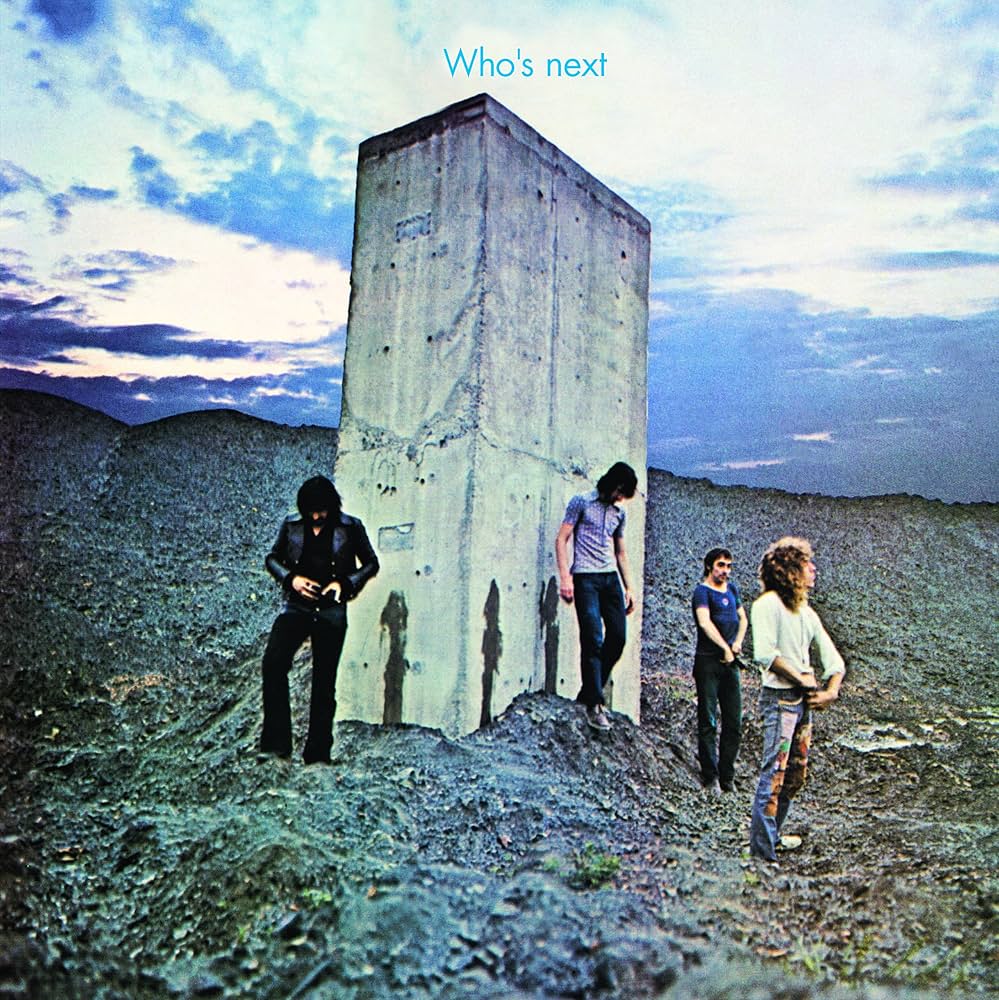
While Who’s Next does not fully retain the original script or narrative of the Lifehouse project, we can see its echoes in the album artwork and music. The album cover features the band standing around a large concrete object, set against a backdrop of a vast spoil tip or slag heap. The landscape evokes post-apocalyptic imagery, reminiscent of Townshend’s vision in his Lifehouse script— “a teenage wasteland”. We can also see the slagheap representing the failed dreams of industrial ambition. Certainly, it looks to other science fiction references in failed grandiose dreams, as can be seen from its resemblance to the monolith from “2001: A Space Odyssey.” In fact, photographer Keith Russell initially photographed the band reenacting the apes’ awe in the film when exploring the monolith. While the monolith in the film symbolizes progress and the development of mankind (appearing during pivotal moments in evolution), the final album cover takes a different approach. The photograph chosen for the album cover instead shows the band members urinating on the pillar.

“Baba O’Riley”
The chorus of “Baba O’Riley” refers to a “teenage wasteland,” a concept attributed to the Lifehouse plot by Townshend in 1971. As the opening track of Who’s Next, heavily features synthesizers, envisioned as the backbone of the Lifehouse project according to Townshend’s 1971 Melody Maker interview. He also explained that the rest of music in the film was expected to sound similar to “Baba O’Riley.” The song references in both sound and title, the minimalist composer Terry Riley and Indian spiritual leader Meher Baba, reflecting Townshend’s interests in simplicity and reduction.
“Bargain”
“Bargain” begins with a gentle acoustic guitar part. It is a love song influenced by Indian mystic Meher Baba, interpreted by Townshend as a devotion to God. The lyrics express a willingness to sacrifice everything to find the subject of the singer’s love, perceived as a bargain. As the song progresses, the energy increases with Keith Moon’s dynamic drum fills and Townshend’s rhythmic guitar chords, leading into Roger Daltrey’s powerful vocals. The song also features an ARP synthesizer used for solos and backing alongside Townshend’s guitar solos. The song also went through as many as 9 recorded versions between April and June of 1971 leading up to the final recording of Who’s Next.
“Love Ain’t For Keeping”
“Love Ain’t for Keeping” is the shortest song on Who’s Next, clocking in at only two minutes and ten seconds. While a harder rock version of the song exists, the song, as recorded for the album, is one of its lighter tracks and notably does not feature synthesizers, unlike many others on the record. This love song was originally intended for the Lifehouse projects and themes of sharing love and human connection to nature.
“My Wife”
Unlike the other songs on the album, “My Wife” was never written or intended for inclusion in the Lifehouse project. It stands separately from the others – written and sung by bass guitarist John Entwistle.
“The Song is Over”
“The Song is Over” was, as the title indicates, originally intended as the concluding song for the “Lifehouse” project. It depicts events after police disrupt the Lifehouse concert, causing the audience to vanish.
“Gettin’ In Tune”
Another Lifehouse track, the lyrics for “Gettin’ In Tune” express frustration with superficiality, seeking to “get in tune to the straight and narrow.” The song fits right into the Lifehouse themes of exploring the social and spiritual power of music.
“Going Mobile”
In the Lifehouse script there is a sense of movement as the main protagonist, Ray, has to travel south from Scotland down to London to seek out his daughter (who has run away to the Lifehouse concert). However, they live in a post-apocalibity world in which the earth has been destroyed by pollution. Thus the song balances the the freedom given by the mobility of traveling across the land, with anxieties about the the polluted world (“I don’t care about pollution, I’m an air conditioned gypsy!”)
“Behind Blue Eyes”
According to Townshend, “Behind Blue Eyes” originated after a Tommy Tour concert in Denver, on 9 June 1970. After the concert, he had resisted temptation from a concert attendee, instead going back to his room alone. While there he began writing a prayer, which evolved into the lyrics of “Behind Blue Eyes.” Despite its potential real-life origins, the song was intended for the Lifehouse project. There are conflicting reports about whether it was envisioned as the “theme song” main villain, Jumbo or another character, Brick, who betrays his leader, Bobby, and struggles with his values. Regardless of which struggling character the songs depicts, the lyrics and sentimental longing of the music look towards a figure of a social outcast struggling with his place in the world (“No one knows what it’s like / To be the bad man / To be the sad man / Behind blue eyes,”).
“Won’t Get Fooled Again”
“Won’t Get Fooled Again” is one of The Who’s most lasting songs and memorable tracks from the album. It was intended for Lifehouse, but it has created a legacy far beyond its origins. It’s clearly an anti-establishment song but also disillusioned in its revolutionary call to arms. The lines “meet the new boss, same as the old boss” highlight the cynicism of wanting the world to change but not trusting that the new way is going to be any better. Townshend told Creem magazine in 1983 that he wrote the song as a reaction to the revolutionary talk of the hippies in the late sixties/early seventies, explaining that he felt like saying: “’Leave me out of it: I don’t think your lot would be any better than the other lot!” Musically, the song is one the band’s epic rock anthems of this era. It showcases all the band member’s strengths from guitar solos to soaring vocals. And most of all, it captures the spirit of its time. Despite its cynicism about the future, there is a clear call to learn from the mistakes of the past, and to not be fooled again.
Production details:
Because the music for Who’s Next evolved in such a complex manner, it’s hard to pinpoint exactly when work on the album began. Ritchie Unterberger posts that early versions of the songs “Pure and Easy” and “Going Mobile” were probably drafted by late October of 1970, since we have record of Townshend revealing songs under the working titles of “The Note” and “We’re Moving” to his bandmates. Unterberger also points out that many of these songs were likely written and recorded as demos using Townshend’s highly advanced home studio. By late 1970, Townshend was on his sixth home studio setup – which included two small rooms and a separate control room. It also housed a Bösendorf grand piano.
John Alcock (who later worked with John Entwistle on several solo albums) got the chance to see this studio setup and described Townshend’s forward-thinking approach: “Most musicians in those days either booked studios or had really simple, low-quality gear to record demos. Peter was one of the very rare musicians who wanted to extend this idea to studio-quality work for later inclusion in, or to form the basis of, tracks in the final album recordings. He was way ahead of his time, very knowledgeable, and had developed a keen interest in, and understanding of, hardware synths, together with building and running his studio for his songwriting purposes with the expectation that the could later use elements of this work in the final recordings.”
Likewise, Townshend expressed his own admiration for his setup on these demos saying: “The demos I made to accompany the Lifehouse film script I wrote in ‘71 are among the best I have ever produced. I had come fully to grips with working multi-track rather than bounce from machine to machine a la Phil Spector. I had managed to get a good tight drum sound in a room only ten feet by fifteen that was crammed with synthesizers, organs and a seven-foot grand piano.”
At least eight of the nine songs that end up on Who’s Next were demoed in this way. John Entwistle’s “My Wife” is the exception on the album. The concerts at Young Vic were held in February of 1971 and in mid-March the band flew to New York to record at the Record Plant. The Who’s manager at the time, Kit Lambert, was co-producing an album there, and the band was hoping to improve upon the quality of the demos they had made in Townshend’s home studio.
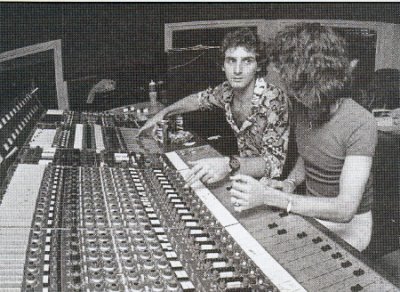

During these sessions, Jack Douglas (who would later go on to produce John Lennon and Yoko Ono’s Double Fantasy among many other iconic albums) was working as a young recording engineer. Jack recalled…”Kit Lambert was technically listed as the producer, but it was clear that Pete was in charge of the production. He could drive the band nuts with his directions, but also really got them ripping when they tracked. He would especially concentrate on whipping up Keith, because he realized that the band actually took its energy cues from Keith. The energy level was always so up there that many of the solos on the record were done in one pass on the tracking sessions. It really kept the trio sound together.”
While these are not the same recordings that appear on the original Who’s Next album, they do showcase the development of several songs in very near form to their final arrangement. “We Won’t Get Fooled Again” was likely one of the first tracks they recorded in the sessions. This song along with the Record Plant versions of “Gettin’ In Tune,” “Pure and Easy,” “Love Ain’t’ For Keeping” and “Behind Blue Eyes” were all released as bonus tracks on the Deluxe Edition of Who’s Next in 2003.
For several reasons the band re-recorded the album back in London – this time without the involvement of Kit Lambert. For the London sessions, the band reconnected with Glyn Johns, who had worked on their classic 1965 album “My Generation.” Townshend explained to Sounds magazine in 1971, “Glyn’s way of working is much more like a musician, Kit’s is more like a film director. I think that’s the only way to describe the difference. And I think we are at the point now where we’re doing a bit of our own direction, and we need a musician more than a director.”
At first the band recorded at Mick Jagger’s country mansion – Stargroves. The Stones had a 16-track mobile studio and the band recorded versions of several tracks including “Won’t Get Fooled Again” and likely “Going Mobile”. In many ways this was a trial run to see how the band and Johns would get along together while working on an album. The sessions did not result in any finished tracks for the album, but it did prove a successful working relationship between Johns and the Who.
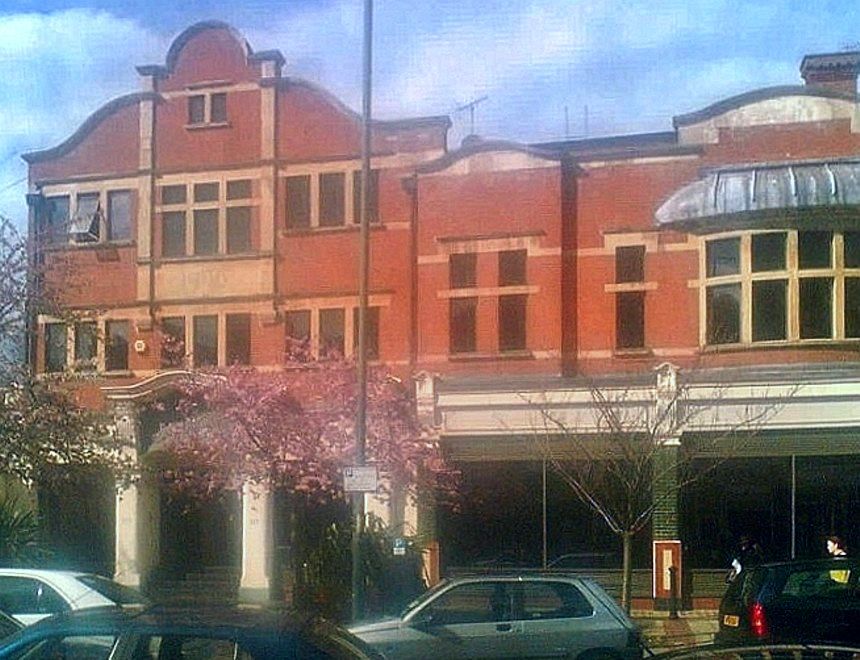

The band then moved to Olympic Sound Studios in London in mid April 1971, with the majority of the album being recorded between May and June. During this time, the final verdict was made to abandon the Lifehouse film project and focus on taking the best songs to create a studio album. Between all the demos, the recordings at the Young Vic, and Record Plant, Johns and the band had a strong basis to decide which songs would make the cut and the changes that would need to be made to bring the songs to their incredible final arrangements.
For instance, “Baba O’Riley” began its life as a 9-minute instrumental piece and was continually cut down to turn it into a rock song. At Olympic studios they paired it down to 5 minutes, and finalized the now-iconic synthesizer part. It was painstakingly created by playing a Lowrey organ that was fed through a synthesizer. Years later, while interviewed for In the Studio’s radio special on Who’s Next, Townshend would explained that the process began with: “…recording random sections of stuff onto tape, cutting tape up, re-recording bits of tape, cutting the tape up again and getting rhythms from it. I could do it fast. “Baba O’Riley” has something like two or three thousand edits in it – the master tape goes by and its all white. It’s just sticking plaster from start to finish. What was very interesting is the stuff that I was cutting out, I was sticking together on a reel to keep it tidy. That piece is very interesting in its own right. But what I then did is, I put a piano over the top, a guitar, a vocal, to make it sound a bit more like rock and roll.”
“Going Mobile” – a song that had been rehearsed, performed and recorded across many phases of the band’s progress – was also finalized in these session. In his meticulously researched book Won’t Get Fooled Again: The Who from Lifehouse to Quadrophenia, Richie Unterberger explains that the final version was created by having the band play live as a trio, and later overdubbing brass synthesizer riffs as “tasteful melodic interjections.” The guitar solo, with its wah-wah-like character, was created by patching Townshend’s electric guitar through an “envelope follower”
The Olympic sessions also brought in the talents of additional musicians including Dave Arbus who provided that unexpected and yet perfectly placed violin solo on “Baba O’Riley”. And Nicky Hopkins played piano for “The Song is Over and Getting In Tune.” The album was mixed at Olympic and Island studios.
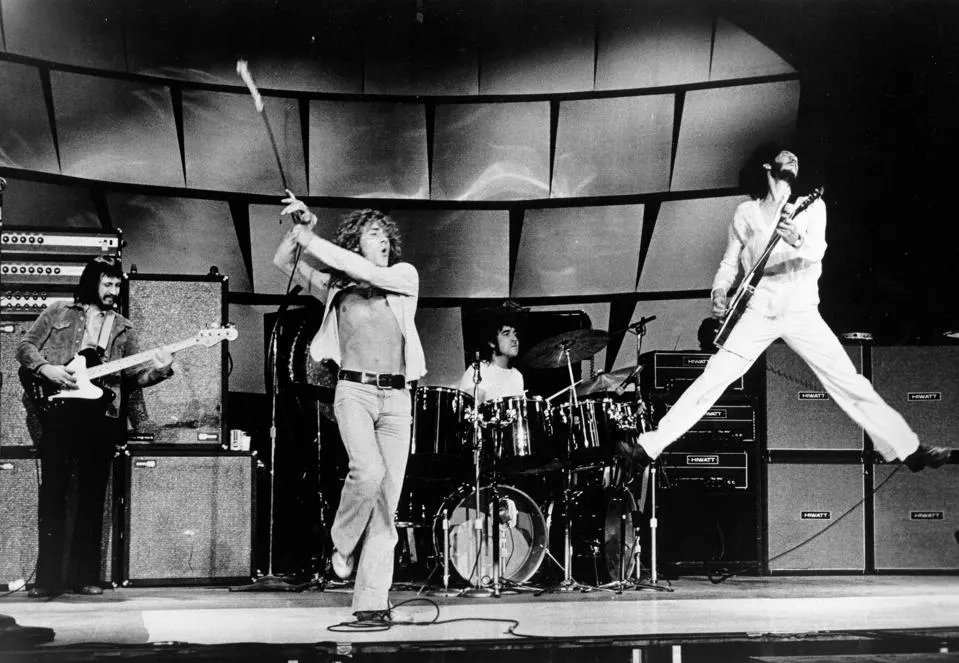

Release and Reception
Who’s Next was released on August 2, 1971 and Glyn John’s is credited alongside the band as co-producer for the album.
Often cited as the band’s greatest studio album, it received positive reviews early on…
Writing for the Village Voice in 1971, Robert Christgau described Who’s Next as “the best hard rock album in years” and praised the band saying that they achieved “the same resonant immediacy in the studio that it does live.”
The album hit number 1 on the UK Albums chart and number 4 on the US Billboard 200. The album boasts several songs which would become iconic Who tracks: ”Baba O’Riley”, “Behind Blue Eyes” and “Won’t Get Fooled Again.” “Behind Blue Eyes” hit the top 20 in the UK and charted in the US, and “Won’t Get Fooled Again” hit the number 9 spot in both the UK and the US.
Who’s Next is an incredible testament to the creativity and lasting vision of Pete Townshend and The Who. While it is not the only iteration of the Lifehouse project (Townshend since wrote a radio show in 1999, and created an online musical software system in 2007), the album is certainly the most iconic and musically impressive product of this initial science-fiction vision. Even without knowledge of the Lifehouse project, Who’s Next is a powerhouse rock album from 1971 – a year which produced many legendary albums from Zeppelin IV to Tapestry. It stands as one of the era’s most impressive musical offerings and several of these tracks remain key songs for the band’s performance repertoire to this day.
Written by Caitlin Vaughn Carlos