

Download The Multitracks: https://producelikeapro.lpages.co/baffadoro-breathe-out-form/
There are certain tools that become part of your musical life without you even really thinking about it. You just reach for them because they work. For me, IK Multimedia’s T-RackS has been one of those tools for a very long time.
I’ve been using T-RackS since the early 2000s, although, as Lorenzo from IK gently reminded me during our conversation in Modena, Italy, it actually goes back even further than that. T-RackS was first released in 1998, which means it has been part of the in-the-box mixing and mastering world for well over two decades.
Back then, a very common workflow was to get your mix sounding great, put T-RackS across it, hit it with an L2, and send it off. Haha. That was the world we were living in. However, what is interesting is that T-RackS has managed to stay relevant because IK has kept evolving it, not just by adding more processors, rather by understanding how people actually make music.
That was the big theme of this conversation: character, speed and creativity.
From Analogue Modelling To Creative Mixing
T-RackS 5 was built around the idea of accurate analogue gear modelling. Compressors, EQs, limiters and mastering tools were designed to give users the feel and behaviour of real hardware. IK’s approach has always gone deeper than simply recreating the front panel of a piece of gear.
As Lorenzo explained, IK had access to the real hardware and modelled the circuits in detail. However, the real magic is not only in the circuit model. It is in capturing the behaviour, the vibe and the musical effect of the box itself.
That is exactly what I love about their 1176 style compressor. Put it on a vocal and, yes, it compresses. However, it also adds grit, brightness and attitude. It does something beyond gain reduction. It brings the vocal forward. It gives you that feeling you get from the real hardware, where the unit is affecting the tone as much as the dynamics.
That is a huge part of why great analogue gear became legendary in the first place. It was never just about clean control. It was about what happened when the signal passed through the thing.
IK seems to understand that very well.


T-RackS As A Faster Route To The Sound
One of the biggest things I appreciate about T-RackS is that it often gets me to the result faster.
I do not want to stack three or four plug-ins when one well-designed processor can do the job. If a compressor adds the right tone as well as the right movement, that is not just convenient, it keeps the creative process moving.
That matters. Creativity has a timer on it. We all know that feeling. You hear something in your head, you start chasing it, and if it takes too long, the idea can disappear. A good plug-in should not slow you down. It should help you make the decision and keep going.
That philosophy is very clear in the newer T-RackS processors.


Joe Chiccarelli Vocal Strip: Air, Presence and Instant Placement
One of the processors shown in the video was the Joe Chiccarelli Vocal Strip. This is a perfect example of a tool designed to get a vocal into the mix quickly.
With a mostly raw vocal, the processor immediately put the voice where it needed to be. It added air, presence and polish without feeling like you were fighting a technical EQ.
That is important because the best vocal EQ decisions are often not as obvious as “boost the frequency you think you hear.” David Bianco and Jack Douglas both taught me that if you want more air, you do not necessarily grab 7k and crank it. Often, you go higher, sometimes way higher, and create a beautiful, gentle lift that opens the vocal without making it harsh.
That is what the air control on this kind of vocal processor does so well. It feels musical rather than clinical. It is not just “high frequency.” It is air.


Lo-Fi Punch: Making Perfect Sounds Feel Human Again
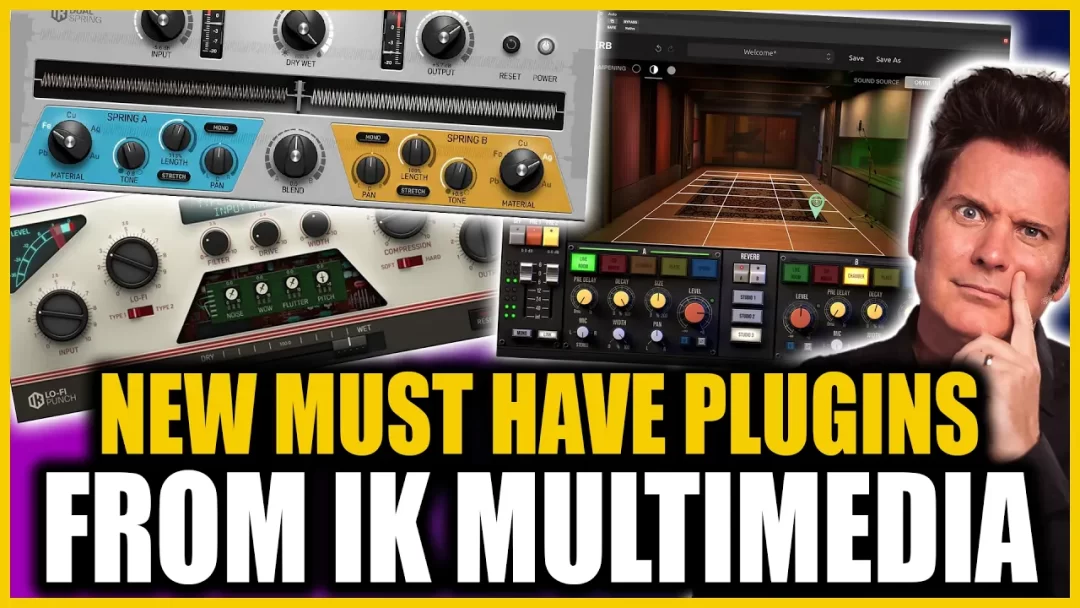
Another standout was Lo-Fi Punch, used in the demo on a bass bus.
This is one of those tools that makes complete sense in modern production because so many sources are now incredibly clean. Virtual instruments, samples and edited performances can be almost too perfect. That can be useful, however it can also make things feel sterile.
Lo-Fi Punch gives you a way to mess things up in a controlled, creative way.
It can act as a compressor, saturator, distortion box and bit crusher. It can get aggressive, however it also includes a dry and wet control, which is incredibly important. You can push the effect hard, then blend it back in until it gives you the character you want without overwhelming the original sound.
That parallel approach is one of the keys to using distortion creatively. You can create something extreme, then tuck it underneath the clean signal. Suddenly the bass has attitude, movement and a sense of life.
It is especially useful on bass, drums, synths and virtual instruments. Anything that feels too clean can benefit from a bit of dirt, movement and unpredictability.


Quad Saturator: Multi-Band Distortion With Movement
Quad Saturator takes the saturation idea further by splitting the signal into four bands and letting you process each band independently.
That alone is useful. However, the really interesting part is the modulation. You can modulate colour, drive and level, and you can make that modulation follow the envelope of the incoming signal.
In practical terms, that means the saturation can react to the performance. It can distort the transient more than the tail, or the tail more than the transient. On a snare drum, that opens up a lot of possibilities.
I have found myself using more saturation on snares lately. We spend so much time getting drum sounds tight, focused and powerful. Then the rest of the mix comes in and the snare can suddenly feel a little too polite. You may try bringing up room mics or overheads, however that can blur the picture. Saturating the snare directly can bring back aggression without losing focus.
It can make the snare feel angry.
That is exactly where a processor like Quad Saturator becomes useful. It is not just “distortion.” It is a way to shape excitement, sustain and attitude inside the mix.


Master Match X: Fast Mastering Without Killing Creativity
T-RackS has always been closely associated with mastering, and Master Match X continues that tradition.
The idea is simple. You choose a target genre or load a reference track, analyse a dense section of your mix, and the processor helps match the EQ and dynamics to that target. It also suggests a target loudness for the style.
What I like is that it does not stop there. You can still shape the result. You can push the compression harder or pull it back. You can make the tonal balance brighter or darker. You can add warmth through harmonic saturation and transformer style colour.
There are also useful mastering features such as stereo enhancement and mono maker, allowing you to keep the low end focused in mono below a chosen frequency.
For me, this kind of tool is incredibly useful when I am doing a mix-off or sending a mix to an artist. I will always mix the song exactly the way I want it, then separately create a mastered version so the artist can hear the energy and final presentation. T-RackS has been part of that process for years because it is fast, musical and easy to use.


Dual Spring: Taking Spring Reverb Beyond Guitar
The Dual Spring module is another example of IK adding creative tools rather than simply recreating the obvious.
Spring reverbs are usually associated with guitar amps, surf records and cabinets. However, Dual Spring is designed to bring that spring character to anything.
It uses two springs in parallel, with different materials, lengths, stretch controls and panning options. You can blend the two springs, pan one left and one right, make one darker and one brighter, and create a true stereo effect from something that traditionally might have been quite limited.
That is very cool.
It also looks right. The interface gives you a nod to vintage gear without going completely over the top. I am not a huge fan of plug-ins that spend all their energy making virtual screws look rusty. Give people the tool. Let them make music. That is what matters.


Sunset Sound Studio Reverb II: The Sound Of A Place
The other major part of the conversation was Sunset Sound Studio Reverb II.
This one is very close to my heart. I have made dozens and dozens of records at Sunset Sound. Some of the biggest records I have worked on were made there. It is one of those places that is not just a studio, it is part of recording history.
The first version of IK’s Sunset Sound Studio Reverb was already loved by a lot of users, and I had a personal connection to it because my miking techniques, EQ and compression were part of the original work in Studio 3. When I first heard it, I recognised the room immediately. It sounded like the way we had captured it.
With Sunset Sound Studio Reverb II, IK has expanded the concept significantly.
The goal is not just to give you a generic reverb. It is to give you the sound and behaviour of Sunset’s rooms, with more control over how the source interacts with the space.
Move The Source, Change The Room
One of the biggest new features is the positioning system.
Instead of being locked into one room response, you can move the sound source around the room using a grid. Anyone who has recorded in real rooms knows how much this matters. Moving a drum kit a few feet can completely change the low end. A source can bloom in one spot and disappear in another. Reflections change. Comb filtering changes. The whole personality of the room changes.
Sunset Sound Studio Reverb II gives you access to that.
Studio 1, Studio 2 and Studio 3 all include this positioning system. IK worked with the studio to define the usable recording areas, meaning you are not just moving a dot around an imaginary room. You are working within practical spaces that reflect how the rooms are actually used.
That is powerful because it lets you access multiple versions of the same room. In some ways, it feels like having several different rooms inside one plug-in.


Omni And Directional Sound Sources
Another important addition is the sound source dispersion control.
Some instruments are very omnidirectional. A snare drum throws sound in many directions. A guitar cabinet, on the other hand, is much more directional. It fires forward in a very specific way, with a very different relationship to the room.
Sunset Sound Studio Reverb II allows you to change how the source radiates into the space. That makes it both more accurate and more creative.
If you want a source to excite the whole room, you can do that. If you want something more focused, you can do that as well.
Again, this is the kind of detail that matters in real recording. The sound of a room is not just the room. It is the source, the position, the direction, the microphones and the way all of those things interact.
Dual Reverbs, Chambers And Creative Blending
Another huge addition is that Sunset Sound Studio Reverb II is now effectively a dual reverb plug-in.
You can load two different room or chamber responses and blend them together inside one plug-in. For example, you might combine a live room with a chamber, then control the balance, phase, pre-delay, panning and EQ independently.
That opens up some very creative possibilities.
You can create realistic room blends, or you can go much further and use phase relationships and size controls to create effects that feel more like sound design. IK includes creative presets that demonstrate this, including flange-like reverbs and unusual room combinations.
The size control is particularly interesting because it lets you stretch or compress the impulse response. Used subtly, that can help a reverb sit better in the track. Used more aggressively, it can create something quite unnatural and exciting.
As always, great power, great responsibility. Haha.
Thankfully, there is also an improved EQ section for each side of the dual reverb, which means you can carve space and stop the reverbs fighting each other.
Console Preamp Colour From Sunset
IK also modelled the preamp sections associated with Sunset Sound’s consoles.
You can choose between API, DeMedio and Neve style preamp colours, or switch the preamp section off entirely if you do not want the additional tone.
That is a smart addition because Sunset’s sound is not only the rooms. It is also the signal path. The consoles, the preamps, the way things hit the electronics, all of that contributes to the final sound.
Having the option to add that colour gives you another layer of realism and another creative choice.
Why This Matters
What I love about both T-RackS and Sunset Sound Studio Reverb II is that they are not only about nostalgia.
Yes, there is history here. Yes, there are classic rooms, classic processors and classic sounds. However, the real value is how these tools help you work now.
Modern production can be incredibly clean, fast and flexible. That is wonderful, however it also means we often have to put character back in. We need tools that add movement, colour, depth and imperfection in a way that feels musical.
That is what IK is doing here.
T-RackS gives you processors that can shape tone, dynamics, saturation and mastering quickly. Sunset Sound Studio Reverb II gives you access to the sound of one of the world’s great recording studios, with enough control to make it feel like a real creative space rather than a static reverb preset.
For someone like me, who knows and loves Sunset Sound, that is incredibly exciting.
These are the kinds of tools that let you move quickly, make decisions and have fun. That is what music production should be. Not staring at a screen for hours trying to make something feel alive, rather reaching for something that immediately gives you a feeling.
And when a plug-in gives you that, it becomes part of your process.
Have a marvellous time recording and mixing.
Warren Huart.
Download The Multitracks: https://producelikeapro.lpages.co/baffadoro-breathe-out-form/