

Hi everybody, hope you’re doing marvellously well.
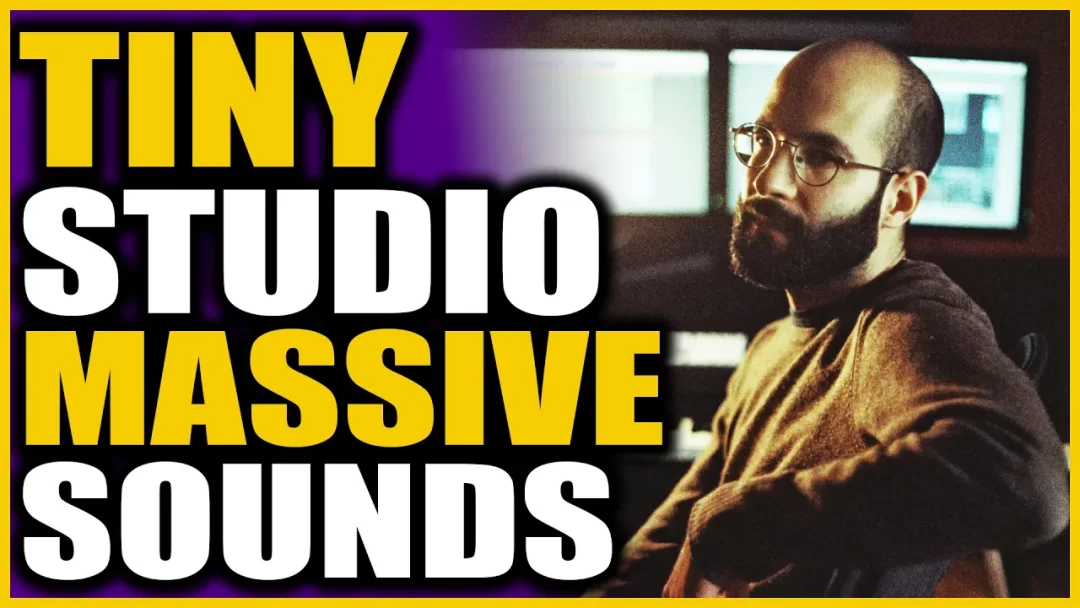
We’re in London visiting Daniel Sonabend, a composer, producer, sound artist and rather wonderful bass player. Daniel is one of those musicians whose work sits beautifully between worlds. His music blends a deep jazz background with contemporary composition, experimental production and a real love of texture, whether he is writing for film, television, albums or installation art.
His recent credits are hugely impressive. Daniel scored the Netflix Original feature film Le Masque for Passion Pictures, the three-part mini-series Cursed Gold for BBC Studios and Disney, and BBC’s documentary series Cold Case Investigations: Solving Britain’s Sex Crimes. He also co-scored the award-winning documentary feature Piano to Zanskaralongside Ernst Reijseger, who many will know from his work with Werner Herzog.
Beyond his own scores, Daniel has contributed additional music, arrangements and specialist performances to a remarkable range of projects, including Earthsounds for Apple TV+, narrated by Tom Hiddleston, The Louis Theroux Interviews on BBC2, and the BAFTA-nominated score for BBC’s House of Maxwell. As a collaborator, his work has appeared on major screen projects including Ridley Scott’s Napoleon, Marvel’s Loki, Crime 101 for Amazon, Obi-Wan Kenobi for Disney+, The Crown Season 6, the BAFTA-winning documentary Gun No. 6, and the Emmy-nominated Amazon Studios film Wildcat.
He has also worked on award-winning short films and brand campaigns, including John Lewis’ Moz the Monster, directed by Michel Gondry, which featured The Beatles’ Golden Slumbers performed by Elbow.
So, yes, Daniel is quietly involved in a lot of music many people have heard, even if they may not yet know his name.


A Studio Built for Curiosity
Daniel’s studio is small, cosy and absolutely packed with instruments, synths, oddities, tape machines, pedals and beautifully unusual sound-making devices. It is the kind of room where every object has a story, and more importantly, every object seems capable of becoming the centrepiece of a score.
He does not really have a name for this particular studio. His previous room was called Modal Studios, and it was around three times the size of this one. When he moved here, he had to squeeze everything in. What he lost in space, he seems to have gained in immediacy. Everything is within reach, organised in what he jokingly calls an “organised mess.”
That makes complete sense when you see how he works. Daniel’s process is built around exploration. He might start on piano, double bass, a synth, a homemade metal instrument, or something he picked up from a market stall because it made a beautifully strange noise.
For a film composer, that kind of curiosity is incredibly valuable. Sometimes the sound that defines a score is not the obvious one. Sometimes it is a tiny Turkish bağlama, a kalimba mounted into a drum head, a waterphone, or a plucked metal object that was almost dismantled before Daniel realised it had an enormous sub tone.
From Tel Aviv Jazz to London Film Scoring
Daniel’s musical background is just as layered as his studio. Drawing from his Iraqi, British and Jewish heritages, he grew up in the Tel Aviv jazz scene, quickly becoming a sought-after arranger, producer and instrumentalist.
He went on to study at the Rimon School of Jazz and Contemporary Music, then at the University of Westminster under acclaimed composer Shirley Thompson OBE and avant-garde musician Steve Beresford. There, he became known for his unique approach to sound design, orchestration, texture and emotionally forward-thinking composition.
Daniel moved to London around 14 years ago. He is half English, with family in North London, so the city felt like a natural place to land. He originally came more as a player, working as a bassist in bands and jazz ensembles. Over time, he moved into production, then composition.
That journey makes sense when you hear him talk. His background as a player is still central to the way he composes. His production brain is always active. His sound-design instincts are everywhere. Rather than separating those roles, he lets them feed each other.


The Double Bass as an Entire Score
The two biggest instruments in the room are Daniel’s double basses. One is a more expensive German bass, the other is a Hungarian student model that his partner found in an antique shop for around £100. Naturally, the cheap one has become one of his favourites.
It has a rougher, more uncontrolled character, with what Daniel describes as a Hungarian gypsy quality. For pizzicato, jazzier parts and more characterful playing, he often reaches for it over the more expensive bass. The German bass, by contrast, is the one he tends to use for more controlled bowed parts, especially when recording for film scores.
What is fascinating is how Daniel treats the double bass less like a single instrument and more like a whole sound design system. He uses pickups, microphones, contact mics, pedals, mono effects chains and stereo effects chains, creating multiple layers from a single performance.
That means one take can become several different textures. A dry mic signal might work in one scene. A contact mic layer through effects might work in another. A huge stereo processed layer might carry a different emotional moment entirely.
In Daniel’s world, a single double bass performance can become a palette.
It reminded me of Ry Cooder’s work on Paris, Texas. One instrument, used with absolute intent, can create an entire atmosphere. Daniel clearly loves that kind of minimal, spacious, emotionally focused scoring. He mentions films like The Revenant as examples of the kind of wide-open visual world where a single instrument can carry enormous weight.
Recording the Double Bass
Daniel keeps his recording setup fairly simple, or at least simple by his own standards. He is quick to say he does not consider himself a recording engineer, however he has clearly spent years refining what works for him.
His main microphone for double bass is a Coles ribbon mic, usually placed between the end of the fingerboard and the bridge. That gives him the woody, warm, muffled, vibey tone he likes. He says that mic alone can often be enough.
For more detail, especially bowed textures, he adds a pair of Neumann KM184s. These capture the air, bow noise and ghostly detail that can make a double bass feel truly cinematic.
That detail matters. When I record double bass, I want to hear what makes it different from an electric bass. I want the bow. I want the wood. I want the physicality. Otherwise, why not just use a regular bass guitar?
Daniel clearly feels the same way, however he also wants options. If a cue needs low end and warmth, he can lean on the Coles. If it needs air and tension, the 184s give him that extra layer.


Weird Instruments, Wonderful Results
One of the great joys of Daniel’s room is the amount of strange and characterful instruments dotted around it.
There is a bass ukulele, which sits somewhere between an electric bass and a double bass. There is a sardine tin instrument from Barcelona, which produces a tiny, slightly gamelan-like metallic scale. There are several kalimbas, including one mounted into a drum head, which became the main instrument in a magical realism film about a young girl escaping into an imaginary world.
There is a Turkish rebab, which instantly pulls the music eastward. There is a tiny Turkish bağlama, slightly unstable in tuning, however beautifully characterful. Daniel used it on an ITV series with composer Alex Baranowski, where it became one of the most interesting sounds in the score.
There is also a waterphone, or hydrophone, an instrument filled with water that produces eerie, whale-like tones when bowed or struck. Daniel bought it for a museum installation project about water, and it ended up becoming central to the score.
Then there is one of the strangest instruments in the room, a homemade plucked metal object built with an engineer friend. It came out of the process of dismantling another instrument, and when Daniel plucked the metal tines, he was shocked by the amount of sub. He told his friend not to touch it, added contact mics, and now it is being used as a bass sound in a feature film score.
That is the magic of Daniel’s approach. He is not simply collecting odd instruments for decoration. These things end up in real scores, often becoming the most memorable sounds.
Synths, Tape and Sound Design
Daniel also has a wonderful collection of synths and processing tools.
One standout is the Korg ARP 2600 mini. Daniel points out that the smaller version uses the same oscillators as the original ARP 2600, giving you that iconic sound in a much more affordable and portable format. He loves it mainly for the oscillators, and like any semi-modular instrument, it invites getting lost. You sit down to make one sound and suddenly twenty minutes disappear.
There is also a Selina string ensemble, an old string machine with brass and string sounds that do not sound remotely realistic, and that is precisely the point. It has a dark, slightly forbidding character. At one point I said it sounded like a Stanley Kubrick movie, which felt about right. Daniel uses weights to hold down notes, then processes the sustained sound through pedals and effects, turning it into a shifting texture.
His tape machines include a Revox, which he sees almost as an instrument, especially for tape loops and processing. There is also a Roland RE-201 Space Echo, which he uses more as an embellishing effect. The distinction is interesting. The Space Echo adds something. The Revox becomes something.
For preamps, Daniel keeps both a Neve channel strip and a Chandler TG channel. The Neve is smoother, while the Chandler is punchier. Naturally, he found it impossible to choose, so he kept both.


Daniel’s Path Into Film Scoring
Daniel’s path into film scoring started with student short films. He met a director at university, scored his first two shorts, and the work grew from there.
He later worked extensively with Natalie Holt, becoming her first assistant years before her career exploded with projects like Loki and Obi-Wan Kenobi. Daniel contributed tape loops, strange textures, double bass, synths and other left-of-centre elements.
That has become part of his identity. He often gets called when a composer needs something unusual, experimental or slightly outside the obvious musical language. He might not always be the main composer, however he is often the person brought in to add flavour, atmosphere and personality.
At the same time, Daniel is careful to keep his own projects alive. He believes it is essential to keep making music that reminds you of your own sound and identity. If you only work on other people’s briefs, you can lose track of what you actually want to say.
Installations, Scent, Nature and Sound Art
Alongside his film and TV work, Daniel has composed music and sound art for award-winning installations, often centred around themes of spirituality, scent and nature.
His installation work has been presented around the world, including at the Museum of the Future in Dubai, Palais de Tokyo, the Grand Museum of Perfume in Paris, The Royal Academy of Arts in London, De Electriciteitsfabriek in The Hague and The Louvre Abu Dhabi.
That side of his work makes perfect sense after spending time in his studio. Daniel is clearly interested in sound as an environment, not just as accompaniment. He thinks in terms of space, texture, memory, atmosphere and physical sensation. That is why a waterphone, a bowed bass harmonic, a Revox tape loop or a contact mic on a strange homemade instrument can become so central to what he does.
Current Projects
At the time of the interview, Daniel was finishing a feature film with the working title Mask, a coming-of-age drama with some humour and a lot of emotional depth. He scored the whole film, and the masters had just come back from our mutual friend Matt, who handled the stereo mastering and 5.1 stem master mix.
Daniel had also recently played double bass for a Sky series, recorded work for a David Attenborough gorilla documentary on Netflix, and continued contributing to other composers’ projects.
Alongside all of that, he is releasing an album with Sandscape, his collaboration with singer-songwriter Eliza Shaddad. Sandscape is an Arab/Jewish experimental electronic-jazz duo, and their debut album Phenomenology is due for release in June 2026.
The album is built around the philosophical idea of lived experience. It explores uncertainty, dread, recovery and release, creating a journey where experience comes first and meaning follows behind.
The project began around 2017 as a songwriting experiment and slowly evolved over several years. It started with more than 20 pieces, became a 12-track album, and eventually settled into eight tracks. Daniel describes it as a space where he and Eliza could do the things they were not necessarily commissioned to do elsewhere, a sandbox for more experimental work.


The Studio Philosophy
One of the most inspiring things about Daniel’s room is that it is not built around perfection. His speakers are not placed in some impossibly perfect acoustic configuration. He uses Focals that he knows well, checks things on Sennheiser HD 650 headphones, and is perfectly comfortable finalising mixes on headphones when needed.
He also has an RME UFX III interface and loves TotalMix for zero-latency monitoring. He has even mapped TotalMix to a small Novation controller so he can ride and adjust monitoring while recording without relying on Logic.
This is a deeply practical studio. It is about immediacy, character and knowing your tools. It is not about having the biggest room or the most expensive setup. It is about being able to reach for something, capture an idea and follow the sound wherever it leads.
Daniel’s monitor stand even allows him to rotate the screen vertically, which is perfect for orchestral scoring. He can view the score in portrait orientation while keeping the film running on another screen. Again, it is practical, personal and completely tied to the way he works.
Final Thoughts
Daniel Sonabend’s studio is a brilliant reminder that music-making is not just about gear, although there is plenty of gear here. It is about curiosity.
A £100 Hungarian double bass can become a favourite instrument. A broken guitar with metal attached to it can end up on a David Attenborough score. A tiny bağlama can become the defining sound of a television cue. A plucked piece of metal can become the low end of a feature film.
Daniel’s work sits somewhere between composition, performance, production and sound design. That is increasingly where modern scoring lives. The composer is often also the producer, the sound designer, the performer and the engineer of their own sonic world.
And in Daniel’s case, that world is full of double basses, tape loops, strange little instruments, philosophical albums, beautiful textures and the kind of happy accidents that only happen when you surround yourself with things that make you want to explore.
You can find out more about Daniel and his work here:
Instagram: @dansonabend Website: www.danielsonabend.com
Daniel’s band project, Sandscape:
Instagram: @sand.scape Buy the album: https://sandscape.bandcamp.com/album/phenomenology-2 Stream the album: https://sandscape.ffm.to/phenomenology
Check out Daniel’s work through the links above, and as ever, have a marvellous time recording and mixing.