


How decades of collecting, recording and studying microphones led Marc to create the JZ Microphones MU-1
I recently visited my good friend Marc Urselli at Audio Confidential in New York to explore one of the most remarkable microphone collections I have ever seen.
Marc estimates that he owns somewhere between 300 and 350 microphones. There are beautiful vintage tube condensers, rare European broadcast microphones, unusual prototypes and microphones with extraordinary recording histories. However, it is his ribbon collection that really sets his mic locker apart.
In fact, Marc believes he owns more ribbon microphones than condensers.
This is not simply a collection of expensive vintage equipment assembled for display. Marc has spent years recording with these microphones, comparing them, restoring them and learning what makes each design unique. His knowledge goes far beyond recognising model numbers. He understands how these microphones evolved, why they were built and how their individual characteristics can be used creatively in a modern recording.
As Marc jokingly described it, he did not merely go down the microphone rabbit hole. He went down the “ribbon hole”.
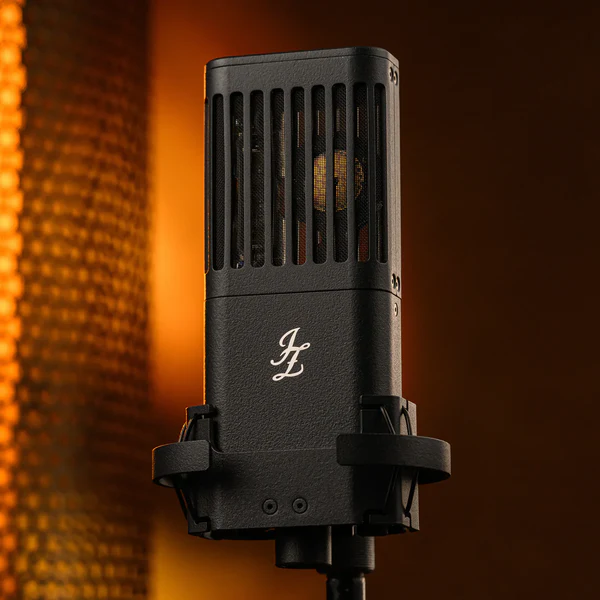
That journey eventually led him to create his own microphone with JZ Microphones: the MU-1, a hybrid ribbon and large-diaphragm condenser microphone designed to bring together the qualities Marc loves most about both technologies.
The Marc Urselli MU-1 is now available for presale directly from JZ Microphones:
https://intshop.jzmic.com/products/mu-1

From Engineer to Microphone Historian
Marc’s collection began as a practical search for different sounds.
Like many engineers, he wanted options. He wanted to hear how different microphones responded to vocals, drums, guitars, brass, piano and acoustic instruments. However, as the collection grew, he began to feel a responsibility to preserve some of the history surrounding these designs.
“If I have all of these, I should have one of these,” became part of the thinking.
That is how a useful mic locker gradually became something closer to an archive.
Marc is now considering creating a microphone museum so that these instruments, their stories and their engineering significance can be preserved and shared. He has even taken over the hosting of microphone collector Stan Coutant’s extraordinary online microphone archive, ensuring that its collection of photographs, manuals, specifications and audio examples remains available. Marc acquired Stan’s entire physical collection as well.
Only around a fifth of Marc’s ribbon collection was displayed during our visit, but even that selection presented a remarkable journey through recording history.

The Western Electric and Altec 639: An Early Hybrid Microphone
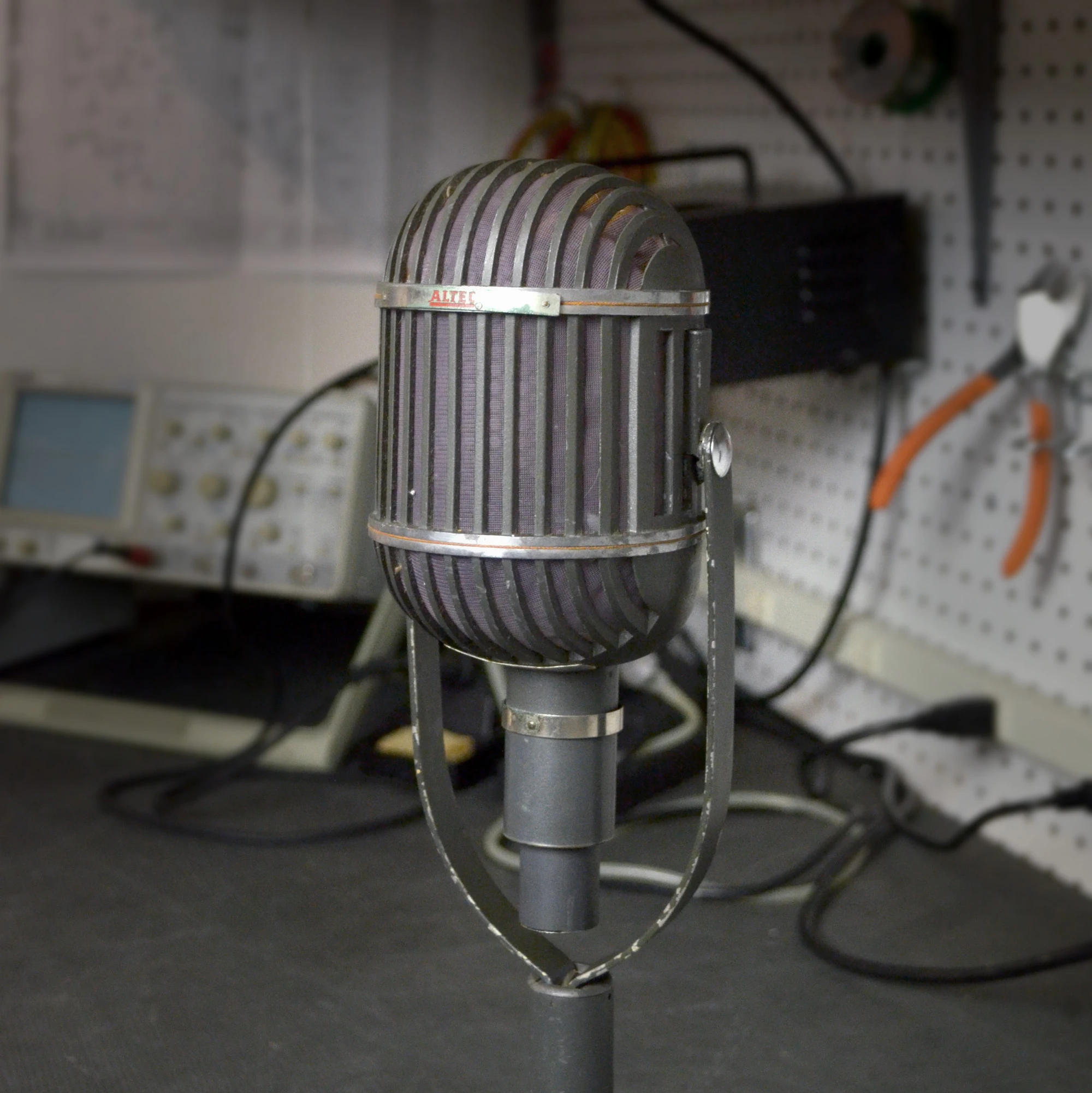
One of the most important microphones in Marc’s collection is the Western Electric 639B, later produced under the Altec name.
The 639 was an early dual-element microphone containing both a moving-coil dynamic element and a ribbon element. A selector on the microphone allowed the engineer to choose between the two elements or combine them in different proportions.
This made the 639 extraordinarily versatile for its era. Rather than changing microphones, an engineer could alter the tonal balance directly on the microphone.
It is also particularly significant because it helped inspire Marc’s thinking behind the MU-1.
However, the 639 combines its two elements internally and sends the result through a single output. The balance is selected mechanically using a small screwdriver.
Marc wanted something much more flexible.
With the MU-1, the ribbon and condenser signals leave the microphone separately. That allows both elements to be recorded onto their own tracks, balanced during the session or blended later during mixing.
The principle has a historical precedent, but the workflow has been completely reimagined for modern recording.

The Star Wars Microphones
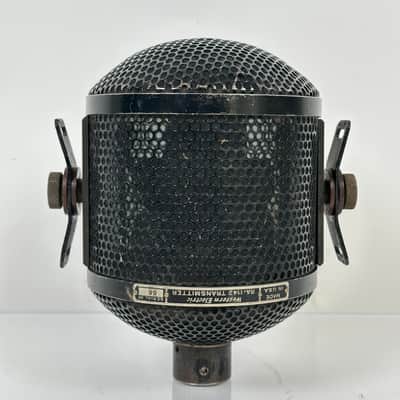
Among the most historically fascinating microphones in Marc’s collection is a pair of enormous Western Electric RA-1142 ribbon microphones.
These particular microphones came from Anvil Studios in England, where John Williams recorded the score for the original Star Wars. Photographs from the sessions show microphones of this type suspended above the orchestra.
Marc initially owned one RA-1142. When another collector offered a pair from Anvil Studios, Marc bought them so that he could create a stereo pair.
After bringing them back to New York, he discovered that one of the microphones had the consecutive serial number to the microphone he already owned.
He now has serial numbers 234 and 235.
For a microphone enthusiast, it is difficult to imagine a more satisfying discovery.
The microphones are exceptionally heavy, so Marc secures them to their stands with additional safety cords. Despite being ribbon microphones, they do not behave exactly like the figure-of-eight ribbons many engineers expect. Their front and rear responses are different, with the front producing a more present sound.
They are wonderful examples of how varied ribbon microphone design was long before the modern ribbon revival.

The French Connection: LMT and the Mystery FL Ribbon
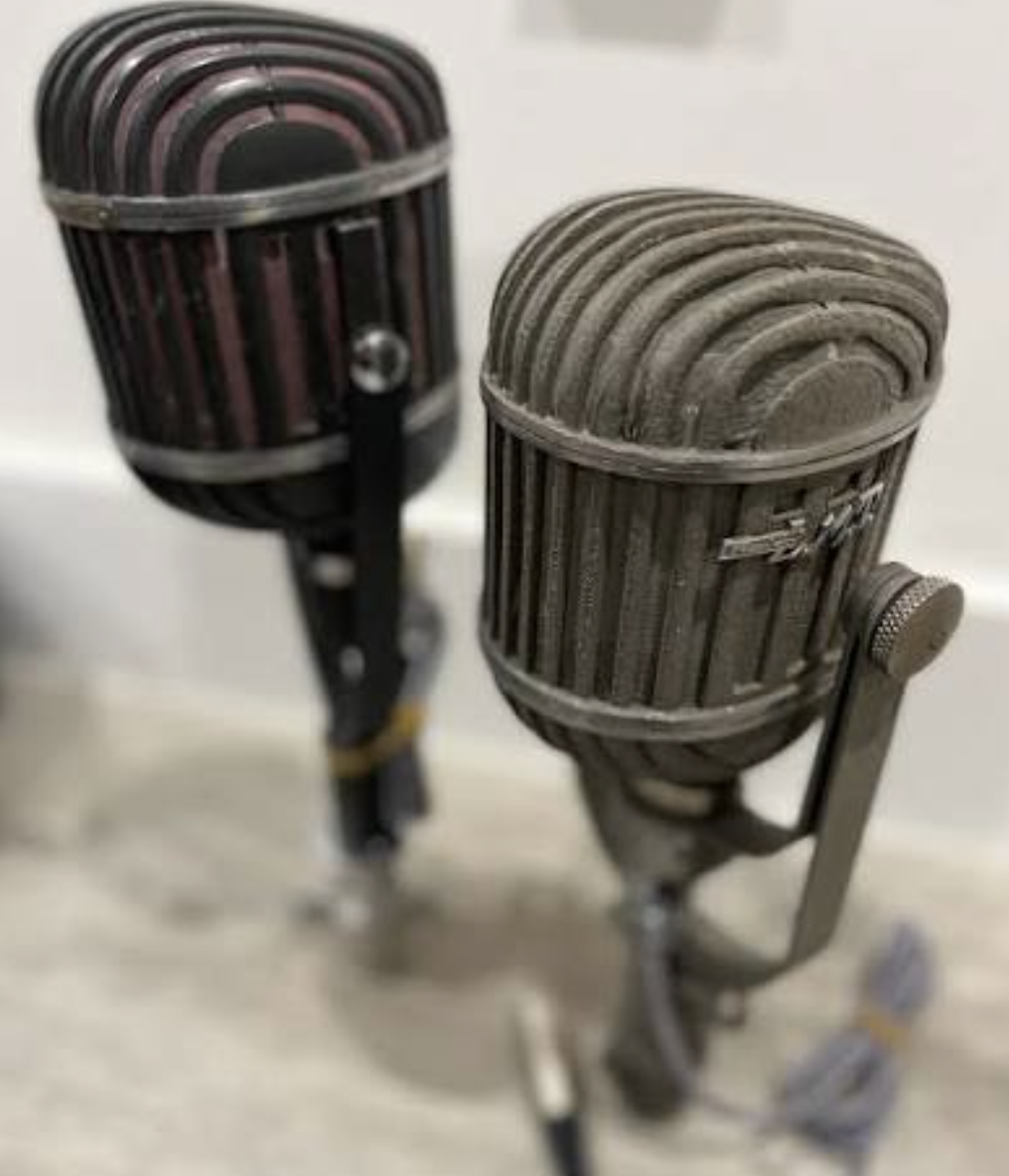
Marc also owns an elegant French ribbon microphone made by LMT, or Le Matériel Téléphonique.
LMT was associated with the French telecommunications industry and produced microphones that shared some visual and technical ideas with American broadcast microphones such as the Western Electric 639.
The engineering is wonderfully inventive. The microphone has a multi-axis mounting system that allows it to pivot in several directions, while even the cable connection can be rotated to accommodate different placements.
Sitting beside it is one of the true mysteries of Marc’s collection.
It is a French ribbon microphone carrying only the letters FL, along with a handwritten note. Marc has consulted numerous microphone historians and restoration experts, but nobody has yet been able to identify exactly who manufactured it or where it originated.
It may not be the finest-sounding microphone in the locker, but it has character and remains historically intriguing.
Marc is hoping that somebody watching the video may recognise it and finally solve the mystery.
The Connoisseur: A Rare British Ribbon
Despite its French-sounding name, the Connoisseur is a British ribbon microphone manufactured by Sugden & Company Engineers Limited in England.
Sugden is better known for its involvement in early high-quality audio equipment and for developing an early stereo turntable system. The Connoisseur appears to have been the company’s only microphone and is now exceedingly rare.
Even highly experienced ribbon specialists have been impressed by Marc’s example.
It is a beautiful reminder that Britain’s ribbon microphone history extends far beyond the famous BBC and STC designs. During the middle of the twentieth century, numerous relatively small companies were experimenting with ribbon motors, magnetic structures, acoustic chambers and broadcast microphone housings.
Many produced only small quantities, which makes surviving examples increasingly important.

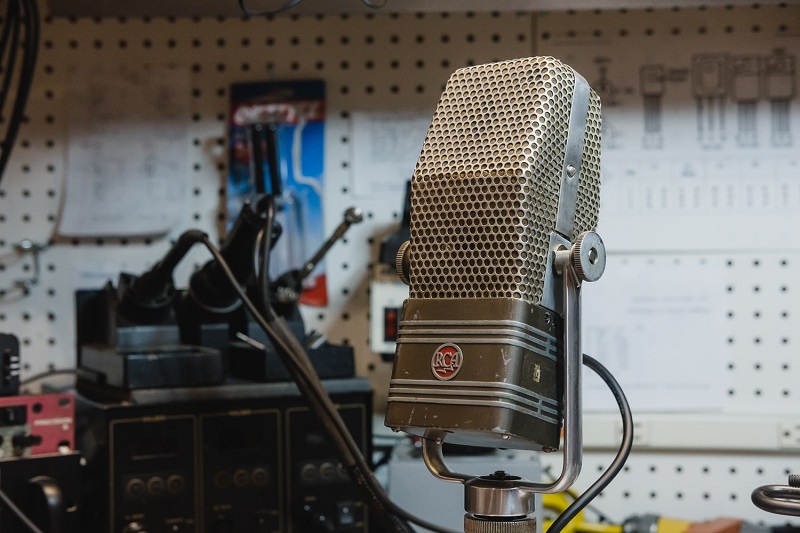
RCA 44: The Microphone Les Paul Called the Best Ever Made
No serious ribbon collection would be complete without the RCA 44.
Introduced during the early 1930s, the RCA 44 helped define the sound and appearance of the classic American broadcast ribbon microphone. Its large ribbon motor delivered a full, smooth sound with substantial low-frequency response and a controlled top end.
Marc owns four RCA 44s (two at Audio Confidential two at Eastside Studio) and has an especially personal connection to the model.
He engineered and mixed the Les Paul & Friends album, which featured Eric Clapton, Sting, Keith Richards, Buddy Guy, Joss Stone and many others. According to Marc, Les Paul repeatedly described the RCA 44 as the greatest microphone ever made.
That is quite an endorsement.
Marc’s RCA microphones also reveal clues about their restoration history. Several have distinctive brown cables fitted by the late Clarence Kane of ENAK Microphone Repair. Kane was regarded as one of the leading authorities on RCA ribbon microphones and held an extensive inventory of original replacement parts.
Among collectors, that brown cable has effectively become a signature showing that a microphone once passed through Clarence’s hands.
Before the RCA 44: The PB-31 and PB-90
Marc’s collection also traces the development that led to the RCA 44.
The RCA PB-31, introduced around 1931, was one of RCA’s earliest commercially produced ribbon microphones. Its appearance is surprisingly modern considering its age.
The later PB-90 begins to display more of the proportions and design language associated with the RCA 44. Placing these microphones together creates a tangible timeline of ribbon development.
You can see engineers gradually refining the motor, housing, acoustic response and physical design until the iconic 44 emerged.
For Marc, this historical continuity is part of the fascination. The microphones are not isolated pieces of equipment. Each one represents a step in the evolution of recorded sound.

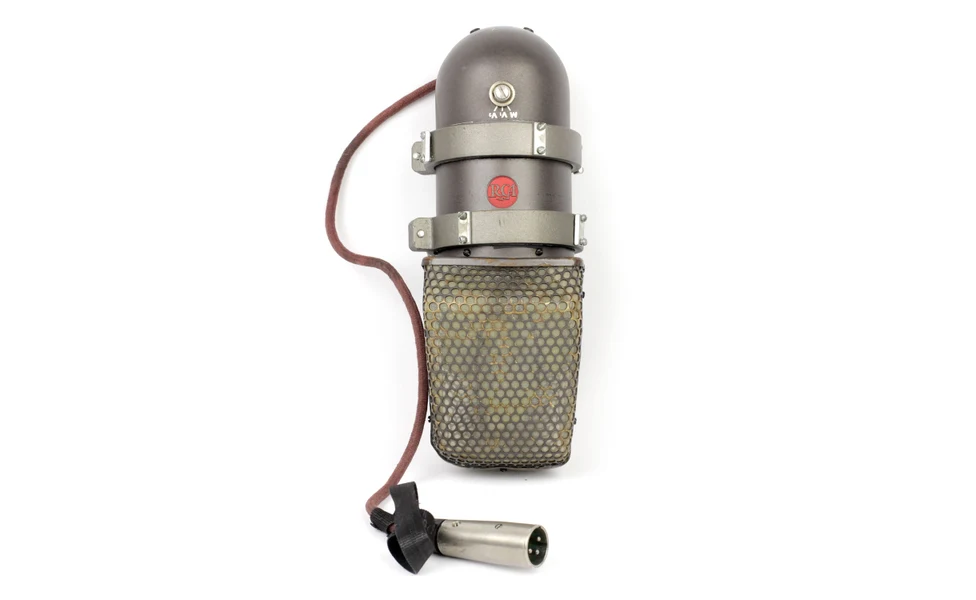
The RCA KU-3A: The Microphone That Started Marc’s Ribbon Obsession
The microphone that truly began Marc’s fascination with ribbons was the RCA KU-3A.
Marc first used one belonging to Lou Holtzman at EastSide Sound in New York. Unlike the conventional figure-of-eight pattern associated with many ribbon microphones, the KU-3A was engineered to produce a directional pickup pattern.
This made it extremely useful for film production, broadcast work and studio recording where rejection from the rear of the microphone was important.
The KU-3A is now exceptionally valuable and highly sought after. Only a limited number are believed to have been produced.
One of the more unusual stories surrounding its design involves the acoustic material placed inside the microphone. RCA reportedly experimented with different types of animal hair before selecting a particular material to protect the ribbon and control the microphone’s acoustic response.
Whether every part of that legend is completely accurate or not, it illustrates the extraordinary amount of experimentation involved in developing these early directional ribbon microphones.
Marc spent years trying to persuade Lou to sell him his KU-3A. Lou quite understandably refused, so Marc eventually found another example for Audio Confidential.
He now has access to one KU-3A at Audio Confidential and another at EastSide Sound.
It remains one of his favourite ribbon microphones.

RCA 77A and 77DX
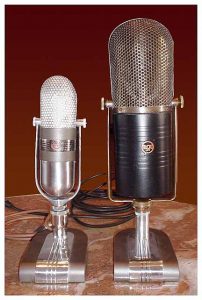
Marc owns around a dozen RCA 77DX microphones, along with two enormous RCA 77A models.
The 77 series became another defining American broadcast microphone. The later 77DX offered selectable polar patterns through an acoustic labyrinth behind the ribbon, giving engineers greater control over directionality and proximity effect.
The RCA 77A is physically much larger and extraordinarily heavy. Marc’s pair looks almost like the familiar RCA broadcast microphone design has been enlarged in every dimension.
Because of their weight, they require substantial stands and additional safety restraints. However, Marc describes them as microphones that can work on practically anything.
That is an important point about great ribbon microphones. They are sometimes treated as specialised colour microphones, but many of the finest designs are remarkably versatile.

Coles: A Longstanding Favourite for Overheads and Saxophone
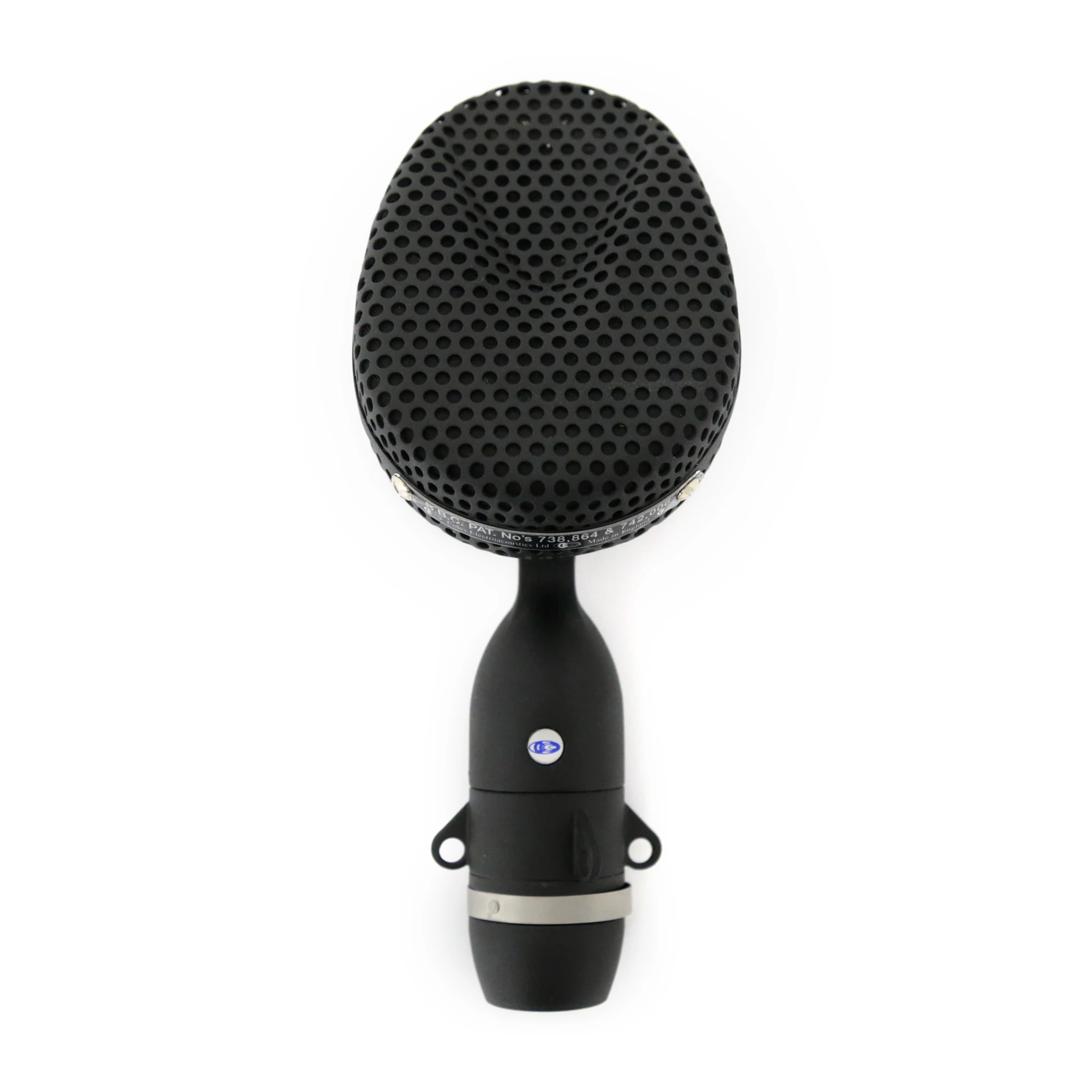
Marc has also used Coles ribbon microphones extensively throughout his career.
The Coles 4038 was developed from BBC microphone technology and remains one of the most recognisable British ribbon microphones ever made. Its smooth high-frequency response, strong low-frequency extension and figure-of-eight polar pattern have made it a studio favourite for drum overheads, brass, strings, room recording and many other sources.
For years, Coles ribbons were among Marc’s preferred drum overhead microphones. He has also used them regularly to record John Zorn’s saxophone.
That combination makes complete sense. A great ribbon can capture the intensity and midrange complexity of a saxophone while smoothing the aggressive upper frequencies that can make the instrument difficult to record.
Before developing the MU-1, Marc might select Coles ribbons for a rock drum sound and AKG C414 condensers when he wanted a brighter jazz-oriented presentation.
The MU-1 now allows him to capture both tonal perspectives from the same microphone position.

Royer and the Modern Ribbon Revival
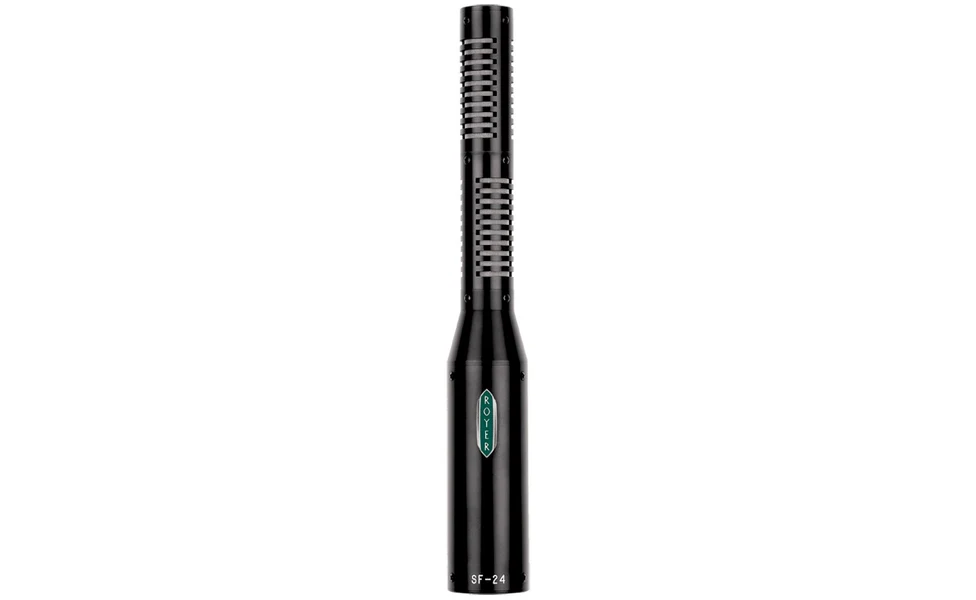
Marc’s collection naturally includes modern Royer ribbon microphones, including the R-121 and a stereo SF-series microphone.
The R-121 played a major role in returning ribbon microphones to everyday studio use. Its compact body, high SPL capability and offset-ribbon design made it particularly successful on electric guitar amplifiers, brass, percussion and drum rooms.
Marc also has a wonderful personal story involving Lou Reed and a Royer stereo ribbon.
Lou would give Marc the microphone before a concert and ask him to record the show with it. Marc captured both the stereo ribbon and the mixing console feed.
Lou initially preferred the sound of the stereo microphone to the board mix. Eventually, Marc began blending approximately 70 per cent of the ribbon recording with 30 per cent of the console feed.
That gave Lou the immediacy and clarity of the board while preserving the space, energy and audience perspective captured by the stereo ribbon.
It is a beautiful example of why microphone choice is not simply about frequency response. A microphone captures perspective, environment and emotion.

Fostex Printed-Ribbon Microphones
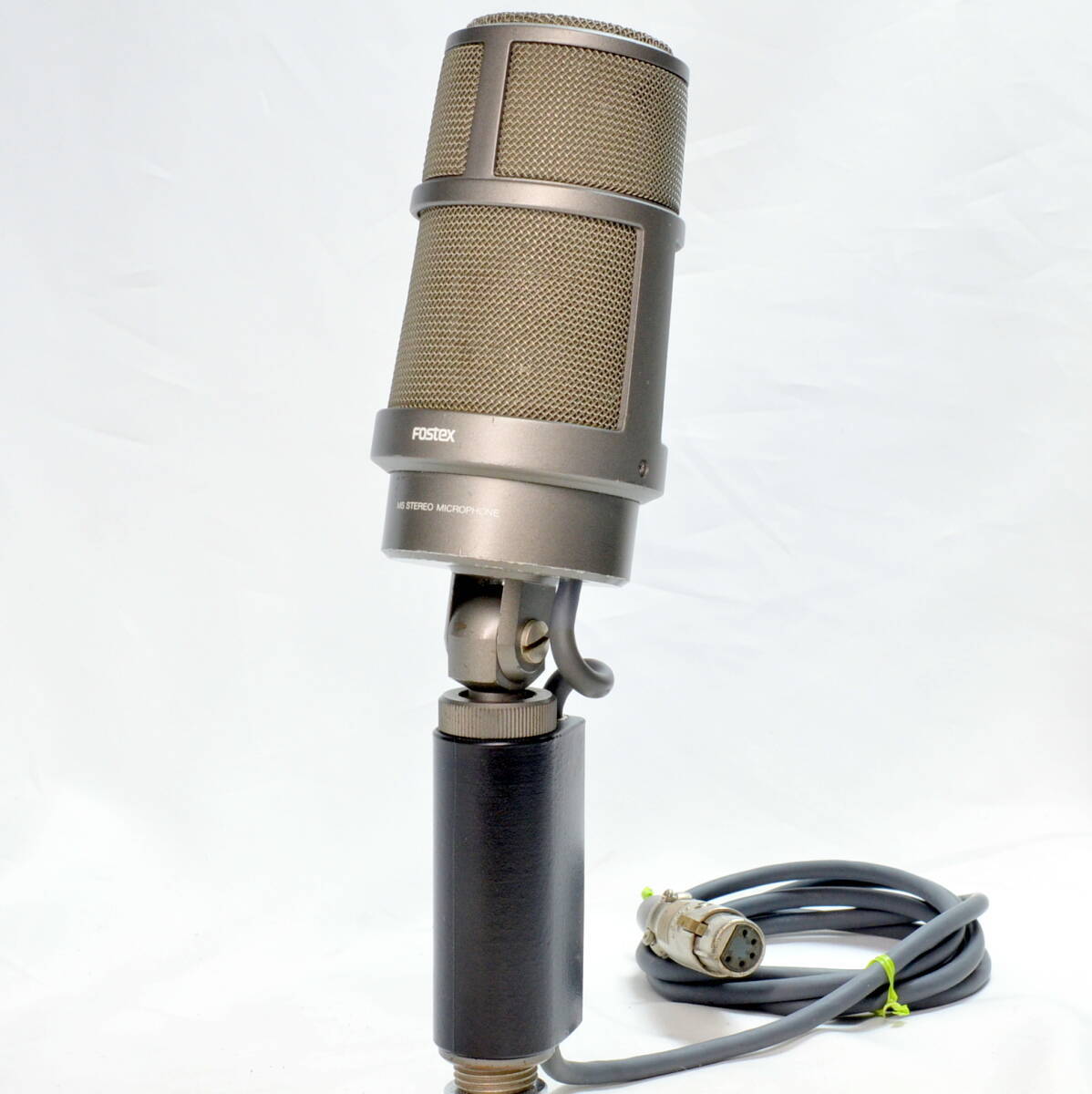
Some of the rarest microphones in Marc’s locker are prototype Fostex printed-ribbon microphones.
Instead of using a conventional freely suspended corrugated ribbon, Fostex developed a printed-ribbon or Regular Phase system in which the conductive element was incorporated into a lightweight diaphragm.
Marc owns a stereo Fostex M22RP and extremely rare mono prototype variations. Only a very small number of the prototypes are believed to have been made before Fostex decided not to proceed with full production.
They may not have the decorative beauty of an RCA 44 or an early Western Electric microphone, but they represent a fascinating alternative path in ribbon development.
That is one of the strengths of Marc’s collection. It does not merely contain the famous models. It includes experiments, prototypes and regional variations that show how different designers attempted to solve similar engineering problems.

Bang & Olufsen, GEC, Reslo and Cadenza
The collection also contains ribbon microphones from manufacturers many people would not immediately associate with professional recording.
Bang & Olufsen, the Danish company celebrated for its beautifully designed home audio equipment, produced both mono and stereo ribbon microphones. Marc owns several stereo models with adjustable capsule angles, allowing the stereo image to be varied.
The British GEC microphone in the collection represents a smaller and more affordable relative of the legendary BBC Marconi ribbon designs.
Marc also owns numerous Reslo microphones. Reslo ribbons became part of British popular music history through their use in clubs and live venues, including vocal use during the early Beatles era at Liverpool’s Cavern Club.
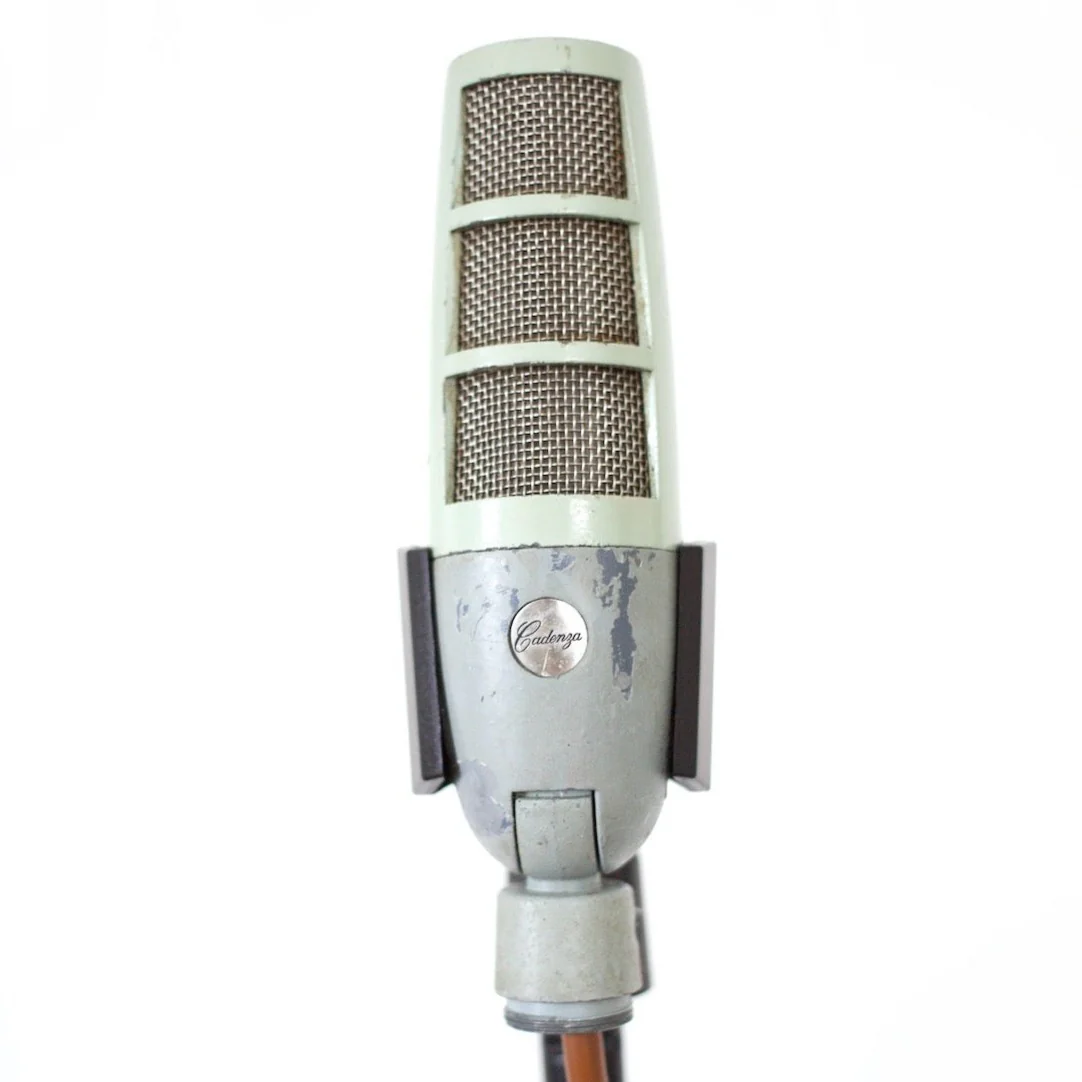
The beautifully packaged Cadenza ribbons are another example of relatively affordable British microphones that have acquired enormous character with age. Even opening the original cases releases the unmistakable smell of vintage electronics, leather, fabric and decades of studio history.
These microphones may not all command RCA KU-3A prices, but they help tell the broader story of how ribbon technology entered radio stations, clubs, rehearsal rooms and home recording setups.
What Marc Understands About Ribbon Microphones
Marc’s collection has given him a particularly nuanced understanding of what ribbon microphones actually do.
Ribbons are frequently described as dark, low-output and fragile. There can be some truth in those descriptions, especially when discussing older passive designs, but they are also oversimplifications.
A traditional ribbon microphone will often produce less output than an active condenser, requiring more clean preamp gain. Many ribbons also have a smoother and less exaggerated high-frequency response than a modern condenser.
However, that does not mean they lack detail.
A good ribbon often captures enormous detail through the midrange, along with a powerful, natural low-frequency response. The smoother top end can make electric guitars, brass, cymbals, strings and aggressive vocals feel more complete without becoming harsh.
Modern ribbon designs have also challenged the assumption that ribbon microphones must be delicate or extremely low in output.
Marc’s experience has taught him that the ribbon and condenser are not opposing choices. They are complementary perspectives.
That understanding sits at the heart of the MU-1.

Marc describes the MU-1 as the culmination of the two microphone cabinets we had just explored.
It brings together his love of the weight, body and smoothness of ribbon microphones with his love of the clarity, articulation and immediacy of large-diaphragm condensers.
The concept began with a working prototype developed with Italian microphone designer Teo Pizzolante. Marc used that prototype to make one record, then another. The results convinced him that the idea should become a commercially available microphone rather than remain a one-off studio experiment.
Marc then approached JZ Microphones.
That relationship already stretched back around 20 years. Marc had long used the JZ Black Hole series and particularly loved its Golden Drop condenser capsule. He has used the microphone on numerous major sessions, including recording Bono.
JZ had extensive experience building condenser microphones, but had never produced a ribbon microphone.
Marc asked them to create one.
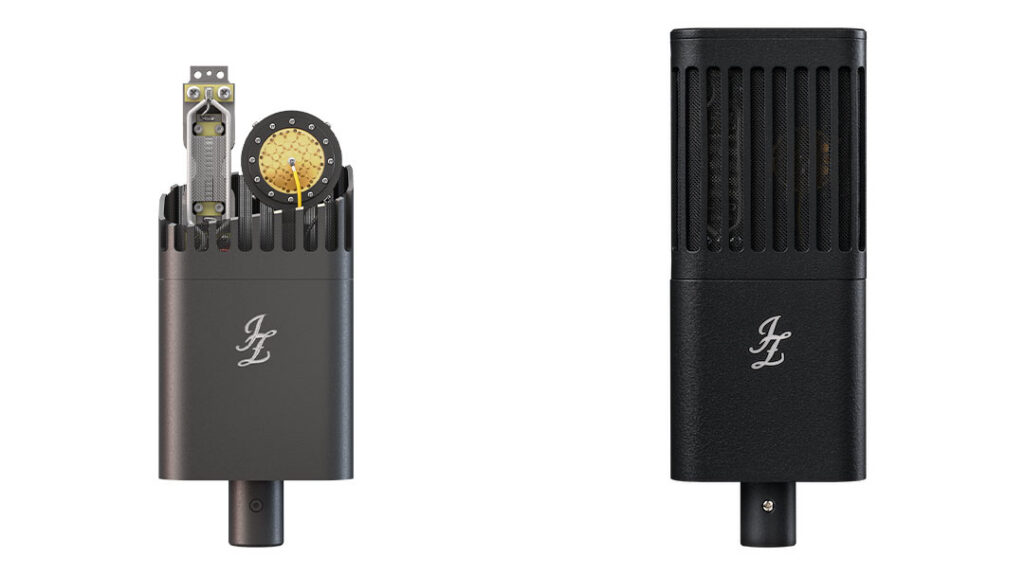
The resulting MU-1 places a ribbon element beside JZ’s Golden Drop large-diaphragm condenser capsule in the same microphone body. The two elements are aligned, phase coherent and level matched.
A five-pin XLR connection leaves the microphone and splits into two conventional three-pin XLR connectors. Each element can therefore be recorded independently.
The condenser has a cardioid polar pattern, while the ribbon operates as a figure-of-eight.
Both outputs safely accept phantom power, so there is no danger of accidentally connecting phantom power to an unprotected passive ribbon. Internal active electronics raise the ribbon signal to a practical level, allowing it to sit comfortably alongside the condenser output.
Most importantly, the two sounds remain separate.
You can record only the ribbon, only the condenser or both at the same time.
Preorder the Marc Urselli MU-1 directly from JZ Microphones here:
https://intshop.jzmic.com/products/mu-1
Why Put a Ribbon and Condenser Together?
Using a ribbon and condenser together is not a new recording technique.
Engineers have been combining microphones for decades. A condenser can provide detail, presence and transient definition, while a ribbon contributes body, low-frequency weight and a smoother upper register.
The difficulty is achieving consistent alignment.
With two separate microphones, you need two stands, two cables and enough physical space to position both microphones correctly. Small differences in distance can create phase cancellation, comb filtering and changes in transient response.
Even after carefully aligning the capsules, the relative phase may need further adjustment in the DAW.
The MU-1 places both elements inside a single, repeatable structure. The microphone can be repositioned without rebuilding the relationship between the two capsules.
That is what makes it more than simply two microphones attached to one another.
It turns a familiar studio technique into a dependable recording system.
One Performance, Two Tonal Perspectives
The MU-1 does not force the engineer to commit to a fixed blend.
On a vocal, you might use the condenser for articulation and air while bringing in the ribbon for weight and warmth.
You could apply dynamic equalisation or multiband compression to reduce sibilance in the condenser track while allowing the ribbon to maintain the body of the vocal. Because the ribbon naturally captures less of the aggressive upper-frequency energy, the complete sound does not collapse every time the condenser is controlled.
On an acoustic guitar, the condenser can provide pick definition and string detail while the ribbon supplies the resonance of the body. Squeaks and excessive brightness can be controlled on the condenser without losing the instrument’s fullness.
On a guitar amplifier, the ribbon can contribute the familiar thick, smooth sound engineers love, while the condenser adds attack and edge.
On drum overheads, the engineer can decide whether the song needs the darker, weightier ribbon image, the brighter condenser presentation or a blend of both.
The same performance effectively produces two complementary recordings from one position.
A Microphone Born from Experience
What makes the MU-1 particularly interesting is that it was not conceived as a marketing exercise or a theoretical technical challenge.
It emerged directly from Marc’s working methods.
Marc has spent decades positioning ribbon and condenser microphones beside one another. He understands the advantages of the combination because he has repeatedly used it on real sessions. He also understands the practical problems: additional stands, limited space, mismatched output levels, capsule alignment and phase.
The MU-1 addresses those problems because it was designed by somebody who encountered them daily.
The microphone is handcrafted by JZ Microphones in Latvia and supplied with a wooden case, custom shockmount and five-pin-to-dual-XLR breakout cable.
It is simultaneously a modern production tool and a tribute to nearly a century of microphone development.
You can see the influence of the Western Electric 639’s dual-element design, the scale and body of the classic RCA ribbons, the flexibility of modern active ribbons and the clarity of the JZ Golden Drop condenser capsule.
However, the MU-1 does not simply imitate any of them.
It takes the knowledge Marc gained from hundreds of microphones and applies it to the way records are being made today.
More Than a Collection
Walking through Marc Urselli’s microphone locker is like exploring the history of recorded sound.
There are microphones associated with early broadcasting, the development of stereo, legendary studios, orchestral film scores, Les Paul, Lou Reed and some of the most important advances in ribbon technology.
However, Marc is not simply looking backwards.
His collection has allowed him to understand why these microphones became classics, where their limitations lie and which qualities remain valuable to engineers today.
The JZ Microphones MU-1 is the logical result.
It combines the depth and smoothness Marc loves in ribbons with the presence and detail he values in condensers. It provides two independent signals without the usual alignment difficulties and gives engineers a tonal palette that can be adjusted throughout the recording and mixing process.
After seeing Marc’s collection and hearing him explain each microphone with such enthusiasm and understanding, the MU-1 makes complete sense.
It is not merely Marc Urselli’s signature microphone.
It is his microphone journey, placed inside a single body.
The Marc Urselli MU-1 is available for presale now from JZ Microphones:
https://intshop.jzmic.com/products/mu-1
Have a marvellous time recording and mixing, Warren