
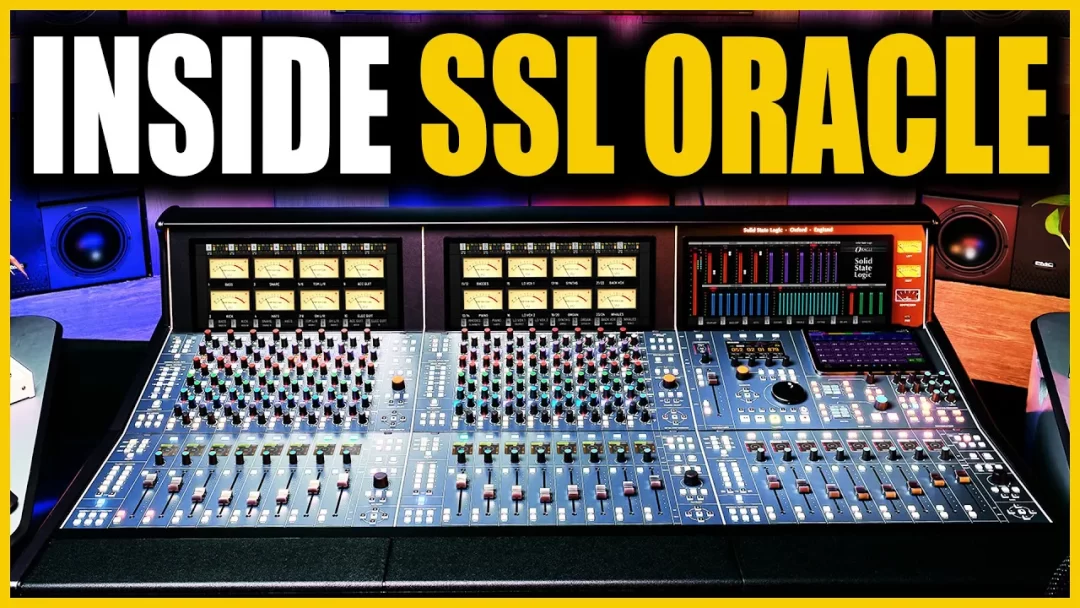

I finally got hands on with SSL’s Oracle and spent a few hours with Niall Feldman, whose original concept shaped the console’s design. The aim is simple, give engineers a familiar SSL channel strip and centre section feel, then unlock the flexibility of digitally controlled analogue. After a day on it I can say it hits that brief.
The studio revolution, from Total Recall to ActiveAnalogue
Since the SL 4000E introduced Total Recall in 1979, we have all dreamed of a console with sublime analogue sound that can instantly recall and switch sessions without the pain of manual reset. That dream has landed. Oracle is a fully analogue in line mixing console with large format features in an AWS sized footprint. It delivers instant recall of processing, routing, gain and pan via SSL’s new ActiveAnalogue™ technology. You can jump from tracking to mixing or flip a session workflow in less time than it takes an artist to change songs. Throughput goes up. Creative flow stays uninterrupted. Analogue tone remains intact.
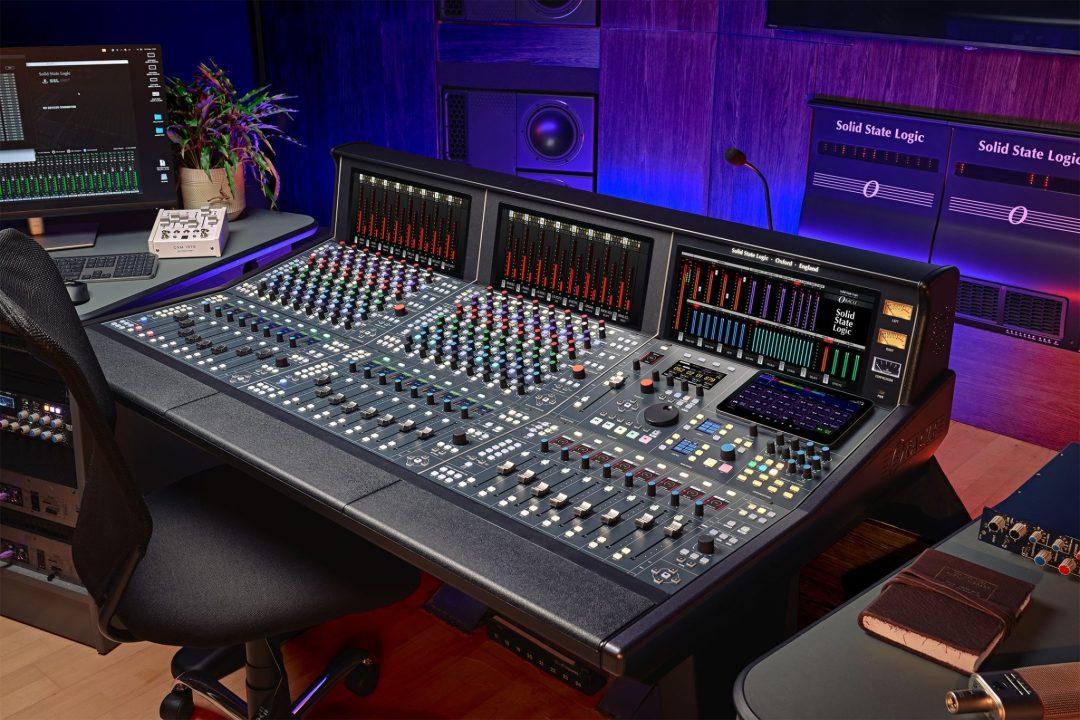

It looks and behaves like an SSL channel strip
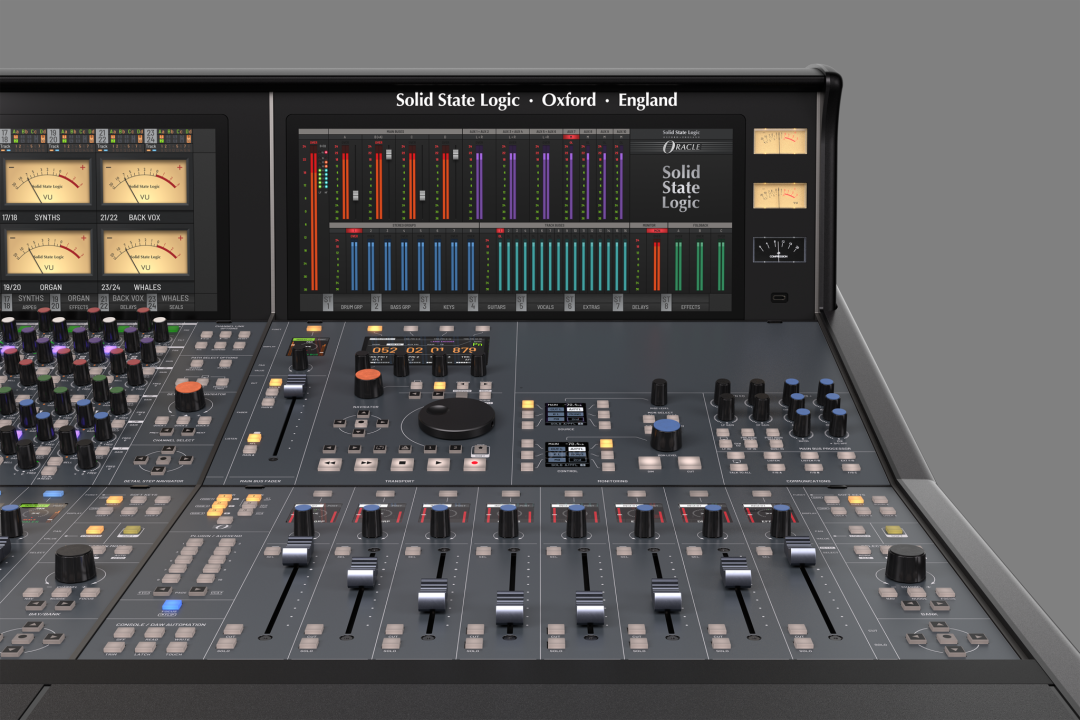
On each strip you have what you expect. Mic line gain at the top, a filter section, auxiliaries, a four band EQ, large fader with pan. The twist is Detail View across a high resolution display for any selected channel. Tap the channel, hit Detail, and you see the whole signal path clearly. It is like unrolling a long SSL strip across a screen without losing the tactile hardware.
Snapshots are built in. It constantly autosaves, and you can store named snapshots and reorder them, so jumping between Mix 72 and Recall 89 becomes second nature.

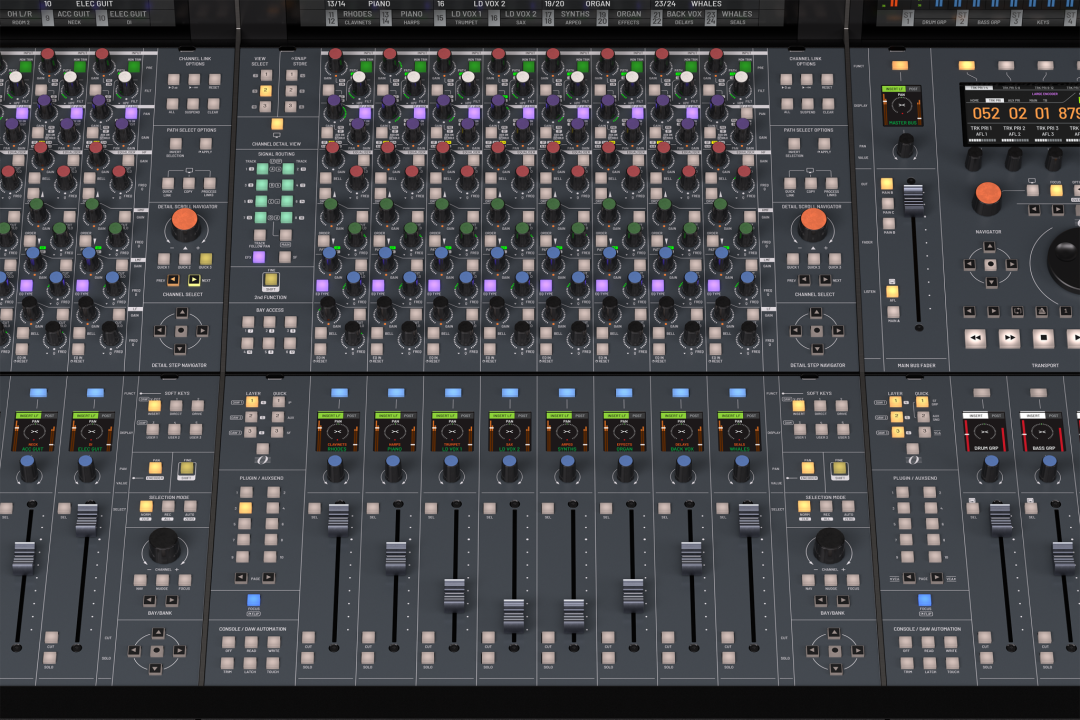
Future Analogue channel strip
Oracle’s Future Analogue channel strip keeps the best of classic SSL and adds the latest analogue circuitry. Channels are stereo or dual mono with a second line level input per channel. Each in line channel has separate record and monitor paths with independent input gain and output level plus flexible processing routing. You have dedicated controls for input gain, filter, aux sends, the four band parametric EQ and a premium 100 mm motorised fader assignable to Small or Large Fader paths. The channel screen shows level and pan and full track names.
At the top sit next generation PureDrive mic pres with a dedicated Drive control and up to 75 dB of gain for a wide range of tones. At the heart is the iconic 242 Black Knob E Series EQ with switchable E or G characteristics. Choose constant Q for assertive E style moves or variable Q for smoother G curves. Shelf or bell on the highs and lows, fully parametric mids and a dedicated high pass filter. You can throw the EQ between Small and Large Fader paths instantly. Odd and even channels can link for simple stereo control. Both paths have independent, movable inserts and independent direct outs to your DAW.
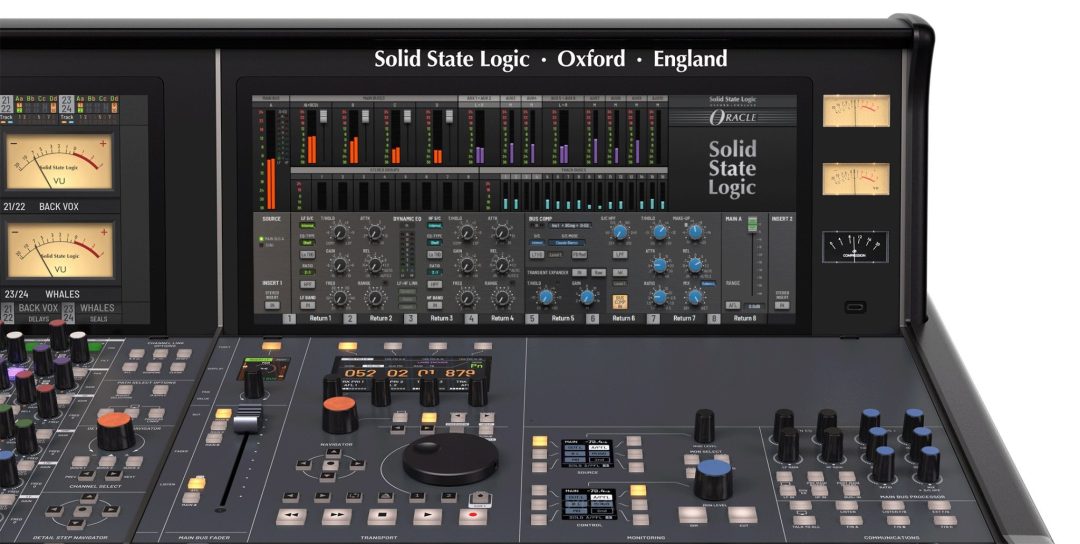
When you pull up Channel Detail View you see a breakout of both Large and Small paths, routing and inserts, and you can scroll and control everything with the bay’s Navigator.
Inline architecture that serves tracking and mix
Oracle is truly inline with a Large Fader path and a Small Fader path. You see both paths, their routing and inserts at a glance. Quick Controls let you flip what is on the physical faders. Press SF to bring small faders to the surface. Press Aux to put sends under your fingers. It is fast and intuitive.

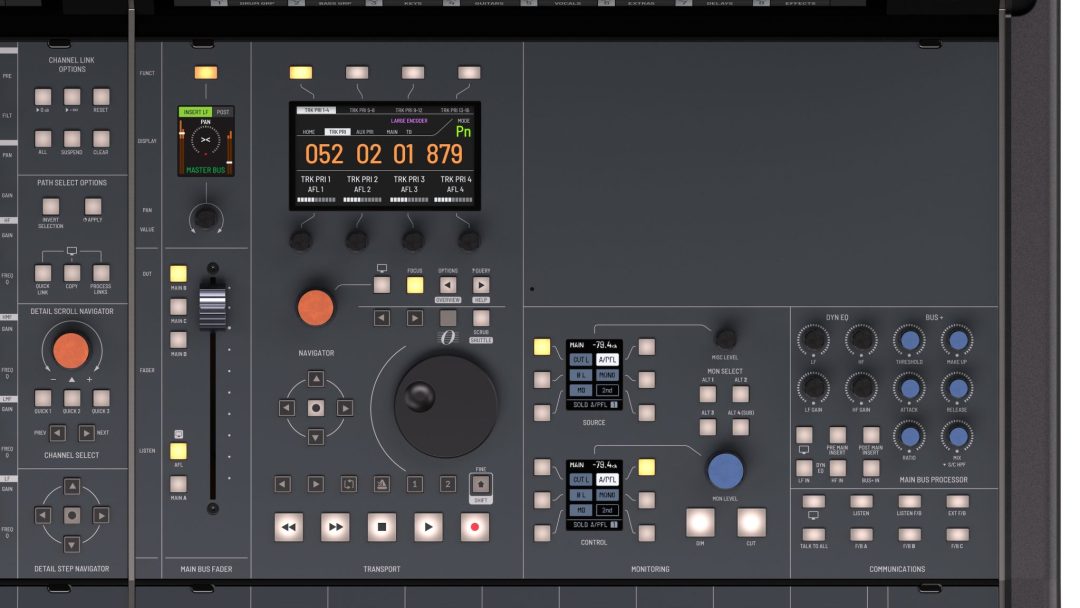
The little navigator that speeds everything up
Touch a control and you get exact values at the bottom of the display. Use the Navigator encoder to jump to any control in the strip. The mid bands smart toggle the frequency knob between Frequency and Q. Store favourite focus points in quick memories, for example mic gain during drum takes, or the mid band pair on lead vocal EQ.
AB anything, move the EQ order, place filters where you want
There are proper AB switches where you want them. Inserts on both Large and Small paths with in out comparison. Order moves the EQ before or after the insert. The high pass filter can live in either path and can sit pre or post insert. On bass I like to high pass first then shape with EQ so the low end breathes around the kick. On guitars I may push the filter after the EQ to sculpt bite. Do it per channel and see the flow at a glance.
Quick Link for temporary groups, Process Link for permanent ones
Quick Link lets you select channels and adjust them together while preserving offsets. Brighten a string section with one HF move and all follow proportionally. Pan and gain offsets hold. Release Quick Link and you are back to individual control. Process Link is there for persistent coupling. You can also define true stereo channels where needed.

Eight Stereo Group Inputs with image control and MS tricks
Oracle has eight flexible fader controlled Stereo Group inputs that can pick up the sixteen Track Busses in pairs. Each has an insert and an Image control that narrows to mono, runs normal stereo or extends width via controlled phase inversion. There is MS encode before the insert and decode after the return, so you can hit outboard with separate mid and side processing, then return perfectly back to left right.
Centre section and bus architecture
The centre section is mission control with high resolution displays and encoders for Main, Track and Aux buses and foldback. Detail Views also cover centre processing and keep meters visible while you work.
Oracle exposes a flexible 34 bus architecture to any channel.
- 4 Stereo Mix Busses, with B, C and D folding into A
- 16 Track Busses
- 10 Aux Busses, individually mono or linked as up to five stereo pairs
You can route each channel path individually or simultaneously to any or all of these buses to build stem and parallel mixes that sum to Main A.

Integrated THE BUS+, Dynamic EQ and more
The surface gives you the SSL Bus Compressor layout we know, now with a mix control for parallel and a sidechain high pass. Under the hood is a full THE BUS+ with selectable operating modes, LOW THD, Feed Back, and 4K saturation options, plus Dynamic EQ and Transient Expander. Each element has proper in out switching for real AB. There are two mix bus inserts, one pre fader and one post fader, so you can ride into an external device or place a limiter after your parallel blend. My go to is a sidechain high pass near 120 Hz so the kick and bass do not false trigger, smash in parallel to taste, then a second post fader compressor to catch peaks. It feels like finishing a master on the desk.
Metering and monitoring
Choose classic VU or Plasma style metering, both modelled on 4000 options, with routing visuals above each bay. Monitoring supports a main plus four alternates. The fourth alt can be a sub or LFE with bass management. Oracle is designed to hand remote monitor control to third party immersive processors such as the Dolby Atmos renderer. There are three independent foldback feeds, a headphone out on the surface and four stereo external sources including a handy surface stereo input for instruments or a Bluetooth receiver.
Advanced DAW control and automation
SSL’s integrated DAW control continues here with SSL 360 integration and the FOCUS key to switch surface faders between analogue processing and DAW control on a bay by bay basis. This makes hybrid workflows natural. Oracle also carries the SSL Dynamic Automation System for classic desk automation moves.
O Control application suite and Templates
The O Control suite runs on Windows or macOS, offline or alongside the console.
- O Setup manages console settings
- O Session handles Projects, Presets and Snapshots and lets you inspect and control processing
- O View gives you a full console overview
You can prep sessions before you arrive, connect with a permission handshake, and keep your project configuration on your laptop so there is no sensitive footprint left behind. Templates recall full routing and settings across the console, which means you can standardise your own tracking, overdub and mixing starting points and get recording faster than ever.
Hardware heartbeat in quiet, tidy racks
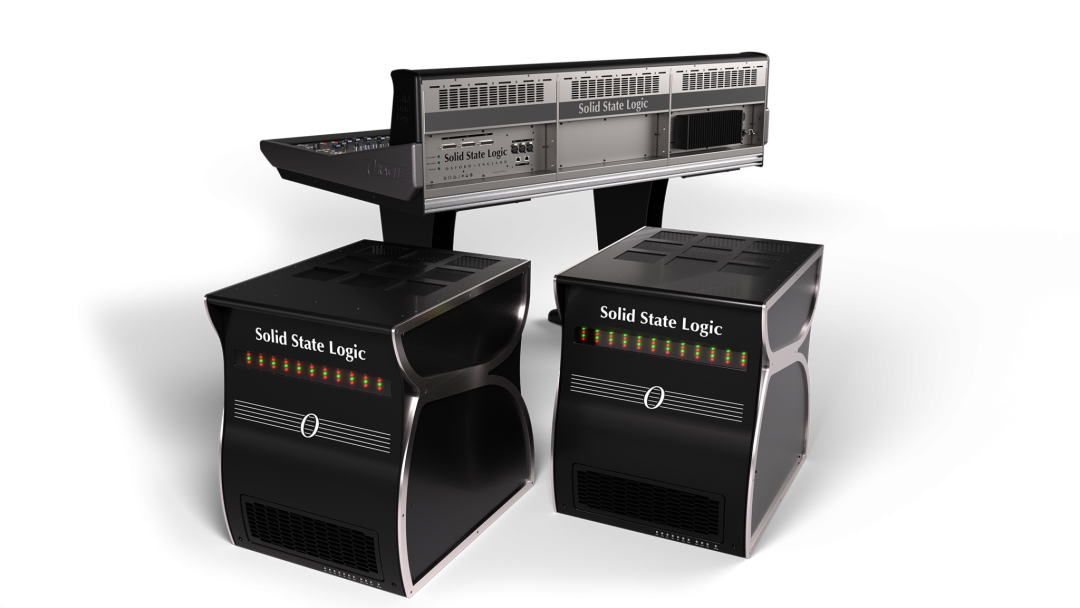
All analogue lives in 13U racks with ultra high performance recallable ActiveAnalogue electronics. A typical system has one centre section rack and one channel rack for a 24 channel console. Add a second channel rack for 48 channels. The racks can sit under the console, in the room or in a machine space. They are actively cooled and designed for an acoustic noise floor below NR25. Service is from the front. Connectivity is balanced DB25 on Tascam pinout. A single Ethernet cable links the surface to the racks. The racks can be remote from the surface and the two racks interconnect within 12 metres.
Headline specs at a glance
- Large format, small footprint analogue in line console with up to 112 inputs at mixdown
- 4 Stereo Mix Busses, 16 Track Busses, 10 Aux Busses, 8 Stereo Flex Groups
- 24 or 48 mono in line channels
- Iconic SSL analogue circuits under ActiveAnalogue™ control
- Next gen PureDrive mic pres with Drive
- Legendary SSL four band parametric EQ with switchable E and G curves
- Integrated THE BUS+ and Dynamic EQ
- Flexible channel architecture for tracking, overdub and mix
- Small and Large Fader paths with assignable EQ, High Pass Filter and Inserts
- Flexible monitoring for multiple stereo and immersive options
- VU or Plasma style metering with dynamic Detail View
- Advanced DAW control with SSL 360
- SSL Dynamic Automation System
- O Control app for offline prep and configuration
- 13U racks house all analogue circuitry and can be remote or under the console
How I would fold it into my workflow
If I owned Oracle I would rebuild my SSL mix template with my favourite outboard normalled to the racks. A main drum bus with my go to compressor and EQ, a crush return I can feed and blend, and a widening MS path for tasteful size on choruses. The difference is I am not sacrificing desk channels for parallel paths and I am not condemning a favourite box to a single duty for life.
Back in the day with Jack Douglas I loved smashing overheads through a dbx 162 to make the kit bloom. It ended up living on that duty. Oracle keeps the analogue tone and gives me the routing and recall to redeploy that same compressor across buses without touching a patchbay.
Who it is for
High end producer mixer rooms that want classic SSL feel and tone with modern speed. Hybrid engineers who want to patch once and reassign in software. Facilities and schools with high turnover and strict project privacy. Anyone who wants to ride real faders into real analogue while keeping DAW convenience.