
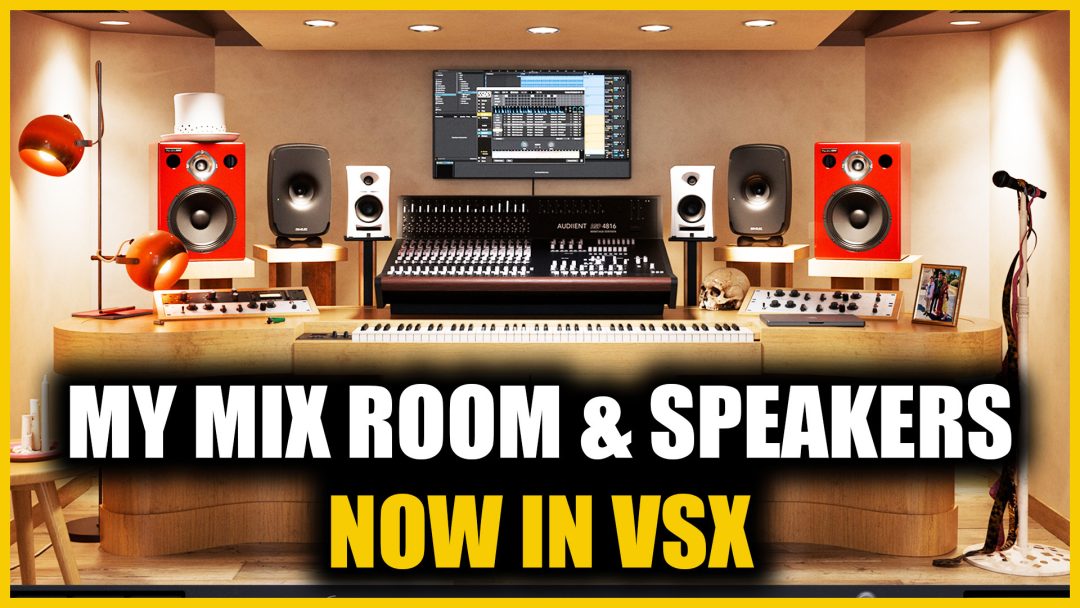

Visit Steven Slate Audio: https://stevenslateaudio.com/en/vsx
I have known about Steven Slate’s VSX concept for a while, thanks to my friend Matt Lange. The promise is simple to say and very hard to deliver, to give producers, engineers, mixers, musicians and all music makers and creators a monitoring chain that truly translates anywhere. Not just close, but accurate. After living with it in my own Spitfire Studios Los Angeles rooms and pushing it to extremes, I can tell you this took eighteen months to get right, not a day, not a week, not a quick tune up, but eighteen months of testing, retesting and refining until mixes I know by heart behaved exactly as they should across speakers, headphones and every real world check imaginable.
Why translation breaks most mixes
We all know the feeling. A mix sounds fantastic in your room, everything seems tight and polished, then you take it out into the world, to the car, another room, a friend’s studio, a pair of earbuds or a Bluetooth speaker, and suddenly it falls apart. The low end shifts, the vocal jumps out or disappears, and all that hard work just does not translate.
The real culprit is the complex interaction between your speakers and your room, especially in the low end. Even well treated spaces struggle with this. VSX tackles that problem at the source, capturing great rooms, tuning the speakers to be flat and accurate, and then modelling those spaces so precisely that you can hear them through dedicated headphones without all the chaos of room acoustics.
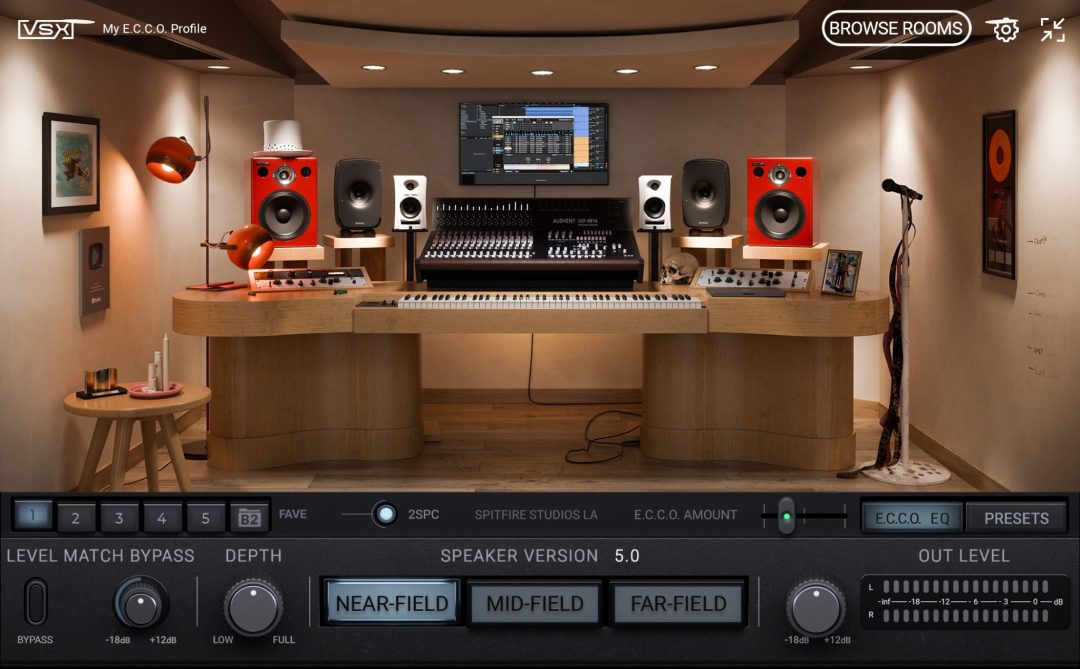

The Spitfire rooms, captured
We tested VSX inside my Spitfire Studios Los Angeles control rooms, designed by Jay Kaufman. There are two identical rooms, each built for total accuracy, nothing hyped, nothing missing, so every mix decision feels honest and effortless. Steven Slate actually rented one of these rooms to create and develop his VSX headphones, while the other served as my personal mix room.
What makes this story truly unique is that we tested the VSX system in the actual Spitfire room, using the real speakers as our reference point. We sat in the sweet spot, switched between the headphones and the monitors, and compared the experience directly. Every tweak, every refinement, every update to the software and headphone tuning was checked against the sound of the real room until it matched perfectly.
The main Spitfire setup features my trusted monitoring chain, Wayne Jones mains for deep, powerful low end, Genelec 8351s for balance, precision and that astonishingly detailed stereo image, and Kali LP-6s for critical midrange checks.
The Wayne Jones monitors are simply phenomenal, incredible tracking speakers and the perfect playback system when you want to blow people away, whether that is clients, artists or the occasional A&R rep who needs to feel the bass in their chest. They deliver effortless power and depth, yet stay tight and controlled no matter how hard you push them.
The Genelecs are where I spend the vast majority of my mixing time, sitting right at the heart of my workflow. They provide the kind of neutral transparency that exposes even the smallest mix choices, beautifully revealing without ever feeling fatiguing, and when Steven and his team modelled them for VSX, the accuracy was genuinely startling.
The Kalis, on the other hand, are great sounding speakers that give me a real world view of how most people are working. A big part of my job is a responsibility to all of you who watch our content, so I need to know what music sounds like on the kinds of systems most creators, producers and musicians actually use day to day, not just in high end studio environments. That perspective keeps me grounded, and it is why having the Kalis faithfully recreated inside VSX was so important.
When Slate’s team captured Spitfire, they worked side by side with me across both rooms to make sure every reflection, nuance and sonic fingerprint was modelled perfectly. These are spaces and speakers I know as well as my own voice, so when the VSX version of the 8351s sounded and felt identical, it was a genuine breakthrough moment.
There was even a point during testing where I forgot I was wearing headphones, I turned my head expecting the soundstage to stay in the room, which is the highest compliment I can give any virtual monitoring system, it felt like I was sitting right there between the Genelecs.
Eighteen months, not a day
Many talented teams have attempted room modelling projects, and some have achieved impressive results in remarkably short time frames. I have even had rooms modelled myself in the past, often over a day or two of careful measurement and capture, and those approaches can sound good and absolutely have their place.
What makes Slate’s VSX Spitfire Studios Los Angeles different is the sheer dedication behind it. Steven Slatepersonally spent eighteen months refining every aspect, the room modelling, the software algorithms, the headphone voicing and the overall translation. There was a team supporting the process of course, but it was Steven himself in the room, day after day, making adjustments, running tests and chasing perfection. He came back time and again, comparing and recalibrating until the VSX system did not just sound like the room, it felt like it.
About a year in, it was already very close, six months later it was closer still, and only in the most recent passes did we finally reach the point where I could switch between the real speakers and the VSX model and stay completely focused on the music rather than the technology.
This was not a one and done capture, it was patience, discipline and hundreds of incremental refinements. That is why the result feels natural rather than processed, and why transients, low end and stereo depth sit exactly where they should, without that cloudy halo you sometimes hear in attempts at room modelling.

The checks that make it bulletproof
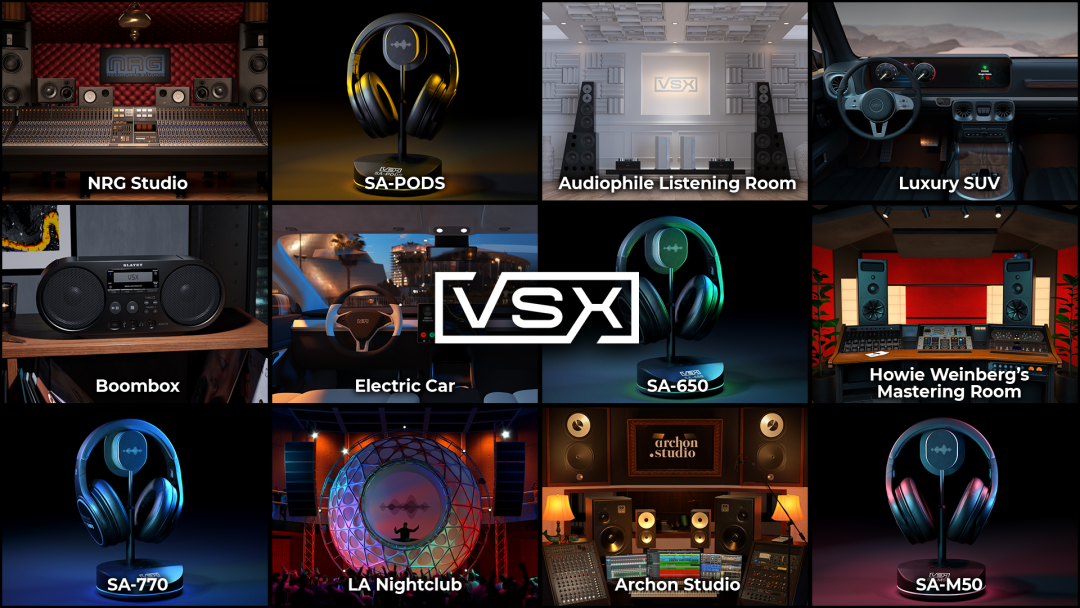
Accuracy is not just about one beautiful control room, it is about confidence across all the places people actually listen. VSX gives you a range of cross checks, studio mains and nearfields, club systems, boom boxes, cars, consumer headphones and yes, Apple earbuds. Alan Meyerson once called them the new Auratones for a reason. When a mix holds up in the pro rooms and on those buds, you can print with a smile.
Headphones that serve the models
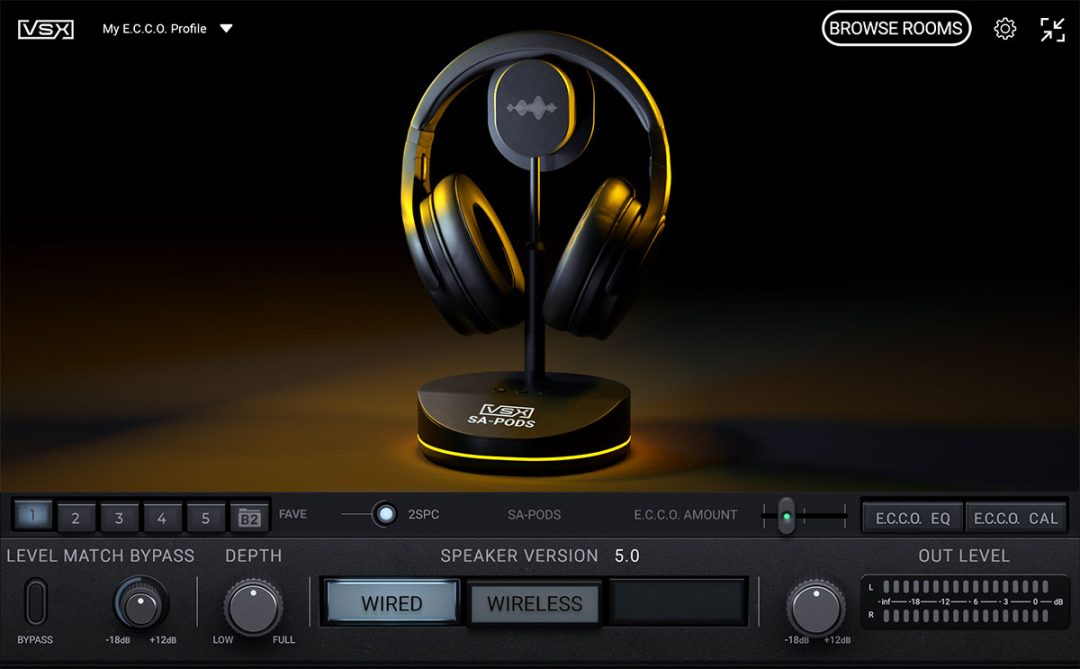
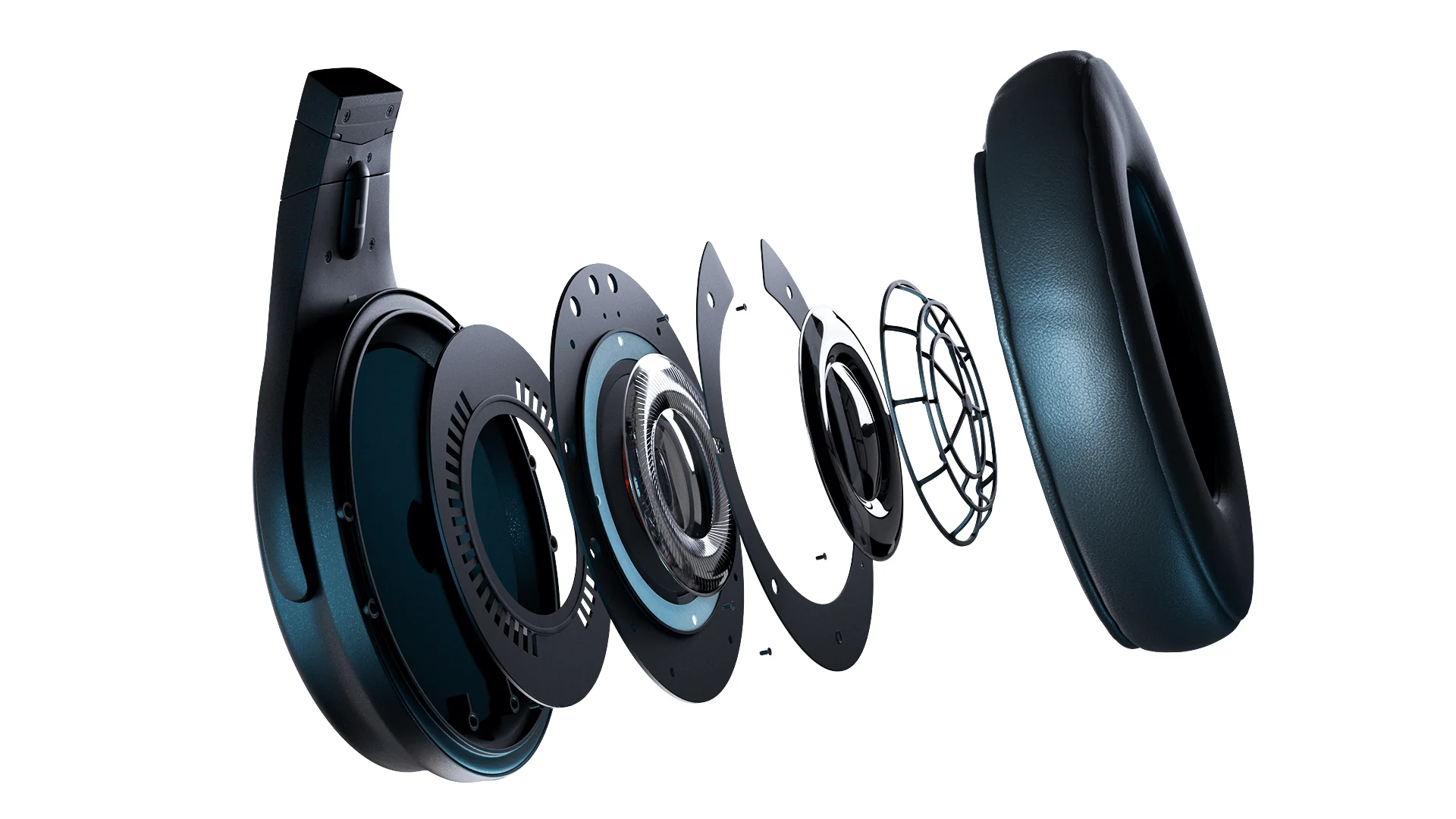
The headphone in VSX is the vehicle, not the star, and it needs to disappear and let the space speak. Slate landed on beryllium drivers for their low distortion, clean extension and consistent bottom end right down to sub territory. The set is lightweight and comfortable, which really matters when you are deep in detail work. The headphone design was refined in parallel with the room itself, both sides improving together until they behaved as one complete system.


The proof, on music
To test, I used sections I know inside out, including the drum outro from The Fray’s How To Save A Life. We went back and forth between the room’s speakers and the VSX model at sensible listening levels, and the imaging, punch and decay behaviour lined up so closely that I could make decisions without second guessing. We also pulled up a pair of Kali LP-6 nearfields, and moving between the real Kalis and their model kept the same balances and tone shape, that is what translation looks like in practice.
What this changes for daily work
I have always loved doing fine detail on headphones, then confirming on speakers, and VSX really tightens that loop. You can do detail and room checks in the same place, and if a mix works across several accurate virtual rooms and secondary systems inside VSX, it is going to work in the real world. That means fewer dreaded car test surprises and fewer endless round trips between spaces.

Why I trust it
Trust came from time, we did not stop at almost, we kept going until it was right. Many products are launched after a single capture session and a burst of marketing, but this was the opposite, eighteen months, multiple full iterations and the kind of honesty that keeps you pushing until it is perfect. That is why the models do not feel like speakers with reverb glued on top, they feel like real speakers in a real room.
Feeling grateful
I am constantly reminded how lucky I am to do what I do. People often stop me on the street to say wonderful things about the educational work we do, and it always makes me feel so blessed to know we are making a difference. Over the past week, since the release of my Spitfire Studios room on VSX, I have had people telling me they are using it every day, which is just amazing. It goes to show how incredible Steven’s work has been on this project, and just how great the room sounds.
Final thoughts
VSX in my two identical Spitfire Studios Los Angeles rooms is the closest I have ever heard a virtual system get to the real thing. The reason is not a trick or a buzzword, it is the work, eighteen months of it. If you care about mixes that translate, that is the difference that matters.