
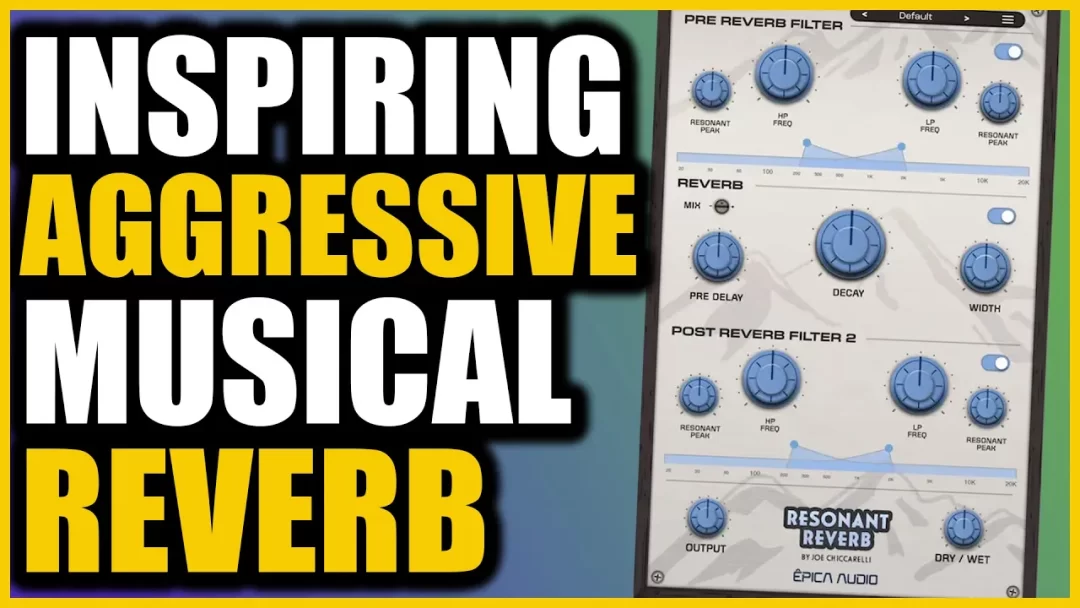

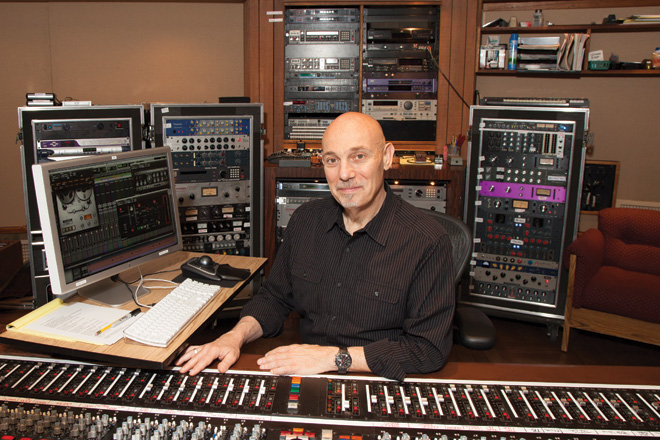
I’m incredibly fortunate to call Joe Chiccarelli a good friend, as well as one of the finest producers and engineers of his generation.
Joe’s extraordinary career began when Frank Zappa gave him his first major engineering opportunity on Sheik Yerbouti. He went on to engineer landmark Zappa albums including Joe’s Garage and has since worked with an astonishing range of artists including The White Stripes, The Strokes, U2, Beck, Elton John, The Killers, Jason Mraz, Alanis Morissette, Morrissey, The Shins and Michael Bublé.
His work with The Raconteurs on Consolers of the Lonely earned the Grammy Award for Best Engineered Album, Non-Classical, one of numerous Grammy and Latin Grammy wins across a career responsible for more than 60 million album sales and billions of streams.
Despite all those remarkable credits, Joe remains endlessly curious about sound. He is always experimenting, always listening and always searching for ways to make a recording feel more emotional and distinctive.
That spirit of experimentation is at the heart of Resonant Reverb, his creative new plugin developed in collaboration with Épica Audio.
You can explore and purchase Joe Chiccarelli’s Resonant Reverb from Épica Audio here.
We are also giving away copies of the plugin. Enter here for your chance to win Épica Audio’s Resonant Reverb.

Turning Reverb Into Part of the Arrangement
Reverb is usually treated as a way to create space.
We use it to place a vocal in a room, give a snare more size or push a guitar further back in a mix.
However, what happens when the reverb itself becomes part of the musical arrangement?
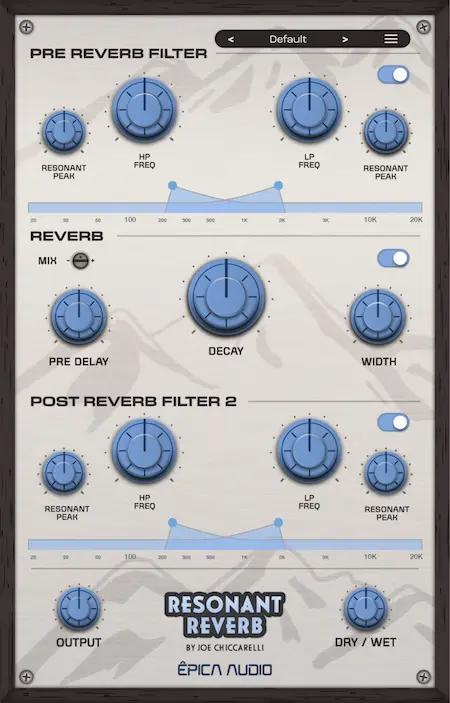
Rather than simply placing a sound into a conventional room, chamber or plate, Resonant Reverb allows you to shape the frequencies exciting the reverb, emphasise specific resonances and transform ordinary ambience into a completely new musical texture.
It can create everything from tightly focused drum tones and dark vintage rooms to strange vocal answers, animated synthesizer effects and reverbs that appear to generate their own notes.

The Thinking Behind Resonant Reverb
Joe has spent decades experimenting with unconventional signal chains while producing, recording and mixing records.
As he explained during our conversation, his approach to reverb processing originally began as a practical mixing solution. Filtering the reverb helped prevent ambience from occupying too much room inside a dense arrangement.
By removing unnecessary lows and highs, he could make the reverb sit in a carefully controlled part of the frequency spectrum without masking the instruments around it.
Joe remembered working on Harrison consoles whose high-pass and low-pass filters could be pushed to dramatic extremes. By heavily filtering a sound, it was possible to create a very narrow frequency band that occupied its own defined position in the mix.
Once plugins made more experimental filtering possible, Joe began pushing the idea much further.
Instead of simply cleaning up the reverb, he started increasing the resonance of the filters until the reverb developed its own identifiable note, vibration and character.
The ambience was no longer sitting quietly behind the source.
It had become an instrument.
More Than a Conventional Reverb
Resonant Reverb places resonant filtering both before and after the reverb.
The incoming sound can be filtered before it reaches the reverb, determining which frequencies excite the ambience. The resulting reverb can then be filtered again afterwards, allowing the final tail to be further shaped, exaggerated or controlled.
This makes it possible to create sounds that would normally require several separate plugins and a far more complicated effects chain.
You can use it subtly to carve out space, or push the filters into extreme resonance and generate something dramatically different from the original source.
As Joe explained, the plugin can perform the obvious task of shaping reverb so it does not occupy too much space. However, the real fun begins when you start getting strange with it.
Finding the Note Inside a Snare Drum
One of the most immediately useful applications is on snare drum.
During my demonstration, I used Resonant Reverb on a deliberately dry, dark and very 1970s-inspired drum recording.
The original snare already had a short reverb, but it needed slightly more impact and personality without making the overall drum sound brighter or more modern.
Using the resonant filters, I isolated and emphasised the low body of the snare, then searched for the upper frequency that gave the drum its bite.
The result was noticeably more dramatic.
Rather than simply adding a longer reverb tail, the plugin reinforced the natural tone of the drum. The ambience appeared to become part of the snare itself.
This is particularly effective with shorter decay times. When the reverb is clamped down tightly, the listener may not perceive an obvious tail. Instead, the drum simply sounds larger, more aggressive or more characterful.
You can also search for a narrow midrange resonance and blend it underneath an existing reverb. This is reminiscent of the classic Abbey Road technique of heavily filtering ambience so that it contributes a specific colour rather than a full-range wash.
Reverb Into Delay
Once a narrow, resonant snare ambience has been created, it can be fed into another effect.
Sending the processed reverb into a ping-pong delay produced a repeating snare texture with far more personality than a conventional delay applied directly to the drum.
This is where Resonant Reverb becomes particularly inspiring.
The plugin does not have to replace the reverbs already in your mix. It can sit alongside them as a specialised texture generator.
A traditional reverb can provide the believable room or sense of depth, while Resonant Reverb creates a filtered accent, repeat or tonal event that gives the track a unique identity.
Creating Coloured Piano Rooms
The plugin also worked beautifully on piano.
The piano in the session had been deliberately recorded and mixed with a dark, muted character. The artist wanted the instrument to feel as though it existed inside a noticeably coloured room rather than a bright, pristine space.
By reducing the high-frequency content and increasing the decay, Resonant Reverb immediately produced a darker and more atmospheric environment.
This is an important distinction.
Sometimes we do not want a realistic representation of a physical room. We want the impression of a room that has a particular emotional quality.
It may feel old, narrow, unstable, distant or slightly broken.
Resonant Reverb makes it easy to create that type of space without building a complicated chain of EQ, saturation, compression and reverb plugins.
Adding Texture to Kick Drums
Reverb on kick drums can be difficult.
Too much low-frequency ambience can quickly make a mix muddy, while too much high-frequency reverb can exaggerate the attack in an unnatural way.
The resonant filters allow you to decide precisely which part of the kick excites the effect.
You might emphasise the low thump, isolate the midrange knock or create a short filtered texture that makes the drum feel as though it belongs in a completely different room.
This can be especially effective when working with dry acoustic drums, electronic percussion or programmed kicks that need additional movement and extension.
Turning Unused Room Microphones Into Something Special
My favourite result from the demonstration came from a crushed mono room microphone.
The microphone had been recorded inside a small storage area behind the main drum room. Because very little high-frequency information entered the space, the recording was dark, compressed and unusual.
In the original mix, it felt largely unnecessary. No amount of conventional EQ seemed to make it contribute anything meaningful.
Resonant Reverb completely transformed it.
By feeding that dark room microphone into the plugin, removing the pre-delay and shaping the resonances, the microphone became an exciting atmospheric layer.
This highlights one of the plugin’s most valuable uses: rescuing imperfect or apparently unusable recordings.
A harsh drum microphone, an overly dark room channel or an unusual piece of spill can become the ideal source for resonant processing.
Instead of trying to correct the recording until it sounds conventional, you can push its imperfections further and turn them into character.
Designing Vocal Answers
Joe also suggested using the plugin to create vocal answers.
A long pre-delay can separate the effect from the original phrase, allowing the resonant reverb to appear after the vocal as a new musical event.
Because the reverb has a completely different frequency shape from the dry voice, it does not simply sound like a conventional echo.
It becomes another character in the production.
This works particularly well in spacious arrangements where there is room between vocal phrases. A heavily filtered reverb can emerge from behind the vocal, answer the final word and then disappear back into the track.
Blending this effect with a more conventional vocal reverb gives you both clarity and creativity. The regular ambience provides depth, while Resonant Reverb adds the unexpected tonal detail.
Synths, Pads and Electronic Music
Resonant Reverb is especially well suited to synthesizers, pads, risers and electronic percussion.
When a resonant filter is pushed hard enough, it begins to react musically to the notes entering it. Different frequencies excite the reverb in different ways, creating movement that feels connected to the performance.
Automating the filter frequencies can take this even further.
A static pad can gradually change colour as the resonant peaks move through its harmonic content. A riser can become increasingly unstable. A simple synth part can generate evolving reflections that almost function as additional notes.
Rather than adding another synthesizer layer, the reverb itself becomes the evolving sound.
Download the Multitracks
The song used throughout this demonstration is David Bennett’s “Under an Empty Sky.”
You can download the multitracks used in the video here and experiment with the session yourself.
It is a great opportunity to try Resonant Reverb on the same snare, kick, piano, vocal and room-microphone sources featured in the demonstration, then compare your own creative choices with the sounds explored in the video.
The Right Kind of Wrong
Many modern recordings begin with perfectly consistent samples, virtual instruments and carefully controlled performances.
There is nothing wrong with that. However, those sources can sometimes benefit from something less predictable.
Resonant Reverb is excellent for what I like to call wrongifying a sound.
It introduces the right kind of imperfection.
It can make a clean drum room feel crushed and strange, turn a straightforward piano into an instrument recorded in an imaginary space or transform a simple vocal reverb into a delayed tonal response.
The idea is not to make everything sound broken.
It is to introduce small moments that make the listener wonder what they just heard.
A Mixing Tool and an Inspirational Tool
Resonant Reverb can be used at either end of the production process.
At the beginning of a session, it can inspire new sounds and arrangements. A processed vocal, guitar or keyboard effect might influence the direction of the entire production.
At the end of a mix, it can provide the missing piece of character.
You may already have a strong balance, but one snare needs more angst, a piano needs a more distinctive environment or an unused room microphone needs to become meaningful.
Those are the moments where this plugin excels.
Final Thoughts
Joe Chiccarelli and Épica Audio have created something far more interesting than another general-purpose reverb.
Resonant Reverb can certainly handle practical mixing duties. Its pre- and post-reverb filtering makes it easy to remove mud, control brightness and position ambience inside a busy arrangement.
However, its real strength appears when you start taking chances.
Push the resonance. Shorten the decay until the reverb becomes part of the drum. Add a long pre-delay and turn a vocal tail into an answer. Feed it an unusable room microphone. Automate it across a synthesizer or run the result into a delay.
The stranger you allow it to become, the more rewarding it gets.
It perfectly reflects Joe’s approach to production and engineering: capture great tones, respect the song and never stop searching for something unexpected.
Before you go, do not forget to enter the giveaway for your chance to win a copy of Épica Audio’s Resonant Reverb.
You can also try the demo or purchase Joe Chiccarelli’s Resonant Reverb directly from Épica Audio here and begin experimenting with it in your own sessions.
Have a marvellous time recording and mixing
Warren