


There are some conversations that feel less like an interview and more like being invited into the control room with two old friends who have made a lifetime of records together. That is exactly what happens when producer, engineer, mixer, songwriter, and musician Bob Marlette sits down with the great John 5 for this free guitar recording course.
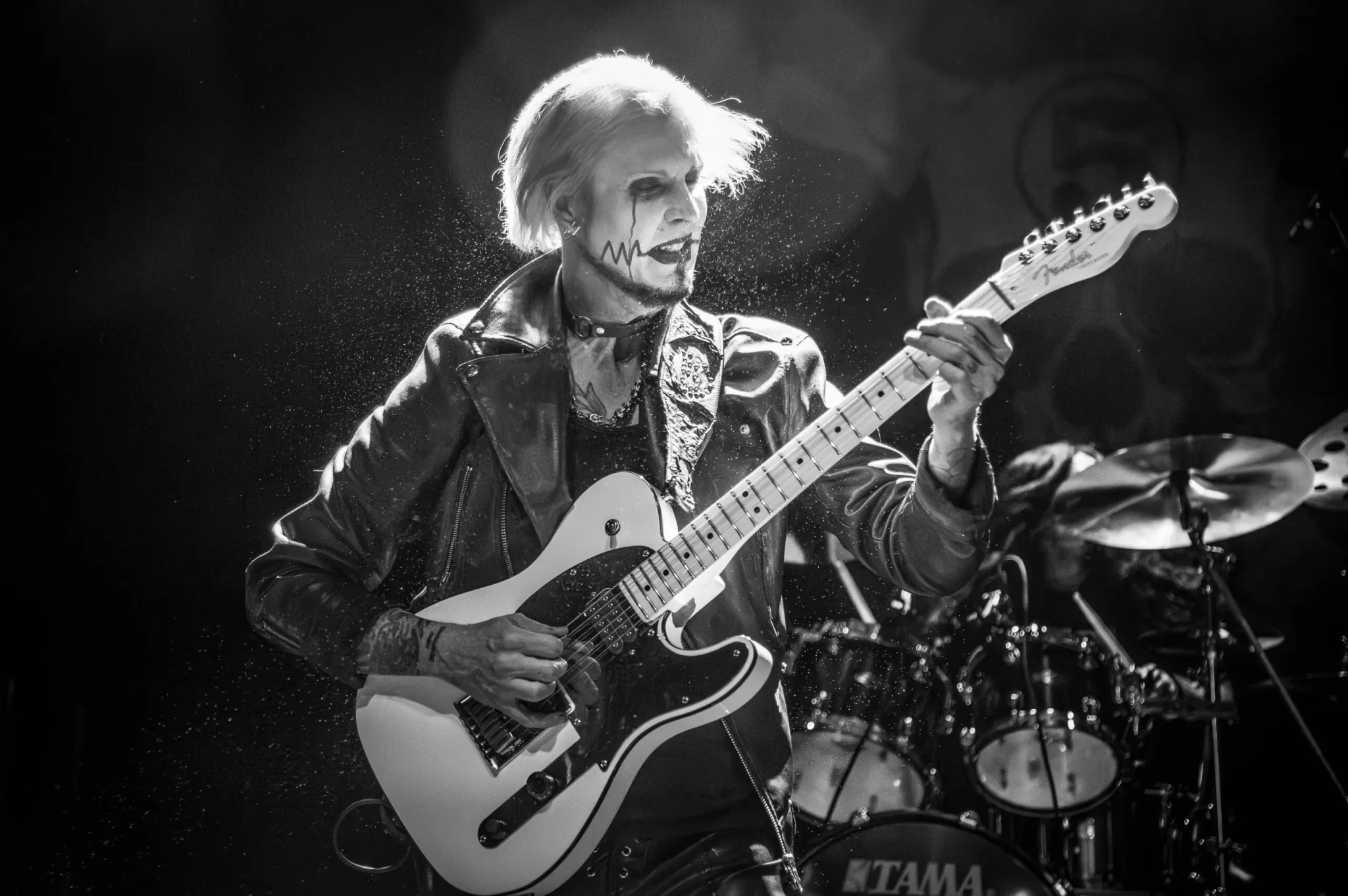
John 5 is one of the most distinctive and technically brilliant guitarists of the modern era, known for his work with Mötley Crüe, Rob Zombie, Marilyn Manson, David Lee Roth, and his own solo work with John 5 and The Creatures. His playing combines precision, speed, musicality, humour, and a deep love of guitar history.
Bob Marlette’s credits span decades of rock, metal, pop, and heavy music. As a producer, mixer, engineer, songwriter, and musician, he has worked with artists including Black Sabbath, Rob Zombie, Rob Halford, Alice Cooper, Shinedown, Seether, Saliva, Lynyrd Skynyrd, David Lee Roth, and many more. He is one of those rare producers who can talk about the technical side of making records in immense detail, while always bringing it back to the song, the player, and the emotional impact.
Together, John and Bob have a friendship and creative relationship that goes back roughly 30 years. In this conversation, they talk about the records they made, the lessons they learned, the evolution of home studios, the importance of clarity in heavy guitar tones, and why the best guitar sound still begins with the person holding the instrument.
This is more than a nostalgic catch-up. It is a free guitar recording course with John 5 and Bob Marlette, full of practical lessons for guitarists, producers, engineers, and anyone trying to make heavier, clearer, wider, more exciting guitar recordings.

“Did We Just Become Best Friends?”
Bob and John first met through Rudy Sarzo, the legendary bassist known for his work with Quiet Riot and Whitesnake. Almost immediately, they connected.
John jokes that it was like the famous scene in Step Brothers: “Did we just become best friends?”
The answer, clearly, was yes.
They shared the same sense of humour, the same love of music, and the same willingness to dive fully into the creative process. John remembers Bob taking him under his wing, helping him understand not just what to play, but how to work in the studio, how to listen, how to perform live, and how to channel all of that youthful energy into something recordable.
John says that he still uses those lessons every day.
That is one of the recurring themes of this discussion. Great production is not just gear. It is mentorship. It is trust. It is experience. It is the willingness to listen, absorb, and grow.
Bob says John was an open book, eager to learn, and that made the relationship fun for him as a producer. Some artists come in convinced they already know everything. John came in like a sponge.
That openness became the foundation for decades of work together.
You can get Mixing Modern Rock with Bob Marlette now for only $27 here:
https://promixacademy.com/course/mixing-modern-rock-with-bob-marlette/

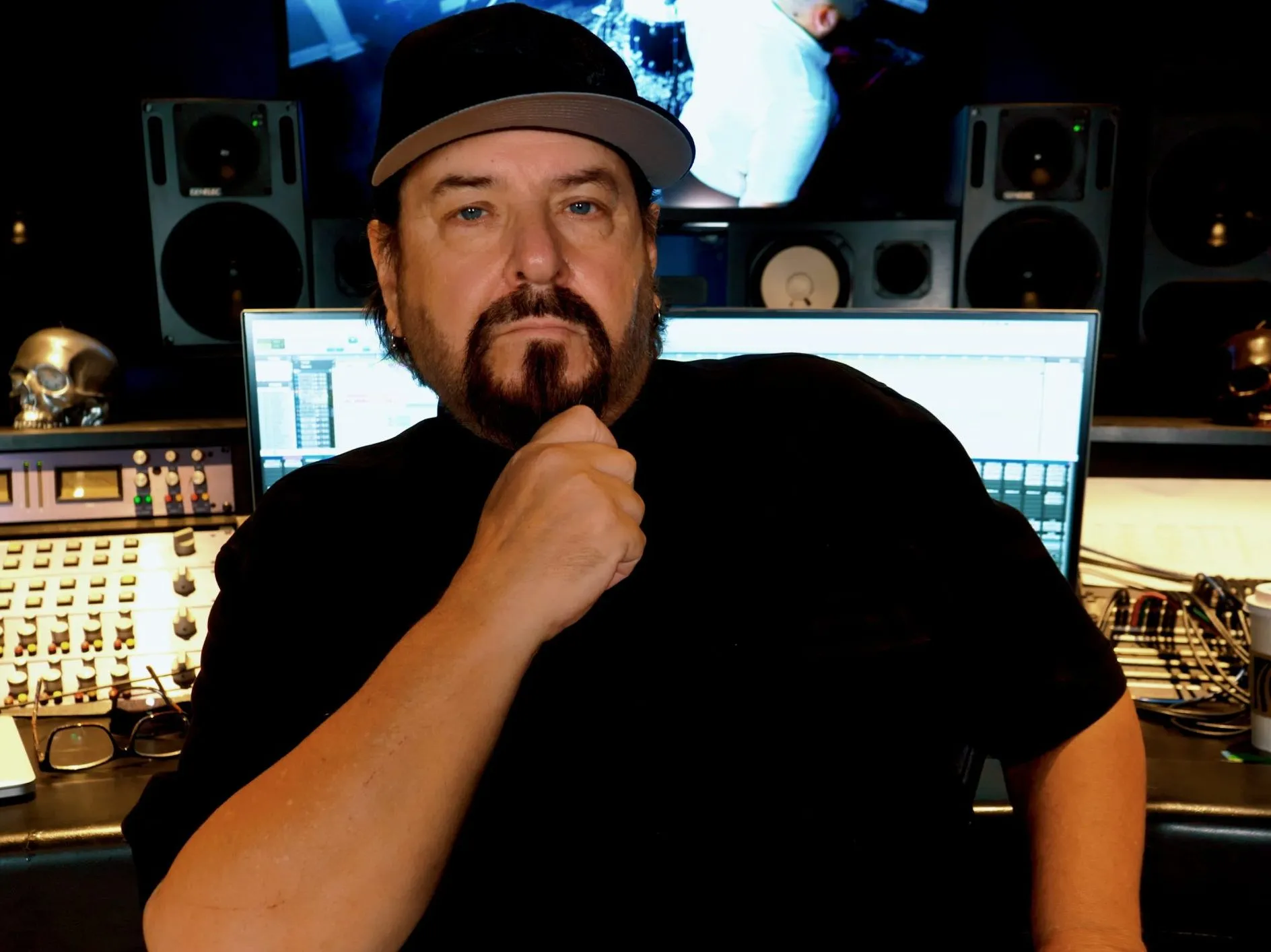
Bob Marlette’s Studio: A Home Base Before Home Studios Were Normal
One of the most fascinating parts of the conversation is John’s reflection on Bob’s home studio. Today, the idea of a serious home studio is completely normal. In fact, many modern records are built in private writing rooms, project studios, and hybrid home setups.
However, Bob had been doing it since the mid-1980s.
John points out how unusual that was. Back then, everyone went to commercial studios. Big rooms, big consoles, big budgets, big schedules. Bob chose to build his own environment instead.
Bob laughs and says some of it was simply because he did not want to drive all over town. However, the deeper reason was control.
Having his own studio allowed him to control the budget, the room, the workflow, the monitoring, and the creative atmosphere. He knew what the speakers sounded like. He knew where the sweet spot was. He knew how much low end was right in that room. He knew how bright things needed to be.
That is a huge advantage.
As Bob points out, when you walk into an unfamiliar studio, one of the biggest questions is, “What am I listening to?” Every room is different. Every set of speakers is different. Even the listening position changes your perception of the mix.
In his own studio, Bob knows the environment. That lets him move faster, make decisions with confidence, and create a more relaxed atmosphere for the artists.
John agrees. A home studio can feel more comfortable, more laid back, and more conducive to real creativity. He jokes about Bob’s couch being so comfortable that Tony Iommi once fell asleep on it.
That image says a lot. This is a serious working studio, however it is also a place where musicians can relax, laugh, hang out, and make music.
The Producer as Teacher, Therapist, and Safety Net
Bob describes production as much more than technical work.
Yes, a producer needs musicality. They need to understand songwriting, engineering, mixing, playing, arrangement, and sound. However, Bob says that is only the skill set.
The real job is knowing the artist.
A producer has to understand how to pull the best performance out of someone. Sometimes that means teaching. Sometimes that means being a therapist. Sometimes that means being a safety net.
That idea is especially powerful in the context of his relationship with John 5. Bob helped John understand what worked in the studio, what did not, how to refine ideas, and how to focus his immense energy into great records.
Eventually, Bob says, John just ran with it.
There is a lovely moment where Bob describes watching John grow creatively, almost like watching his “little boy” grow up. It is funny, affectionate, and very telling. Their relationship was not just transactional. It was musical, personal, and built on trust.

The Records They Made Together
The conversation becomes a remarkable walk through rock history.
John and Bob remember working on sessions and records involving John Wetton, Robin Zander, Rick Springfield, Wilson Phillips, Red Square Black, Rob Halford, Lynyrd Skynyrd, Rob Zombie, Loser, Lita Ford, Union, Tony Iommi, and many more.
Bob jokes that he has made so many records that interviewers will sometimes ask him about a snare sound from a record and he has to stop and think, “Did I do that record?”
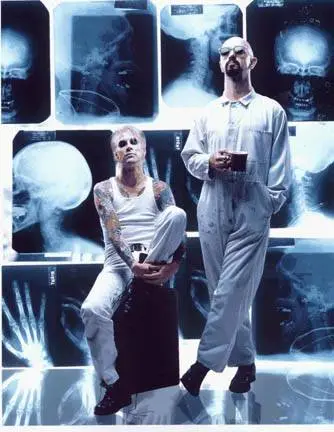
For Bob, one of the pivotal records in his relationship with John was Red Square Black. It was a departure, darker, more industrial, more visual, more aggressive, and creatively freeing. John remembers Bob as almost a fifth member of the band, involved not only in the sound, but also in the visuals and the overall concept.
That kind of collaboration is rare. It is not just producing a band. It is helping shape a world around the music.
They also talk about the Rob Halford record, and the famous split between Bob’s original mix and Trent Reznor’s later version. Bob is respectful of Trent, however he makes it clear that he and John had a very strong vision for what that record was supposed to be. They wanted it to be heavy, brutal, inventive, and new for Rob Halford.
Bob remembers talking with Rob about the fact that he had already been Judas Priest, already been the Metal God, already done Fight, and already proved himself in that world. So why not explore? Why not push into new territory?
Rob was open to it, and that openness allowed them to create something that people still argue about, celebrate, and rediscover.
That is usually the sign of something interesting.


Lynyrd Skynyrd, “Gifted Hands,” and Musical Surprise
Bob also thanks John for introducing him to Lynyrd Skynyrd, which led to Bob producing a couple of Skynyrd records.
One of the funniest moments comes when Bob talks about his wife playing “Gifted Hands” on her playlist, loving the song without initially realising that Bob had worked on it and that John was playing guitar on it.
It is a small moment, however it says something lovely about music. Sometimes a song simply connects with people, detached from credits, history, genre, or expectation.
Bob says he was surprised how well he clicked with the Skynyrd camp, however the sessions turned out to be magical. Great people, great songs, great chemistry.

Writing with Rob Zombie in the Room
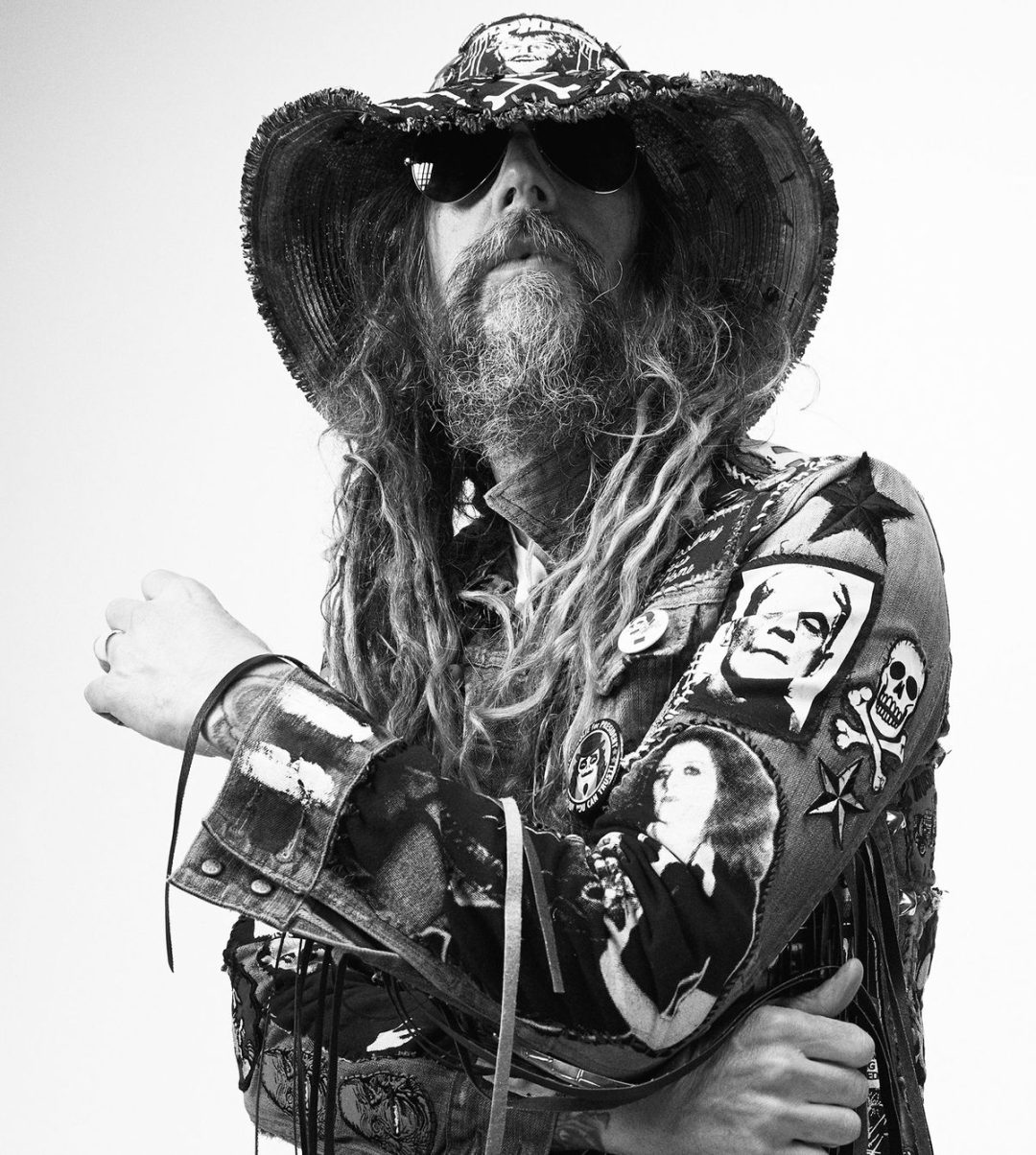
The Rob Zombie story is a brilliant lesson in being willing to abandon the plan.
Bob and John had prepared 10 to 15 ideas before working with Rob. They were excited about them. They were having fun. Then Rob arrived, listened, and essentially pointed them in an entirely different direction.
Not one of those prepared ideas was used.
Instead, they wrote the record in the room, on the spot.
John says he is glad they did, because it became a killer record. Bob agrees. It worked because the three of them were together, reacting in real time, listening to what Rob wanted, and allowing the direction to reveal itself.
That is a crucial production lesson. Preparation is valuable, however the artist’s vision matters more. If the energy in the room tells you to go somewhere else, go there.
The Evolution of Recording Technology
Because Bob has had such a long career, he has lived through enormous technological change.
He started on four-track machines. Then came eight-track, then sixteen-track, then ADATs, then modern DAWs with seemingly unlimited track counts.
John remembers when Bob got ADATs and everyone thought it was incredible technology. Red Square Black was the first record Bob made entirely on ADATs, using multiple machines that could take ages to sync.
Today, Bob routinely works on sessions with 150 tracks or more.
That change has transformed how records are made. In the old days, you might have to put hi-hat, tambourine, and a background vocal on the same track in different sections of a song. Now, every part can have its own lane, its own processing, its own editing, and its own place in the arrangement.
However, Bob does not present technology as a replacement for musical judgement. Technology gives you options. It gives you control. It lets you work in a home environment in ways that would once have been impossible.
The goal is still the same: serve the song.
Click Tracks, Red Lights, and Playing with the World’s Best Percussionist
The click track stories are some of the funniest and most educational parts of the discussion.
John recalls a major drummer taking off his headphones, shaking them, putting them back on, then taking them off again, before telling Bob there was a clicking noise in his headphones that was throwing him off.
That was the click.
Bob says that, at that time, many players had simply never worked with clicks. Today, clicks are part of everyday recording, especially because editing and arrangement work often rely on a stable tempo grid. However, for many old-school players, it was a foreign concept.
Bob tells another great story about working with Black Stone Cherry. The band were nervous because they had heard Bob liked using clicks. Instead of forcing a harsh metronome into the drummer’s headphones, Bob created a musical guide with shaker and side stick. Then he explained it as playing with the world’s best percussionist, someone so perfect he would never drift.
That is brilliant production psychology.
He did not make the click feel like a machine. He made it feel like a musician.
John also remembers using a visual click during Red Square Black live shows, before in-ears were common. Instead of hearing an audio click, he had a box with a red light pulsing to the tempo.
That is dedication. It also shows how far ahead of the curve they were, running programmed lights and tapes at a time when that was not common in rock performance.

Black Sabbath, Tony Iommi, and the Invention of Heavy
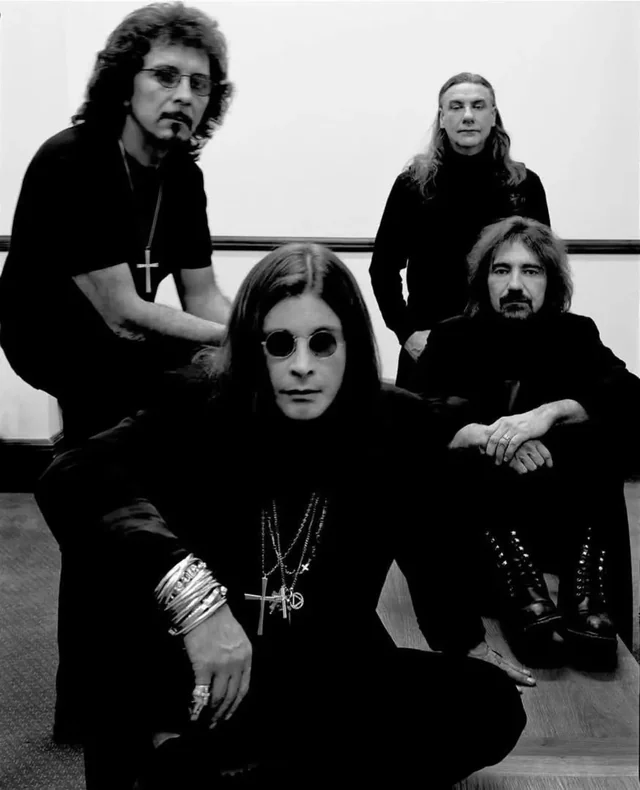
The conversation takes a beautiful turn when Bob and John discuss Tony Iommi and Black Sabbath.
Bob worked with Tony Iommi on his solo material and was later asked to work on the Black Sabbath reunion project. He remembers being in the control room with Dave Grohl while Tony was out in the live room playing through his Laney amps. Dave looked over and said, “Dude, we’re working with Tony Iommi.”
It is a wonderful reminder that even legends have their own legends.
John talks about Tony as someone who reinvented the wheel. He came up with riffs and a whole style of music that changed everything.
Bob also shares a fantastic story about gathering the members of Black Sabbath in a room at Henson. The room was packed with assistants, everyone trying to manage the moment. Bob finally stopped everything and said that anyone who was not in Black Sabbath needed to leave.
Once it was just the band, the energy changed. After a few awkward moments, Ozzy leaned over to Tony and said, “Remember that time you set Bill on fire?” What followed was an hour of outrageous, hilarious stories.
Beyond the humour, Bob also talks about Tony’s playing in detail. Because Tony lost the tips of two fingers, fifths became a huge part of his guitar style. However, Bob points out that Tony often varied those fifths, giving the riffs width and size, especially because there was no second guitarist.
That is the real genius. Limitation became invention. Invention became style. Style became a genre.

Tone Is in the Hands
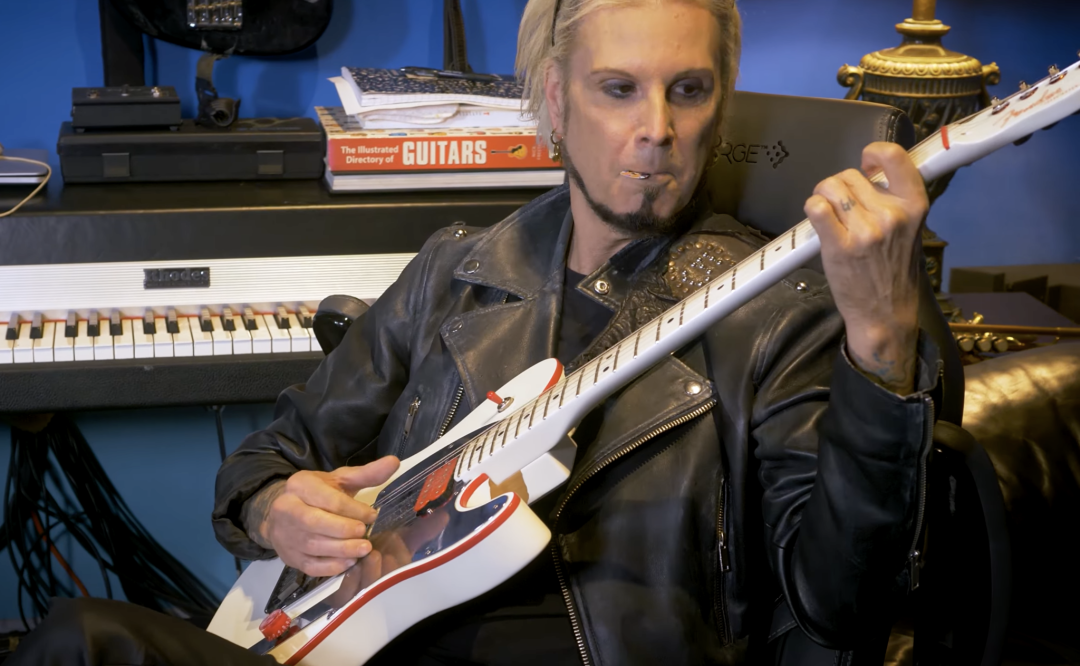
After the stories, Bob brings the conversation back to the heart of the free guitar recording course: tone.
One of the most important ideas he shares is that the guitar player creates the tone as much as the equipment does.
Bob tells a story about working with Carlos Santana and Neal Schon. Neal arrived with a huge rig, stacks, pedals, gear, and a crew. Carlos had a much simpler setup. At one point, Carlos picked up Neal’s guitar and played through Neal’s entire rig.
It still sounded like Carlos Santana.
That is the lesson.
The guitar matters. The amp matters. The pedals matter. The mic matters. However, the player’s touch, picking, phrasing, timing, vibrato, and personality are what truly define the sound.
Bob says that when he is building tones for John, he is trying to facilitate John’s thing. He wants it heavy, however he also wants enough clarity that everyone can hear what John is playing.
John immediately agrees and says that clarity is one of the most important lessons Bob taught him. Even live with Mötley Crüe, John wants his guitar to be clear. He says that when people tell him his sound is “too clean,” he takes it as a compliment.
That is a huge point.
Heavy does not mean blurry. Heavy does not mean unusable amounts of gain. Heavy does not mean losing the notes.
Some of the biggest guitar sounds ever recorded are surprisingly clear.

Why AC/DC and Van Halen Still Sound Massive
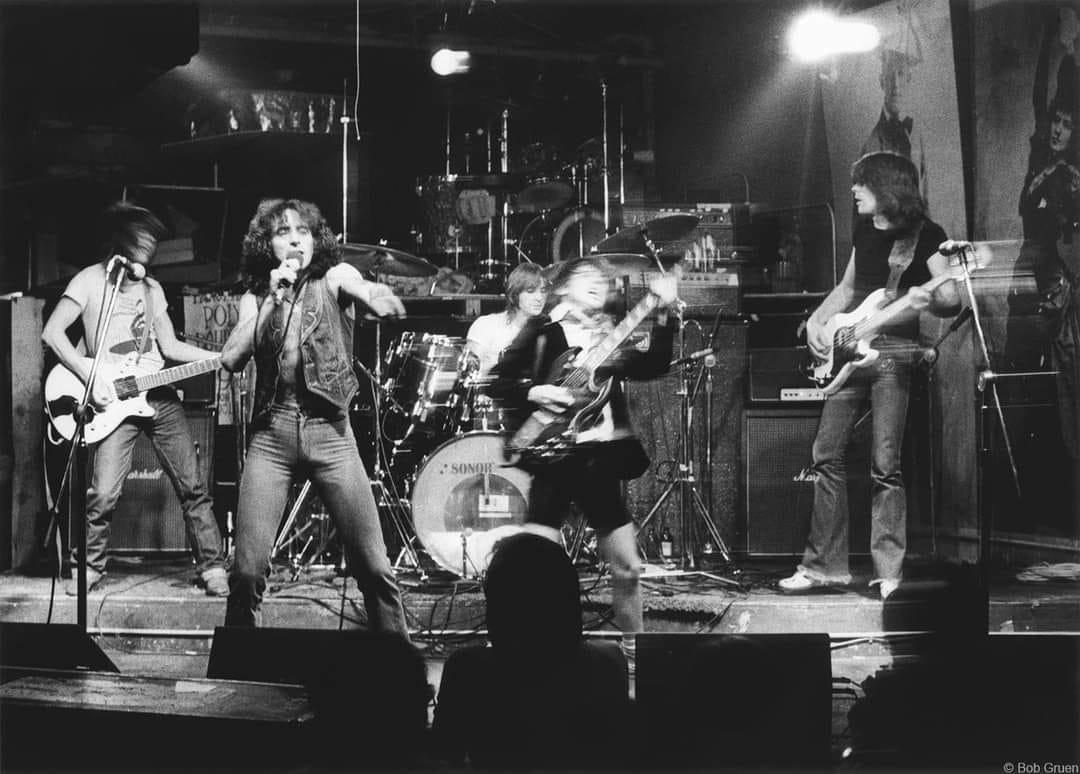
John and Bob use AC/DC as the perfect example.
Those guitar tones are not over-saturated. They are clean, loud, clear, punchy, and completely powerful. You can hear the notes. You can hear the pick. You can hear the groove.
Bob says that when an AC/DC song plays in a stadium, it still cuts through because it is clear and powerful. That is the goal.
They also talk about early Van Halen tones. Eddie Van Halen did not need a distortion pedal. The sound came from the amp, the voltage, the touch, the guitar, the feel, and the player. It was organic and amp-driven, not buried in gain.
The lesson for guitarists is simple, however incredibly important: too much gain can make your guitar sound smaller.
It may feel exciting when you are standing right next to the amp, however in a full band, in a mix, or in a large venue, excessive gain can become mush. The notes disappear. The attack disappears. The riff disappears.
If the listener cannot distinguish the notes, Bob asks, what is the point?
Building Heavy Guitar Tone in Zones
Bob then walks John through his approach to building heavy guitar tones using different amps as tonal components.
For the session, he uses four amps:
A Bogner for bite and midrange character.
A Diezel for thickness and body.
A Mesa Dual Rectifier for heavier gain and aggression.
An old-school Marshall that is almost clean, adding clarity and articulation.
The idea is that no single amp has to do everything. Each one handles a different part of the tone. Bob can blend them quickly, shifting the sound in seconds without interrupting the creative process.
This is one of the core lessons of the free guitar recording course.
Do not just think of guitar tone as one sound. Think of it as a blend of components. One element can provide bite. Another can provide body. Another can provide aggression. Another can provide clarity.
Together, they create a huge sound that still has definition.
The SM57 Still Works
Bob is refreshingly direct about guitar microphones.
After more than 50 years of making records and trying all kinds of mics, the Shure SM57 remains his go-to on guitar cabinets.
He also uses ribbon mics, including Royers, and sometimes other choices like a 609, however the 57 is still the foundation. It works. It captures the midrange, attack, and aggression of a guitar cabinet in a way that sits beautifully in a mix.
That is another great lesson. You do not always need exotic gear to make a great guitar record. You need the right tool, placed well, in phase, in a room that is not fighting you.
Phase, Isolation, and Avoiding Boxy Reflections
Bob’s studio setup is built so that amp heads can be controlled from the main room while the cabinets are isolated in a separate sealed area. Each cabinet is miked, phase-aligned, and treated so that the microphone captures the speaker rather than the room bouncing back into it.
This is especially important for anyone recording guitars at home.
If a reflective surface is too close to the speaker, the sound comes out of the cabinet, hits the surface, and bounces back into the mic. That can create a boxy, phasey, “coney” sound that is hard to fix later.
Bob’s solution is heavy absorption around the cabinets, so the microphone hears the direct energy from the speaker.
That might sound like a small technical detail, however it can be the difference between a guitar tone that sounds professional and one that sounds like it was recorded in a box.

Working Fast When Creativity Happens
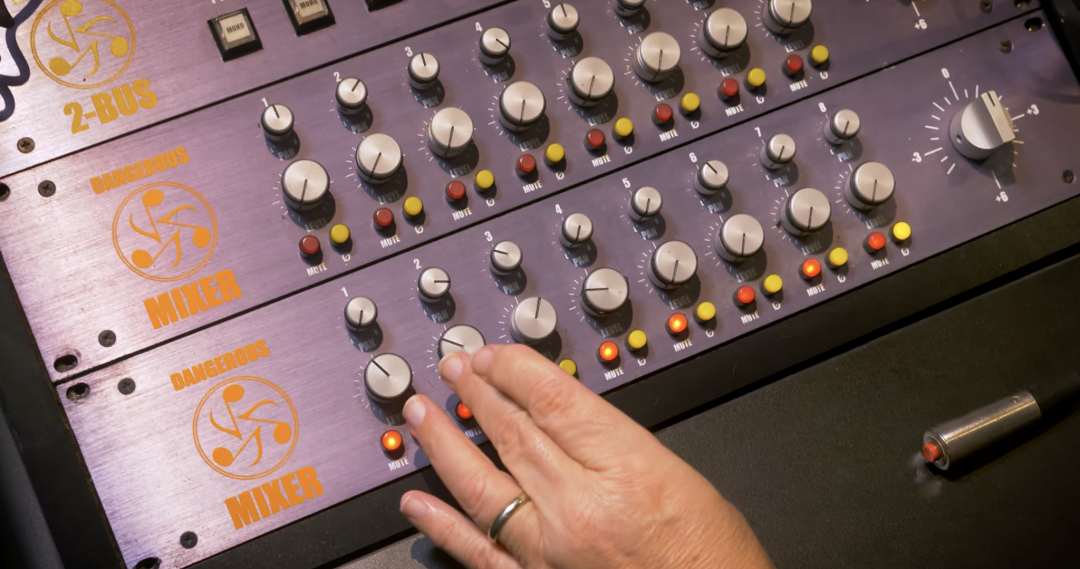
Bob hates wasting time when the creative energy is flowing.
If John plays something great, Bob wants to capture it immediately. He does not want to stop the session for half an hour to rebuild the tone. That is why his setup is designed around flexibility.
By blending amps, using DI, having plugin options ready, and knowing his room, Bob can quickly recolour the sound to fit the part.
That is the difference between engineering as a technical exercise and engineering as part of the creative process.
The technology should support the idea. It should never get in the way of the performance.

Amp Modelling, Plugins, and Not Being a Purist
One of the most interesting parts of the conversation is Bob’s honesty about amp modelling.
He says his view on amp modelling plugins has changed dramatically because they have become so good. In fact, when Warren called him about doing this session, Bob realised he had to turn his amps on because he had been using plugins so much.
John is surprised by that, however Bob explains that modern amp plugins give him excellent tones, flexibility, and control. He can run DI through an Avalon, then explore different plugin sounds quickly.
Bob is not a purist. He has never been a purist. His attitude is simple: if it sounds good, it is good.
At the same time, he still loves real amps. There is something visceral about a speaker moving air. There is an energy that happens when you feel the cabinet in the room.
However, Bob wants the freedom to choose. Real amp, plugin, modeller, pedal, DI, hardware, in the box, out of the box, it all depends on the song and the moment.
That is a very modern, very useful mindset.
Making Guitars Wide
Bob has always loved wide guitar sounds.
He explains that one of the reasons classic records often sounded so wide was that they had two different guitar players. Different hands, different guitars, different amps, different tones. The left and right sides naturally had contrast.
In modern productions, where one guitarist may be playing all the parts, Bob creates that contrast deliberately.
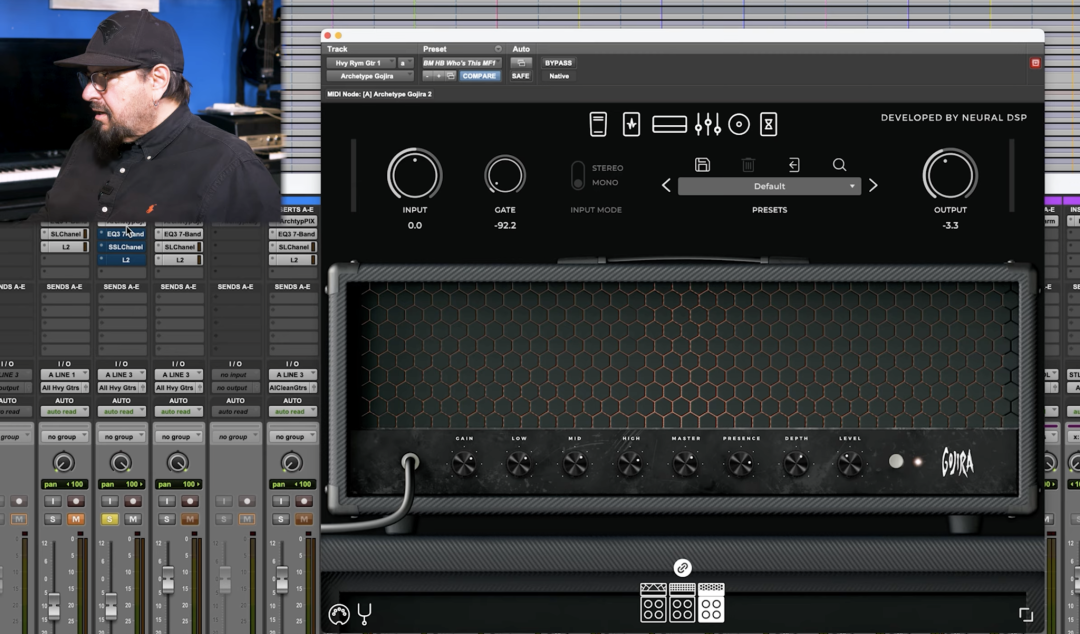
One side might be a Telecaster. The other might be a Les Paul. One side might be real amps. The other might be a plugin, such as the Neural DSP Gojira. One side might have more midrange bite. The other might have more body.
The key is that the left and right sides should not be identical. Difference creates width.
Bob then shows how he shapes the tones with EQ. He often filters out low lows around 80Hz or higher, listening carefully to remove mud without thinning out the guitar. He likes useful low-end punch around 180Hz, body around 240Hz, bite around 2kHz to 2.5kHz, and presence around 5kHz to 6kHz.
He rarely uses compression on heavy guitars in the mix because distorted guitars are already compressed by the amp and saturation. Instead, he uses EQ and sometimes a limiter like an L2 to control peaks and bring the tone forward.
This is incredibly practical information for anyone recording guitars at home. Width is not just panning. Width comes from performance, tone, contrast, and careful EQ.
The Yellow Overdrive Pedal
John and Bob also talk about John’s famous yellow overdrive pedal.
Bob remembers it from the earliest sessions with John. John still uses it today.
That is a lovely reminder that great gear does not have to be complicated. John 5 has access to anything, however one small pedal has remained part of his sound because it works. It gives him that extra push, that controlled chaos, without overwhelming the tone.
The lesson is simple: when you find something that responds to your playing, keep it.
The Real Lesson: Find Your Own Sound
Near the end of the course, Bob brings everything back to individuality.
Experiment. Turn knobs. Push buttons. Try strange settings. Sweep the EQ. Listen. Find the sweet spot. Pull it back. Learn what works for your hands, your guitar, your song, and your taste.
Bob started in a time when there were no engineering schools teaching this stuff. He learned by being in the studio, asking what buttons did, making mistakes, and listening.
That spirit is still the best way to learn.
The point of this free guitar recording course with John 5 and Bob Marlette is not to copy one setting or one amp chain. It is to understand the thinking behind the sound.
Heavy guitar tone is about clarity.
It is about the player.
It is about the song.
It is about knowing how much gain is enough.
It is about building tones in layers.
It is about getting width through contrast.
It is about using real amps, plugins, pedals, mics, and EQ as tools, not rules.
Most of all, it is about discovering your own thing.

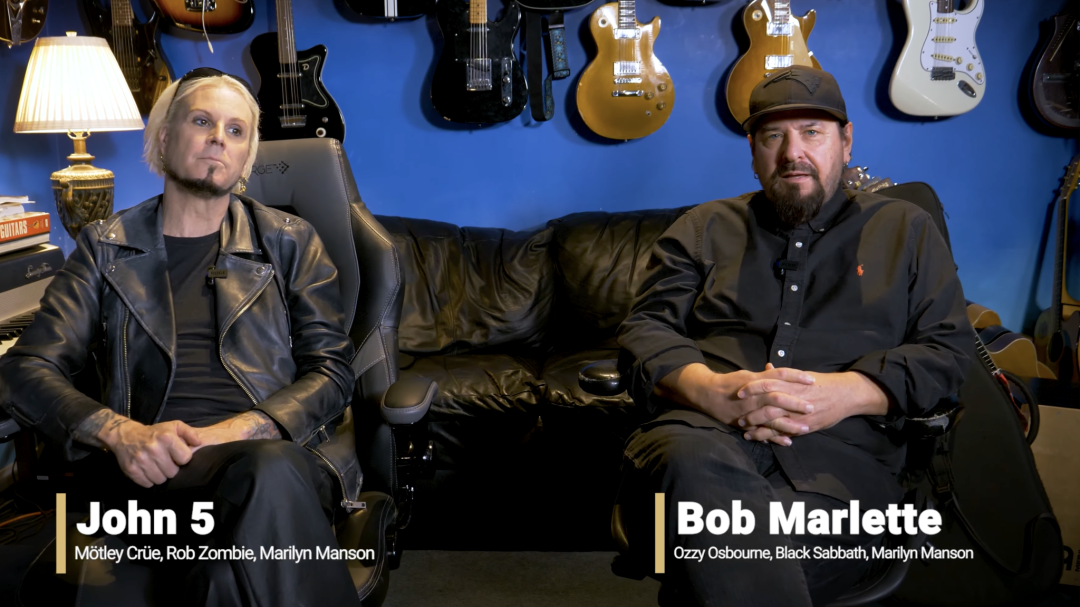
Watch the Free Guitar Recording Course with John 5 and Bob Marlette
This free guitar recording course is a rare chance to sit in with John 5 and Bob Marlette as they discuss tone, production, recording, performance, and decades of shared musical history.
You will hear how Bob builds massive guitar tones, how John thinks about clarity and live performance, why too much gain can ruin a heavy sound, how to use different amps and plugins together, and why the player’s hands will always matter most.
For guitarists, producers, engineers, and home studio owners, this is an incredibly valuable lesson in making heavy guitars sound powerful, wide, clear, and musical.
Go Deeper with Bob Marlette
If you enjoyed hearing how Bob Marlette thinks about guitar tone, production, clarity, width, and impact, you can go even deeper with his Mixing Modern Rock course at Pro Mix Academy.
In Mixing Modern Rock with Bob Marlette, Bob breaks down how he approaches a full modern rock mix, balancing drums, bass, guitars, vocals, energy, width, and power with the same practical, musical thinking you hear in this discussion.
You can get Mixing Modern Rock with Bob Marlette now for only $27 here:
https://promixacademy.com/course/mixing-modern-rock-with-bob-marlette/
Final Thoughts
What makes this conversation so special is the balance of wisdom and friendship.
Yes, there is a huge amount of technical information here. Amps, mics, phase, EQ, plugins, DI, modelling, compression, panning, width, and gain are all covered in real detail.
However, underneath it all is something more important: a 30-year creative relationship between two people who genuinely love making music.
John 5 still carries the lessons Bob taught him. Bob still speaks about John with pride, affection, and admiration. Together, they remind us that great records are made through trust, listening, humour, experimentation, and a lifelong love of sound.
That is the real course.
And, of course, have a marvellous time recording and mixing.