
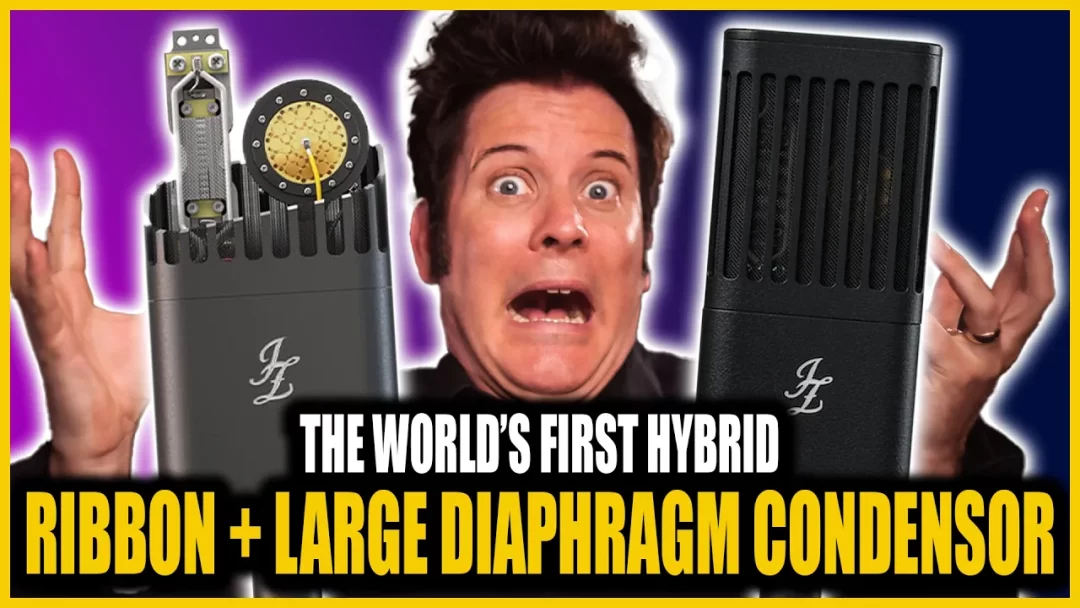

There are moments in recording when someone looks at a problem that has existed for decades and asks a wonderfully simple question.
Why has nobody done this before?
That is exactly what happened with the JZ Microphones MU-1, a microphone designed by Grammy-winning producer, recording engineer and mixer Marc Urselli. On paper, the idea sounds almost obvious. Put a ribbon element and a large-diaphragm condenser capsule inside the same microphone. Make sure they are phase-aligned. Make sure they are level-matched. Give the engineer both sounds separately, from one source, on one stand, without the usual alignment headaches.
In practice, that is a huge achievement.
The MU-1 is described by JZ Microphones as the world’s first ribbon and large-diaphragm condenser hybrid studio microphone. It combines the warmth and body of a ribbon with the clarity and detail of JZ’s Golden Drop™ large-diaphragm condenser capsule, housed in one phase-coherent microphone design.
That distinction matters. The MU-1 is not simply pairing a ribbon with a small condenser element. It combines a ribbon with a true large-diaphragm condenser capsule, giving engineers two separate, phase-aligned signals that can be recorded, processed and blended with complete control.
That is where it becomes very exciting.
Download the MU-1 multitracks here:
https://producelikeapro.lpages.co/chris-st-hilaire-bad-day-form/
You can get the JZ Microphones MU-1 here:
Use the code PLAP10 at checkout for an additional 10% off the MU-1 preorder.

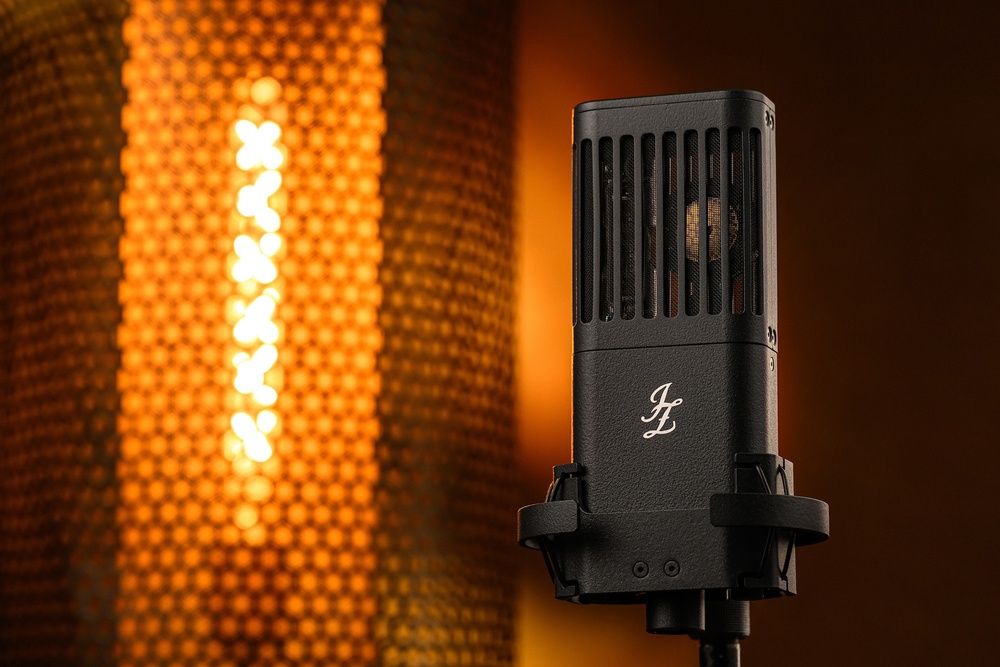
Ribbon Warmth, Large-Diaphragm Condenser Detail
The MU-1 is not simply a microphone with two tonal options. It is a recording system in a single body.
It gives you the detail, air and immediacy of a large-diaphragm condenser, along with the warmth, weight and natural smoothness of a ribbon. More importantly, it allows you to record those elements separately and blend them in whatever way the source, the song and the mix require.
JZ’s design uses independent dual outputs via a 5-pin XLR split, meaning the ribbon and large-diaphragm condenser signals can be recorded separately and blended later. That opens up a huge amount of flexibility. You can treat the large-diaphragm condenser and ribbon like two perfectly aligned microphones, however you do not have to deal with two stands, two placements and the constant worry of phase cancellation.
The MU-1’s patent-pending hybrid capsule architecture is the heart of the design. The ribbon and large-diaphragm condenser elements are built to work together, phase-aligned and level-matched, so they blend naturally.
For anyone who has spent years putting two microphones on a guitar amp, a piano, a bass cabinet, a vocal or a horn, this is a big deal.
A Microphone Born From Real Studio Problems
Marc Urselli is exactly the kind of person you would want designing a microphone like this. He is not approaching it as a theoretical exercise. He is approaching it as someone who records real musicians, in real rooms, every day.
Marc is a Grammy-winning producer, engineer and mixer with more than 30 years of experience, and his credits include Lou Reed, Nick Cave, U2, Elton John, Jeff Beck, Buddy Guy and Les Paul.
He is also a serious microphone connoisseur. In the interview, Marc mentions owning somewhere in the region of 300 to 350 microphones, with a large portion of them being ribbons. That is not casual enthusiasm. That is a lifelong obsession with tone, texture and the way different microphones respond to real instruments.
Marc has also been a JZ Microphones user since around 2010 and has long relied on the JZ Black Hole in his studio. The MU-1 uses JZ’s Golden Drop™ large-diaphragm condenser capsule technology, and Marc specifically references his love for the Black Hole capsule family during the session.
The idea behind the MU-1 came from his years of blending ribbon and large-diaphragm condenser microphones. Like many of us, Marc would use one microphone for body and another for detail. The problem was always the same.
Phase.
When two separate microphones are placed on the same source, even tiny differences in distance can change the sound dramatically. Move one microphone slightly and the low end shifts. Change the angle and the midrange changes. Ask a sax player to sit down halfway through a session and now you are moving two stands, checking alignment again and hoping the relationship still works.
The MU-1 solves that by putting the ribbon and large-diaphragm condenser elements together in one microphone.
One stand. One position. Two separate sounds. No phase guessing.
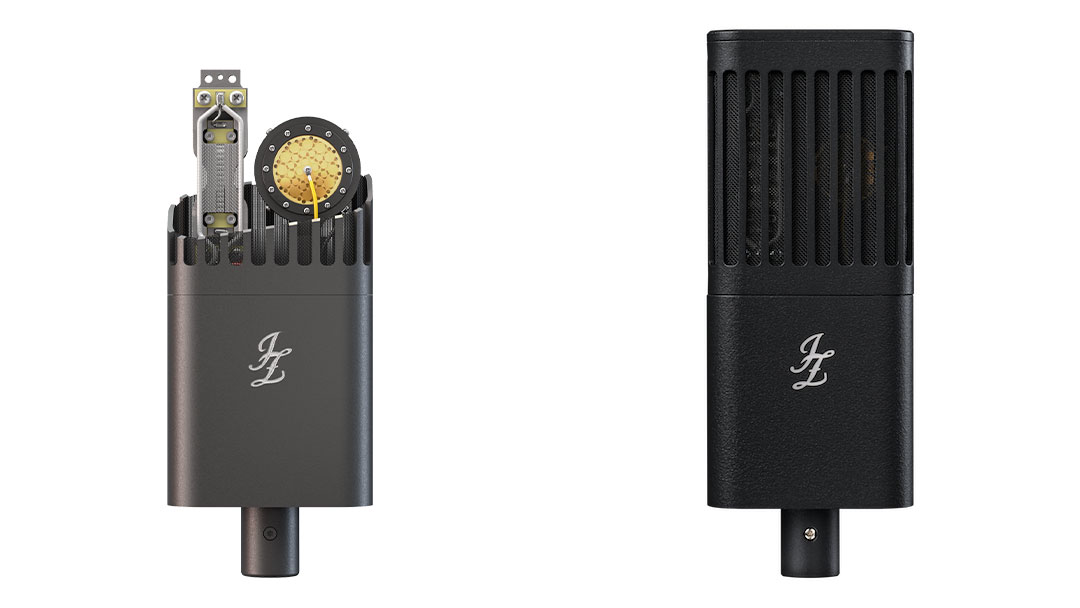
The large-diaphragm condenser element in the MU-1 gives the microphone its clarity, focus and extended detail.
JZ’s Golden Drop™ technology is a major part of this. The company describes the design as making the capsule diaphragm lighter, allowing it to move faster. The result is improved clarity and precision, with reduced colouration and distortion.
In practical terms, the large-diaphragm condenser side is what brings articulation.
On a vocal, it gives you breath, consonants and immediacy. On piano, it gives you the attack of the hammers and the harmonic detail. On guitar, it gives you the upper midrange bite that helps the instrument speak in a dense mix. On drums, it captures cymbal definition and transient information.
In other words, it gives you the information.
That does not mean it has to dominate the sound. One of the great things about the MU-1 is that the large-diaphragm condenser can be used as the detail layer. You can bring it in just enough to give the source definition, while letting the ribbon provide the weight and body.
That is a very musical way to work.
The Ribbon Side
Ribbon microphones have a special place in recording history. So many of the records we love were made with ribbons. They have a way of presenting sound that feels natural, smooth and three dimensional.
The ribbon side of the MU-1 brings girth, low end and a darker, more forgiving top end. On vocals, that can be incredibly useful when a singer has a lot of sibilance. Rather than immediately reaching for EQ or a de-esser, you can simply lean more on the ribbon side. It smooths the voice naturally, without making it feel processed.
On bass, the ribbon gives you size and warmth. On guitar amps, it gives you thickness and room interaction. On drums, because the ribbon has a figure-of-eight pickup pattern, it captures more of the room and ceiling reflections, giving the overheads a sense of space that a cardioid condenser alone might not deliver.
That is one of the most interesting things about this microphone. The two elements are not just two EQ curves. They behave differently. The large-diaphragm condenser gives you a focused capture with clarity and detail. The ribbon gives you body and, depending on the source and placement, a greater sense of the room.
Blend those together and you are not just changing tone. You are changing the relationship between direct sound, body and space.
Download The MU-1 Multitracks
One of the best ways to understand the MU-1 is to hear it for yourself inside a real session.
We are making the multitracks from this demo available so you can download them, bring them into your own DAW and experiment with the microphone exactly the way we did in the video.
You will be able to hear the ribbon and large-diaphragm condenser elements separately, blend them together, process them independently and really experience what makes this microphone so unique.
Try the MU-1 on vocals, piano, bass amp, electric guitar, drums and clarinet. Push the ribbon. Push the large-diaphragm condenser. Use one for body and the other for detail. Compress them differently. EQ them separately. Blend them together and hear how phase-coherent they are.
Download the MU-1 multitracks here:
https://producelikeapro.lpages.co/chris-st-hilaire-bad-day-form/
Seriously, download the multitracks when the link is live, put them into your own session and listen to what happens when you blend the ribbon and large-diaphragm condenser elements together. It is the quickest way to understand why this microphone is so useful.
You can also get the JZ Microphones MU-1 here:
Use the code PLAP10 at checkout for an additional 10% off the MU-1 preorder.


Piano, Four Faders And Endless Possibilities
In the session, Marc begins the demonstration with piano. The recording uses a pair of MU-1s, which means four channels in total, the large-diaphragm condenser left and right, and the ribbon left and right.
With all four elements together, the piano sounds complete. Then Marc solos the large-diaphragm condensers. You hear the detail, definition and top end. Then he solos the ribbons. Immediately, the piano becomes rounder, thicker and more grounded.
The real magic happens when he starts mixing and matching.
You can take the low end from the ribbon and the high end from the large-diaphragm condenser. You can favour the ribbon if the piano needs more body. You can bring up the large-diaphragm condenser if the arrangement needs more articulation. Because the two elements are phase-coherent, you are not fighting cancellation while you make those decisions.
That is incredibly powerful.
It is also a very modern way to think about recording. We often talk about committing sounds on the way in, and I absolutely believe in that. However, the MU-1 lets you commit to a great microphone position while still preserving tonal flexibility. You are not fixing a bad recording later. You are giving yourself two genuinely useful versions of the same performance, captured from the same place.
Bass, Low End And Presence Without Phase Problems
Bass is another perfect example.
For years, many engineers have recorded bass using both a DI and a microphone on the cabinet. The DI provides low end stability. The microphone provides character, speaker tone and midrange presence. The challenge, again, is getting the two signals to sit together.
With the MU-1 on a bass amp, you can use the ribbon for the weight and low end, then bring in the large-diaphragm condenser for definition. If you need more attack, add more large-diaphragm condenser. If the bass feels too bright or too forward, lean into the ribbon.
Marc makes the point that this approach speaks directly to how many of us mix bass. We often separate the job into two emotional categories. One element gives us the foundation. Another gives us the personality.
The MU-1 gives you both, from one microphone.
Vocals, Sibilance And A Smarter Way To De-Ess
The vocal demonstration is one of the most useful parts of the session.
Marc explains that if a singer has a lot of sibilance, he often favours a ribbon microphone because it naturally reduces that harsh, spitty top end. With the MU-1, that becomes even more flexible.
You can record both the large-diaphragm condenser and ribbon at full range. If the large-diaphragm condenser gives you too much sibilance, you can use a de-esser or multiband compressor on just the condenser channel. Then, because the ribbon is still providing the body of the vocal, the voice does not collapse when the sibilant frequencies are reduced.
That is a fantastic technique.
When you de-ess a single vocal microphone too aggressively, you can sometimes hear the vocal duck, dull or momentarily disappear. With the MU-1, the ribbon fills in the gap. You can control the harshness of the large-diaphragm condenser while preserving the natural weight of the performance.
Then, once the two elements are balanced, you can treat them as a combined vocal sound. You can EQ the blend, compress it and place it in the mix like any other vocal. The difference is that you have shaped the tone at the source in a much more natural way.


Drums, Overheads And Room Character
For drums, the MU-1 opens up a fascinating approach to overheads.
In the session, the drums were recorded with additional microphones on kick, snare and hi-hat, however the MU-1s were used as overheads. Once again, the large-diaphragm condenser and ribbon elements each tell a different part of the story.
The large-diaphragm condenser overheads give you the cymbal definition and transient information. The ribbon overheads give you more body and more room. Because the ribbon is figure-of-eight, it hears more of the environment around the kit, including reflections above and behind the microphone.
That gives you a very interesting mixing option.
You could compress the ribbon overheads more aggressively, almost as if they were room microphones, while keeping the large-diaphragm condenser overheads cleaner and more open. That lets you add excitement, movement and size without losing the full frequency picture of the kit.
In effect, a pair of MU-1s over a drum kit can behave like overheads and room mics at the same time, depending on how you balance and process the two elements.
Electric Guitars, From Classic Pairings To A New Approach
Electric guitar is another area where two microphone techniques are deeply established.
For years, Marc often used a dynamic microphone and a ribbon on guitar cabinets. That combination makes perfect sense. The dynamic gives you midrange punch and aggression. The ribbon gives you depth and smoothness.
With the MU-1, Marc has moved towards large-diaphragm condenser and ribbon instead.
That gives you a different kind of flexibility. The large-diaphragm condenser brings clarity, upper midrange and bite. The ribbon brings girth, warmth and a sense of space. The result is a guitar sound that can be shaped very quickly, without having to worry about two separate microphones being slightly out of alignment.
For heavy guitars, that can be a huge advantage. Phase issues on guitar cabinets can make the sound smaller, thinner or less focused. The MU-1 gives you the ability to blend two complementary tones while keeping the centre of the sound solid.
That is exactly what you want when guitars have to feel big, powerful and emotionally connected to the track.
Clarinet, Horns And Why Ribbon Mics Feel Natural To Players
One of the most revealing parts of the conversation is Marc’s explanation of why horn players often love ribbon microphones.
His theory is brilliant.
When a saxophone or clarinet player hears themselves while playing, they are not hearing the instrument from the front, where all the brightest information projects out into the room. They are hearing it from behind the instrument, along with the return of the room. That perspective is naturally darker and smoother.
So when you put a bright large-diaphragm condenser in front of a horn player, they may say, “That does not sound like me.”
When you put a ribbon in front of them, it often feels more familiar. It represents the instrument more like the player experiences it.
That is a beautiful insight, because it reminds us that recording is not just about technical accuracy. It is about emotional recognition. Does the player feel represented? Does the sound inspire them? Does it feel like their instrument?
The MU-1 allows you to capture that ribbon warmth while still blending in the large-diaphragm condenser detail when the mix needs it. For clarinet, saxophone, brass and woodwinds, that could be incredibly useful.

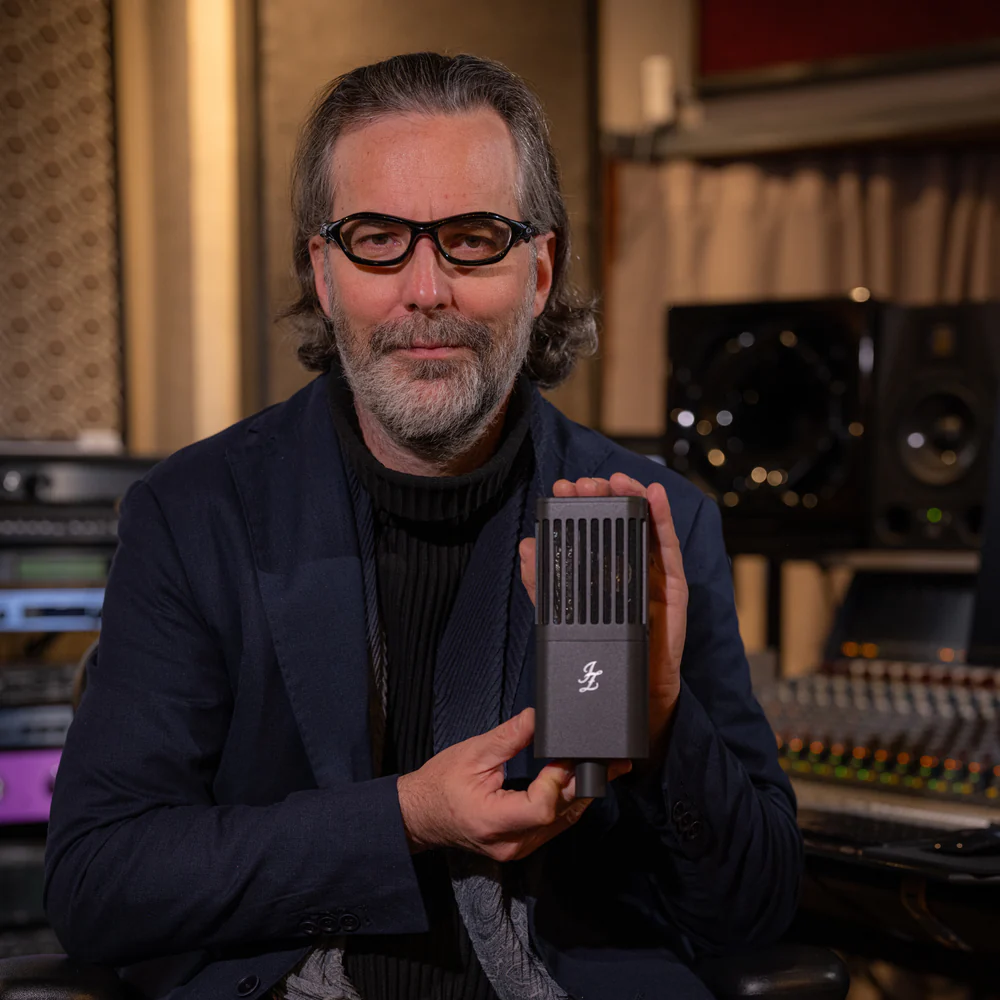
Handcrafted In Latvia
Like all JZ microphones, the MU-1 is handcrafted in Latvia. The microphone features a solid all-metal body designed for durability and reliability in professional studios.
That matters. A microphone like this is not just an interesting concept. It has to survive real sessions, real stands, real artists, real travel and real studio life.
JZ Microphones has built its reputation around precision manufacturing, distinctive capsule design and consistent build quality. The MU-1 continues that tradition, while adding something completely new to the company’s range.
The microphone comes with a 5-year warranty and is supplied as a complete studio package.
Preorder, Pricing And Availability
At the time of writing, the JZ Microphones MU-1 is available for preorder directly from JZ Microphones.
The listed preorder sale price is $1,982.48, reduced from the regular price of $2,478.35, with tax included. Even better, you can get an additional 10% off by using the code PLAP10 at checkout.
JZ lists the microphone as shipping in August 2026.
You can get the JZ Microphones MU-1 here:
Use the code PLAP10 for an additional 10% off.
For a microphone that combines a ribbon and large-diaphragm condenser into one phase-aligned, level-matched hybrid design, that is an intriguing proposition. Instead of buying two separate microphones, setting up two stands and constantly managing phase, the MU-1 gives you a purpose-built dual-output system in one microphone body.
The code is PLAP10, and it gives you an additional 10% off the MU-1 preorder.
Five Years In The Making
The MU-1 was not an overnight idea. Marc says the concept had been in his mind for years, and the actual development took around five years from the point where he decided someone needed to build it.
The earliest prototype began with a basic microphone body, a friend in Italy who could help with the electronics and Marc’s desire to prove the idea in real recording sessions. Once he started making records with the prototype, he realised he did not want to go back.
That is always the sign of a meaningful studio tool.
Not because it looks impressive. Not because it sounds clever on a spec sheet. Because once you use it, you miss it when it is gone.
Marc eventually brought the idea to JZ Microphones, a company he already had a long relationship with. Their willingness to think differently made them the right partner. The result is the MU-1, a microphone that takes a very common studio technique and places it into a single, elegant recording tool.
Why The MU-1 Matters
What makes the MU-1 exciting is not simply that it combines two microphone types. It is that it combines two philosophies.
The large-diaphragm condenser gives you precision, speed and detail.
The ribbon gives you warmth, weight and natural musicality.
Together, they allow you to make decisions that used to require multiple microphones, multiple stands, careful placement and constant phase checking. The MU-1 gives you that flexibility without the usual compromise.
For vocals, you can control sibilance in a more natural way.
For bass, you can blend weight and presence.
For piano, you can balance body and articulation.
For drums, you can combine overhead clarity with room-like ribbon depth.
For guitars, you can shape bite and girth from one position.
For horns and reeds, you can capture the darker, more familiar tone players often love, then add detail as needed.
That is what makes this microphone special. It is not a novelty. It is a practical studio solution.
Final Thoughts
Every once in a while, a piece of recording equipment comes along that feels less like a new gadget and more like the logical answer to a question engineers have been asking for years.
The JZ Microphones MU-1 is one of those ideas.
It takes something we already love doing, blending microphones for tone, and makes it easier, more reliable and more flexible. It gives us the richness of a ribbon and the clarity of a large-diaphragm condenser, without forcing us to choose one over the other.
Most importantly, it keeps the engineer in control. You can favour the ribbon. You can favour the large-diaphragm condenser. You can process them separately. You can blend them together. You can use them subtly or dramatically.
That is the kind of flexibility that does not get in the way of creativity. It enhances it.
And after hearing it on piano, bass, vocals, drums, guitars and clarinet, it is easy to understand why Marc Urselli says he has been using the MU-1 somewhere on every session since receiving the first production model.
It is a wonderfully simple idea.
It is also incredibly useful.
You can download the multitracks from the session, hear the MU-1 for yourself and experiment with blending the ribbon and large-diaphragm condenser elements in your own mix:
https://producelikeapro.lpages.co/chris-st-hilaire-bad-day-form/
Download the multitracks, pull them into your DAW and try the ribbon and large-diaphragm condenser blend for yourself. That is the real test.
You can get the JZ Microphones MU-1 here:
Use the code PLAP10 at checkout for an additional 10% off the MU-1 preorder.
Have a marvellous time recording and mixing.