
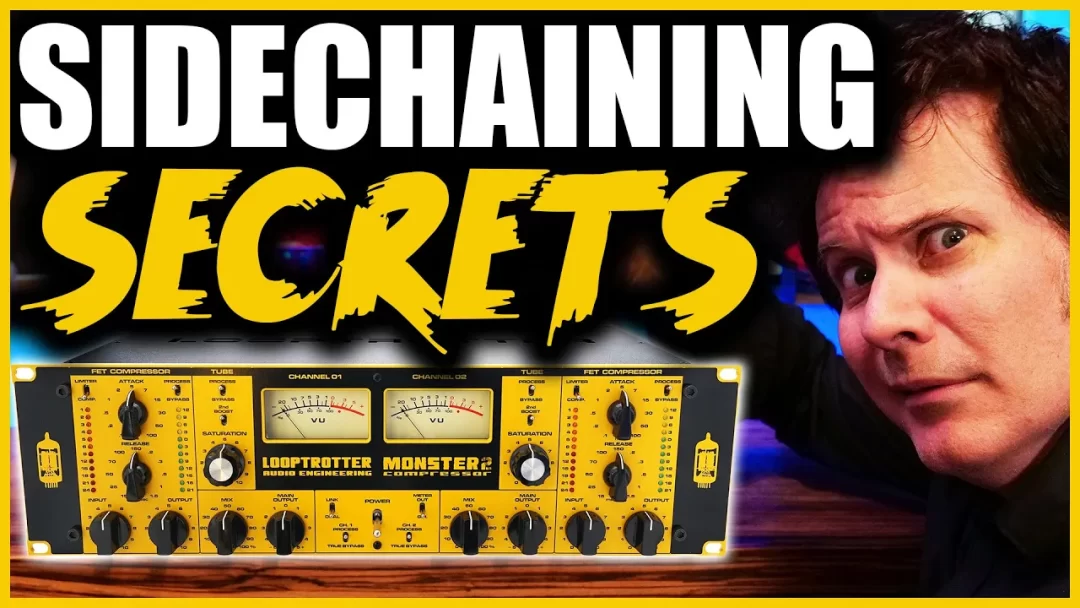

The Monster Compressor 2 from Looptrotter is a versatile analogue processor designed to bring subtle saturation, punchy dynamics, and flexible parallel control to tracking, mixing, or mastering applications. Built around a FET compressor, a tube saturation stage, and a dry/wet mix control, it offers a thoughtfully engineered signal path that caters to both character-driven processing and more transparent tasks.
We recently had the opportunity to test the unit during sessions at Brighton Electric, and the results were impressive — particularly for engineers working in hybrid setups who want analogue tone with flexible control.


Build and Design
The second-generation Monster Compressor has been redesigned for improved durability and sound quality. The unit features:
-
Gold-plated, heavy-duty Grayhill switches with a lifetime warranty
-
6N2P NOS military-grade tubes
-
Burr Brown Sound+ components in the signal path
-
A thick, coated aluminium faceplate
All parameters except the saturation control are stepped, making it easy to recall settings, which is particularly useful in mastering or hybrid mix environments. The saturation is controlled via a smooth rotary knob, which offers fine-grained control even if not stepped.
The overall build quality is robust. It feels built to withstand years of regular studio use.


Compressor Section
The compression circuit uses a FET design with no separate threshold control. Instead, the input level drives the compression, in a style reminiscent of vintage units like the 1176. The ratio is program-dependent, meaning it responds dynamically to the level of the signal. Lower-level material is compressed more gently, while peaks are handled with a steeper ratio. There is also a switchable limiter mode, which tightens the compressor’s knee and gives it a more aggressive character.
In use, the compressor performed well on a variety of source material. On drums, it added controlled punch. On full mixes, particularly with slower attack and faster release settings, it brought subtle cohesion and movement without sounding heavy-handed. The stepped attack and release controls, calibrated in milliseconds, made it easy to match and compare with other hardware or software units.


Tube Saturation and Second Boost
After compression, the signal is passed to a tube saturation stage featuring military-grade NOS valves. A notable feature here is the 2nd Boost switch, which increases harmonic content, especially useful for more aggressive tone-shaping. While the saturation is not as configurable as some dedicated colour boxes, it adds a pleasing density and harmonic warmth when used with care.
On mixes that needed a touch of high-mid excitement or harmonic texture, the saturation circuit added just enough weight to bring those frequencies forward without sounding harsh. More extreme settings were usable too, particularly on drums or bass, where additional colour and aggression were desired.


Parallel Mix and Flexibility
The stepped mix knob allows precise blending of dry and processed signals, making the Monster 2 especially helpful for parallel processing. The unit also includes independent bypass switches for the compressor, saturator, and the overall signal path. This makes it easy to A/B each stage in isolation.
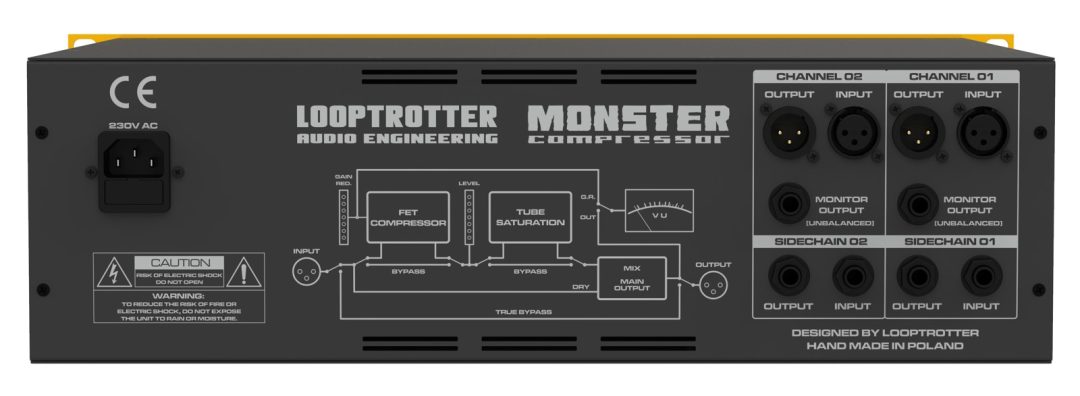
One standout feature is its dual mono capability. Since each channel is fully independent, it can be used to process two mono sources simultaneously, such as kick and snare, or vocal and bass. Additionally, the rear panel offers external sidechain inputs, allowing for advanced routing, such as keying the compressor from a full mix while printing stems.
This proved very useful when preserving the tonality and movement of a stereo master while running individual stem passes. In scenarios like stem printing for live playback or immersive formats, this feature could save a significant amount of time and preserve mix integrity.
Real-World Use
Across several sessions, the Monster 2 performed consistently. It enhanced transients without overly flattening the signal, especially when using a slower attack and blending some saturation back in via the mix control. It was especially effective on live-recorded material, where it added subtle cohesion while preserving dynamics.
On dense, already compressed mixes, limiter mode proved helpful for managing peaks without altering the overall tonal balance. The saturation was more mix-dependent — occasionally flattering, occasionally a bit much — but the ability to blend and bypass sections made it easy to dial in.
While it may not replace more surgical mastering tools, it adds useful colour and control at the mix bus or subgroup level.

Conclusion
The Looptrotter Monster Compressor 2 is a well-designed analogue processor that combines classic compression, musical tube saturation, and modern workflow features like mix control, dual mono operation, and external sidechaining.
Its strengths lie in its versatility, recallable settings, and the ability to dial in harmonic character in a controlled way. While it may not suit those looking for ultra-transparent processing, it’s a strong option for those wanting musical colouration with flexible integration into hybrid or analogue setups.
Pros
✔ Durable build with lifetime-warrantied controls
✔ Program-dependent compression with stepped settings
✔ Musical tube saturation with optional harmonic boost
✔ Dual mono operation and sidechain inputs
✔ Independent bypass for compressor and saturator
✔ Mix knob for parallel blending
Cons
✘ Stereo channels must be matched manually
✘ Saturation control is not stepped
Verdict
A thoughtfully built and sonically engaging processor. The Monster Compressor 2 balances musicality with control, and suits both creative mixing and subtle mastering enhancement, especially in hybrid studio environments.