
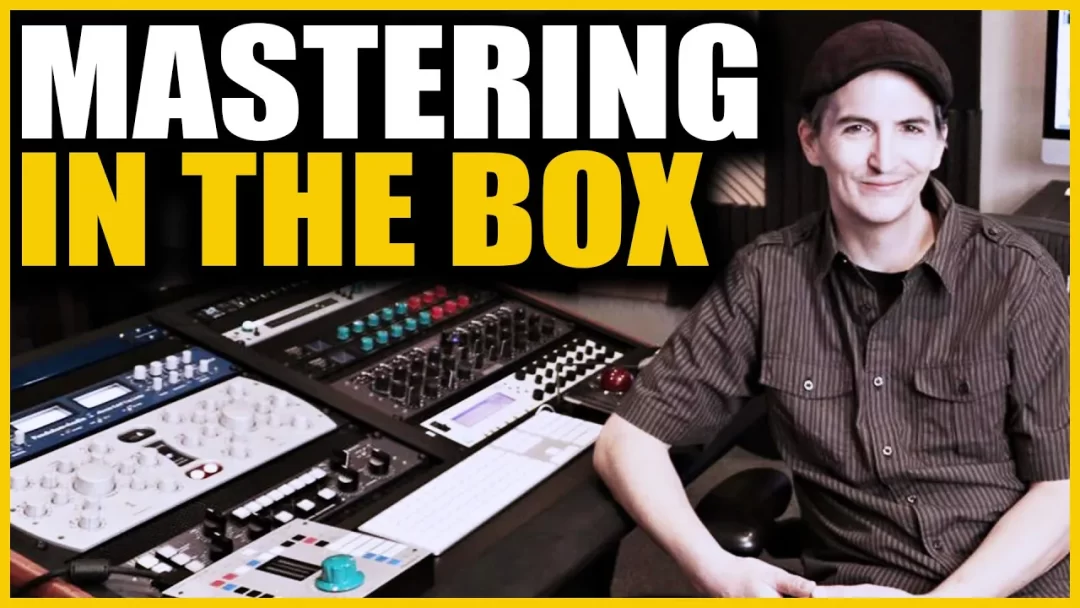

Modern mixes often arrive already loud, sometimes as loud as a finished master. In this in-the-box session, mastering engineer Warren Sokol shows, step by step, how to turn a hot, limiter-squeezed mix into a polished, musical master without adding harshness or destroying feel. Below is a distilled walkthrough of his approach, complete with practical checks you can apply in your own projects.
Download the files to follow along: https://producelikeapro.lpages.co/mastering-pop-rock-with-warren-sokol-form/


The challenge: pre-limited mixes
Many mixers print approval versions with bus processing for impact and level. That can include EQ, compression and, crucially, loudness maximisers or peak limiters. EQ and compression are taste decisions that shape tone and groove. Peak limiting is a technical loudness move that removes headroom and changes transient behaviour. Once a file has gone through a peak limiter there is no way to “un-limit” it, so the mastering headroom is already spent. The task becomes improvement without aggression.
How Warren spots limiting vs clipping
Zooming into the waveform tells the story.
- Clipping shows flat tops and flat lines when the signal exceeds digital zero.
- Peak limiting shows retained micro-ripples on top, where the limiter held the peak just below a ceiling and modulated the crest. In the session, the mix retained a square-ish look with visible ripples, pointing to peak limiting rather than hard clipping.


Start by restoring headroom
The track arrived at about −0.1 dBFS. The first move was a digital gain reduction of roughly 3 dB to create safe working space for any subsequent EQ and spatial work.
Tip: Even if you plan only subtractive EQ, overall peak level can rise after cuts. Removing mid energy often lets low-frequency waveforms reach higher absolute peaks. Always recheck headroom after EQ moves.
Fix the musical dynamics before turning any knobs
Because the limiter had already been working hard, choruses were hitting the ceiling and vocals were being pushed down at the moment they needed to bloom. Warren performed targeted level edits to rebalance the build-ups and drops so the chorus hits felt natural again.
- He placed micro-edits just before downbeats to hide crossfades in the pre-impact breath.
- Small trims around a dB, sometimes a quarter dB, restored the energy arc into the hook.
- Once happy, he grouped the edits into a single region to protect the work upstream.
Quiet, precise clip-gain work often beats dynamics processing when you are already level-limited.


Subtle, ITB processing chain
- Stereo width A tasteful widener added a touch of space without phase weirdness. Small moves only, since widening after a limiter can exaggerate edges.
- High-frequency smoothing He auditioned de-essing approaches. A wideband, phase-cancellation style de-esser can be gentle, however after later EQ moves it was pulling too much snare snap, so he removed it. Static spectral shaping won here.
- Sweet, broad shelves A Baxandall-style EQ (Dangerous BAX flavour) provided wide, musical shelves.
- Surgical but musical problem solving with Ozone EQ Using the analog (minimum-phase) mode with proportional-Q:
- Clean, low-artifact limiting A PSP peak limiter was chosen for its steady behaviour on snare and vocal.
- Gain staging back into the limiter With the limiter bypassed, he raised the source clip until it sat just under clipping, ensuring the limiter was not asked to do level-building it did not need to do. This recovered roughly +1.5 to +2 dB before the limiter even worked.
If more loudness were required, he would consider two different limiters at ~1 dB each rather than one limiter doing 2 dB, often a nicer artifact trade.
Why these moves work on hot mixes
- Edits beat compression when the file is already flattened. You restore contrast without pumping.
- Very broad shelves tame grit and restore gloss without exaggerated phase interactions.
- Targeted mid cuts remove specific harsh notes that the limiter pushed forward.
- Clean limiting with auditioned auto compensation reveals the true cost of each dB.
- Proper gain staging means the limiter is finishing the job, not rescuing level lost to poor setup.
Listening notes from the session
- Snare edges revealed which limiter behaved more transparently.
- The pre-chorus vocal snippets were initially louder than the chorus vocal because the full band hit the limiter ceiling. Micro-trims fixed the perception of lift.
- A mid song moment where the bass image widened was not a phase error, it was a creative production choice. Awareness of mix intent prevents unnecessary “corrections.”


A quick checklist for mastering pre-limited mixes
- Identify: zoom in and confirm peak-limiting vs clipping.
- Create headroom: trim the file 2 to 3 dB before any processing.
- Edit the musical arc: clip-gain builds and drops so hooks actually lift.
- Widen with care: small moves, check mono.
- Tame HF grain: prefer broad shelves or very gentle de-ess, reassess after EQ.
- Sweep and solve: small, tight cuts in the low-mids and mids to reveal bass notes and remove honk.
- Stage the level: push the source up to just under peak, then add clean limiting for the final dB or two.
- If you must go louder: split the work between two different limiters.
- Always re-check intros and verses after limiting so they do not leap out awkwardly.
- Print and compare: level-matched A/B against the source to confirm you improved sonics, not just loudness.
Key takeaways
- Once a mix has been peak-limited, mastering becomes an exercise in restraint and detail rather than enhancement.
- Micro-edits and tiny EQ moves often deliver bigger musical wins than chasing more loudness.
- Clean limiting and correct gain staging protect transients and keep snares and vocals intact.
- Communication with the mixer is vital. If bus EQ and compression are part of the approved vibe, keep them. If a loudness maximiser is on the mix bus, ask for a version without it when possible.
Have a marvellous time recording, mixing and mastering!
Download the files to follow along: https://producelikeapro.lpages.co/mastering-pop-rock-with-warren-sokol-form/