
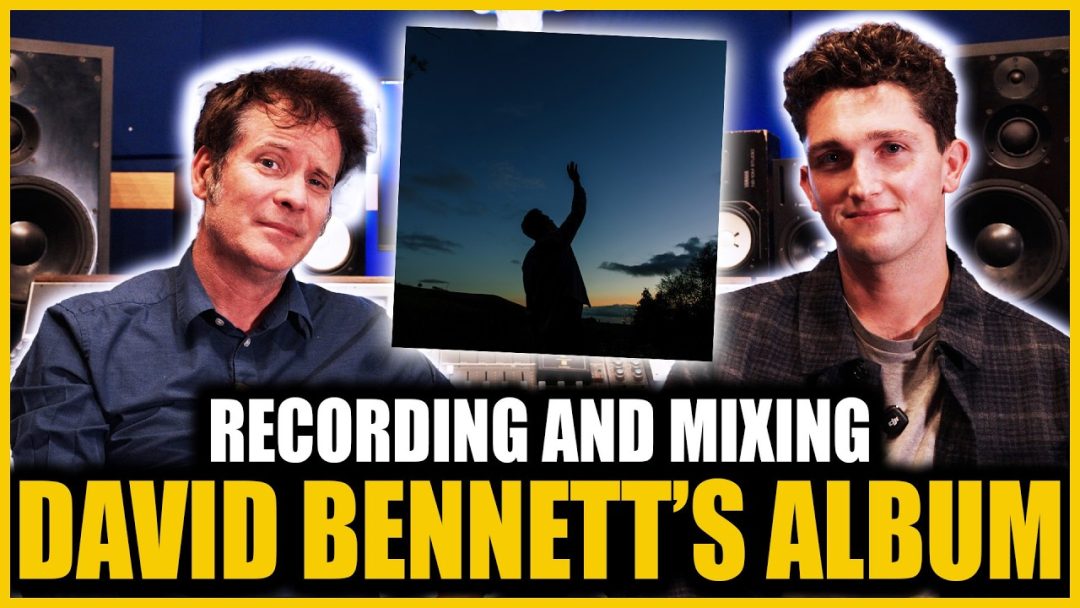

There is something especially rewarding about working with an artist who can do it all. David Bennett, from the YouTube channel David Bennett’s Piano, is not just a brilliant educator with a deep understanding of songwriting and harmony, he is also a genuinely gifted pianist, producer, and songwriter. So when we started working together on his new album, Under an Empty Sky, it was a real pleasure to help bring these songs to life.
Although I mixed the entire record at Spitfire London, part of the story began earlier when we tracked drums for four of the songs at Brighton Electric, a studio both of us know well. After the session, I brought everything back to London and began the process of mixing the album, sending David mixes, making recalls, and gradually honing in on the exact character he was after.
Listen to the full album here: https://davidbennettpiano.bandcamp.com/album/under-an-empty-sky
Download the multitracks for Pastor’s Son here: https://producelikeapro.lpages.co/david-bennet-pastors-son-form/
A Clear Sonic Vision
What made the project work so smoothly was that David had a very clear vision for the sound of the record. He was not looking for massive modern drums or huge reverbs. Instead, he wanted something inspired by classic 1970s singer songwriter and soft rock records. Think warm, controlled drums that support the song rather than dominate it.
A modern reference point we discussed was Father John Misty, whose productions often draw from that same vintage palette. The goal was to create a drum sound that felt organic, intimate, and musical without becoming overly dry or overly polished.
That immediately shaped how we approached the session.


Recording the Drums at Brighton Electric
We tracked four songs in a single day, which meant the setup had to be reliable and musical rather than experimental. While there are endless creative microphone techniques available, this was not the moment to reinvent the wheel. The priority was capturing great performances with a sound that would mix easily later.
To keep the kit controlled, we used baffles around the drums, tightening the immediate environment so the close microphones remained focused while still allowing the room mics to provide a sense of space.
The goal was simple. The close mics should sound close. The room should sound natural. And the overall kit should feel cohesive rather than oversized.


Cymbal Control
One of the first adjustments we made was to the ride cymbal. It sounded beautiful, and we had placed a Royer 121 on it because it was likely to be a featured part of the arrangement. However, when accented it had a slightly aggressive high midrange.
Rather than changing cymbals or asking the drummer to play differently, we used a simple solution, a small piece of tape underneath the cymbal to slightly dampen the sustain. It softened the decay and prevented the cymbal from becoming overly dominant once compression was applied later in the mix.
Small adjustments like this can make a huge difference.


Snare, Hi Hats and Overheads
The snare was miked with SM57s top and bottom, which remains one of the most reliable combinations in recording history. The drum had a pleasant note to it, however we applied a small amount of MoonGel to control excess ring while keeping the character intact.
The hi hat setup combined a small diaphragm condenser with a 57, a technique inspired by my old friend, the dearly departed Dave Jerden. Dave showed me this years ago, and it is one of those deceptively simple ideas that works incredibly well in practice. The small diaphragm mic captures the sparkle and air of the hat, while the 57 provides the midrange body that often helps the instrument sit more naturally in the mix. Quite often I find myself favouring the 57 track more than the condenser. Personally, I have never been a huge fan of the ultra thin, overly bright hi hat sound that became popular in the 1980s. I much prefer hearing the instrument as part of the drum kit rather than a sharp splash of high frequencies.
Overheads were a pair of Neumann U87s, carefully measured from the centre of the snare to keep the stereo image balanced and phase coherent. We discussed trying a more experimental approach, however with four songs to track in a single day it made more sense to rely on a method that consistently delivers musical results.


Kick Drum Options
To give us flexibility later in the mix, we recorded three different kick drum microphones.
Inside the kick was a D112, positioned slightly off axis from the beater head. Years ago I discovered that pointing a kick mic directly into the blast of air from the beater can cause the low end to disappear. Angling the microphone slightly avoids that problem and produces a more consistent sound.
Outside the kick we placed two classic microphones.
An AKG D12 provided the familiar 1970s knock and character, while a FET 47 gave us a deeper low end option that could act almost like a subkick if needed.
Recording multiple perspectives like this gives you choices later. Rather than committing too early, you can decide during the mix which combination best suits the track.


Mono and Room Mics
One of my favourite parts of the setup was a Coles ribbon microphone placed low in front of the kit. Positioned carefully, it captured the kick and snare evenly rather than simply becoming another kick drum mic.
This technique, which I first learned in Nashville, creates a beautifully balanced picture of the drum kit and can add weight and cohesion to the overall sound.
A pair of AKG 414s acted as room microphones, providing a subtle sense of space. Because David wanted the record to feel relatively dry, these were used sparingly in the mix.


Mixing the Drums
When it came time to mix the album, the kick drum microphones played very specific roles.
The D112 became the modern attack element, with EQ boosting the low end around 60 Hz, cutting boxiness around 350 Hz, and adding definition around 2.5 kHz.
The D12 carried the classic 70s tone, so it required very little processing.
The FET 47 became a sub element, filtered and shaped to provide additional low end weight.
Blended together, the result was a kick drum that felt both vintage and powerful without sounding overly modern.
The snare required very little processing. A small amount of EQ added low end and presence, while a short 0.75 second room reverb helped it sit naturally in the track. I have always liked that length because it reminds me of the natural ambience in my old studio, Swing House.
Room microphones were lightly compressed and high passed to avoid low end conflicts with the kick. I also added a small amount of the same short room reverb to help everything glue together.
The key idea was restraint. Less processing, more musical balance.
Finding the Right Direction
The first mix I sent David leaned slightly too far into pop territory. The drums were a bit brighter, the ambience slightly bigger, and everything felt more forward.
His feedback was clear. It sounded great, however it was too pop.
That is an incredibly helpful moment in the mixing process because it tells you exactly where the line is. The solution was not to add more processing, it was to remove it. Less compression, less room, and a slightly more relaxed overall feel.
Once we made those adjustments, the record immediately started to sit in the world David had imagined.


Mixing the Rest of the Record
Beyond the drums, much of the mix was about preserving the character of the recordings David had already created.
The double bass sounded fantastic from the start. David had supplied both the individual elements and his own printed blend, and his version actually worked best. My job was simply to help it sit alongside the piano and kick drum, controlling the low end using tools like Soothe to keep everything even.
The piano was naturally dark and intimate, so I added a gentle presence boost around 2 to 3 kHz and left its natural room ambience intact.
The acoustic guitars were already compressed during recording, however I used subtle limiting to control occasional peaks and emphasised the midrange around 1 kHz rather than pushing the highs too aggressively.
Vocals varied from song to song. Each one needed a slightly different approach, however the starting point was always de-essing followed by compression and gentle EQ.
Atmosphere and Musical Texture
One of the most enjoyable aspects of David’s production style is the amount of subtle atmosphere within the arrangements. Small ambient elements, delays, Leslie effects, and background textures create a bed of sound that adds depth without becoming obvious.
In a modern digital recording world where everything can easily become overly clean and clinical, these layers add warmth and humanity.


Final Mix and Mastering
Once the mix was complete, it was sent to Adam Ayan for mastering. The mix already included gentle bus compression and limiting, something mastering engineers are perfectly comfortable with as long as the mix is not clipped.
The important thing is that the mastering engineer hears the mix the way the artist and producer approved it.
A Truly Collaborative Record
Working on Under an Empty Sky was a fantastic experience. David brought great songs, thoughtful arrangements, and a clear vision for the sonic world he wanted to create.
My role as mixer was to shape those elements into a cohesive record while preserving the intimacy and musicality at the heart of the project.
The drums may have been recorded in a single day at Brighton Electric, however they became one of the key foundations for the entire album once everything came together in the mix.
It is always exciting to collaborate with someone who approaches music with both curiosity and craftsmanship, and David Bennett certainly embodies both.
Have a marvellous time recording and mixing.
Listen to the full album here: https://davidbennettpiano.bandcamp.com/album/under-an-empty-sky
Download the multitracks for Pastor’s Son here: https://producelikeapro.lpages.co/david-bennet-pastors-son-form/