

There is something almost impossible to recreate when great musicians perform together in the same room.
You can edit individual notes, isolate every instrument and retain complete control over the mix, but that does not necessarily produce a better musical performance. Sometimes the energy comes from the musicians hearing, seeing and physically feeling one another play.
During this session at Salvation Studios in Brighton, Sean Genockey and I recorded an incredible jazz trio featuring pianist Lior Solomons-Wise, drummer Noam Solomons-Wise and double bassist Edouard Le Feuvre.
Rather than committing to one conventional studio arrangement, we recorded the trio using two very different setups. The first offered maximum isolation and control. The second placed all three musicians within feet of one another, recreating the intimacy and immediacy of a small jazz venue.
The difference was remarkable.
Download The Multitracks Here: https://producelikeapro.lpages.co/lior-soloman-wise-jazz-multitracks-with-sean-genockey/
Three Musicians Playing as One
Lior Solomons-Wise, Noam Solomons-Wise and Edouard Le Feuvre are extraordinary musicians, but what made this session particularly exciting was the way they responded to one another.
That interaction is central to jazz.
A drummer may alter the intensity of a cymbal pattern in response to a piano phrase. The bassist may change the length or weight of a note after feeling the kick drum in the room. The pianist may leave more space because of something happening rhythmically between the bass and drums.
Those decisions happen instinctively and often within fractions of a second.
When musicians are placed in separate booths and rely entirely on headphones, they can still deliver exceptional performances. However, some of that physical connection can be reduced. When the trio were brought together, they no longer needed headphones to understand the shape of the music. Edouard could physically feel Noam’s kick drum, while Lior could respond directly to the movement and dynamics of the rhythm section.
The musicians immediately recognised the difference.
The quieter passages became more delicate, the louder sections developed more urgency and the entire performance seemed to breathe more naturally.

Setup One: Maximum Isolation and Control
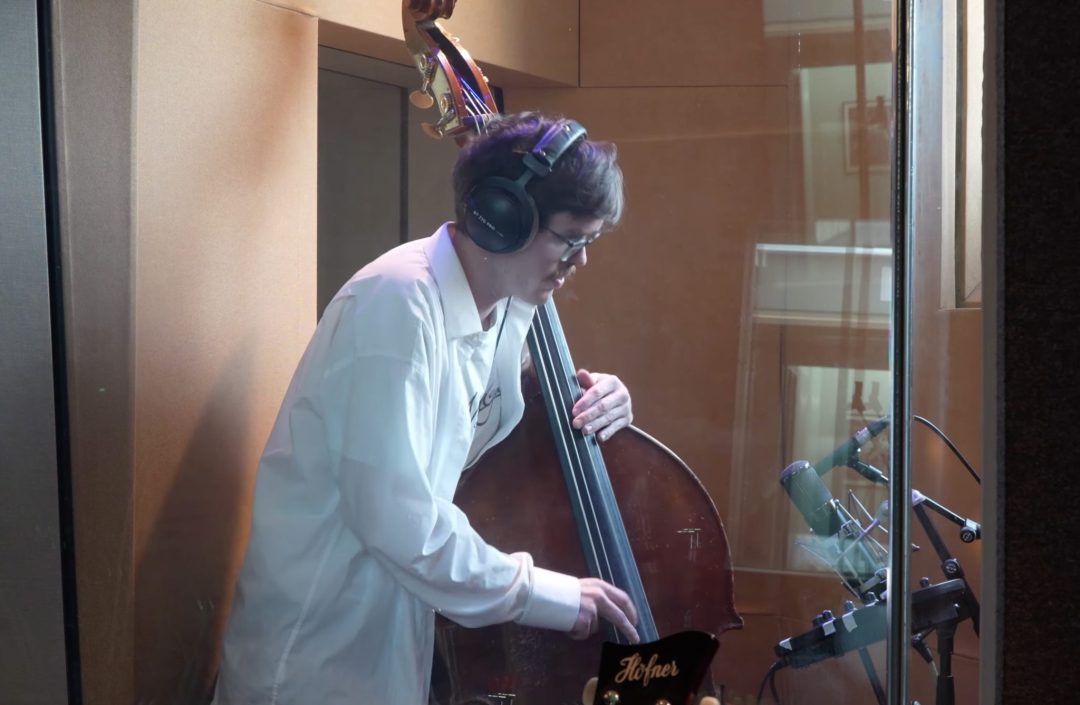
For the first recording arrangement, the piano remained in the main live room, while the drums and double bass were placed in separate spaces.
This offered several advantages.
Each instrument could be captured with greater isolation, allowing more freedom when balancing, equalising or compressing the individual elements during the mix. The drum microphones could be altered without significantly affecting the piano, while the double bass could be processed without bringing up excessive spill from the rest of the trio.
The studio’s sightlines still allowed the musicians to see one another, which helped preserve some of the communication of a live performance.
This approach can be particularly valuable when recording larger jazz ensembles. A loud lead instrument such as a trumpet can easily dominate every microphone in the room, so placing it in a booth may provide the best balance between interaction and control.
The isolated arrangement also produced an elegant, refined performance. There was a sense of finesse and precision that could be extremely useful when making a record.
However, isolation is only one way to record jazz.

Setup Two: Recreating the Jazz-Club Experience
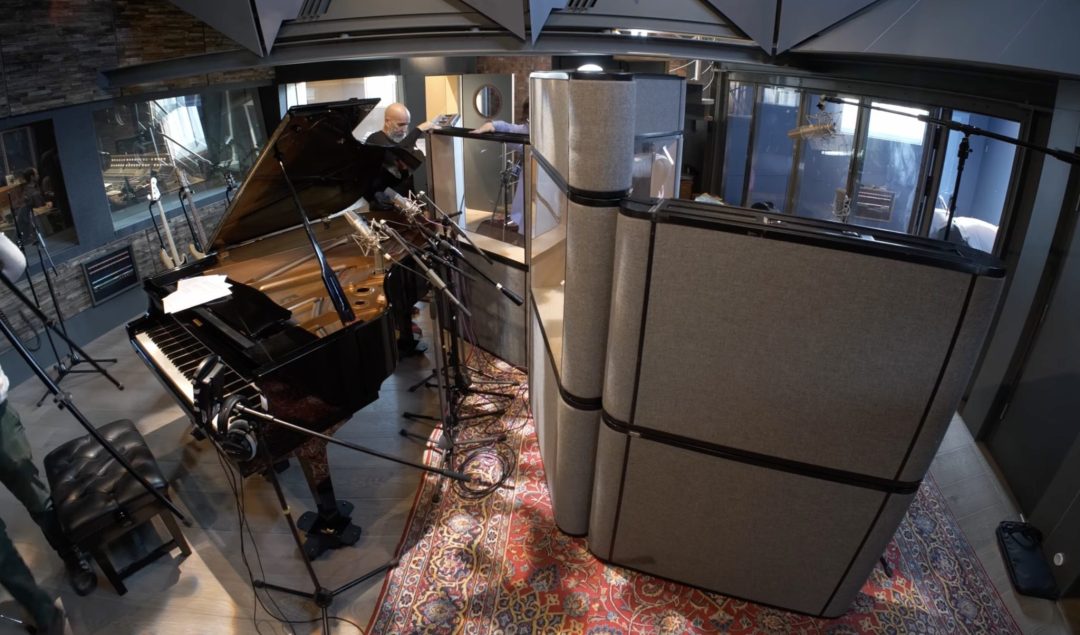
For the second arrangement, Noam’s drums and Edouard’s double bass were moved into the main room alongside Lior and the piano.
The musicians were now only a few feet apart.
Sean compared the spacing to London’s legendary Vortex Jazz Club, where performers often work in an extremely compact area. This was an environment the musicians understood immediately. They did not have to think about playing closely together because it was already familiar to them.
The response was instantaneous.
The music had more throttle. The louder sections pushed harder, the softer sections fell away more dramatically and the trio seemed able to react without hesitation.
There was also no need to rely entirely on headphones. Edouard could hear and feel the acoustic drums in the room. Noam could react directly to the piano and bass. Lior was surrounded by the natural sound of the ensemble rather than hearing an artificial headphone balance.
This arrangement sacrificed a degree of isolation, but the musical benefit was considerable.
It also demonstrated that spill is not necessarily the enemy.
Why Microphone Spill Can Be Musical
Engineers are often trained to avoid spill wherever possible. However, when the microphones, room and musicians are working together, spill can provide a natural form of glue.
When Noam plays a drum fill, a small amount of that fill enters the piano microphones. Rather than ruining the recording, it can make the moment feel larger and more exciting. The sound of the instruments interacting in the room becomes part of the production.
The closer arrangement also produced more separation than many people might expect.
In a large room, placing musicians farther apart does not always reduce unwanted spill. A distant drum sound entering a piano microphone can contain more obvious room tone and delay, making it harder to incorporate naturally.
By positioning the musicians closely and using microphone polar patterns carefully, the spill can arrive more directly and coherently. Microphone nulls can be aimed towards competing instruments, while the direct sound remains strong enough that the bleed feels like part of the instrument rather than an unwanted reflection.
This is one of the most important lessons from the session:
Good separation does not always require greater physical distance.

Sean Genockey’s “Rock Brain” Approach to Jazz
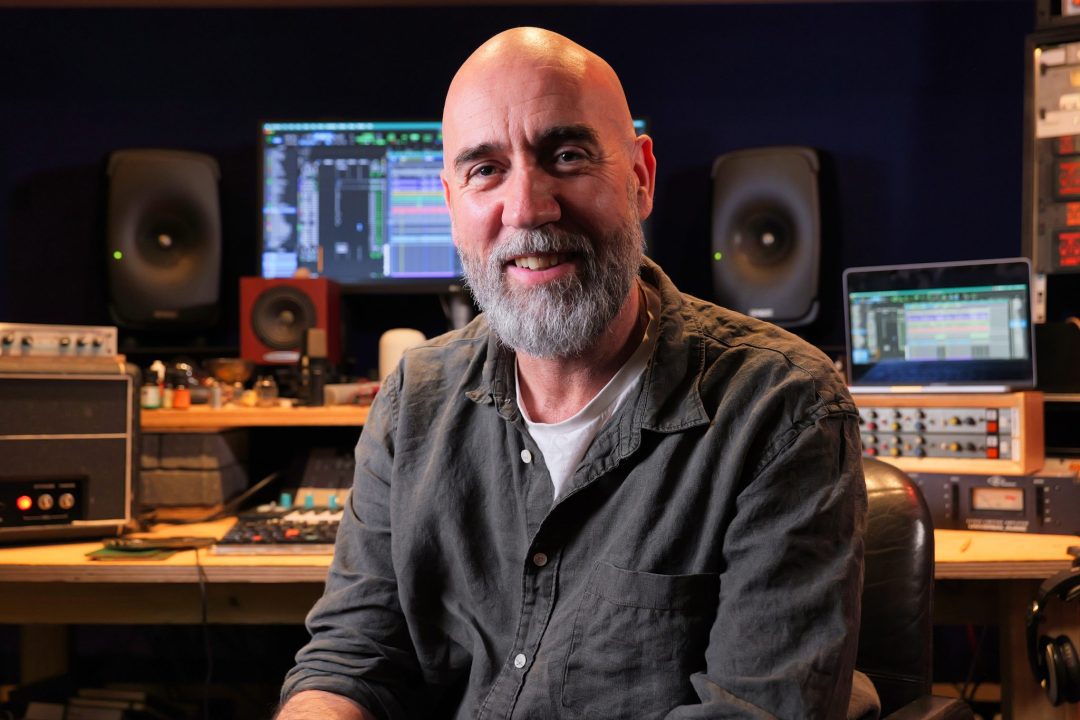
Sean has recorded many outstanding jazz musicians at Salvation Studios, but he does not approach the genre as a strict traditionalist.
Instead, he brings what he calls his “rock brain” to the recording.
That does not mean making the musicians sound inappropriate or overly aggressive. It means refusing to limit the recording simply because jazz was historically captured using minimal equipment.
Early jazz engineers often came from classical recording backgrounds. Their techniques produced extraordinary records, but Sean is not interested in copying an old recording simply for the sake of authenticity.
A modern jazz recording can still feel natural while providing additional choices during the mix.
Rather than using only one overhead and a kick drum microphone, Sean may capture the snare from above and below, use spot microphones on the toms and record more than one set of overheads. These microphones do not all have to remain active throughout the song.
The tom microphones, for example, can be pushed during a powerful fill and then brought back down, just as they might be on a rock record.
The goal is not to manufacture excitement after the recording. It is to capture the excitement that already exists and provide the mixer with simple ways of emphasising it.
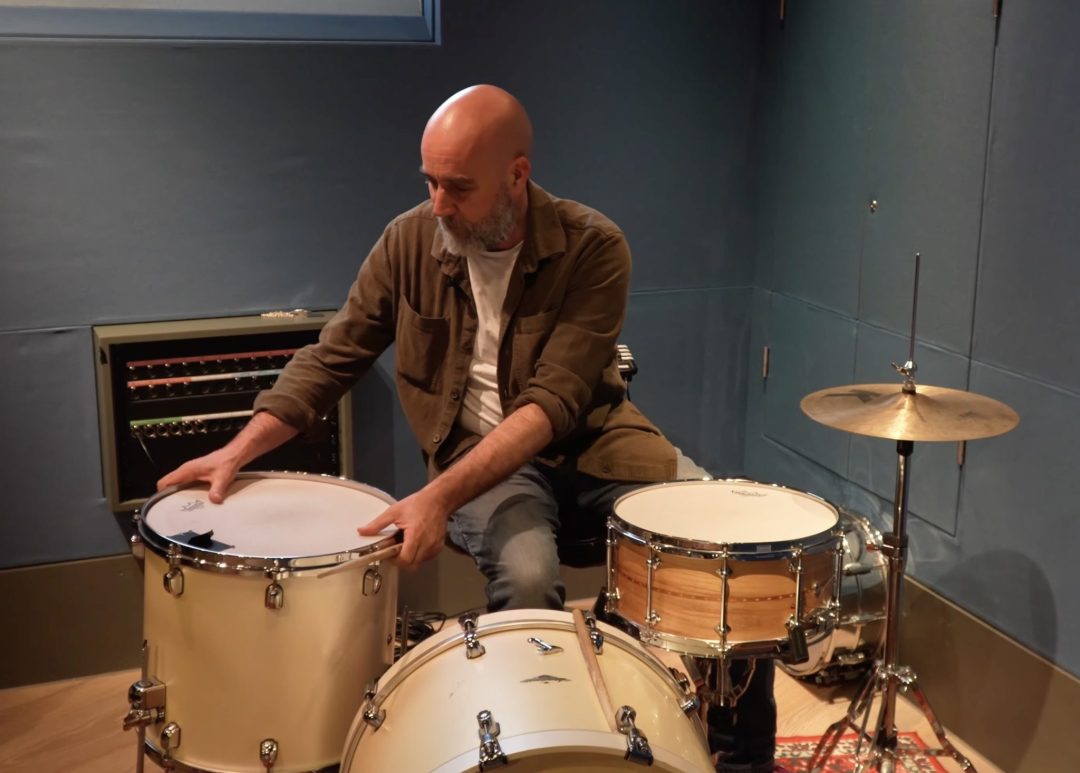

Recording the Drums
Noam’s kit was deliberately approached with more ambition than a stereotypical jazz setup.
The session used a large 22-inch kick drum, which is bigger than many jazz drummers might normally choose. However, as Sean pointed out, Tony Williams created some extraordinary jazz recordings using larger drums.
The kick was tuned and adjusted in the room, including experimenting with the beater position and front head to find the right balance of pitch, attack and low end.
The microphone arrangement included:
• Two kick drum microphones
• Top and bottom snare microphones
• Stereo overheads
• Rack and floor tom microphones
• Hi-hat microphone
• Optional ride microphone
Although this appears extensive for jazz, the overheads were still expected to carry most of the drum sound.
The close microphones were there to offer control and emphasis, not to replace the natural picture of the kit.
AEA R88 and Gefell Overheads
Two different stereo overhead perspectives were created.
An AEA R88 stereo ribbon microphone provided a smooth, warm and “buttery” representation of the kit. A second pair of Gefell microphones offered a different tonal perspective.
The capsules were positioned carefully so the two overhead systems remained closely phase-aligned.
This created an extremely useful mixing option. Rather than trying to reshape the drums with equalisation, Sean could change the overall character of the kit simply by adjusting the balance between the two overhead pairs.
The ribbon microphones could add weight and softness, while the condenser pair could contribute additional clarity and detail.
Snare and Tom Microphones
The bottom snare microphone was one of the few signals recorded with compression, using an 1176.
Compressing a bottom snare microphone may be unconventional, but it can add a controlled sense of snap, sustain and excitement without forcing the top microphone to do everything.
The rack and floor toms were captured with M69 microphones, while FET 47-style microphones were also discussed for the larger drums.
Once again, the intention was not to make the close microphones dominate the sound. They were available as “power moves” when the arrangement demanded more impact.
The Importance of the Hi-Hat
Sean made an excellent point about the way hi-hats are often treated in modern recording.
Engineers may spend enormous amounts of time shaping the kick and snare, while the hi-hat is pushed to the side of the mix or captured with a thin, overly bright condenser sound.
In jazz, the hi-hat is fundamental to the mechanics and momentum of the groove.
The foot-controlled hi-hat can be as important rhythmically as the kick and snare. A good hi-hat recording should retain body and midrange rather than becoming a brittle, disconnected ticking sound.
Working with highly detailed drummers reinforces how much musical information exists in the cymbals, hi-hat and smaller components of the kit.
Recording the Double Bass
Sean described the upright bass as one of the most difficult instruments to record successfully.
It has an extremely wide frequency range, complicated resonances and a very delicate balance between note, body, finger noise and acoustic projection.
Unlike an electric rock bass, it generally does not benefit from being compressed aggressively until every note becomes uniform. The goal is to preserve Edouard’s dynamics while capturing enough low-frequency information for the bass to support the arrangement.
Keeping the Microphone Preamps Close
One of the most interesting techniques involved placing the microphone preamps physically close to the double bass.
Instead of sending a very low-level microphone signal through a long cable run to the control room, the signal was amplified near the instrument and then transmitted at line level.
Sean had previously experimented with this approach and found the improvement significant. The bass appeared to retain more frequency extension, clarity and immediacy.
This is particularly valuable with a harmonically complex and sensitive acoustic instrument.
Once the preamp gain had been established, the bass signal became largely “set and forget.” There was little need to continually adjust the preamp during the performance.
Passive Low-Frequency EQ
Sean also used passive Dtorri EQ units, which include transformer-based low-frequency shaping.
These offered several broad bass frequencies, allowing the very bottom of the instrument to be shaped gently without creating an obviously processed sound.
The same type of unit could also be used on the kick drum to place additional weight underneath the recording.
The point was not to create an exaggerated modern low end. It was to establish a controlled foundation while the musicians were recording, rather than attempting to repair the balance later.

Recording the Piano
Lior’s piano was captured using multiple perspectives, each serving a different purpose.
The principal sound came from two stereo microphone systems positioned inside the piano:
• A pair of Neumann U87s
• A pair of Coles ribbon microphones
The capsules were placed close together and aimed carefully to maintain phase coherence. One side of each pair focused more heavily on the upper register, while the other captured the bass end of the instrument.
The U87s offered clarity and definition, while the Coles ribbons provided a warmer, softer and more extended tonal character.
The microphones were moved slightly away from the strings to allow additional space and air around the sound.
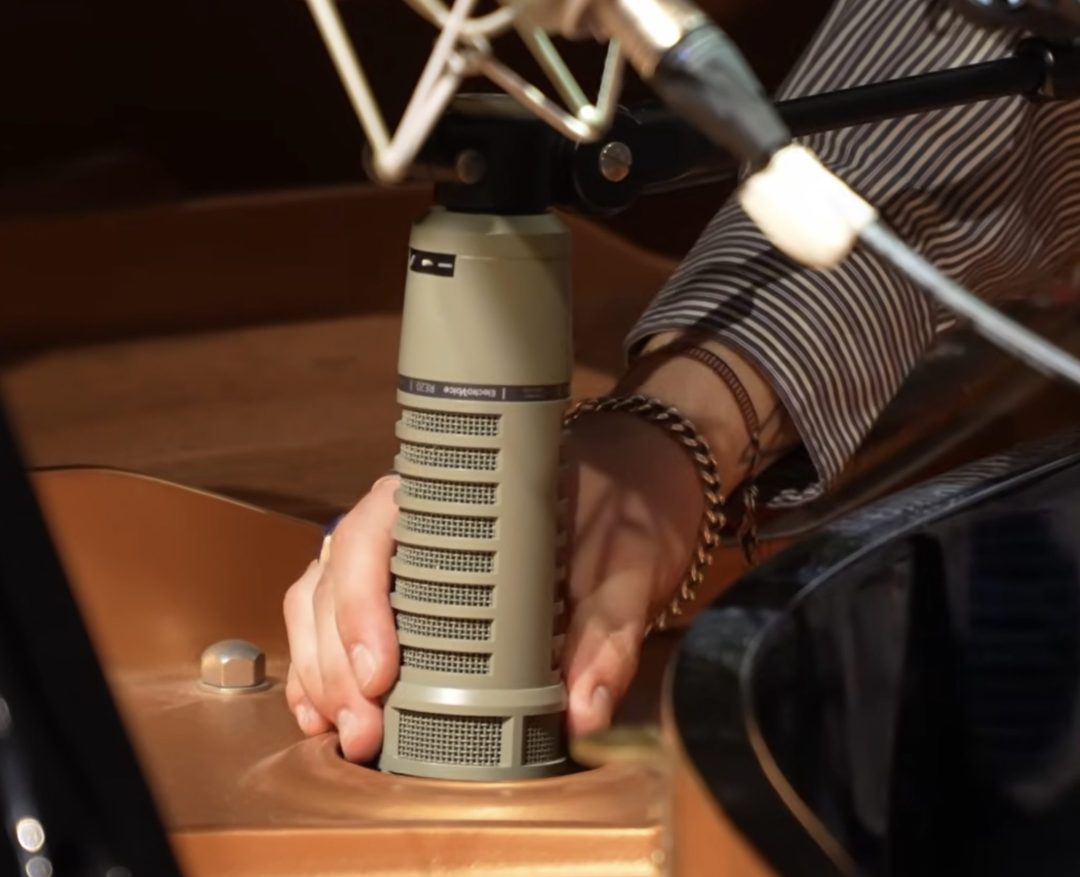
The RE20 Piano Crush Microphone
An Electro-Voice RE20 was positioned close to one of the piano’s sound holes, aimed towards the soundboard.
This microphone was then heavily compressed using an 1176.
It was never intended to become the principal piano sound.
Instead, the compressed RE20 could be brought up during a piano solo or particularly energetic section. This allowed the piano to gain density, presence and excitement without changing the balance of the main stereo microphones.
A horn player can step closer to a microphone when beginning a solo. A pianist cannot move the entire instrument towards the microphones. The compressed mono microphone provides a way of creating the same sense of forward movement.
This is a technique influenced by classic Beatles-era piano recordings, where heavily compressed dynamic microphones were sometimes used to add attack and urgency.
Using the Room as an Instrument
One of Salvation Studios’ greatest assets is the ability to alter the acoustic character of the main room.
Movable roof panels allow the decay and ambience to be adjusted, providing a natural alternative to artificial reverb.
Room microphones mounted high in the studio captured the piano, drums and ensemble ambience. When blended with the closer microphones, they created a larger and more immersive image without making the instruments feel detached.
This natural ambience was often preferable to adding large amounts of synthetic reverb later.
The studio also contains a real EMT 140 plate reverb, alongside a Bricasti system capable of producing a remarkably similar ambience.
These options provided depth and space when required, but the main sense of scale still came from the room itself.
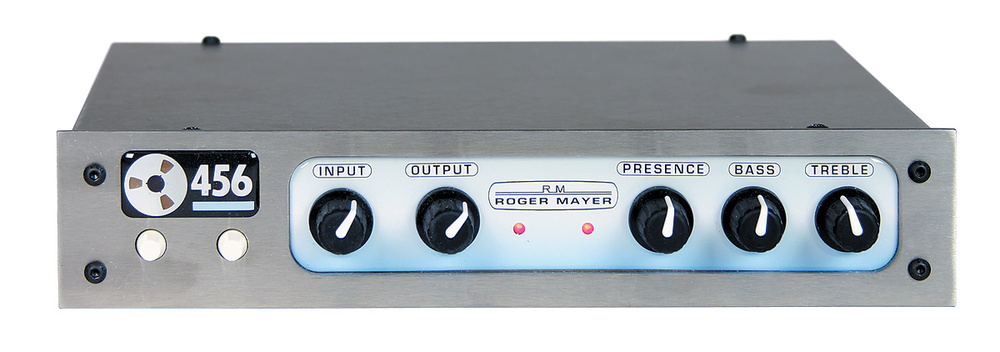

Sean brought eight channels of Roger Mayer 456 tape electronics to handle much of the drum recording.
The recording system was calibrated so that the converters and tape-style electronics operated at their preferred levels. A simple gain adjustment in Pro Tools compensated for the difference between converter alignment and the level the 456 process expected to receive.
This did not change the character of the signal by itself. It simply allowed the analogue stages to be driven correctly without accidentally over-recording.
The tape electronics added subtle weight, cohesion and harmonic character before the signals reached the digital recorder.
Once again, the objective was to create a sound that was already close to the finished record.
Record What You Intend to Mix
One of the strongest ideas running through the session was that recording and mixing should not be treated as two completely separate processes.
Sean wants the sound coming from the studio floor to resemble the eventual record.
The mix should enhance the performance, not rescue or completely transform it.
This philosophy was common during the classic analogue era. Engineers often printed sounds with EQ, compression and ambience already committed. By the time the recording was complete, the faders could be placed close to unity and the record would largely reveal itself.
That does not mean every production should be simple. Some arrangements contain many overdubs, edits and transitions that require complex mixing.
However, with a trio this good, the essential balance can be surprisingly straightforward.
Drums, double bass and piano can be organised onto only a handful of master faders. With the instruments recorded properly, the overall musical emphasis can be changed almost instantly by pushing the piano, pulling back the drums or allowing the bass to lead the arrangement.
Great players make the mix responsive.
A Minimal Approach to Processing
There was almost no corrective equalisation used during the live session.
Many of the microphones were left completely flat. Compression was limited mainly to special-purpose signals such as the bottom snare microphone and the piano RE20.
This minimal approach was possible because the microphone choice, positioning, instrument tuning and room acoustics had already created the desired sound.
When mixing this style of music, Sean prefers to spend more time shaping the stereo bus than processing every individual track.
However, jazz musicians can be particularly sensitive to the way bus compression changes the front edge of a note. A fast attack can create an obvious percussive click or make the ensemble feel constrained.
Slowing the attack allows the transients to remain open and natural while still providing subtle cohesion.
The compressor should barely move, gently controlling the mix rather than announcing its presence.
Possible in-the-box mix-bus choices discussed during the session included:
• Softube Bus Processor
• Softube Tape
• Arturia tape processing
• Curve Bender-style equalisation
• Acustica Audio equalisation and limiting tools
• A subtle true-peak limiter
These tools can reproduce much of the function of an analogue chain, provided they are used gently.
Performance Versus Control
The two recording setups did not produce a simple winner and loser.
The isolated arrangement provided greater finesse, separation and control. The close live arrangement produced a more physical, dynamic and instinctive performance.
Both are valuable.
The important lesson is to understand what the music requires.
Some records may benefit from the detail and flexibility of isolation. Others may come alive only when the musicians are placed together and allowed to take risks.
There is no universal rule that says jazz must be recorded in one room, nor is there a rule that every musician should be placed in a separate booth.
The engineer’s responsibility is to create the environment in which the musicians can deliver their strongest performance.
Final Thoughts
Recording Lior Solomons-Wise, Noam Solomons-Wise and Edouard Le Feuvre at Salvation Studios demonstrated how dramatically the physical arrangement of musicians can influence a recording.
The microphones, preamps, tape electronics and processing were all important, but the greatest transformation came from moving the trio closer together.
When the musicians could hear and feel one another naturally, the dynamics became wider, the interaction became more immediate and the music gained an energy that no plugin could manufacture.
Sean Genockey’s approach combines respect for classic jazz recording with the possibilities of modern production.
The overheads still carry the drums. The room remains central to the sound. The performances are recorded live and processing is kept to a minimum.
At the same time, additional microphones, compressed character channels, transformer EQ, tape electronics and carefully planned routing provide creative control when the arrangement demands it.
The goal is not to make jazz sound like rock.
It is to bring the confidence, commitment and imagination of a great rock recording to musicians who are already creating something extraordinary in the room.
And ultimately, that is the real lesson from Salvation Studios:
Capture the musicians playing together, make decisions with intention and record the sound you want to hear before the mix has even begun.
Download The Multitracks Here: https://producelikeapro.lpages.co/lior-soloman-wise-jazz-multitracks-with-sean-genockey/