


Every so often, a band comes along that seems to arrive from somewhere else entirely.
Not because they are trying to be weird for the sake of it, not because they are chasing trends or carefully reverse-engineering what is popular, but because they have built their own world. Their own sound, their own visual language, their own musical rules and their own way of performing.
Angine de Poitrine are one of those bands.
I recently sat down with Gabriel Gagné Gaudreault, the producer, engineer and mixer who helped capture these extraordinary recordings.
Over the last few months, there has been a huge groundswell of interest around Angine de Poitrine. Reaction videos, live clips, album discussions and deep dives have been popping up everywhere. However, because we are a production channel, I wanted to speak to someone at the heart of how this music was actually captured.
That brought me to Gabriel Gagné Gaudreault.
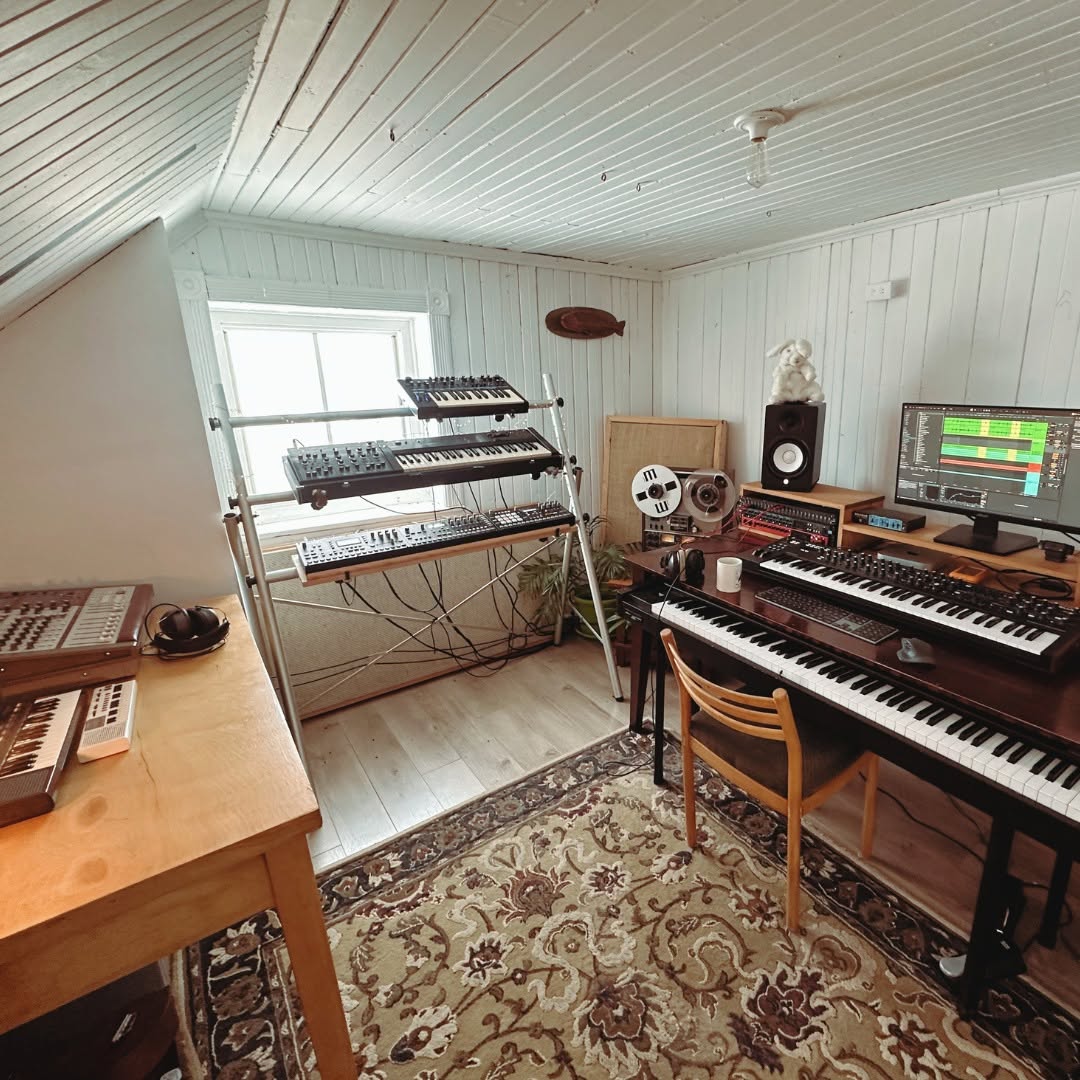

Gabriel is based in Quebec and works out of Studio Gramophone, a small home studio in Jonquière, near Saguenay, in the more northern part of the province. He has been closely involved with Angine de Poitrine’s recordings and understands not only the sound of the band, but the unusual workflow that makes their music possible.
And that workflow is fascinating.
Check out Gabriel’s Studio: https://www.studiogramofaune.com/
Gabriel’s Studio on FaceBook: https://www.facebook.com/profile.php?id=61575744912416
Gabriel’s Studio on instagram: https://www.instagram.com/studiogramofaune

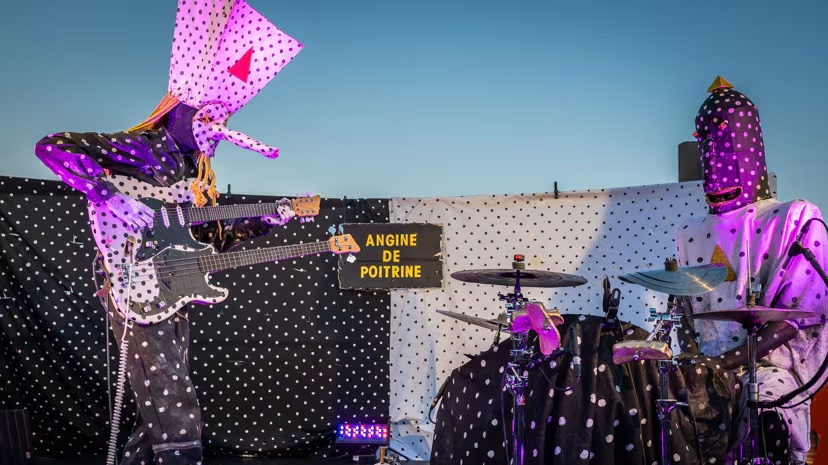
A Hybrid Between Live Performance and Electronic Music
When you first hear Angine de Poitrine, one of the striking things is that the music feels alive. It does not sound like a sterile, looped, gridded production. There is movement. There are variations. There are parts interacting underneath one another in a way that feels human.
At the same time, there is clearly a loop-based architecture to the music.
Gabriel describes the process as a hybrid. The band jams a lot to generate ideas, then works closely with guitarist and bassist Ken to develop the skeleton of the piece inside the DAW. From there, they build the arrangements together, often in a way that resembles electronic music production more than a traditional rock band tracking session.
In the early days, they tried recording the music directly from the live setup, with the drums, guitar and bass performing together while the looper was running. The problem was practical. You would end up with, essentially, a couple of mono tracks from the looper, such as bass and guitar, and there was very little flexibility afterwards. You could not properly EQ, pan, balance or shape the production.
That might preserve a performance, however it does not necessarily give you a record.
So Gabriel and the band developed a different approach. They record loops individually, find performances that feel right, stretch them out inside the DAW and arrange the music from there. The drummer is also part of that arrangement process, and once the recorded version takes shape, the band works out how to perform it live with the looper.
That last point is crucial.
The recording is not built in a way that ignores the live band. In fact, the looper dictates what is possible. Gabriel explained that they would never put two different guitar parts into the recording if those two parts would have to start at the exact same time live and could not realistically be performed with the looper.
That is a very different philosophy from most modern productions.
Quite often, a band records whatever serves the record, then figures out a different arrangement for the stage. Acoustic guitars, extra textures, added synths, backing vocals or doubled parts might all be included on the album, even if they never appear live in the same way.
With Angine de Poitrine, it is almost the reverse. The recording is based around what the live performance can become. The album and the stage version may not be identical, however they are connected by the same internal logic.
The Looper as a Creative Limitation
Creative limitations can be incredibly powerful.
In this case, the looper is not just a piece of gear. It is part of the writing system. It defines what can happen, what cannot happen and how ideas need to be arranged. That limitation gives the music a strange and compelling tension.
The band are not simply playing to backing tracks. They are not trying to reproduce a perfect studio arrangement with hidden support. Instead, the music breathes differently in each format. The record has its own identity, and the live performance has its own identity.
That is something we sometimes forget.
People often ask, “How would you ever do that live?” when talking about a complex record. My answer is usually, “Who cares?” Records and live performances do not have to be identical. They can live independently. However, in the case of Angine de Poitrine, the fascinating thing is that the recording is still deeply connected to the live methodology.
It is complicated, however it is not artificial.

Recording Guitars with DI, Amp Sims and Flexibility
Although the music itself sounds unusual, Gabriel is very clear that the engineering setup was not flashy.
His studio is a small home studio. Many of the guitars, basses and some vocals were recorded there, while the drums for Volumes One and Two were recorded at a local experimental space called Le Sous-Bois, part of the broader creative community around Saguenay.
The guitar and bass recording approach was very practical. Because the music relies so heavily on loops, editing and precise arrangement, Gabriel found that DI recording often worked better than miking up amplifiers.
When you are looping lots of guitar segments, a DI gives you cleaner edits, less room bleed and more flexibility. It also allows the production to stay fluid while the arrangement is still being shaped.
Ken’s effects pedals are a major part of his playing, so Gabriel would often capture both pre-effects and post-effects DI signals. This gave mixer and mastering engineer Danny Lamey more options later in the process. They would also print amp sim sounds into the session as part of the production.
Some parts were reamped. Some solos, effects and special moments were recorded through amps in the room. However, the foundation of the workflow was practical, flexible and open-minded.
There was no purist attitude about recording guitars.
And good for them.
Whatever works, works.
Gabriel mentioned using a variety of amp sims, with IK Multimedia’s AmpliTube being one of the tools that worked well for their process. The point was not to use gear for the sake of impressing anyone. The point was to support the music.
That is a lesson worth repeating.

Drum Recording at CEM (Centre for Musical Experimentation)
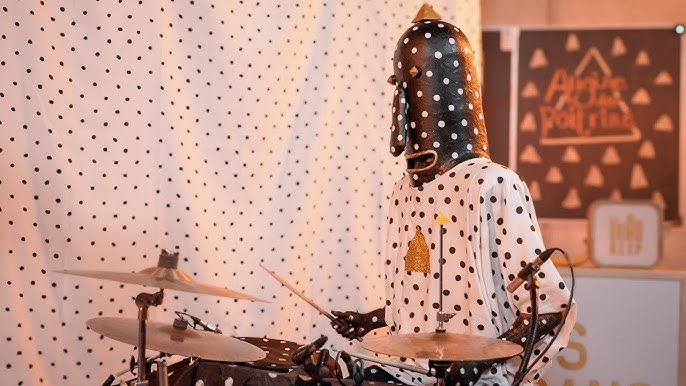
The drums were recorded at CEM, using the mics available, there was nothing unnecessarily extravagant about the setup.
Gabriel used a D112 on the kick, along with a plate mic inside the kick to capture more attack, plus a subkick for low-end support. On the snare, he used an Audix microphone, and for the hi-hat he mentioned using a Beyerdynamic. For room mics, which are not a dominant part of the band’s sound, he used an Audio-Technica XY stereo microphone.
I love that.
Audio-Technica microphones are very underrated. We often forget that many of the classic records we grew up loving were made with equipment that was simply new at the time. It was not always about vintage gear. It was about people using what they had, making decisions and committing to the sound.
Just because something is new, accessible or practical does not mean it is bad.
Gabriel’s setup proves that point beautifully. Yamaha HS7 monitors, Beyerdynamic DT 770 headphones, a Focusrite Clarett 8Pre, an OctoPre and a straightforward recording chain. Nothing overly fancy, however the results speak for themselves.

The Microtonal Guitar
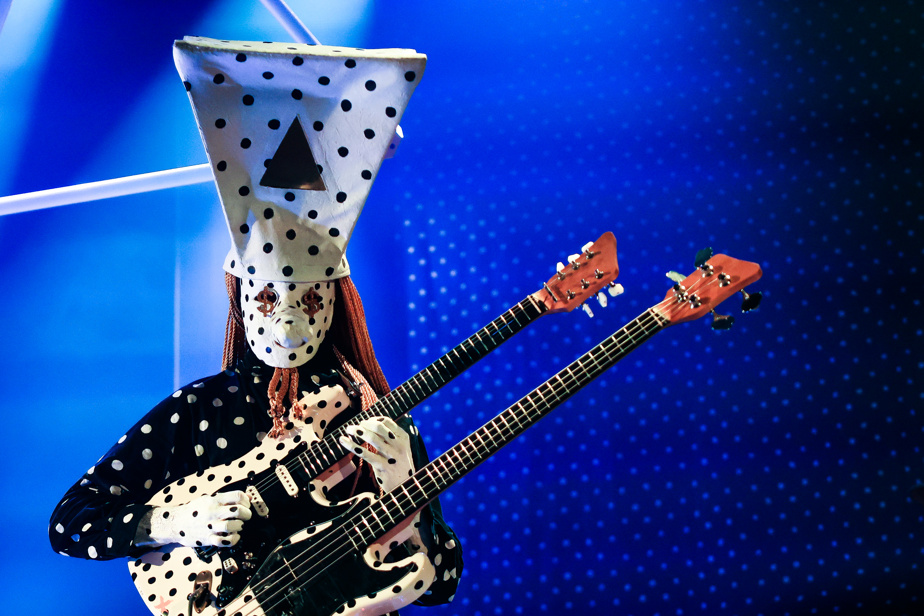
One of the most fascinating parts of Angine de Poitrine’s sound is the microtonal guitar.
Gabriel explained that the band’s interest came from a mixture of influences, including Turkish music, experimental music from the 1970s and bands like King Gizzard and the Lizard Wizard, who have explored microtonal tuning in their own work.
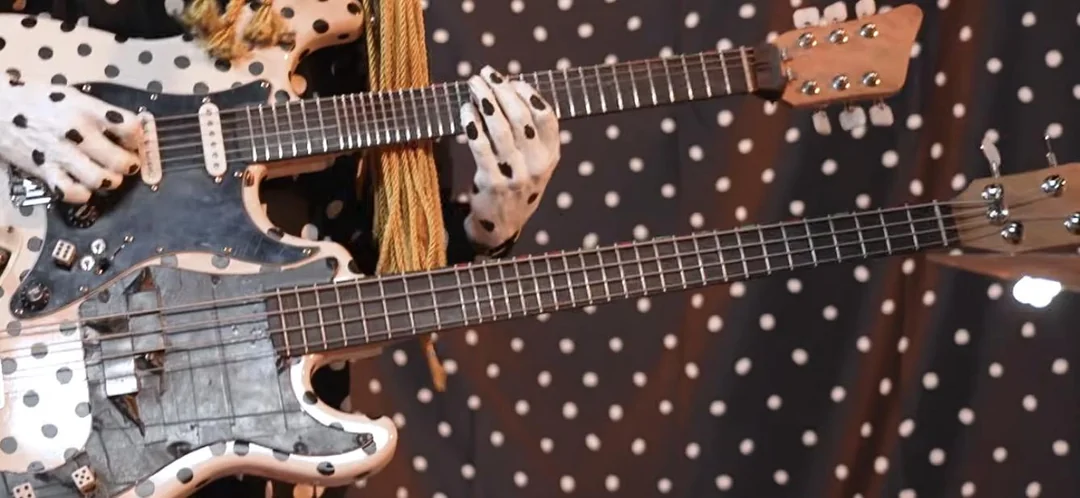
The drummer, Clément, worked out the prototype for the microtonal guitar. The band then approached a luthier in Saguenay to build what Gabriel described as a kind of Frankenstein double-neck instrument.
This is not a normal double-neck guitar where both necks run through the same output and switch between sounds. This instrument has two separate outputs, feeding two completely different signal chains.
It is a custom-made instrument, designed around the band’s needs.
Gabriel, who is a guitarist himself, said he has tried playing it and can barely get three chords out of it. The layout is disorienting because the octave is divided into 24 frets, giving access to quarter tones across the instrument.
That is a huge part of why the music feels so alive.
When I first heard it, it felt like the music was breathing in multiple ways. We are so used to modern rock and metal being tightly edited, tuned, quantised and perfected that hearing pitch move in this way is almost shocking. It pushes against the grid. It pushes against the expectation of perfect tuning. It feels human, unstable and alive.
In this modern world of AI-generated music and hyper-edited production, that is massively refreshing.
Tension, Friction and the Influence of Electronic Music
Gabriel made a really interesting point about the band’s sense of tension and release.
Stylistically, Angine de Poitrine do not sound like electronic music. They are very much a guitar-based, performance-driven band. However, in terms of arrangement philosophy, Gabriel hears a strong connection to electronic music.
There are buildups, drops, loops, friction points and releases. The band works with tension in a way that feels related to electronic arrangement, even though the instrumentation and aesthetic are completely different.
That makes sense.
In the 1980s and 1990s, a lot of guitarists started learning programming and bringing programmed elements into rock music. Now we have a generation of musicians who grew up hearing loop-based music, electronic structures and computer-based production as the norm. It is only natural that some of that thinking would come back into guitar music in new ways.
Gabriel himself has a background in guitar and classical guitar, however over the last 10 to 15 years he has worked heavily in electronic music. That experience made him a natural fit for this project. His approach to programming, editing and arranging helped the band’s unusual process make sense in the studio.

Why Angine de Poitrine Connected
It is always difficult to explain why something connects.
Once a band breaks through, everyone has a theory. People say they knew it would happen because of this or that. However, the truth is usually more mysterious.
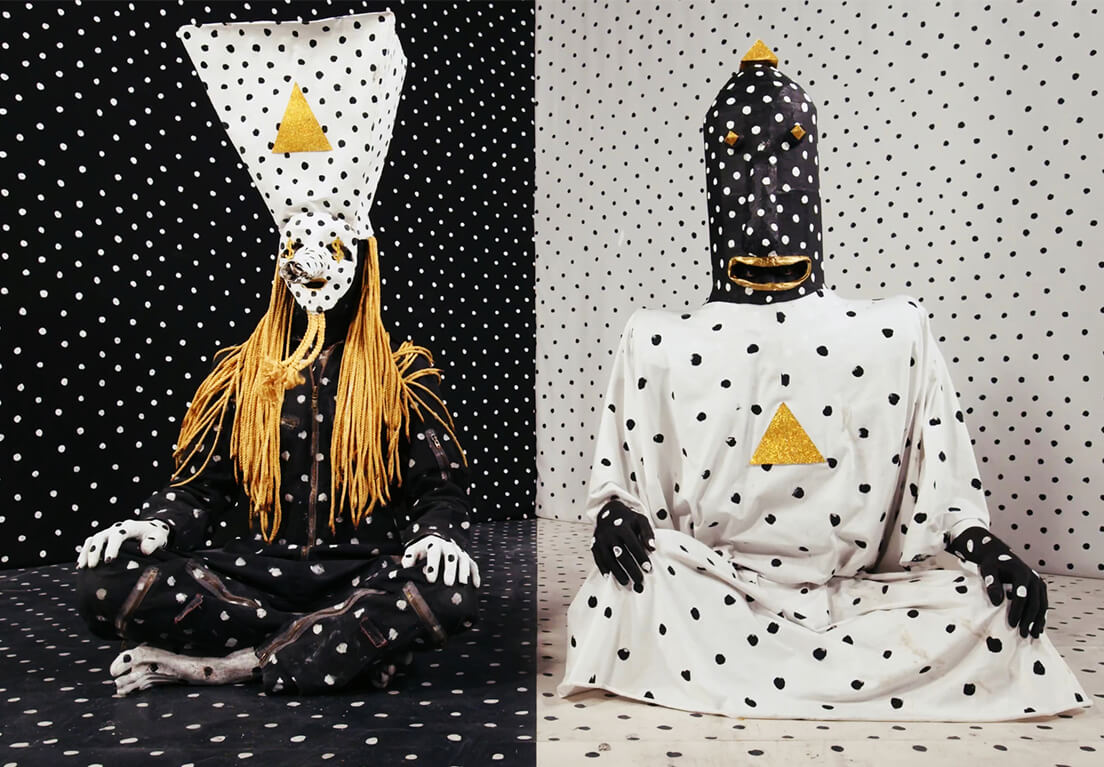
With Angine de Poitrine, the visual identity is clearly part of the hook. The costumes, the aesthetic and the presentation are strong enough to make people click. In the internet age, that matters. Sometimes you need something visually striking enough to make someone stop scrolling for ten seconds.
However, that is only the door.
The music is what keeps people there.
The band are not easy to pigeonhole. They are not chasing a trend. They are not trying to sound like anybody else. They are simply being themselves, and that is incredibly powerful.
There is also a sense that this is not a one-trick pony. The music has legs. It feels like a fully realised artistic world, not just a viral moment.
That is why it resonates.
In a time when so much music can feel polished to the point of lifelessness, Angine de Poitrine sound like people making art because they have to. There is humour in it, tension, friction, personality and a refusal to sand off the edges.
That is exactly what makes it exciting.
The Importance of Local Scenes
One of the most meaningful parts of the conversation was Gabriel’s reflection on local music scenes.
He spoke about how important it is to support the bands around you, especially if you live in a smaller town, rural area or a place outside the obvious industry centres. Go to shows. Support venues. Get involved. Work with artists who inspire you.
This project started because Gabriel liked what the band was doing and wanted to be involved.
That is a huge lesson.
Scenes do not grow by accident. Bands, producers, engineers, venues, rehearsal spaces, studios and audiences all feed one another. When that ecosystem works, incredible things can happen.
Gabriel was also keen to shout out Le Sous-Bois, the local space that supported the band early on and helped make the recordings possible. He appreciated that they did not try to capitalise on the band’s success, even though they were one of the first places to get involved and support the project.
That kind of support matters.
It is easy to look at a band once they are getting international attention and assume the story starts there. However, before the YouTube reactions, before the viral explosion, before the wider attention, there is usually a local community that helped something grow.
Making People Want to Play Again
Perhaps the most beautiful thing Gabriel said was about the comments he has seen from listeners.
Some people have heard this music and felt the urge to pick up a guitar again. Others have felt inspired to make art. That is a powerful thing.
When you spend your life making music, it is easy to sometimes wonder, “Why add to the pile?” There is already so much out there. So much noise. So much content. So much music uploaded every single day.
However, then something like this comes along and reminds people why music matters.
It does not have to be perfect.
In fact, maybe perfection is not the point at all.
Maybe the point is to make something alive enough that it makes someone else want to create.
Final Thoughts
Gabriel Gagné Gaudreault’s work with Angine de Poitrine is a brilliant reminder that great records do not always come from huge studios, expensive chains or conventional workflows.
Sometimes they come from a small home studio, a local experimental space, a strange custom-built microtonal guitar, a looper, some DI tracks, amp sims, practical engineering decisions and a producer who understands the band well enough to help them become more themselves.
That is what this feels like.
Not a band trying to fit into the modern music world, but a band building their own world and inviting everyone else in.
And in an era where music can so easily become over-edited, over-corrected and over-polished, hearing something this human, strange, funny, tense and alive is a wonderful thing.
It makes you want to listen.
Even better, it makes you want to create.
Check out Gabriel’s Studio: https://www.studiogramofaune.com/
Gabriel’s Studio on FaceBook: https://www.facebook.com/profile.php?id=61575744912416
Gabriel’s Studio on instagram: https://www.instagram.com/studiogramofaune