
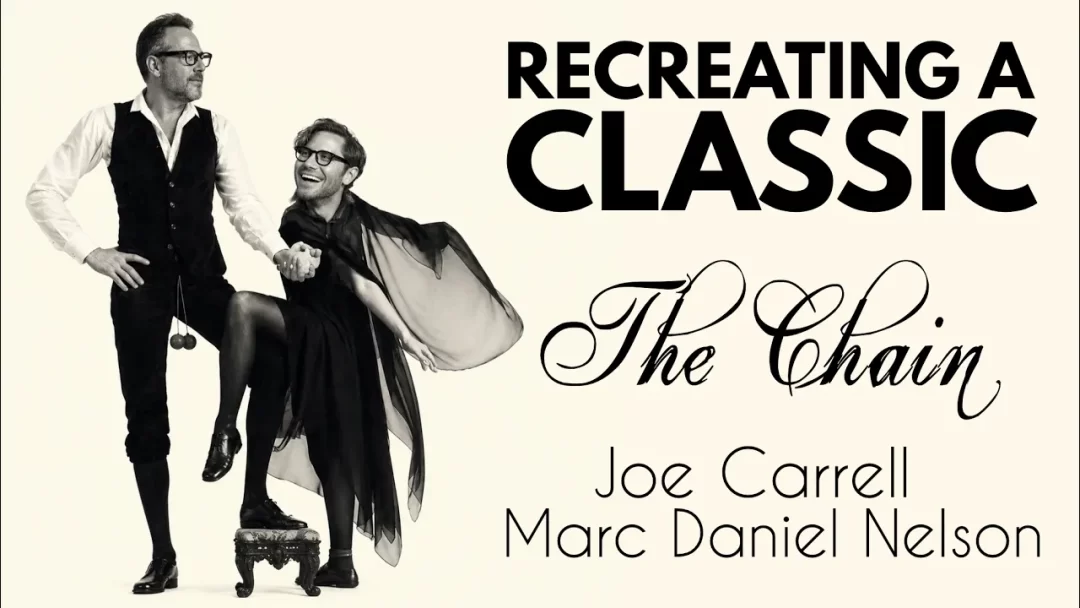

Download the multitracks here: https://producelikeapro.lpages.co/blue-honey-the-chain-form
Some songs are more than songs. They are landmarks.
Fleetwood Mac’s “The Chain” is one of those records that seems to exist outside of time. The moment that kick drum, dobro, vocal stack, and eventually that unforgettable bass line appear, you know exactly where you are. It is emotional, mysterious, raw, and somehow incredibly polished without ever feeling slick.
So when Joe Carrel set out to re-produce “The Chain”, this was never going to be about simply copying the original note for note and hoping for the best. The real challenge was much more interesting than that. How do you capture the spirit of one of the most iconic recordings ever made, while still using modern tools, modern tracking, and modern mixing expectations?
That is where this project becomes so fascinating.
Joe brought in a group of fantastic studio musicians to recreate the instrumental parts, along with Nashville husband and wife duo Blue Honey to handle the vocals. From the start, the aim was to respect the original arrangement and feel, while giving the tracks enough sonic quality and flexibility for Marc Daniel Nelson to take them into the mix and shape them with a deep understanding of the original Fleetwood Mac sound.

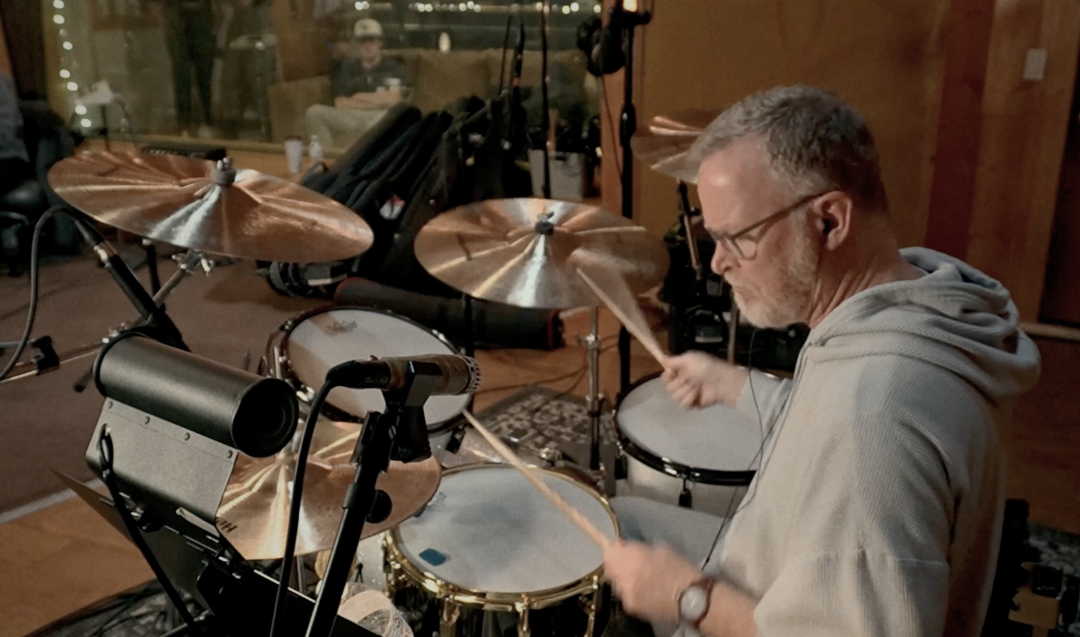
Tracking the Foundation
Joe’s approach to the recording was beautifully practical. He was not trying to reinvent the wheel. He was trying to get great performances, capture them through high-quality gear, and make choices that supported the song.
For the kick and snare, Joe used the SSL 4000 Revival, with some compression and a healthy amount of EQ. As anyone who has recorded drums knows, even a great kick and snare, beautifully tuned and well played, usually need a little help to sit exactly where they should. That does not mean “fixing” them. It means giving them what they need.
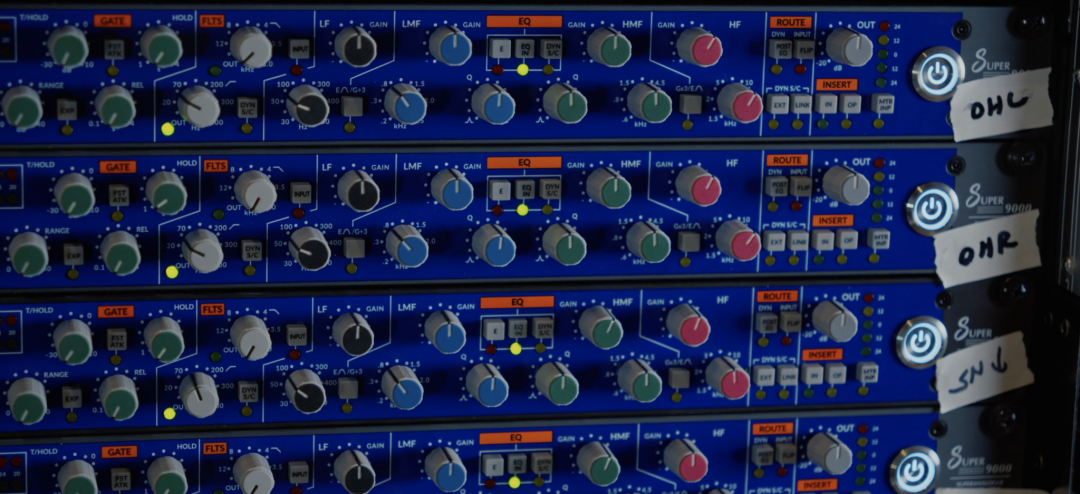
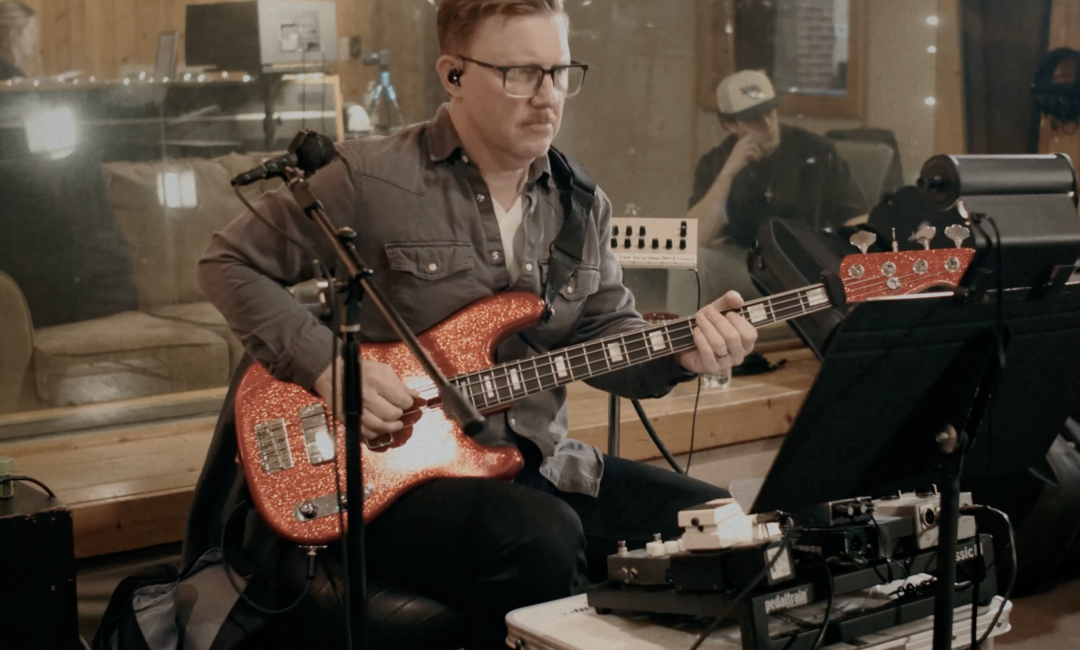
The overheads, snare bottom, and one of the electric guitars went through SSL 9000-style processing. Joe used a little top-end lift, gentle compression, and fast attack compression where needed, keeping things controlled without killing the performance. The main rhythm guitars and end solos went through the SSL 4000 circuit to take advantage of that transformer character, while the bass also went through the 4K with some carefully chosen EQ, including a small cut around 200Hz and a lift around 2kHz.
That is such an important part of making a track like this work. The original “The Chain” is not a hyped modern rock production. It has shape, space, and restraint. Every sound has to occupy its own place.

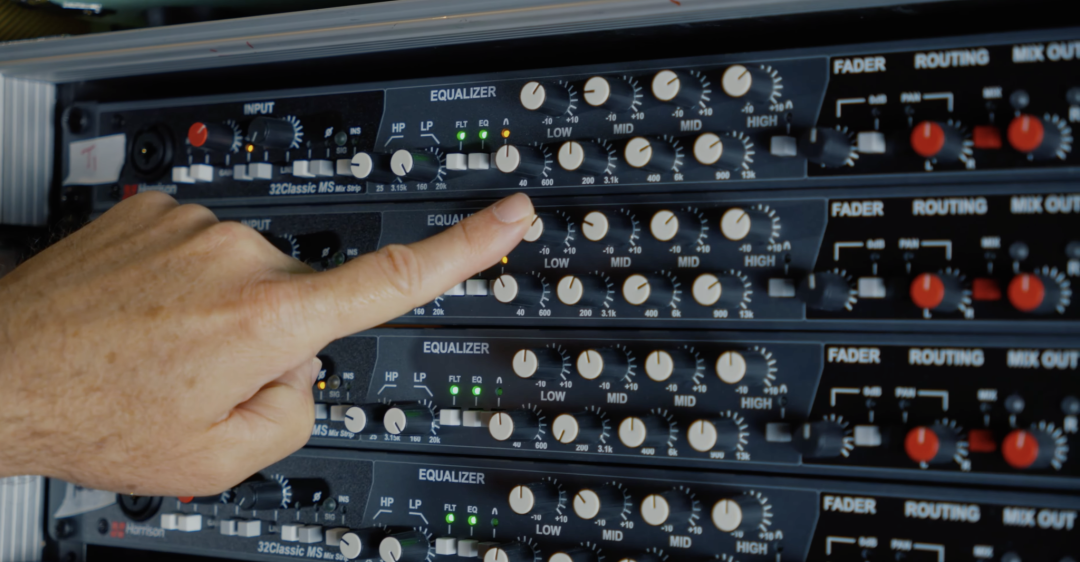
The Harrison 32C and Musical EQ
Joe also used Harrison 32C-style EQ on the toms and acoustic guitar. The toms received quite a bit of EQ, however that is part of the beauty of vintage-inspired EQ designs. Some EQs are incredibly obvious the moment you add 2 or 3dB. Others invite you to turn the knobs further because the curves are broad, musical, and forgiving.
That is what Joe was describing with the Harrison-style EQ. It is not just about correcting frequencies. It is about leaning into the musicality of the circuit.
On the acoustic guitar part, which recreates Lindsey Buckingham’s iconic dobro-style texture, the EQ was much more restrained. Joe reduced a little around 200Hz to control the close-mic effect, however the goal was largely to let the instrument speak naturally, with just enough circuit character to give it personality.


Vocal Mics with Character
The vocal choices were also a big part of the production. Troy was recorded with a Heiserman H251, a recreation of the vintage Telefunken 251. Joe talked about the HK12 capsule, the 6072 tube, and the T14 transformer, which was reverse engineered from a pristine 1961 original transformer. That kind of microphone brings a wonderful combination of detail, beauty, and authority.
For Cassie, Joe chose the Neumann M149. It has a classic lineage, sharing capsule heritage with microphones like the U47 and M49, however it is also a very modern microphone in other ways. It is transformerless, low-noise, and offers multiple polar patterns and filter options.
Both vocals were recorded through the SSL 9000 preamp path, giving them a clean, open, transformerless quality. This was a smart contrast. The microphones provided tone and character, while the preamp path kept the capture clear and controlled.

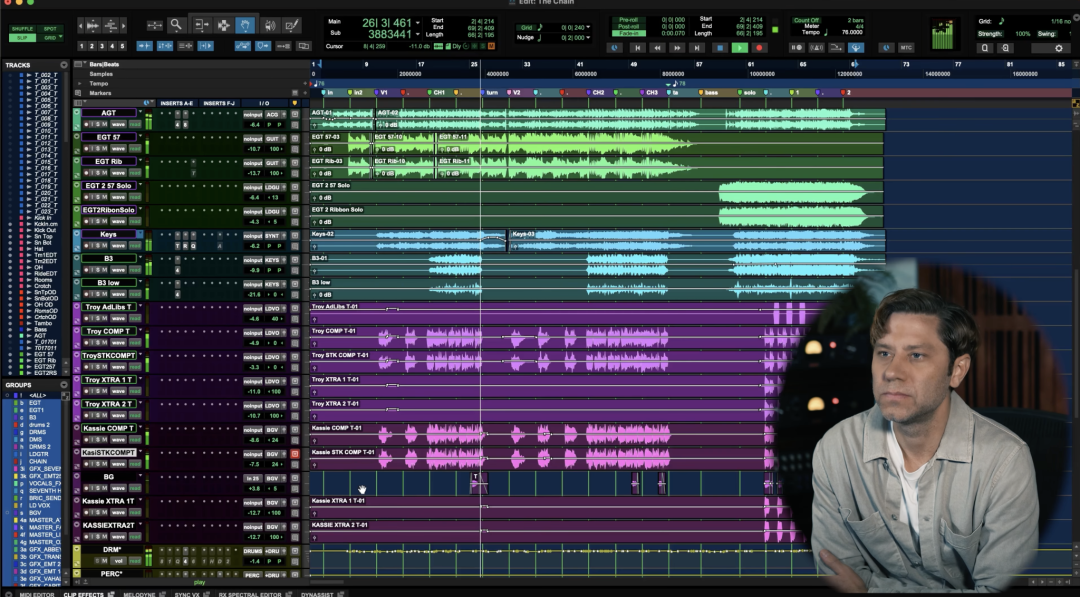
Marc Daniel Nelson’s Mix Philosophy
Once the tracks were recorded, Marc Daniel Nelson took over the mix. Marc’s relationship with this song runs deep. “Rumours” and “The Chain” were a huge part of his upbringing as an engineer, and he later worked closely with Ken Caillat, who engineered, produced, and mixed the original Fleetwood Mac album. That connection gave Marc a unique insight into the spirit of the record.
One of the most interesting things Marc points out is the decision every mixer faces when working on a cover. Are you making a soundalike? Are you doing something “in the vein of” the original? Or are you creating a new arrangement entirely?
In this case, Joe and the musicians stayed close to the original arrangement and vibe. The vocals have a strong Stevie Nicks and Lindsey Buckingham flavour, and the structure honours the original. However Marc still had to make choices for a modern mix. Low end, for example, is heard very differently now than it was in the 1970s. Modern listeners expect more size and weight, even when the production is vintage-inspired.
Marc chose three key elements to preserve from the original: the kick drum, the reverb, and the panning.
That tells you a lot. He was not trying to copy everything. He identified the things that made the original feel like “The Chain”, then built the modern mix around those emotional anchors.
The Power of the Mono Centre
One of the boldest decisions in the original record is the vocal panning. Today, if most of us received doubled vocal stacks with multiple singers, our instinct would be to spread them wide. Hard left, hard right, nice stereo width, big chorus lift. However Marc noticed that in the original, the vocals stay locked in the centre until the end.
That is unusual by modern standards, however it makes perfect sense in the context of the song.
The verses are sparse. You have kick drum, dobro, electric guitar, and mono vocals. There is not a huge stereo arrangement fighting for space. Keeping the voices in the middle makes the track feel more intimate, haunting, and almost claustrophobic in a really compelling way.
Marc retained that approach. Instead of making the vocals big and wide from the beginning, he kept them focused and narrow, allowing the arrangement to bloom later when the full band and outro section arrive.
The Kick Drum and the Original Feel
“The Chain” has one of those kick drum sounds that immediately establishes the track. Marc wanted to preserve that familiarity, especially in the verses.
He explained that he and Ken Caillat had sampled drums at Producers Workshop, now The Boulevard, aiming for 1970s-era drum sounds. One of those samples was specifically in the spirit of “The Chain” kick drum. Marc used that sample in the verses, then allowed the actual band performance to take over when the full arrangement kicks in.
This is a brilliant lesson in mixing a recreation. Sometimes one familiar texture is enough to place the listener emotionally inside the song. You do not have to copy every single detail. You just need to know which details matter most.

One Reverb to Glue the World Together
Another major part of Marc’s mix was the reverb.
In the original era, engineers often had one or two reverbs available, not dozens of plug-ins across every track. That limitation created a kind of natural glue. Everything shared the same space.
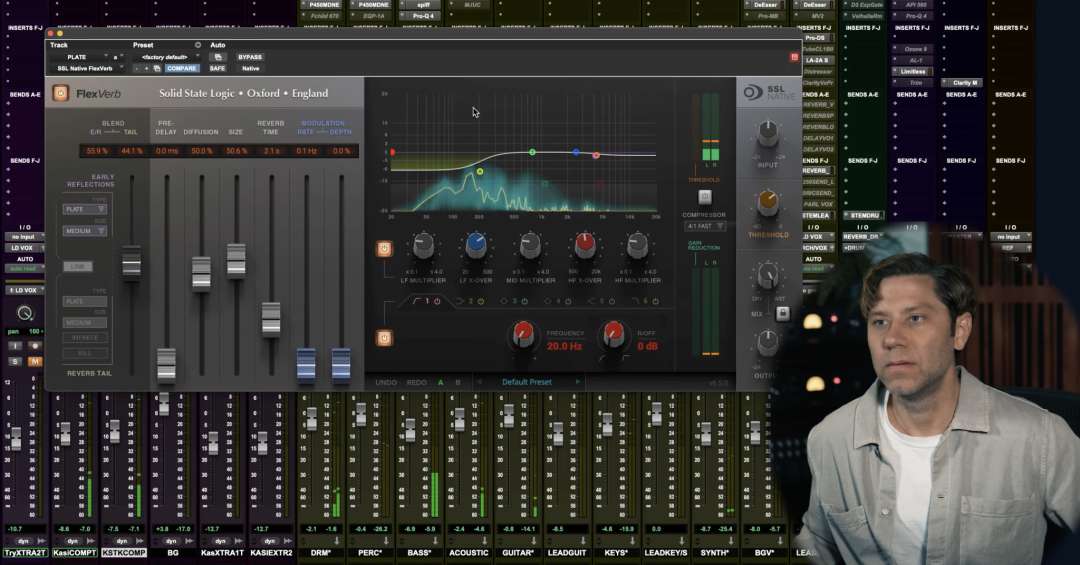
Marc followed that idea by using one main reverb across the track. He auditioned several plate reverbs, including some of his favourites, however many sounded too large or too modern. The original “Rumours” reverb has a bright, special, slightly quirky quality. Eventually, Marc found that SSL Flex Reverb gave him the closest emotional response after adjusting diffusion, reverb time, and EQ.
He used that same reverb on the kick, dobro, vocals, snare, and other key elements, allowing the whole production to feel like it belonged in one world.
This is one of those deceptively simple lessons that applies to all of us. Sometimes cohesion does not come from adding more. It comes from taking options away.

Adding the Right Historical Character
Because Joe’s tracks were recorded through SSL 4K, SSL 9K, Harrison, and other modern or modern-inspired chains, Marc had to create some of the personality associated with the original record in the mix.
He leaned on API-style EQ and Stevens 821 tape machine-style processing. Marc explained that his 455 plug-in was based on the API console associated with the Sausalito Record Plant side of the original “Rumours” sessions, while the Stevens 821 plug-in referenced the tape machine used at Producers Workshop for overdubs and mixing.
The key point here is not simply the names of the tools. It is the intent.
Marc was not adding vintage colour randomly. He was using specific types of harmonic character, EQ curves, and tape behaviour to push the modern recordings closer to the emotional world of the original.
That is a very different thing from just slapping a “vintage” plug-in across every channel.

Drums, Bass, and Controlled Personality
Marc paid particular attention to the snare drum, describing it as a huge part of the Fleetwood Mac personality. He sculpted out an unwanted whistle-like resonance, added back fundamental weight around 130Hz, and controlled some of the aggressive top-end attack so it did not feel too modern or too pokey.
The bass also required careful shaping. “The Chain” has one of the most famous bass parts in rock history, however in a modern recording it is very easy to let the bass get too large or too forward. Marc wanted the weight and importance without letting it dominate in the wrong way.
He found a squawky area around 900Hz to 1.2kHz that needed attention. Interestingly, he boosted some 1kHz with API-style EQ for personality, then controlled that same general range later with more surgical EQ. That might seem contradictory on paper, however it makes perfect sense sonically. Sometimes an EQ is not just boosting a frequency, it is adding phase character, attitude, and movement. Then a cleaner EQ can refine the result.
Vocals That Sit Back, Not Up Front
Modern vocals are often mixed very forward. They are compressed, bright, consistent, and right in your face. That would have been completely wrong for this track.
Marc rolled off the vocals more aggressively than he normally would, sometimes much higher than a typical modern vocal high-pass. The aim was to make them spooky, slightly thinner, and more tucked into the track, rather than big and full. He used gentle compression, two stages of de-essing, tube colour, and LA-2A-style limiting, however nothing was being crushed.
The vocals breathe. They move. They feel like part of the record rather than something pasted on top of it.
That is such a crucial lesson. The best vocal sound is not always the biggest vocal sound. The best vocal sound is the one that serves the song.
Automation Instead of Crushing Everything
One of the most valuable points Marc makes is about automation. Rather than relying on heavy bus compression to create glue, he used clip gain and bus automation to make the instruments move around each other.
That is a very old-school idea, and it is still one of the most powerful tools we have. Before everyone started smashing mixes into compressors, engineers created excitement by riding faders. The mix breathed because people made it breathe.
Marc described automation as a huge part of what makes a mix special. The instruments flow like waves, creating emotion and cohesion without flattening everything. That is a wonderful reminder for all of us. Compression can be amazing, however it cannot replace musical movement.
The Fade-Out Trick
One lovely detail Marc shared came from Ken Caillat. On fade-out songs, engineers would often start lifting certain elements as the fade happened. Drums, vocals, or fills might rise slightly against the overall fade so the listener catches one last phrase or one last drum fill before the song disappears.
That is such a classic record-making move. It is subtle, however it keeps the ending alive. Rather than everything simply shrinking away at the same rate, the fade becomes a final little performance.
We’re making the multitracks available so you can download them, pull them into your own DAW, and create your own mix of Joe Carrel and Blue Honey’s recreation of Fleetwood Mac’s “The Chain.”
Try your own approach. Keep it close to the original, push it into a more modern direction, experiment with the reverb, the vocal panning, the bass tone, the drum balance, and see how you would honour one of the most iconic songs ever recorded.
Download the multitracks here: https://producelikeapro.lpages.co/blue-honey-the-chain-form
The Real Lesson
What makes this recreation of “The Chain” so compelling is not that Joe and Marc tried to make a perfect museum piece. It is that they understood what mattered.
Joe captured great performances through thoughtful mic choices, SSL and Harrison-style front-end colour, and a strong respect for the arrangement. Marc then approached the mix with deep historical knowledge, however also with the confidence to make modern decisions where needed.
The kick drum, the centre-panned vocals, the shared plate-style reverb, the API and tape-inspired colour, the careful low-end choices, the restrained vocal treatment, and the automation all point toward the same goal: honour the feeling of the original.
That is the art of recreating a classic.
It is not about copying the past. It is about understanding why the past still moves us, then using everything we know now to bring that feeling back to life.
Have a marvellous time recording and mixing.