


The Comeback of a Classic
In the world of audio engineering, there are certain tools that have stood the test of time, and the spring reverb is one of them. Chris Yetter from Audioscape has taken it upon himself to revive this classic technology with a modern twist. The XL 305R reverb unit not only pays homage to its predecessor, the Master Room XL 305 but also incorporates advanced techniques to enhance its functionality. This blog and accompanying explores the journey of creating this unique piece of equipment, the technical aspects that make it special, and its applications in today’s music production landscape.


The Origins of the Spring Reverb
Spring reverb was first developed to enhance the sound of the Hammond organ, which lacked natural reverberation when played in smaller spaces. Laurens Hammond, the founder of the company, and his team devised the Hammond Type 4 Spring Reverb Unit as a way to emulate the rich, reverberant sound of a pipe organ in large halls.
Spring reverbs gained broader popularity when Leo Fender incorporated them into guitar amplifiers, starting with the Fender Vibroverb and the standalone Fender Reverb Unit in the early 1960s. This made spring reverb a defining characteristic of surf rock and other genres.
In the 1960s, 70s and early 80s it was a staple in many recording studios. The original designs, like the XL 305, were renowned for their distinctive sound but eventually fell out of favour as digital reverbs took over. Chris discovered Wayne’s original designs and recognised the potential for revival. Wayne’s work in the late 70s and early 80s laid the groundwork for what could become a new standard in reverb technology.


How It Works:
Components:
Transducer: Converts the incoming audio signal into vibrations.
Springs: These vibrations travel through one or more metal springs.
Pickup: Captures the vibrations at the other end of the spring and converts them back into an audio signal.
Mechanism:
When sound enters the spring, it vibrates and travels along the spring’s length. The vibrations reflect within the spring, mimicking the way sound bounces off walls in a physical space.
This creates a “reverberated” sound with a metallic, slightly shimmering quality.
Characteristics:
Metallic Sound: The reverberation often has a distinct character due to the physical properties of the spring.
Decay Control: The length and tension of the spring affect the reverb’s decay time and tone.
Compact Design: Spring reverbs are much smaller and more portable than traditional plate or room reverbs, which contributed to their popularity in guitar amps.
Popular Applications:
Guitar Amplifiers: Spring reverb is a staple in many vintage and modern amps, such as Fender’s Twin Reverb.
Studio Effects: Used in recordings for its unique sound, particularly in rock, surf music, and experimental genres.
Sound Design: Adds character and retro vibes to mixes.
Spring reverbs have a unique tonal quality that differs from digital and plate reverbs, making them valuable for achieving certain vintage or lo-fi effects.


The XL-305R: A Modern Reimagining of an Analog Classic
The XL-305R traces its lineage back to the analog XL-305 Spring Reverb of the 1980s, a “secret weapon” reverb that has earned a cult-like following over the years. Unlike many spring reverbs, the XL-305’s Spring Assembly features 12 finely tuned springs, creating an equally tempered response. This design mimics the effect of opening a piano lid, holding the damper open, and singing into the strings.
Building on this unique concept, the XL-305R has been completely reimagined. From updated electronics and adjustable spring decay times to modern workflow enhancements and a sleek aesthetic, every element was meticulously crafted. With input from Wayne Kirkwood, the original XL-305 designer, and four years of intensive R&D, this groundbreaking design has been brought into the 21st century.
The result? A product we’re incredibly proud to introduce to the market, blending simplicity and flexibility for unmatched performance.
Key Features:
2U Rack Unit: Includes an international external power supply for optimal noise performance.
Input Controls: Drive the signal into the reverb tank, with signal overload LEDs to monitor hot signals.
Mix Controls: Seamlessly blend the dry and wet signals.
4-Band EQ (Per Channel): Center-detented controls provide extensive tonal shaping for the wet signal.
Parallel/Wet Toggle Switches: Switch between fully wet signals or a parallel blend. Engaging parallel mode with maxed-out mix controls results in a 50% wet signal.
Mono Drive Switch: Stereo-links the channels for easier control of the stereo image.
Mono Return Switch: Sums the reverb output signal to mono.
LED Output Indicators: Monitor the total output level of the reverb effect.
The XL-305R can deliver plate-like reverb with subtle input settings or go full “spring reverb” with a harder drive, offering unparalleled versatility for a variety of applications.

The Craftsmanship Behind the Reverb

One of the standout features of Audioscape’s spring reverb is the craftsmanship involved in its production. Each unit is built from scratch, ensuring that every component is tailored for optimal performance. Chris shared how the spring assemblies are constructed on-site, highlighting the precision required in measuring and cutting each spring for different millisecond delays. This craftsmanship is a nod to the past while still being relevant in today’s music production.
Understanding the Spring Assembly
The spring assembly consists of four trays, each containing three springs, resulting in a total of 12 springs. Each spring is tuned to a different millisecond delay, creating a rich and complex reverb sound. The math behind these springs is crucial; it ensures that the reverb produced is equally tempered, leading to a more harmonious sound. Chris explains that this careful tuning is what sets their reverb apart from generic spring tanks.
Technical Features of the Reverb Unit
Aside from the unique spring assembly, the reverb unit offers several technical features that enhance its usability. The device includes a mix control, allowing users to blend dry and wet signals. This is particularly useful when integrating the reverb into a mix, whether used as an auxiliary effect or a direct insert. Additionally, the parallel wet switches allow for quick adjustments, making it easier for users to find the perfect balance in their sound.
The EQ Design
One of the most significant upgrades in this reverb unit is its four-band EQ, designed by Wayne. The EQ allows for precise tonal shaping, making it easier to dial in sounds that fit specific instruments or mixes. Chris recounted a particular instance where he used the EQ to make a resonator guitar sound more aggressive in the mix, showcasing the immediate impact of the controls.


The Science and Legacy Behind the XL-305
The unique “equally-tempered” spring design of the XL-305 follows a logarithmic progression similar to a musical scale, creating a diffuse and natural reverb. Unlike most mechanical reverb systems—which rely on material properties or a few springs for diffusion—the XL-305’s multi-spring assembly eliminates the classic “boing” sound associated with basic designs.
This innovation was rooted in the work of William “Bill” Hall, who initially designed the system for a groundbreaking acoustic burglar alarm. During testing, Hall realized that the diffuse, log-based spring timings created an exceptional reverb effect. The burglar alarm concept was scrapped, and the MasterRoom Reverb was born—by accident.
Hall’s contributions, combined with Kirkwood’s engineering expertise, gave rise to the original XL-305. However, as digital reverbs gained prominence in the early 1980s, spring reverbs fell out of favor, and MicMix, the company behind the XL-305, eventually closed its doors.
Now, the XL-305R resurrects and modernizes this historic design for a new generation of artists, bridging analog warmth with contemporary functionality.

The Plugin Version
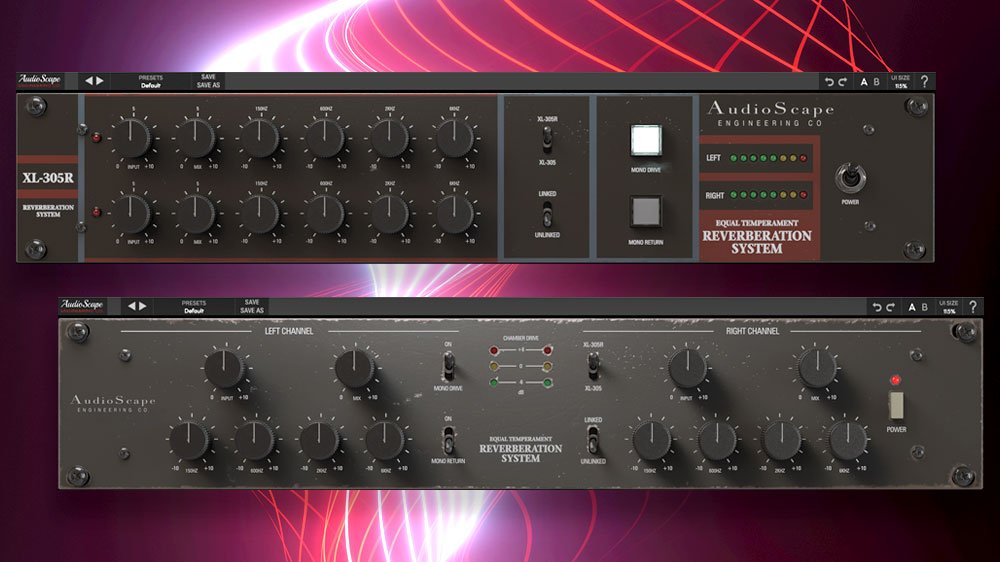
For those who prefer digital solutions, Audioscape also offers a plugin version of the reverb. This dual plugin allows users to switch between the original design and the modern version, providing flexibility in sound choice. The plugin retains the essence of the hardware, allowing for the same rich, complex reverb without the need for physical equipment.
Mono Drive Feature
The mono drive feature adds another layer of functionality to the reverb unit. By driving the spring assembly in mono, users can control both channels with a single input, simplifying the mixing process. This feature, along with the individual EQ controls for each channel, allows for a more tailored approach to sound design.
Creative Use of the Reverb
Chris encourages users to experiment with the reverb, particularly with the input levels and EQ settings. The unit is designed to inspire creativity, allowing for different soundscapes depending on how the springs are driven and mixed. The ability to adjust the left and right channels independently means users can create unique stereo imaging, making the reverb a powerful tool for sound design.
Final Thoughts: A Unique Offering in Modern Audio
The revival of the spring reverb through Audioscape is a testament to the enduring appeal of vintage technology in modern music production. By marrying classic design principles with contemporary innovation, Chris and his team have created a device that not only sounds incredible but also enhances the creative process. Whether you’re a seasoned audio engineer or just starting, this reverb unit offers a unique sound that can elevate your mixes.