
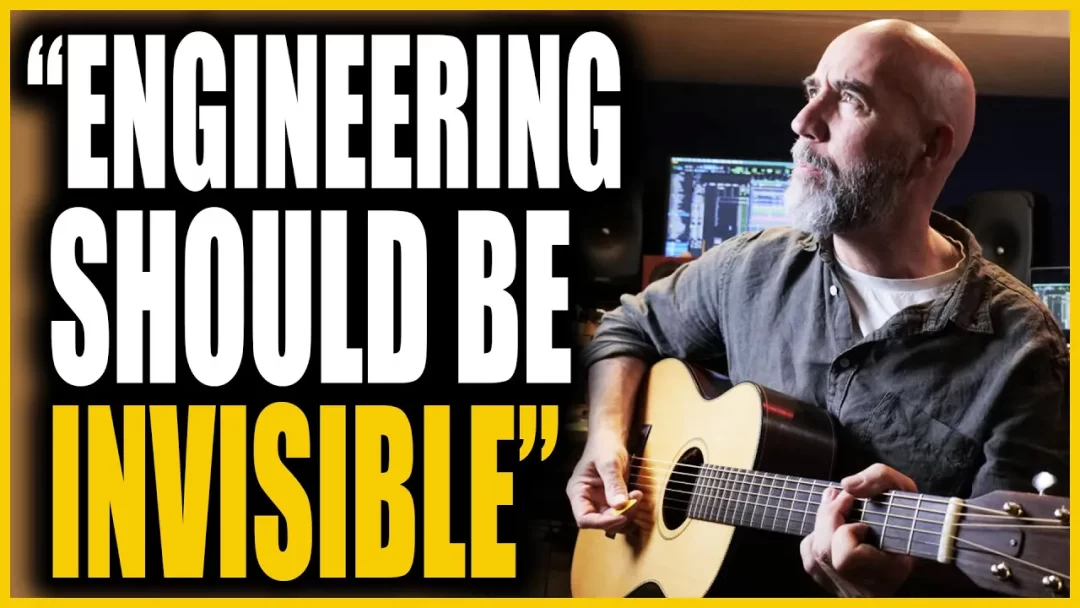

Walk into Metropolis and you feel it straight away. Energy, conversation, ideas. That is exactly why mixer, engineer and guitarist Sean Genockey moved his base of operations here after twenty one years at his Wimbledon room, Black Dog Studios. Post lockdown he wanted less seclusion and more creative cross-pollination. At Metropolis he has both, plus a jumbo jet or two drifting past the window to remind you that you are in the thick of London life.
“Here you can grab a coffee, talk about something that inspires you, then take that spark straight back into the room,” Sean says. “I made a lot of great records in Wimbledon, however I was spending too much time alone. I wanted to be around people making things.”


ReKognition Sound, the new home base
Sean’s room at Metropolis now has a name. ReKognition Sound. It is his personal space, co-founded with Jesse Wood, and the headquarters for their ReKognition Sound label. The studio sits directly beside Metropolis Studio B, which Sean regularly uses for live tracking, while ReKognition serves as a precision-focused mixing and finishing suite. Recent work here includes projects with Craig Silvey, NewDad, The Futureheads, Jasmine Rodgers, Scott Matthews, Jace Everettand Ronnie Wood.
“Ronnie is amazing, full of energy,” Sean smiles. “We have done all his recent solo work in this room. It is a space where you can react fast and keep the magic alive. The moment you stall an artist, the take is gone.”
His guiding principle is simple. “Engineering should be invisible. Your job is to facilitate greatness, not hold it up.”That ethos is baked into the room design and the monitoring.
Monitoring you can trust
ReKognition has been upgraded with Genelec 8351B three-way coaxial monitors, calibrated by Andy Bensley using GLM software. Sean grew up with big full-range mains and wanted that same confidence in a compact footprint.
“This little setup gives me that confidence,” he says. “It is forensic, yet it still feels like music. You are not distracted by dips or harshness. You can think about emotion and instinct. After Andy did the sweep with GLM I stopped second-guessing. I can make big decisions fast and know they will hold up.”

A guitarist’s playground, an engineer’s lab
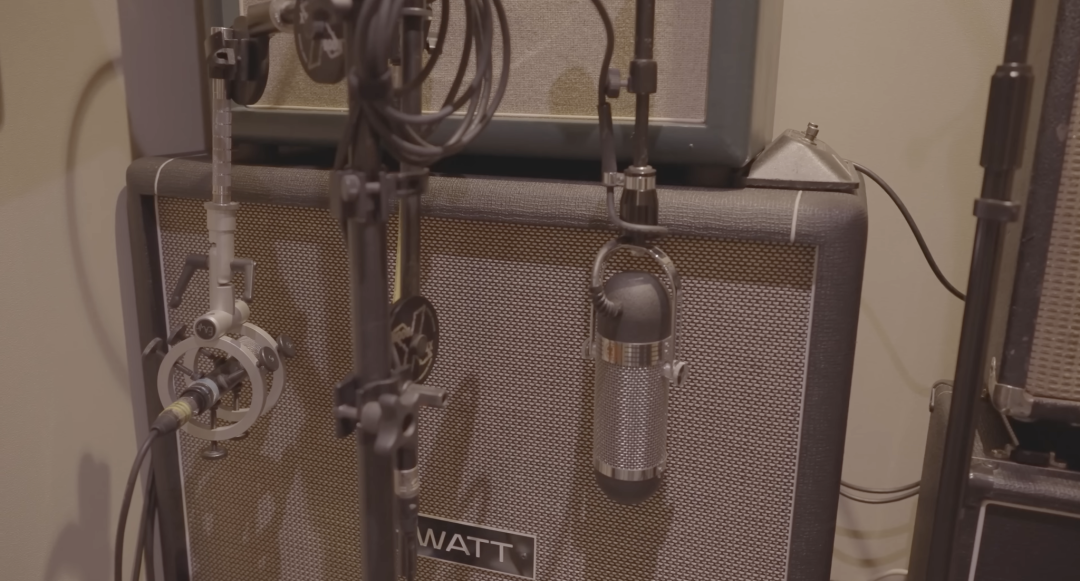
ReKognition mirrors the ethos of Sean’s old room. Everything is wired, labelled and ready. On the day we visited he had a split guitar setup feeding a pair of combos and a DI, with three carefully placed microphones:
- AKG C414 on the combo
- Beyerdynamic M69 on the Super Reverb
- JZ Amethyst set back for space and air
He begins each session with a short reference burst, then time-aligns every mic to the DI. Because the mics live at different distances, this transient check lets him nudge them to a common arrival point in seconds. The result is a tight, phase-coherent foundation that keeps creative momentum high. If the artist wants to swap a combo for a Hiwatt he can repatch quickly and keep the sound locked.
Sean likes the DI as part of the tone, especially when pedals feed it. On its own it can sound thin, yet in the blend it adds focus and attack. For mix delivery he can bus the lot to mono if needed, or keep the multi-mic flexibility.
Phase, polarity and the low-end truth
So much of Sean’s approach rests on fundamentals that often get overlooked. Drums are a dance between phase and polarity, guitars are mostly polarity choices, and low end is physics, not magic. He always checks polarity first, then time-aligns the snare to the overheads for that satisfying body and weight.
On bass he often treats the DI and amp like a crossover. The DI supplies clean, stable sub. The amp provides character, midrange articulation and movement. If those two are not time coherent you lose headroom on the mix buss and the vocal will fight you.
“Your vocal balance will never sit if your bass is wrong,” Sean says. “Get the low end right and the song opens up.” We talk about American records and that unmistakable girth going back to Motown. We also talk about how slight phase offset on classic DI and amp chains sometimes is the sound. Knowing when to clean and when to keep the wobble is part of the craft.

Vintage feel, modern workflow
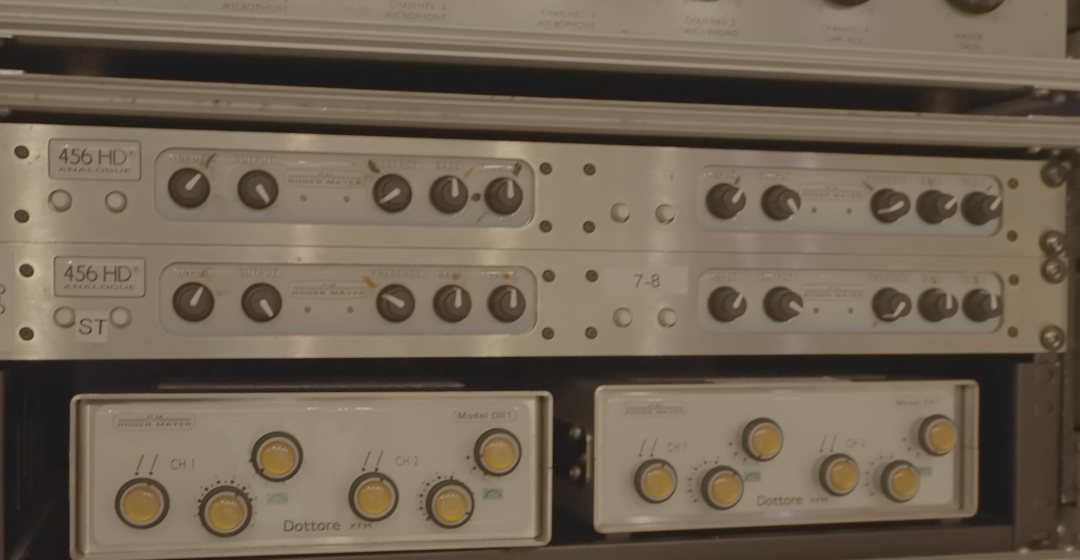
If you know Sean, you know his long collaboration with Roger Mayer. Mayer’s work spans from Hendrix and Beck to lesser known but powerful studio inventions. Sean runs multiple channels of Mayer’s 456 processors in 500-series and rack formats, designed to emulate the analogue tape capture curve in a fully analogue path. Placed right before conversion they soften digital edge, tame anti-aliasing nasties and add the harmonic knit we associate with pre-CD recordings.
Another favourite is a passive low-end transformer EQ that Sean uses on upright bass and kick in jazz sessions. It adds sub weight without phase smear so the capture arrives closer to the finish line.
Hybrid by design
Sean’s rig lets him flip between ITB and OTB at will. He runs 16 hardware inserts through a Dangerous conversion and monitor path into either the Dangerous 2-Bus or a Tube-Tech summing amplifier. Jazz projects often go fully analogue for speed and musicality. Pop and rock mixes might be ITB with targeted hardware inserts. The master faders live near unity. Rides and movement do the heavy lifting.
“I love mixing,” he says. “Particularly other people’s music. Taking something with potential and making it sing is still the buzz.”
Guitars ready for anything
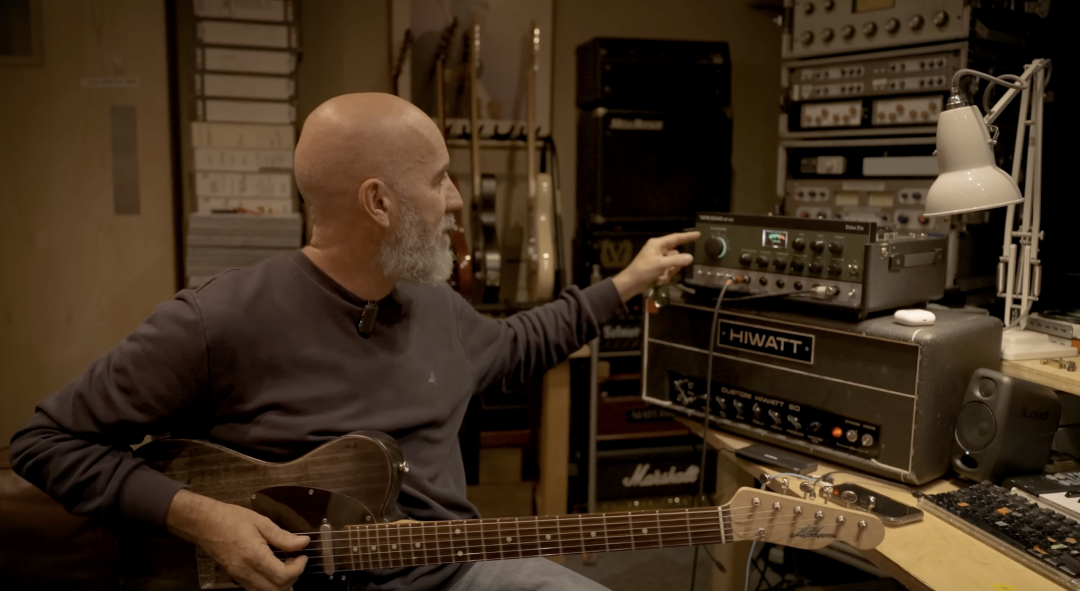
Two nearly identical T-style instruments are set up with different string gauges, one with a wound third for heavy arpeggios and slide, the other lighter for precision. A clever blower switch forces an instant bridge-pickup lead tone regardless of knob positions. There is a compact studio acoustic that records beautifully without wolf notes, plus a humbucker-equipped Strat for the sounds a Tele will not do. The amp corner rotates between a Super Reverb and a modern Hiwatt-style combo, mic’d and split for tone stacking.

Roots and perspective
Sean’s twenty plus years span global touring with his band Moke, long mentorship with Dave Eringa, and collaborations with artists such as Manic Street Preachers and Suede. That history informs his present. The front end stays simple because the point is the performance.
“The magic is not in the plug-ins. It is in the players,” he says. “My job is to get it right at source, fast, and then not get in the way.”
He is forthright about modern pitfalls. “So many multitracks I get now are rescue jobs. Fundamentals are missing, phase is off, and people hoard knowledge. I came up in a world where everyone shared what they knew. That is how we got better.”
Producing with purpose
Alongside mixing and session work Sean runs a label out of Metropolis with Jesse Wood, focusing on artist developmentin the old-school sense. Rehearsal, arrangement, writing, tracking, performance. He produces only a couple of outside projects a year so he can be all in. When he is not producing he mixes, plays and keeps improving.
The takeaway
What I love about Sean’s approach is the balance of head and heart. He is meticulous about phase, polarity and capture, yet everything is in service of feel and speed. Align mics so you can create faster. Use analogue front end to make the capture inspiring. Trust a monitoring system that gives you clarity without fatigue. Keep the low end honest so the vocal tells the story. Then make the record with as few obstacles as possible.
At ReKognition Sound there is no time for overthinking, only a constant return to feel, trust and the truth in sound. The artist walks in, you agree on what you are trying to capture, and you go. No fiddling, no fuss. Just music.