
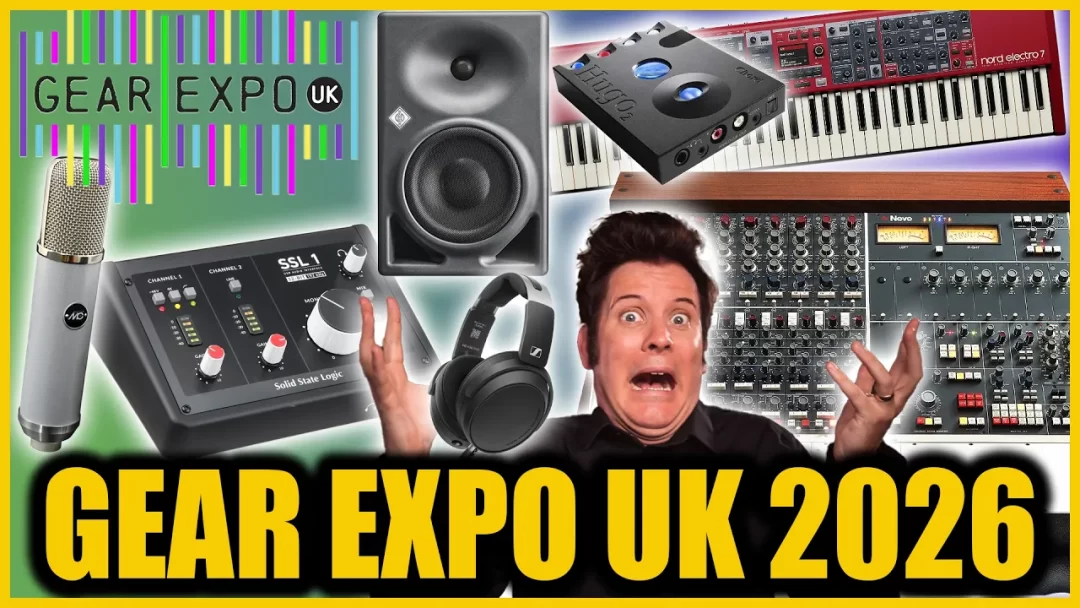

Sound On Sound’s GearExpo UK 2026 at the University of Westminster Harrow Campus felt like exactly the kind of pro audio show the UK has needed for a long time.
It was not just a room full of boxes, badges and brochures. It was a genuinely hands-on day where producers, engineers, musicians, manufacturers, designers and educators could actually talk, listen, try things out and reconnect with the wider recording community.
From the moment we arrived, it was clear the event had a different energy. There were familiar faces, of course, but there were also plenty of new people, fresh conversations and a real sense that the UK recording and music technology scene is alive, curious and moving forward.
One of the first people I bumped into was Graeme Fleece, who I had met previously at the MPG Awards. Graeme came up as a session keyboard player and spoke beautifully about working on Def Leppard’s “Bringin’ On The Heartbreak,” and what he learned from Mutt Lange a producer who really knew how to get the best out of musicians. It reminded me very much of Jack Douglas and that old-school approach where the producer’s role is not to intimidate, but to encourage, support and create the conditions for something great to happen.
That was a theme that ran through the whole day. Yes, there was a huge amount of gear, but the best conversations were really about people, process and how technology helps us make better music.
Headphones, Monitors And The Realities Of Recording

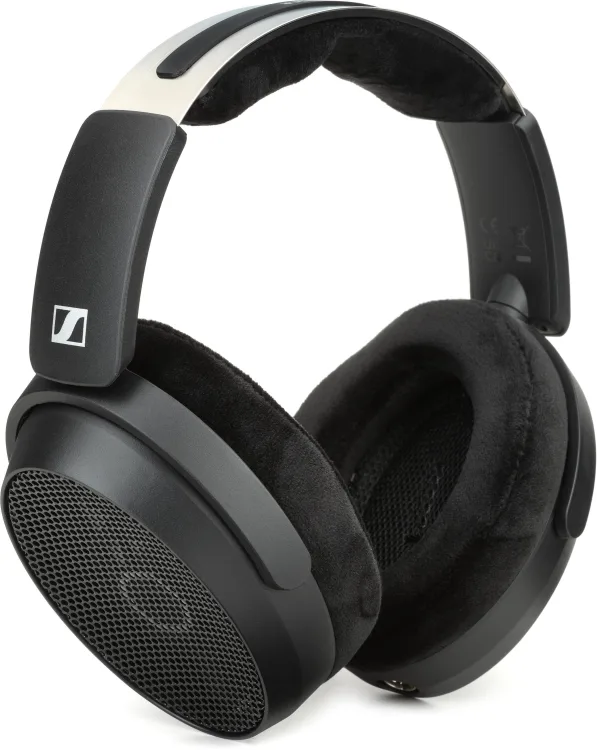
At the Sennheiser stand, we checked out the HD 490 PRO open-back headphones and the newer closed-back HD 480. The HD 490s were incredibly light, detailed and comfortable, with a very defined low end and clear high mids. The HD 480s had the isolation and slightly flattering character that makes sense for tracking, where musicians often need something that feels inspiring as much as accurate.
That is an important distinction. We talk endlessly about mixing headphones, but tracking headphones matter enormously. A musician needs to feel connected to the performance. Isolation, comfort and a pleasing low end can make all the difference when someone is singing or playing for hours.
We also spent time with Neumann’s KH 150 monitors, which I had already heard at the Neumann factory. The DSP-powered KH range, combined with the MA 1 calibration system, is designed to help engineers get a more natural and reliable monitoring picture. In a world where so many people are working in less-than-perfect rooms, that kind of intelligent speaker calibration is becoming increasingly important.
New Classics And Reissued Legends

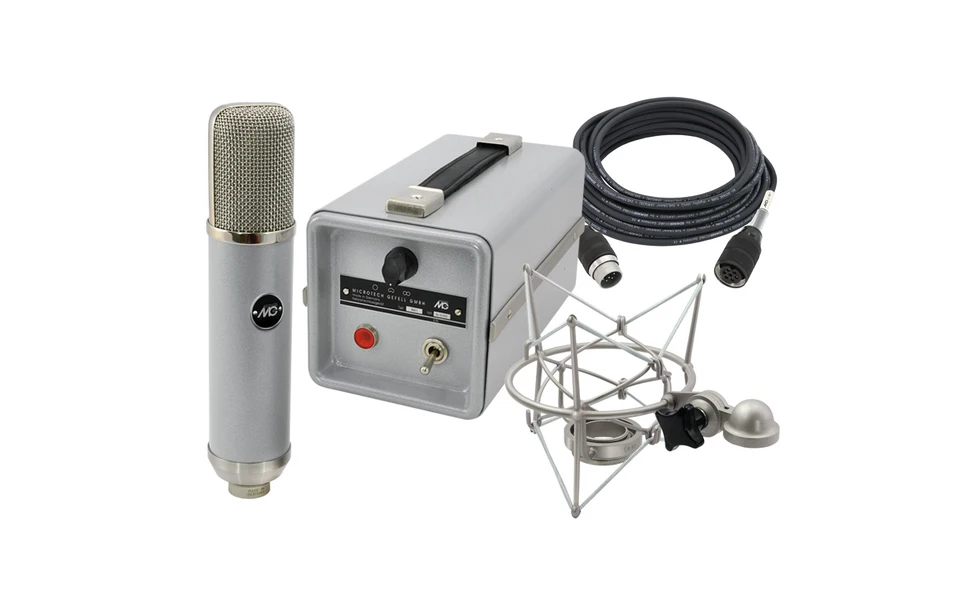
One of the most exciting things on the show floor was Neumann’s reissue of the UM 57. The original came out in 1957 and was made at the Gefell factory. It is one of those microphones that has a real mythology around it, especially for anyone who has used a good pair on piano, overheads or room mics.
The reissue uses the original M7 capsule design approach, with omni, cardioid and figure-of-eight polar patterns. For those of us who love vintage microphones, but also understand the reality of maintaining them, seeing a classic design return in a modern production version is incredibly exciting.
There was also plenty of console love. Neve showed the modern BCM10, a reimagining of the classic format with expanded monitoring, 1073 and 1084 module options, 1272 circuitry, inline capability and serious transformer-balanced architecture. It keeps the spirit of the original, but updates it for the way studios actually work today.
SSL also had the SSL 1 interface on display, a simple and affordable interface aimed at singer-songwriters, podcasters, gamers and creators who do not need a huge amount of I/O. It still includes SSL’s 4K button, which adds that familiar presence and sheen, especially useful on darker microphones like an SM7B.
Synths, Touchscreens And Studio Furniture

GearExpo was not just about mics, monitors and consoles. There was plenty for synth lovers too. ASM had their Hydrasynth range on display, along with newer analogue designs that immediately caught the eye.
SSL’s modular gear also showed how much the industry has shifted. There is a huge appetite for tactile, modular, hands-on equipment, even from companies best known for large-format consoles.
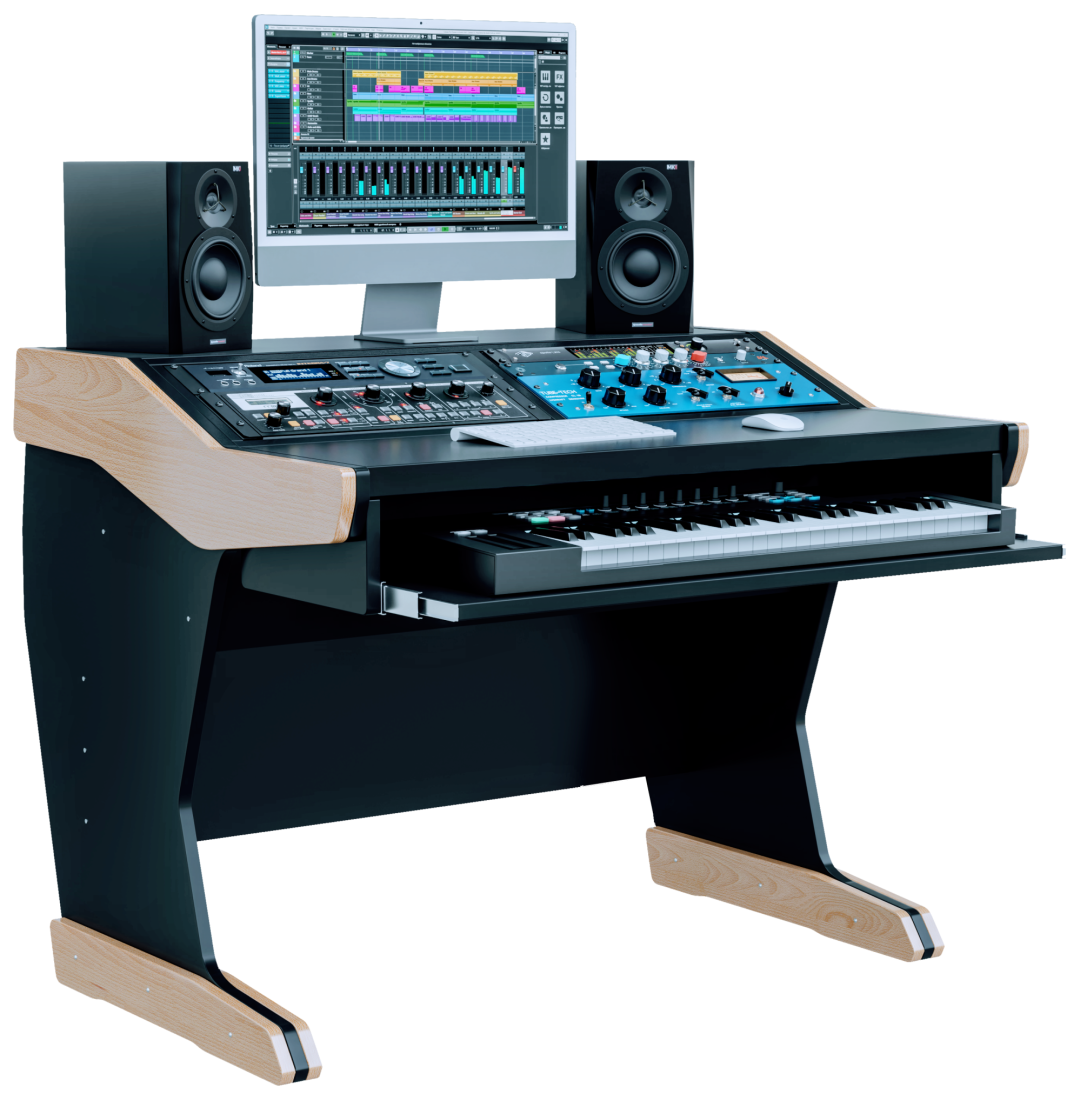
Buso Audio had some lovely studio furniture on display, including workstations with rack space, 88-key keyboard trays, height-adjustable options, speaker stands and acoustic panels. Studio furniture can be overlooked, however it makes a huge difference. If your setup is just a computer screen and speakers on a desk, it can feel more like a travel agency than a creative space. Proper furniture helps a studio feel intentional.
One of the most interesting Buso products was a 27-inch 4K UHD touchscreen designed for music production. It was running with dedicated Mac drivers and allowed direct parameter control rather than simply acting like a mouse. For producers who want tactile plugin control without a traditional control surface, that is a fascinating direction.
Affordable Gear And High-End Inspiration

A great show should have both ends of the spectrum, and GearExpo did. There were serious high-end pieces, but also affordable tools that could make an immediate difference in a home studio.
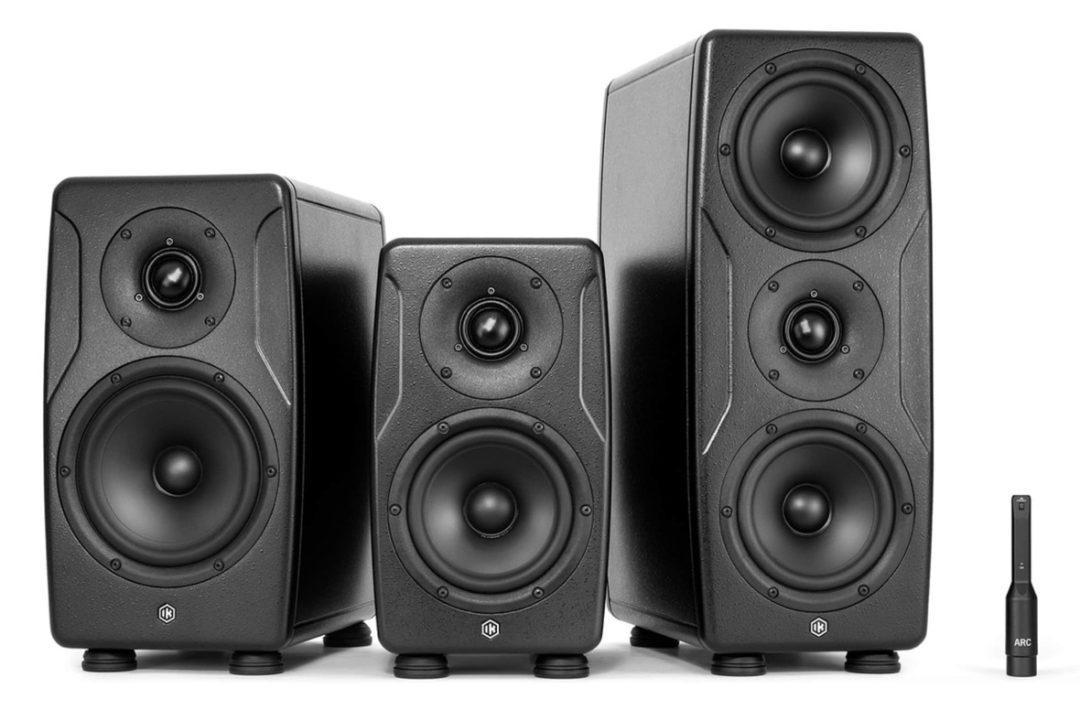
IK Multimedia demonstrated the iLoud Precision MTM MKII monitors, the smaller MTM models and their new subwoofer. What was particularly useful was hearing the before-and-after of room calibration in one of the Westminster rooms. The raw room had obvious low-end peaks, but the corrected version was dramatically smoother. The smaller MTMs were especially impressive. With correction, they sounded far bigger and more usable than their size suggests.
IK also had ARC On-Ear there, which I have had a lot of fun with recently. It can completely change your perception of familiar headphones, sometimes revealing just how good a pair already is once the tonal balance is corrected.
That said, room correction and headphone correction are tools, not magic. I never like to treat anything as absolute. If correction is working too hard, I often back it off until I no longer hear it “doing” something. Music is not listened to in perfectly flat environments. It is heard in cars, headphones, earbuds, kitchens, living rooms and studios of every shape and size. The goal is translation, not perfection.
The Importance Of Reference Tracks
One of the best conversations of the day was around monitoring, room correction and reference tracks. Before room correction became common, the solution was simple: take five or six songs you knew incredibly well and play them in the room.
If the room was boomy, midrangey or aggressive, you learned that quickly. On bigger-budget records, you might bring your own speakers or even your own rack of gear. However, the core principle was always the same: reference tracks tell you how the room behaves.
When we were mixing the Aerosmith record, we constantly checked mixes in the car. Not because the car was “accurate,” but because we knew what music sounded like in that environment. A car is a big resonant box with a compromised sound system, however if you listen to music there every day, it becomes a valid reference.
That is the point. The best monitoring environment is the one you understand. It might be a tuned studio, a pair of headphones, earbuds or your car. If you know how great records sound there, you have a useful frame of reference.
Outboard, Reverbs And Boutique Excellence

There was plenty of boutique analogue gear to explore as well. Tegeler Audio was showing its updated branding and colour scheme, along with its SSL-style and Pultec-style units, which remain big sellers for good reason. Their reverb unit was also a highlight, offering a more natural room-style ambience rather than a deliberately obvious effect.
At the Funky Junk room there was a huge variety of gear from different manufacturers, including Trident, Telegrapher, Pope Audio, API-style pieces and classic drum machines. These rooms are always fun because you get that feeling of discovery. You walk in and immediately find something you either know and love, or something you have never seen before.
PSP Audioware demonstrated the PSP BB Delay, inspired by the Dynacord VRS, but expanded into something much more flexible. It could do wild ambient feedback textures, ducked delays, modulation-heavy soundscapes and also simple, practical slapback effects on vocals. That is what I love about PSP. They understand classic gear, but they do not simply copy it. They use the idea as a starting point and then make it genuinely useful for modern production.
Keyboards, Performance And The Joy Of Hands-On Control
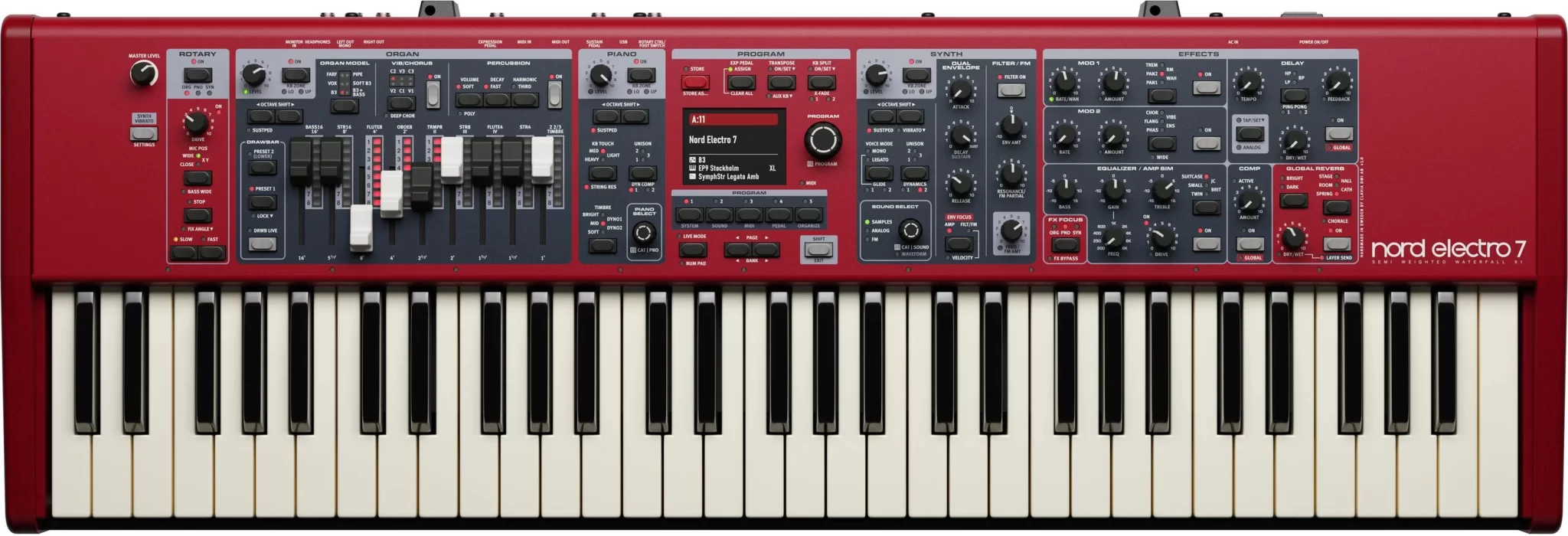
Nord’s Electro 7 range was another highlight. The new models continue the Electro family with 61, 73 and HP versions, improved Leslie modelling, new piano samples and a more capable synth engine. What I have always loved about Nord keyboards is that everything feels immediate. There are no distracting menus or layers of complexity. If you want to turn up the reverb, there is a knob for it.
That matters, especially live. The more you can keep a musician in the creative moment, the better the performance will be. Gear should invite you to play, not make you feel like you are programming a spreadsheet.
Vintage Surprises And Proper Audio History
One of the most unexpected moments of the day was seeing a pair of rare Rupert Neve tape machines. Many people do not even realise Neve made tape machines, but here they were, complete with original-style punched labels and a glorious valve-filled design.
They were brought along by Cleo, whose late father, producer and musician Alexander Falso, had collected them. They were not just museum pieces. They were reminders of how much of this industry has been built by obsessive, brilliant people making tools for other obsessive, brilliant people.
That, to me, is the soul of a show like GearExpo. The best gear is never just gear. It carries history, taste, problem-solving and personality.
Why GearExpo Mattered
The most impressive thing about Sound On Sound’s GearExpo UK 2026 was not simply the number of brands in attendance. It was the fact that the show felt useful.
You could speak to the people who designed the products. You could ask practical questions. You could hear things, touch things, compare ideas and have real conversations. There were producers, engineers, musicians, designers, distributors and students all sharing the same space.
It was also far too much to cover properly in one day. Even spending five minutes at every booth would have been impossible. That is a good problem to have. It means the event had scale, variety and depth.
For anyone making music, whether in a professional studio, a home setup or somewhere in between, GearExpo was a reminder that we are living in a remarkable time. Affordable interfaces are better than ever. Small monitors can sound astonishing with the right calibration. Classic microphones are being reimagined. Analogue consoles are still evolving. Software is becoming more creative. Headphones are becoming more accurate. Studio furniture, touch control and workflow tools are all improving.
However, the biggest takeaway is still the same as it has always been: learn your tools, trust your ears and make music.
Gear is wonderful. I love it. We all love it. But it only matters when it helps you capture a better performance, make a better decision or feel more inspired.
Sound On Sound’s GearExpo UK 2026 did exactly that. It brought the UK audio community together around the thing we all care about most: making records, having conversations and finding new ways to create.
Have a marvellous time recording and mixing!
Gear List We Checked Out In The Video!:
Sennhesier HD 490 PRO https://sweetwater.sjv.io/gRJ6ng
Interphase Audio Ark Console: https://www.arkconsole.com
Neumann KH 150 https://sweetwater.sjv.io/0G2j6O
Neumann MA 1 https://sweetwater.sjv.io/2R2560
IK Multimedia iLoud Precision MTM MKII https://sweetwater.sjv.io/xJO5Kx
IK Multimedia ARC On-Ear https://sweetwater.sjv.io/GKMqer
SSL 1 interface https://sweetwater.sjv.io/enaEW1
SSL 2 / SSL 2+ https://sweetwater.sjv.io/kOee6n
Shure SM7B https://sweetwater.sjv.io/XYZ0gX
Austrian Audio OC microphones https://sweetwater.sjv.io/Qj79Mz
Mojave Audio microphones https://sweetwater.sjv.io/9V2zoE
Lewitt LCT 1040 https://sweetwater.sjv.io/5kKZJ1
ASM Hydrasynth https://sweetwater.sjv.io/1G2PAz
Nord Electro 7 https://sweetwater.sjv.io/X4WnB3
Nord Stage 4 https://sweetwater.sjv.io/an7qKM
Nord Grand 2 https://sweetwater.sjv.io/6k7dZm
API 2500 https://sweetwater.sjv.io/WqqYgA
Electro-Harmonix Deluxe Memory Man https://sweetwater.sjv.io/X4Wnkb
PSP Audioware plugins https://sweetwater.sjv.io/0G2jqE
Beyerdynamic DT 100 https://sweetwater.sjv.io/vDWjJy
Adam Studio Monitors https://sweetwater.sjv.io/PyPqaX