

Producers often spend years chasing “bigger” sounds, when the real magic lies in something far more elusive and far more powerful than boosting EQ curves or stacking plug-ins. Steve Lillywhite summed it up beautifully in a few sentences when reflecting on his work with XTC. What made that band extraordinary was not only their songwriting or their performances, it was their relationship with space. Every part lived in its own pocket, unforced and unhurried, and because of that, the entire soundscape felt wider, deeper and more alive.
Lillywhite reminds us that sound is not just the parts you play, it is the air around the parts. The breath between them. The negative space that lets each element speak clearly. Most of the time when a mix feels small, crowded or indistinct, the problem is not the tone of the instruments, it is the simple fact that too many things are trying to live in the same frequency range at once.
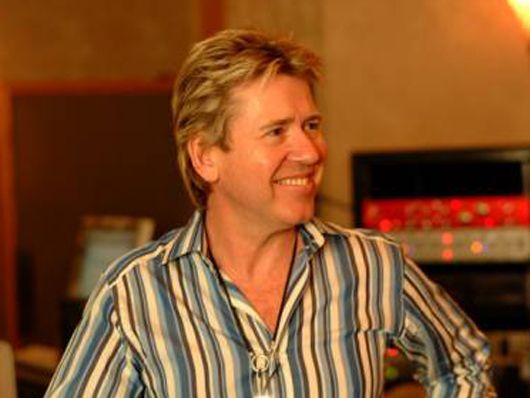

He uses reggae as a perfect example. People often talk about the “massive” bass sound in reggae, as though there is some mystical engineering trick behind it. However the truth is remarkably straightforward. The bass is huge because almost nothing else is competing with it. There is no wall of guitars. There is no heavy snare eating the mids. The midrange is intentionally sparse. You have high hats and rimshots carrying the top, you have the bass anchoring the bottom, and the space between them becomes its own instrument. The low end feels enormous precisely because the rest of the arrangement steps aside and lets it be enormous.
This is the part so many producers and mixers miss. We often focus on improving the sound of what is there, when the real artistry lies in removing what does not serve the song. Space isn’t an absence. It is a decision. It is part of the production. It is arrangement, orchestration and mix philosophy all working together.
You hear this clearly in the best XTC records. Lillywhite knew that if the guitars were tightly voicing the upper mids, the vocal should sit just above or just below. If the drums were punchy and economical, the percussion didn’t need to be busy. He created a constantly shifting ecosystem where everything played a role without stepping on the toes of what mattered most.


The greatest mixers and producers throughout history share this trait. They know where to leave gaps. They know when something is already “full enough.” They understand that a song becomes emotionally larger when the mix itself breathes.
The temptation in modern production is to fill every inch of the spectrum. Unlimited tracks, unlimited plug-ins, unlimited options. Yet the records we keep returning to, generation after generation, all share a sense of restraint. They make bold decisions about space. They trust silence. They trust simplicity. They trust the listener to feel what is there because of what isn’t.
Steve Lillywhite distilled that wisdom perfectly. Sound is the combination of parts, and crucially, the space between them. Once you understand that, everything opens up. Your mixes grow. Your arrangements grow. And the emotional impact multiplies.
Space is not empty. Space is music.