
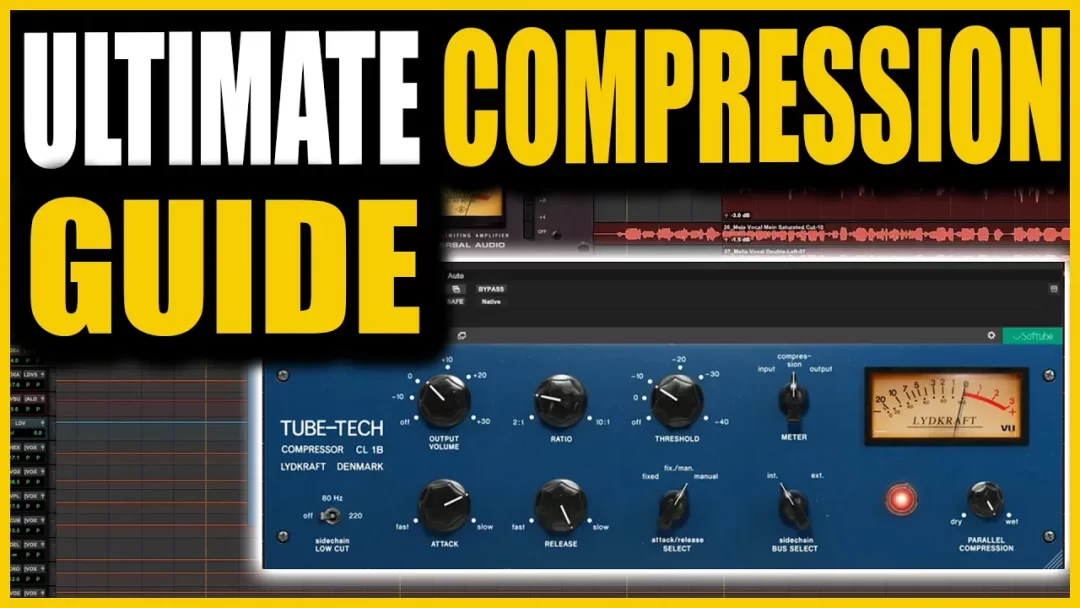

Compression isn’t just a technical tool, it’s a shaping force—one of those subtle yet powerful techniques that can define the emotional impact of a track. Over the years, I’ve come to think of compressors not simply as devices that control dynamics, but as musical instruments in their own right. Used well, they can bring a vocal to the front of a mix without sounding forced, or make a drum kit feel like it’s exploding out of the speakers.
In this guide, I want to take you beyond the textbook explanation. Let’s walk through how compression really works, what the controls do, and how to apply it practically across instruments and genres. These aren’t just bullet points—they’re techniques that have been shaped in real sessions, where decisions were made with the clock ticking and the track on the line.
Want to go deeper? Sara Carter’s Mixing Simplified course breaks down EQ, compression, delay and reverb into clear, practical steps you can apply right away.
Master the essentials and level up your mixes with confidence
👉 Mixing Simplified: Master The 4 Essential Mixing Tools


Why Use Compression?
Before you even touch a knob, ask yourself: Why am I compressing this? This might sound basic, but it’s the most important question. Compression can be surgical or creative. Are you trying to:
- Smooth out uneven dynamics in a vocal take?
- Rein in the sharp peaks of a snare drum?
- Bring subtlety and detail forward in a fingerpicked guitar part?
- Or are you simply trying to make something feel better?
Every situation is different. But the moment you know the “why,” the “how” becomes much clearer.
Getting Started: Setting Up Your Compressor
One of the best ways to understand what compression does is to take it to extremes. I learned this trick early on—dial in settings that are clearly audible, even exaggerated, so you can hear the compressor working.
Let’s say you’re working with a raw drum kit. Nothing fancy yet—just a clean multi-mic recording. You want to understand what your compressor is doing? Crank the ratio to 20:1 (this turns it into a limiter in all but name), drop the threshold so it starts working hard, and use a fast release with a moderate attack (say 8 ms). Now listen.
You’ll hear the room mics pull forward, the kick and snare become tighter, and the entire kit start to “pump.” It might not be what you want in the final mix—but it shows you what each control is doing.


Attack: The Shape Controller
The attack control is all about timing—how soon the compressor reacts after the input level crosses the threshold.
Think of a snare drum. The initial hit, the transient, defines its character. If your attack time is too fast, you’ll shave off that transient, and the snare might lose its snap. Too slow, and you might not control the peaks effectively.
Personally, I often start with a medium attack and then move in either direction based on the role the instrument plays. If I want a kick to punch through a dense mix, I’ll slow the attack slightly so the transient cracks through before compression clamps down. If it’s a background percussion element, I might speed it up to push it back a little.


Visualising the Waveform
It helps to imagine the waveform in your head, especially when you’re not working with a visual DAW. You’re shaping the envelope of the sound. A longer attack lets the front end through. A shorter one shaves it down. It’s subtle, but it matters. With drums especially, that first few milliseconds can make the difference between flat and fire.
Want to go deeper? Sara Carter’s Mixing Simplified course breaks down EQ, compression, delay and reverb into clear, practical steps you can apply right away.
Master the essentials and level up your mixes with confidence
👉 Mixing Simplified: Master The 4 Essential Mixing Tools


Release: The Excitement Controller
I’ve always thought of the release setting as the groove dial. A good release time can make the mix breathe with the music—it’s where the compression becomes musical, not just technical.
If it’s too fast, the compressor will let go too early and might flutter. Too slow, and it never quite recovers before the next transient, dulling the dynamics. Ideally, you want it to release just before the next transient hits—so you get a bounce, a flow, a sense of movement.
Try tapping along with the tempo, then adjust the release while listening to the gain reduction meter. When it breathes in time with the music, you’ll know.


Ratio: Controlling Compression Strength
The ratio determines how much the signal is compressed once it crosses the threshold. For most drum applications, I hover around 4:1—it gives you control without squashing the life out of the performance.
But here’s where context matters. For parallel compression or room mics, I’ll go higher. For something like an acoustic guitar in a sparse arrangement, maybe lower. I don’t believe in “one-size-fits-all” settings—start with a ballpark and then adjust based on how it feels.


Threshold: The Sensitivity Dial
Once the attack, release, and ratio are set, the threshold becomes your key to engaging the compression just enough. I usually aim for 3-6 dB of gain reduction for most musical sources, unless I’m going for a specific effect. That gives you control without losing the natural dynamics.


Makeup Gain: Restoring Energy
Compression reduces volume, so makeup gain is there to bring it back up. But this isn’t just about matching levels. It’s about comparing apples to apples.
Toggle your compressor in and out—does the compressed signal sound tighter, more controlled, but still alive? If it feels smaller or duller, back off. If it jumps out and sits in the mix beautifully, you’re close.


Listening is Everything
None of this matters if you’re not listening critically. Use your ears more than your eyes. Settings that look right might not sound right. I’ve sat in rooms with Grammy-winning mixers who ride the controls entirely by instinct, knowing exactly what they want to hear. That comes with experience—but it starts with trusting what you’re hearing now.
Experimentation and Practice
Compression isn’t about rules—it’s about taste. Try extreme settings. Flip between slow and fast attack times. Use sidechain inputs. Parallel compress your drum bus. See what happens. Every mix teaches you something new.
You’ll mess up. You’ll overcompress. That’s part of the process. But every time you listen back and notice what you did, you’re improving.
Want to go deeper? Sara Carter’s Mixing Simplified course breaks down EQ, compression, delay and reverb into clear, practical steps you can apply right away.
Master the essentials and level up your mixes with confidence
👉 Mixing Simplified: Master The 4 Essential Mixing Tools
Final Thoughts
Understanding compression means understanding sound at its most foundational level—how it behaves, how it changes, how it fits. There’s science behind it, sure, but in practice, it’s a deeply musical process. The more you use it, the more intuitive it becomes.
Keep your ears open, stay curious, and don’t be afraid to twist those knobs.
More soon.