

Download The Multitracks Here: https://producelikeapro.lpages.co/wrong-trousers-marble-arches-form/
Check Out The Xvive More You Here
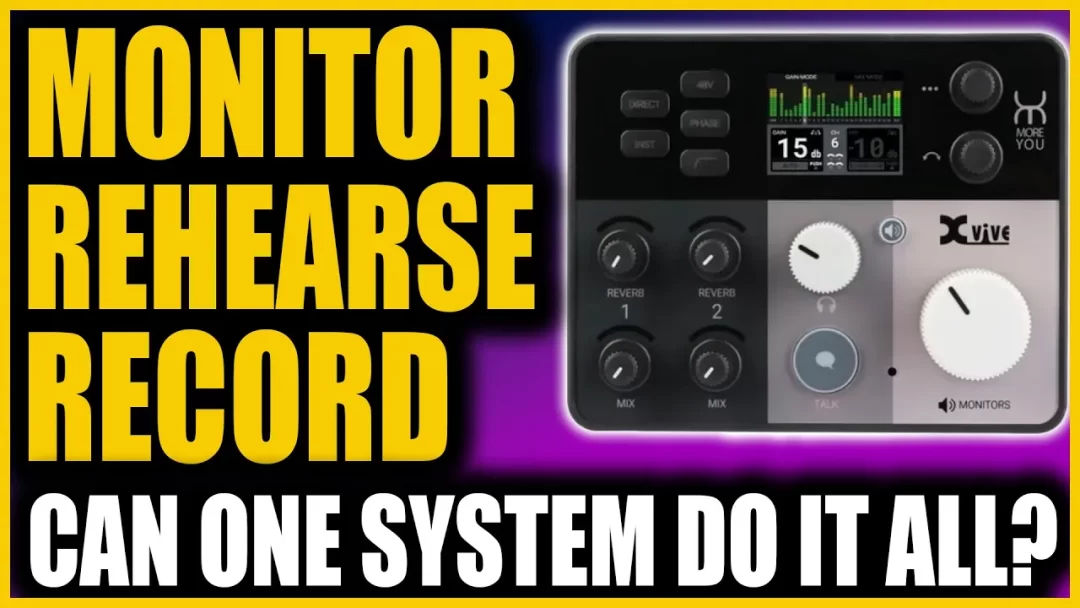
We recently spent time with the XVive More You system at Brighton Electric, putting it to use in a live band rehearsal setting. The goal was simple. Can this modular system help bands hear themselves properly while rehearsing, and at the same time, record something usable without major compromises?
What we discovered was a system that’s certainly different from most others we’ve used, and in some ways, quietly clever.
What’s the Problem It Tries to Solve?
In most rehearsal rooms, monitoring is barely functional. If you’re lucky, the PA works. If not, you’re guessing. Vocals disappear, the drummer can’t hear the bass, and the guitarist just turns up louder. It’s chaotic. Trying to record that same rehearsal only adds to the challenge. With limited inputs, no real monitoring options, and messy cabling, it’s rare to walk away with anything worth keeping. So the question is, can a system like More You bridge that gap?


The Setup We Tried
We kept things simple and realistic, using three More You units and six inputs in total:
• Unit 1: Kick mic (AKG D112) and bass DI
• Unit 2: Snare (SM57) and mono overhead (OC818)
• Unit 3: Guitar (SM57) and vocal (SM58)
Each musician had their own box in front of them. They could adjust their headphone mix, add a little reverb if needed, and use the built-in talkback mic to communicate with the others. There was no guessing, no shouting, and no pulling headphones off to speak. From a usability perspective, it was quick to set up. We connected the units using standard XLR cables, daisy-chained them for both power and signal, and were up and running in under an hour.

What’s Under the Hood?
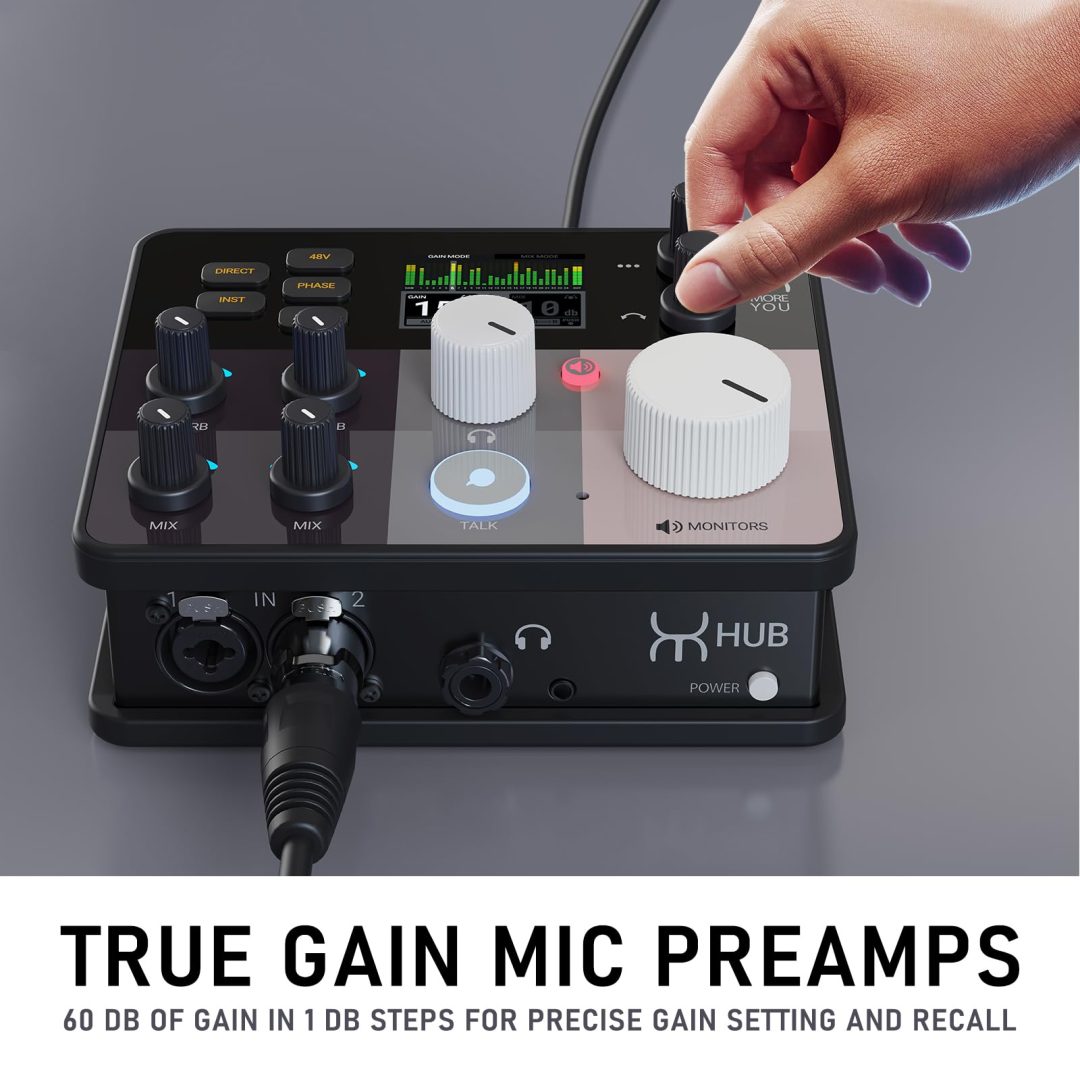
The More You Hub is the centre of the system. The 2X units offer many of the same features. Each unit includes:
• Two combo XLR inputs with True Gain preamps
• Two headphone outputs that support either 1/4″ or 1/8″ plugs
• USB-C connection to a DAW
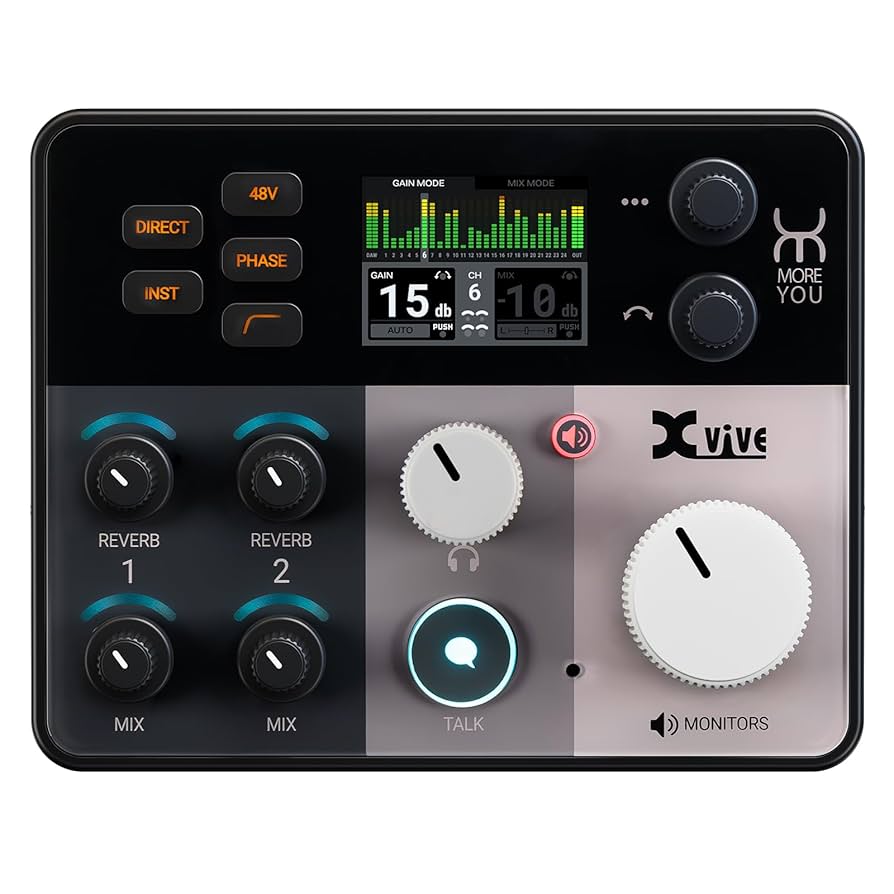
• Per-channel control over gain, reverb, high-pass filter, and phase
• An LCD screen with rotary encoders for quick navigation
• Talkback mic and push-to-talk button
• A mic stand mount for practical placement
The system can be expanded to accommodate up to eight players, with 24 total inputs, including ADAT-equipped preamps if needed.
What stands out is the way it handles communication and power. Standard XLR cables are used for everything, including signal routing, talkback, and power distribution. That simplifies setup and reduces cable clutter.

In Use: What Stood Out
Several features felt genuinely helpful in a rehearsal context:
• Auto Gain across all channels helped us set levels quickly
• Per-player reverb made headphone mixes feel more musical
• Talkback mics saved time and made collaboration easier
• Plugin monitoring let guitar and vocal signals include effects in real time
• No DAW required. The system works as a standalone headphone rig when needed
It felt like a system designed with actual musicians in mind.


What Did the Recording Sound Like?
We tracked the band live with just a handful of edits. The mic preamps delivered clean, solid audio with no harshness or muddiness. Once in the DAW, we made a few sensible adjustments, rolling off some lows on the guitars, adding a touch of reverb to the snare, and balancing the kick and bass.
The most noticeable difference was that everyone could hear themselves clearly during the session. That meant the performances were more confident, and we didn’t waste time fixing issues caused by bad headphone mixes. Would we use this for a full album? Possibly not. But for songwriting, rehearsals, and demo-quality recordings, it certainly held its own.
Could This Work in a Studio?
Although clearly designed with live players in mind, More You has potential studio applications. Because power, audio, and talkback travel through standard XLR, it works well across rooms using existing tie lines. This makes it suitable for tracking setups in smaller or modular studios. It will not replace a high-end interface or console, but it could offer an elegant solution in places where flexibility and communication are more important than raw channel count.


Specifications at a Glance
Max I/O: 24 inputs, 20 outputs (8 Hubs or 2X plus 8 ADAT)
Audio Quality: 24-bit at 44.1, 48, or 96 kHz
Inputs per Unit: 2 combo XLR/TRS, with phantom, phase, HPF, and Auto Gain
Headphone Outputs: Two outputs per unit, each supporting 1/4″ or 1/8″ headphones
Connectivity: USB-C to DAW, MIDI (1/8″), ADAT
Monitor Outputs: Stereo TRS from main Hub
Power Distribution: One PSU powers entire system via XLR
Talkback: Built-in mic and push-to-talk button on every unit
Mounting: Mic stand clip included
Interface Control: LCD screen, two encoders, no deep menus, clear navigation
Final Thoughts: Where Does This Fit?
More You does not set out to replace traditional recording setups. Instead, it offers a streamlined way to rehearse, monitor, and record simultaneously, with far fewer compromises than we are used to seeing in rehearsal environments.
If you have ever struggled to hear yourself in a band room, or recorded a rehearsal only to find the results unusable, this system might be worth exploring.
It is not flashy. It does not overpromise. It just solves a few specific problems in a way that feels both practical and, at times, surprisingly elegant.
Download The Multitracks Here: https://producelikeapro.lpages.co/wrong-trousers-marble-arches-form/