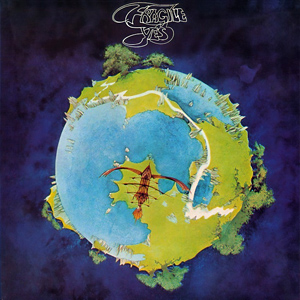
There are albums that define a band, and then there are albums that redefine what a band can be. Fragile sits firmly in the latter category. Released at a time when progressive rock was still finding its identity, Yes didn’t just contribute to the genre, they elevated it.
What makes Fragile so fascinating is its structure. Rather than presenting a collection of fully collaborative tracks from start to finish, the band made a bold creative decision. Each member recorded a short solo piece, almost like musical fingerprints, offering a glimpse into their individual personalities. It is a rare moment where a band says, “This is who we are together, however this is also who we are apart.”
That balance between individuality and unity is what gives the album its depth.
The Power of Personality
Those solo pieces are not throwaways. They are statements.
Rick Wakeman’s classically inspired flourishes, Steve Howe’s intricate guitar work, Chris Squire’s unmistakable bass tone, Bill Bruford’s rhythmic identity, and Jon Anderson’s ethereal sensibility, each one adds a different colour to the palette. Instead of diluting the album, these moments strengthen it.
They remind you that Yes was never just a band, it was a collection of highly individual musicians who somehow found a way to move as one.

“Roundabout” – Where Everything Converges
If Fragile has a centrepiece, it is undoubtedly Roundabout.
Written by Jon Anderson and Steve Howe, the song is a masterclass in arrangement and evolution. It didn’t arrive fully formed. Instead, it grew out of fragments, ideas, and musical sketches that were pieced together over time.
Steve Howe later reflected on the writing process, recalling how the song began in a hotel room with Anderson. They had “all these bits of music,” and rather than forcing them into a rigid structure, they allowed the composition to unfold naturally.
And that opening.
The acoustic guitar intro is instantly recognisable, almost architectural in its precision and tone. It sets the stage before the band even fully arrives. Then Chris Squire’s bass enters, not as a supporting instrument, however as a driving force. His tone, his phrasing, his presence, it becomes the spine of the track.
This is where Yes truly shines.
Arrangement as a Superpower
One of the most revealing insights about Yes during this era is their collective strength in arrangement.
As Howe pointed out, even before he joined, the band had an exceptional ability to shape music. This is what allowed Roundabout to become more than just a collection of ideas. It became a journey.
Sections evolve, dynamics shift, textures expand and contract. Nothing feels static. The band treats arrangement not as a technical necessity, however as a creative instrument in itself.
That is the real lesson of Fragile.
Great musicianship gets you in the room. Great arrangement makes the music last forever.
Why Fragile Still Matters
More than fifty years on, Fragile remains a benchmark for progressive rock, however its lessons go far beyond genre.
It is about:
- Trusting individual voices within a group
- Allowing ideas to develop organically
- Understanding that arrangement is composition
- Letting contrast create cohesion
In a world where many records are built layer by layer in isolation, Fragile is a reminder of what happens when musicians truly listen to each other and build something together.
It is not just an album.
It is a conversation between five brilliant minds, captured at the exact moment everything clicked.