
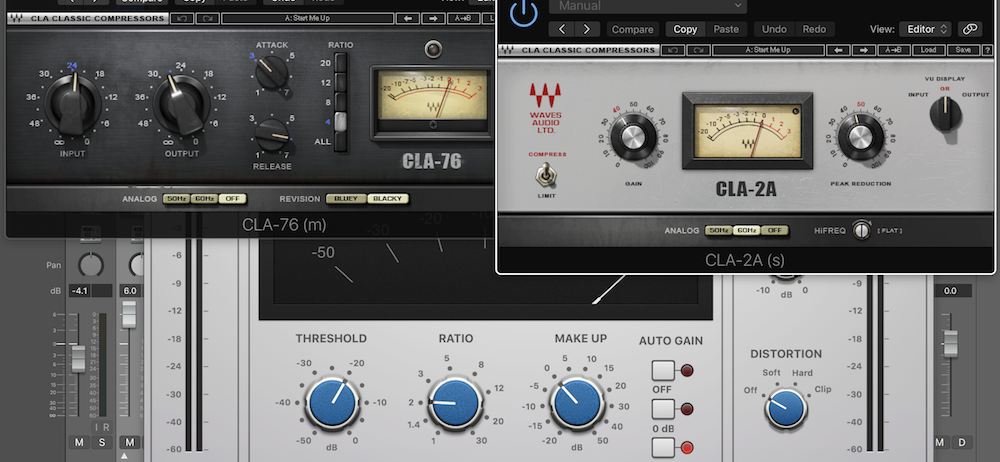
Vocals are the “face” of a song. They’re right out in front and the first thing listeners gravitate toward and identify with. Whether you’re mixing a massive pop vocal or a straight-forward rock singer, you’ll want to spend a solid chunk of time on them. Arming yourself with a good vocal compressor, or a handful of them, is an excellent way to prepare for mixing a compelling vocal.
Top Vocal Compressor Options
- UREI/Universal Audio 1176: One of the most famous and widely used FET limiting amplifiers of all time. It’s tremendous on vocals, whether you’re using the real thing or one of many plugin emulations. The Waves CLA-76 version is particularly great, as is the UAD one. When it’s time to find a vocal compressor, reach for an 1176. It’s a very fast compressor, capable of taming the sharpest transients in the source material. The 1176 also has a desirable sonic character, making it a go-to for many of the best mixers in the world.
- Teletronix LA-2A: For a cool tube-y sound, you can’t go wrong with an LA-2A. I keep both an 1176 and a 2A (plugins) on my vocal buss, with the latter applying just a bit of glue and tube character at the end of the chain. Its controls are simple: a Peak Reduction knob to control gain reduction and a Gain Control knob to add make-up gain. At the risk of sounding cliche, the LA-2A does add an analogue warmth to vocals that sounds incredible.
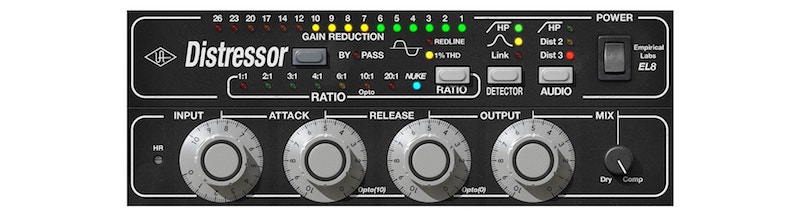
- Empirical Labs Distressor: Another fantastic compressor. It has many, but one particularly unique feature is the ability to add 2nd- or 3rd-order harmonics to the signal, emulating vintage tape saturation. It also has a wide range of ratio settings for more control. For example, at a ratio of 10:1 with the Attack control set to 10, the Distressor’s circuitry goes into an LA-2A emulation mode. It’s renowned as the Swiss Army knife of compressors and for good reason. Use it as a vocal compressor, on drums, bass, guitar, or anything else, really.

- dbx 160A: Again, one of the most-used compressors ever. It may not look like much, sporting just threshold, ratio, and output controls, but it’s highly regarded and has been used on everything. The 160 series was initially introduced in 1976, undergoing various iterations. The 160A is still produced today as world-class compressor.
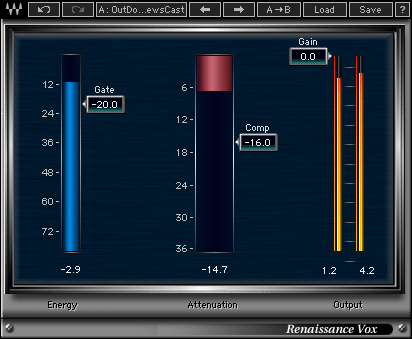
- Waves RVox (Plugin): A dynamics processor designed specifically for vocals. Its simple and streamlined controls make it an excellent vocal compressor, gate/expander, or limiter. For quick and easy results, give the RVox a go.

FabFilter Pro-C 2 (Plugin): Analogue hardware and plugin emulations aside, FabFilter consistently provides a character all its own. Offering eight different compression styles, including one for vocals, the Pro-C 2 is the epitome of a modern software compressor.
Vocal Compressor Techniques

Parallel Compression
Parallel compression is a go-to technique to push a vocal track forward and make it sound bigger or more aggressive. It’s been used since the ’70s to achieve more punch in a natural sounding way. It often sounds more complicated than it really is, so don’t be afraid to try it out!
In your DAW, make a copy of your lead vocal track and place a compressor on it. You’ll want to hit the vocal hard, so exaggerate your compressor’s settings even to the point in which it doesn’t sound pleasant.
Make sure the original vocal track is at the desired level, and bring up the compressed copy’s fader until it sits just beneath the original. Parallel compression gives the impression of control without sounding completely squashed. It’s a fantastic way to compress vocals, but works with almost any individual instrument, too!
Tonal Compression
This is the lightest use of compression which will smooth out your vocals and give them just a bit of dynamic control. You don’t want to crush the transients because that will push the vocals further back in the mix. Instead, you’ll want to add some musical tone to the performance.
A slow attack and release with just 2 to 3 dB of gain reduction does the trick if tonal compression is what you’re after.
Dynamic Compression
Dynamic compression is typically used to catch the sharpest peaks in the source material and reel them in.
You’ll want a faster attack and release time and a higher threshold and ratio. Whereas the idea of tonal compression is to catch every word and smooth things out, you don’t want to compress everything here–just the peaks!
Generally speaking, using a combination of both tonal and dynamic vocal compression is the key to a better sounding vocal!
Change the Way You Mix with a Great Vocal Compressor
Developing a signal chain with the right vocal compressor(s) is one of the best ways to get a rough vocal mix up quickly. In general, the 1176/LA-2A combination is incredible sounding, with the former catching the sharpest peaks and the latter handling consistent leveling. There are, however, many more options available, so try as many as you can before picking your favorites!