Welcome to a deep dive into the world of Vari Mu compressors, a staple in audio production. Today, we’ll explore what they are, their history, and how they function in modern studios.
What is a Vari Mu Compressor?
A Vari Mu compressor is a type of tube compressor that uses variable gain reduction to control dynamics. The term “Vari Mu” comes from the Greek letter mu (μ) represents gain, so “vari mu” is short for “variable mu compressor” or “variable gain compressor”. This design allows for a smooth and musical compression that is highly sought after in the world of audio engineering.
These compressors work by reducing the gain of an audio signal based on its amplitude. When the signal exceeds a certain threshold, the compressor kicks in and reduces the gain, effectively controlling peaks and adding sustain to the audio signal. The unique characteristic of Vari Mu compressors is their ability to provide a warm, rich tone, which is particularly desirable for vocals and instruments.

RCA BA-6A (Mono Unit)
The History of Vari Mu Compressors
The origins of Vari Mu compressors can be traced back to the early 1950s with units such as the RCA BA-6A, released in 1951. This compressor was designed primarily for broadcast applications, where it was used to keep AM radio signals in check. The design was robust, featuring multiple tubes that contributed to its unique sound.
Over the years, the Vari Mu design evolved, gaining popularity in studio settings as engineers discovered its ability to enhance the sonic quality of recordings. The rich harmonic content produced by these compressors made them a preferred choice for mastering and mixing.
Key Characteristics of Vari Mu Compressors:
- Smooth, Transparent Compression: Vari Mu compressors apply gentle compression, adding warmth without harshness, making them popular for mastering, vocals, and bus compression.
- Variable Ratio: The compression ratio increases as the input signal gets louder, which is ideal for dynamic sources, as it applies light compression on softer signals and more aggressive compression on louder ones.
- Tube Saturation: The tubes contribute to a warm, pleasing harmonic distortion, enhancing depth and character, which is often desirable in both individual tracks and full mixes.
- Soft-Knee Compression: This style naturally eases into compression rather than applying it abruptly, giving it a musical feel that preserves the integrity of the original sound.
Famous examples of Vari Mu compressors include the Fairchild 670 and the Manley Variable Mu, both highly regarded for adding smoothness and warmth to recordings while maintaining sonic detail. These compressors are beloved for adding a subtle but rich tonal quality that’s difficult to achieve with other types.
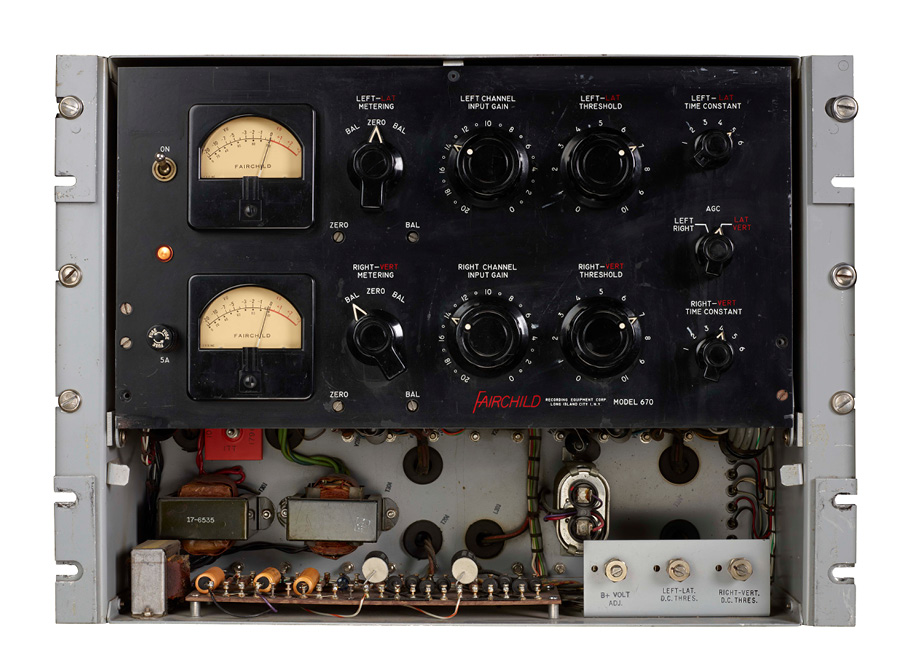
Fairchild 670
Modern Vari Mu Compressors
Today’s Vari Mu compressors often include enhancements to meet the needs of contemporary production environments. For instance, the AudioScape ASA 6A is modeled after the original RCA BA-6A but includes modern features such as:
- Variable Attack and Release Times: Unlike the original fixed settings, modern Vari Mu compressors allow users to adjust attack and release times, providing greater flexibility in shaping the sound.
- Threshold Control: This addition allows for more precise control over when the compressor engages, making it easier to achieve the desired compression without excessive gain reduction.
- Side Chain High Pass Filter: This feature helps prevent low frequencies from triggering the compressor, which can lead to a fuller low end and more balanced sound.
- Negative Feedback Switch: This switch reduces negative feedback in the circuit, adding harmonic richness and saturation to the sound.
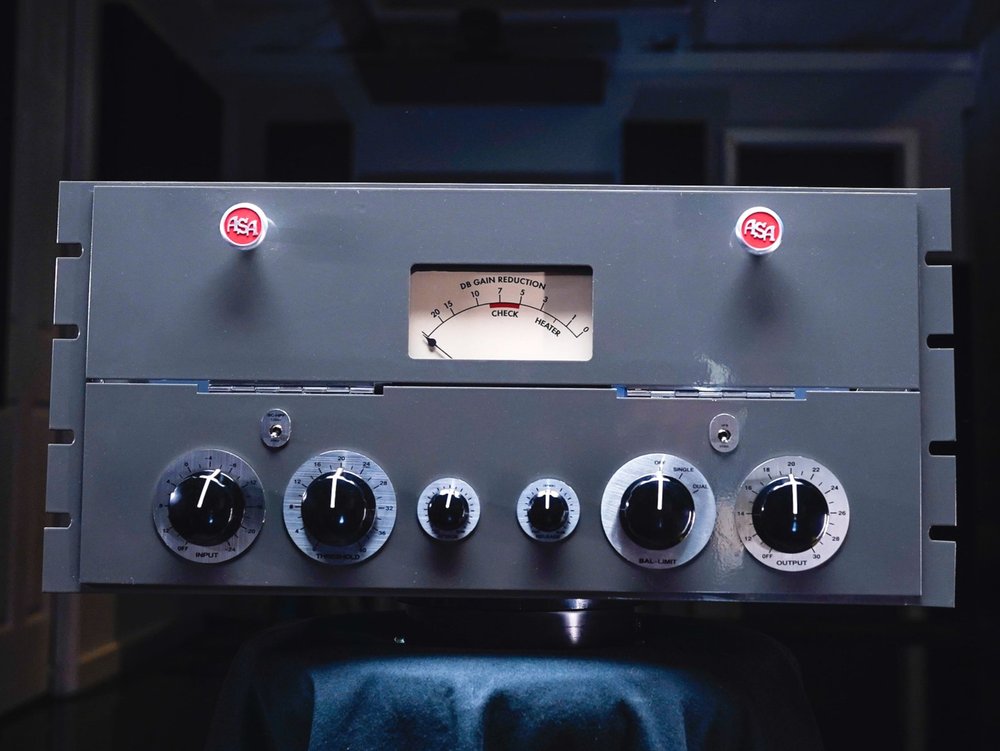
Audioscape ASA-6A
Comparing Vintage and Modern Designs
While vintage Vari Mu compressors are revered for their unique sound, modern iterations like those from Audio Escape are designed with usability in mind. They maintain the warm, rich characteristics of their predecessors while offering enhancements that make them more compatible with today’s fast-paced studio workflows.
Practical Applications in the Studio
Using a Vari Mu compressor in a mix can significantly impact the overall sound. For instance, when compressing vocals, a Vari Mu compressor can smooth out peaks and add warmth, making the vocal sit better in the mix. By adjusting the attack and release times, engineers can tailor the response of the compressor to fit the material, achieving a more polished sound.
In a recent demonstration, the Audio Escape compressors were tested on various vocal tracks. The results highlighted how these units can bring out the richness in voice while maintaining clarity and dynamic range. The ability to apply heavier compression while still retaining a musical quality is a testament to the design and functionality of Vari Mu compressors.
 Conclusion
 Conclusion
 Vari Mu compressors have a rich history and continue to play a vital role in audio production today. Their unique ability to provide musical compression while enhancing the tonal quality of recordings makes them a valuable tool for engineers. With modern advancements, these compressors have adapted to meet contemporary needs, ensuring they remain relevant in the ever-evolving landscape of music production.
For anyone looking to explore the world of dynamic processing, understanding the function and history of Vari Mu compressors is essential. Whether you are mixing a track or mastering an album, these compressors can add that special touch to your sound.