What happens when you combine the performances of world-class session musicians with technology capable of adapting those performances to your own chords, key and tempo?
That is the idea behind Tonalic by Celemony, an ambitious new creative platform that has been more than ten years in the making.
Try Tonalic here: https://www.tonalic.com
We recently sat down at Sensible Music Studios in London with one of the people behind Tonalic to explore how it works. Rather than simply talking through its features, we built a track from scratch, added new parts to an existing production and discovered just how quickly Tonalic can turn a basic musical idea into a fully arranged song.
More Than a Decade of Recording Sessions
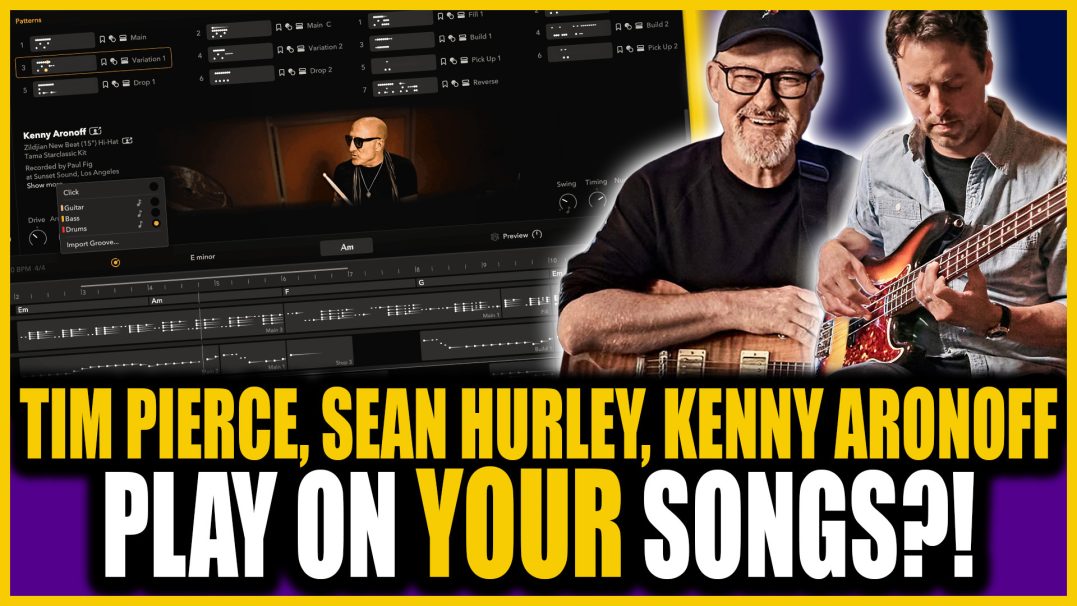
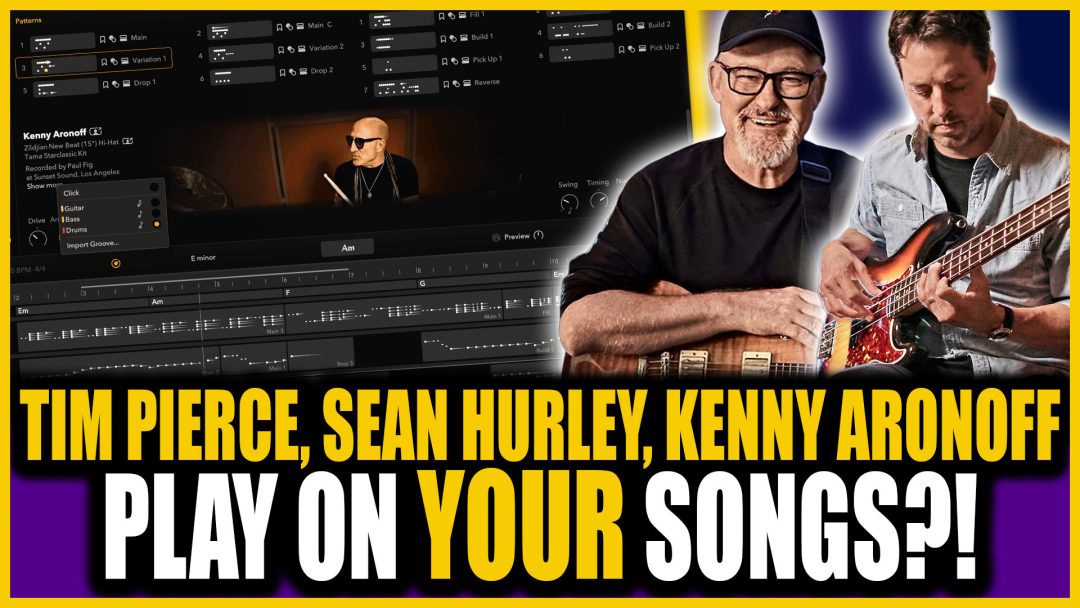
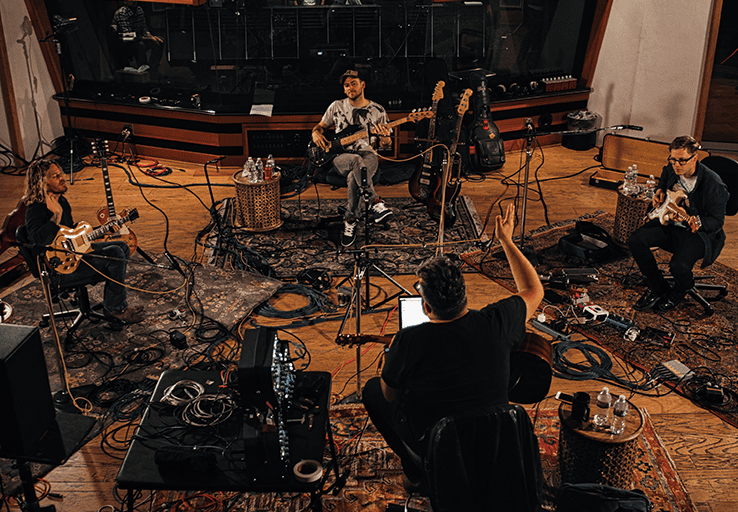
The foundation of Tonalic is an enormous collection of genuine performances recorded with some of the world’s finest musicians.
The Tonalic team travelled to studios around the world, working with players including:
- Tim Pierce
- Sean Hurley
- Victor Indrizzo
- Brian Sutton
- Brent Mason
- J.T. Corenflos
- Nick Movshon
- Binky Griptite
- Alex Reeves
- Rob Harris
- Paul Turner
- Kenny Aronoff
- Randy Bowland
- Dwayne Moore
- Larry Paxton
These were not musicians sitting in a room playing disconnected notes for a conventional sample library. They were proper recording sessions, designed to capture complete musical ideas, natural phrasing, dynamics, transitions and the subtle interaction that makes a human performance feel convincing.
Sessions took place in professional studios including Sunset Sound, with experienced engineers, carefully chosen instruments, amplifiers and microphones.
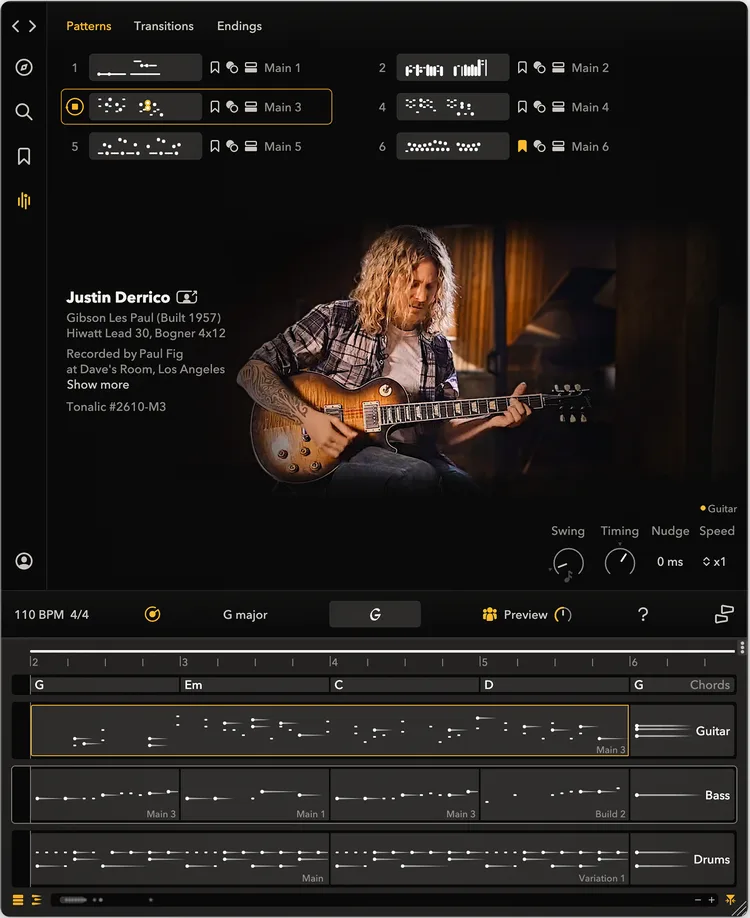
That information is retained inside Tonalic. When you select a performance, you can see who played it, where it was recorded, who engineered the session and which instruments and recording equipment were used.
Real Performances That Adapt to Your Song
The most important distinction between Tonalic and a traditional loop library is that the performances are not locked to their original harmony.
Celemony is the company behind Melodyne and its Direct Note Access technology. Tonalic builds on that experience by analysing the musical content of each recorded performance and adapting it intelligently to the user’s song.
You can choose your key, enter your own chord progression and change the tempo. Tonalic then reshapes the performance around those decisions.
This goes beyond simply transposing a collection of notes.
The software examines the original player’s chord choices, movement, phrasing and voice leading. It then attempts to preserve the musical logic of that performance as it adjusts to the new harmony.
When we entered a progression moving through G, C, E minor and D, the acoustic guitar part did not merely repeat one shape at different pitches. It changed naturally as the harmony developed, retaining the character of the original player.
That is what makes Tonalic feel less like dragging in a loop and more like directing a musician.
Starting With Brian Sutton
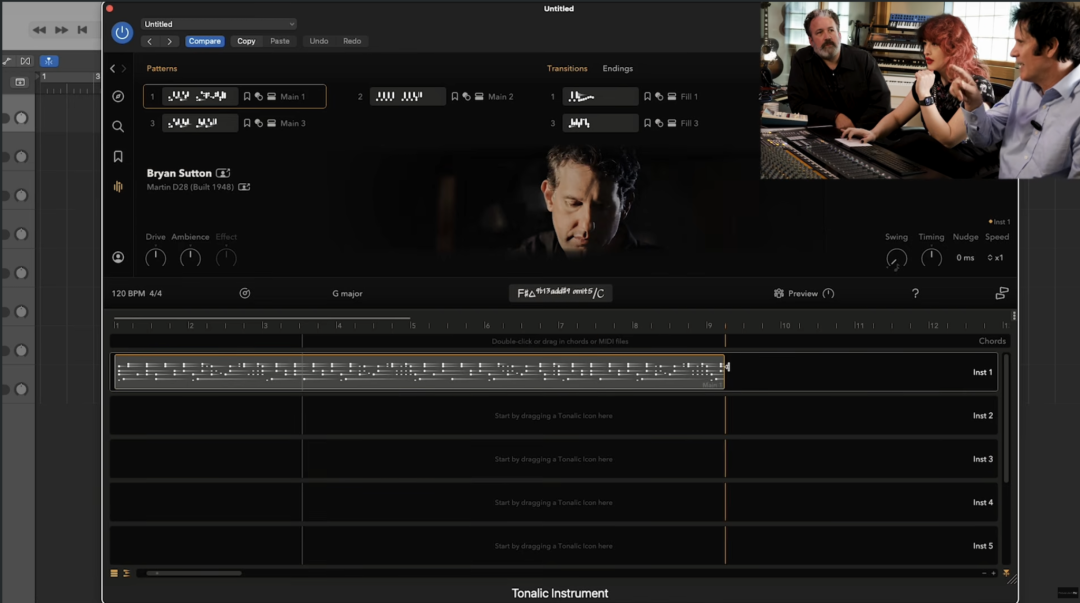
We began our track with acoustic guitar and explored performances from Nashville guitarist Brian Sutton.
Each Tonalic package contains a selection of musical patterns, usually based around one or two-bar ideas. The browser allows you to hear the performance by itself or preview it alongside an accompanying band.
The full-band preview is particularly useful when songwriting because it immediately provides context. You can hear how the guitar might sit against bass and drums before committing it to your arrangement.
Once we found the right acoustic part, we opened its set page. This revealed related performances designed to work together, including:
- Alternative patterns
- Builds
- Fills
- Transitions
- Variations
- Endings
These additional performances are essential when constructing a complete song. Instead of repeating the same phrase for several minutes, you can introduce variation, build intensity and create convincing section changes.
Even when a pattern is repeated, Tonalic can introduce natural performance variations rather than reproducing exactly the same phrase every time.
Arranging a Complete Performance
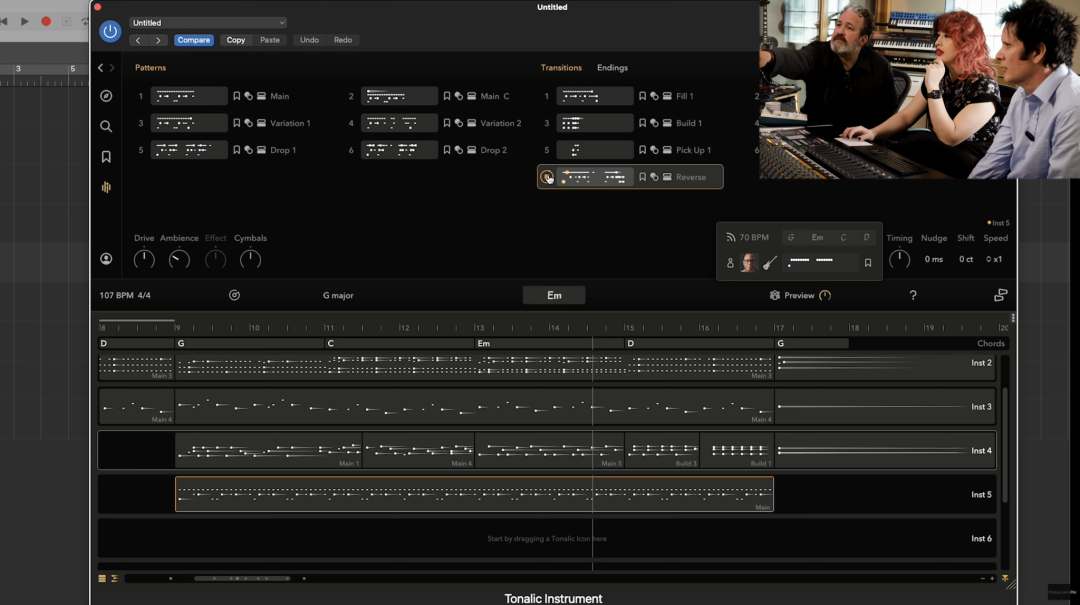
One of Tonalic’s strongest features is the ability to arrange related performances across a song.
After establishing the acoustic guitar part, we added mandolin, upright bass and electric guitar. We then used builds and endings to make the musicians sound as though they were responding to the arrangement.
The importance of those transitions should not be underestimated.
A conventional loop may sound excellent until the moment the song needs to stop, change direction or hit a final chord. Tonalic’s collection of fills, builds and endings allows the arrangement to behave more like a group of musicians playing an actual session.
We were able to create a final ensemble stop by selecting appropriate endings for the individual instruments. Within minutes, the track had the kind of coordinated ending that would ordinarily require giving instructions to every player in the room.
As we joked during the session, we had gone from testing a plug-in to producing what sounded suspiciously like a commercial for a new Ford F-150.
Drums, Banjo, Percussion and Washboard
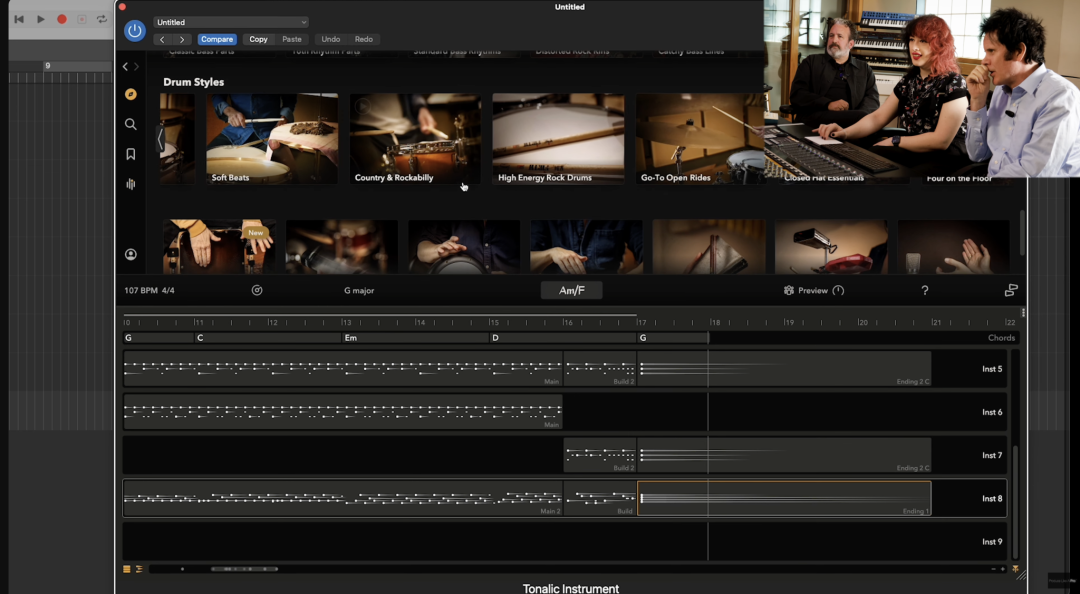
Once the main harmonic arrangement was established, we began adding drums.
We selected a performance from Alex Reeves, whose playing brought a loose, creative feel to the track. Tonalic displays the original recording tempo for each performance, which helps users choose material that will adapt naturally to the tempo of their production.
The software can stretch performances considerably, but choosing a part recorded reasonably close to the song’s destination tempo will usually preserve more of the musician’s original phrasing.
From there, things became increasingly adventurous.
We added:
- Banjo
- Handclaps
- Cajón
- Cowbell
- Additional percussion
- Washboard
The washboard may not appear in every modern production, but that is partly the point. Tonalic makes it easy to audition instruments that many producers do not have sitting in their studios.
You may already have guitars, bass and drums, but perhaps the arrangement needs one unusual rhythmic element. Tonalic allows you to test that idea immediately without locating the instrument, hiring a player and organising another session.
It can be used to build an entire arrangement, but it can also be used simply to fill a gap.
Transforming an Existing Production
The next test was adding Tonalic to an existing track from Shelby and Kyros.
The production already contained powerful drums, synthesizers and guitars, so this was not about creating a song from nothing. Instead, we wanted to discover whether Tonalic could add something unexpected to a developed arrangement.
We auditioned guitar performances from Jared Scharff and searched using musical descriptions such as distorted and progressive. Tonalic’s filtering system made it possible to narrow the results by player, instrument, style and performance characteristic.
Once a part was selected, we changed it to half-time and dropped it into the track.
The performance immediately suggested a different direction. We dried up some of the original ambience, added compression and began experimenting with delay.
That workflow demonstrates another important aspect of Tonalic: the performances are a starting point.
You are not expected to leave them untouched. They can be edited, processed, compressed, distorted, delayed, filtered and manipulated like any other audio inside your production.
You can take a beautifully recorded session performance and turn it into something entirely different.
A Songwriting Tool, Not an Automatic Song Generator
Tonalic can generate an enormous number of possibilities, but it does not make the important musical decisions for you.
The user still chooses:
- The chord progression
- The key
- The tempo
- The musicians
- The performances
- The song structure
- The transitions
- The processing
- The final arrangement
That makes Tonalic closer to a songwriting and production environment than a one-click song generator.
It provides musical performances and intelligent adaptation, but the person using it remains the writer and producer.
As with any powerful creative tool, it is possible to add far too much. We certainly proved that by stacking banjo, washboard, cajón, claps, cowbell and multiple guitars into the same arrangement.
However, having too many options is often preferable to having none. The producer’s job is to choose what supports the song and remove what does not.
What About Copyright?
Naturally, one of our biggest questions concerned ownership.
According to the Tonalic team, users can incorporate the performances into their own songs without paying additional royalties or giving the original musicians a conventional featured performance credit.
The musicians participate financially through Tonalic’s licensing model, while the user is free to release and commercially exploit the finished production.
If a track created using Tonalic were licensed for a commercial, the resulting song would belong to the user who created it.
A producer may choose to mention that a Tonalic performance was based on material recorded by a particular musician, but Tonalic does not present that musician as having been directly hired to perform on the finished record.
That distinction matters. The performances originate from real players, but the user is creating a new arrangement, harmony and production around the available material.
Human Performances Inside a Flexible Modern Workflow
There is no shortage of loops, samples and virtual instruments available to modern producers. What makes Tonalic compelling is the combination of human performance and musical flexibility.
The parts were played by exceptional musicians in real studios. They contain touch, feel, dynamics and personality. However, they can also respond to a new chord progression and fit inside a production that did not exist when the original session took place.
That opens up several possible uses.
A songwriter could build an entire demo around Tonalic performances. A producer could use it to test different arrangement ideas before hiring musicians. An artist working alone could add instruments they do not play. An experienced engineer could use a single performance to fill one missing space in an otherwise completed production.
Perhaps its most useful quality is the speed with which it allows you to explore.
You can hear a mandolin against your chorus, test a fretless bass beneath a verse or discover that your progressive synth-pop song has secretly needed a half-time banjo all along.
Sometimes those experiments will be ridiculous. Occasionally, they will completely transform the song.
That is where Tonalic becomes genuinely exciting. It does not merely provide more sounds. It provides musical ideas, performed by real people, that can be shaped around your own creative decisions.
Try Tonalic here: https://www.tonalic.com