There are few mixers whose work has shaped the sound of modern records quite like Bob Clearmountain. His mixes do not just balance instruments, they move, breathe and react like performances. That is a huge part of why so many of his records feel alive decades later.
In this conversation with Marc Daniel Nelson and Ira Becker at Mix This, Bob explains exactly why he still hasn’t moved completely in the box, and why the answer has far less to do with nostalgia than people might think.
When Bob explains why he has never fully moved in the box, it is worth listening carefully.
This is not simply about loving a large-format console because it looks impressive or because it comes from a golden age of recording. Yes, the SSL console sounds great. The EQs, dynamics, routing and summing all matter. However for Bob, the real reason he still works the way he does is automation. More specifically, the SSL G Series automation system and the way it allows him to perform a mix in real time.
That distinction is everything.

It Is Not About Being Anti-Digital
Bob is not saying modern DAWs are useless. Far from it. Pro Tools, Logic and other systems have made recording, editing and mixing incredibly powerful. We can do things today that would have seemed impossible in the era when SSL automation was first developed.
However Bob’s point is much more specific. There are certain musical, physical and workflow-based aspects of console automation that modern DAW automation still does not replicate in the same immediate way.
That matters because Bob’s approach to mixing is not just technical. It is performative.
When he is mixing, he is not simply setting static levels and occasionally drawing in an automation curve. He is reacting to the music. He is listening to the vocal against the track, feeling where the chorus lifts, deciding when a guitar should tuck back, when the strings should bloom and when the whole record should suddenly breathe differently.
That kind of decision-making depends on immediacy.
The moment the technology forces you to stop and think, “How do I do that?” the musical impulse can start to disappear.
The Magic Of Roll Back Join
One of the central features Bob demonstrates is something he refers to as “roll back join.” This may sound technical, however the musical idea is very simple.
Imagine Bob has already ridden the lead vocal all the way through a song. Those rides are working. The emotion is there. The words are sitting properly. However when he gets to the second chorus, he feels the whole vocal needs to sit a little louder.
In a typical DAW workflow, you might trim the automation, draw an offset or try to write new automation over the existing pass. The problem Bob highlights is that when you rewind, the fader often jumps back to the previously written automation position. The exact physical place where you found the new level is gone. You are left trying to recreate it. You are guessing.
On the SSL, Bob can turn off the fader motors, listen, move the fader until the vocal feels exactly right and then roll back. When the chorus arrives, he can hit join and the system applies that exact difference, while preserving all the detailed rides underneath.
That is the key.
He is not destroying the work he has already done. He is not flattening out the previous vocal automation. He is not replacing musical detail with a blunt level change. He is keeping the performance of the original ride and simply offsetting it by the amount his ears just chose.
That is a profoundly musical way to work.

The Difference Between Mixing And Editing A Mix
This is where Bob’s workflow reveals something important about the art of mixing.
A lot of modern mixing has become visual. We look at waveforms. We look at automation lanes. We draw lines. We copy and paste sections. We zoom in and fix things.
All of that can be useful. However Bob is describing something different. He is making decisions with his hands, in real time, while listening.
That sounds obvious, however it is easy to forget how powerful it is.
When Bob says he is finding the level by listening, that is the whole point. The console allows him to keep the musical decision connected to the physical action. He hears the vocal, touches the fader, feels the change and commits it exactly where it needs to happen.
There is no gap between instinct and execution.
That is why he describes this kind of automation as something he uses constantly. It is not a rare trick. It is part of his entire mixing language.
Automation Is Part Of Bob’s Sound
One of the most important points in the discussion is that automation is not treated as an afterthought. For Bob, it is part of the sound of the mix itself.
That is a huge lesson.
We often talk about “the sound” of a mixer in terms of EQ, compression, reverbs, delays, saturation or monitoring. Those things absolutely matter. However with someone like Bob Clearmountain, movement is just as important.
A great Bob Clearmountain mix breathes. The vocal does not just sit in one place. The drums do not simply remain static. Guitars, keyboards, percussion, effects and backing vocals all move around the emotional centre of the song.
That movement is not random. It is musical arrangement after the arrangement. It is the mixer shaping the listener’s attention.
Marc Daniel Nelson rightly points out that Bob’s automation makes a mix feel alive, almost organic. Bob agrees because that is exactly what he is chasing.
He wants the elements of the track to feel like they are responding to each other.
That is why the automation system matters so much. It is not just a convenience. It is the instrument through which Bob performs the final emotional shape of the record.

Local And Global Moves
Another beautiful aspect of the SSL system is the way Bob can work locally or globally.
In the demonstration, he talks about creating a breakdown going into a section. He can listen to the song, decide which elements should drop out, choose faders or cuts, roll back and then hit join at the exact musical moment where he wants that breakdown to happen.
He can do this with one fader. He can do it with several. He can bring things back locally, or globally. He can make large musical gestures with the same immediacy as a player hitting a chord change.
That is an important distinction. In a DAW, you can absolutely automate mutes, levels and breakdowns. However the process often becomes more editorial. You select, draw, copy, paste, trim and refine. On Bob’s console, it is closer to conducting.
He is listening to the arrangement and physically shaping it as it passes by.
That is why losing this workflow would not just mean losing a piece of equipment. It would mean losing a way of thinking.
Why DAW Automation Can Feel Like Guesswork
The video also compares Bob’s SSL workflow with a DAW-based control surface approach. Ira demonstrates riding a fader, writing automation, going into trim mode and trying to find a louder level. The issue appears when he rewinds. The fader returns to the automation position, meaning the newly discovered level is lost.
At that point, the mixer has to approximate the move again. You can get close, of course. There are workarounds. You can hold the fader, try to catch the level, or use trim tools in the software. However as the demonstration makes clear, it is not the same. It is especially not the same when you are trying to do it across multiple faders at once.
For Bob, that difference is not academic. It affects the feel of the mix.
When you are trying to preserve a musical instinct, “close enough” can be frustrating. The level you found while listening was the level. The SSL automation lets him capture that exact relationship.
That is what Bob means when he talks about saving the difference between the existing automation and the new level.
It is not just fader position. It is intention.
Mixes Within Mixes
Another hugely powerful part of the SSL workflow is how Bob can combine automation from different mixes.
This is something every mixer understands immediately. A client, producer or artist might say, “I love the vocal in mix three, however I prefer the rest of mix six.” In a DAW, this can mean importing session data, managing playlists, moving automation between sessions or carefully copying information across versions.
Bob’s SSL automation lets him work in a different way. He can join specific channels, faders or cuts from one mix into another across a defined section. The original mixes remain intact. A new mix is created. Nothing is destroyed. Nothing is overwritten in a panic.
This is an incredibly elegant way to deal with revisions.
It also reflects the reality of mixing at the highest level. Final mixes are often built from taste, comparison and tiny preferences. The best vocal ride might live in one version. The best chorus lift might be in another. The best intro balance might be somewhere else entirely.
Bob’s system lets him treat automation almost like performance takes. He can comp the best emotional moments from different mix passes.
That is not nostalgia. That is speed, precision and musicality.

The Floppy Disk Problem
Of course, the system is not perfect.
Bob jokes about the drawback, the automation data is stored on floppy disks. For anyone who grew up in the digital era, that sounds almost absurd. Here is one of the greatest mixers in the world, relying on a system whose last software update was in the mid-1990s and whose mix data lives on a format many younger engineers have never used.
There is also a serious side to this. Bob mentions that when his house burned down, thousands of those disks were lost. That means old automation data disappeared with them.
It is a heartbreaking reminder that older workflows can be both incredibly powerful and incredibly fragile.
Bob even says there should be a modern system that does all of this on a Mac or PC. That is really the heart of the issue. He is not arguing against progress. He is asking why progress has not preserved some of the best ideas from the past.
Why Hasn’t This Been Recreated Properly?
That may be the most interesting question raised by the whole conversation.
Modern DAWs are astonishingly capable. We can edit audio sample-accurately, recall entire mixes instantly, automate almost anything, run hundreds of plug-ins and collaborate across continents. Yet certain aspects of classic console automation still have not been translated in a way that feels as effortless as Bob’s SSL.
Why?
Partly because software development often prioritises features that look impressive on screen. Graphic EQs, spectral displays, clip gain, plug-in chains, MIDI tools and recall systems are all easier to market visually.
However the best automation workflows are about feel.
They are about what happens when a mixer is halfway through a pass, hears something, grabs a fader, rolls back and wants to commit that emotional decision without breaking the flow.
That is harder to explain in a feature list. However to someone like Bob Clearmountain, it is everything.

The Console As A Musical Instrument
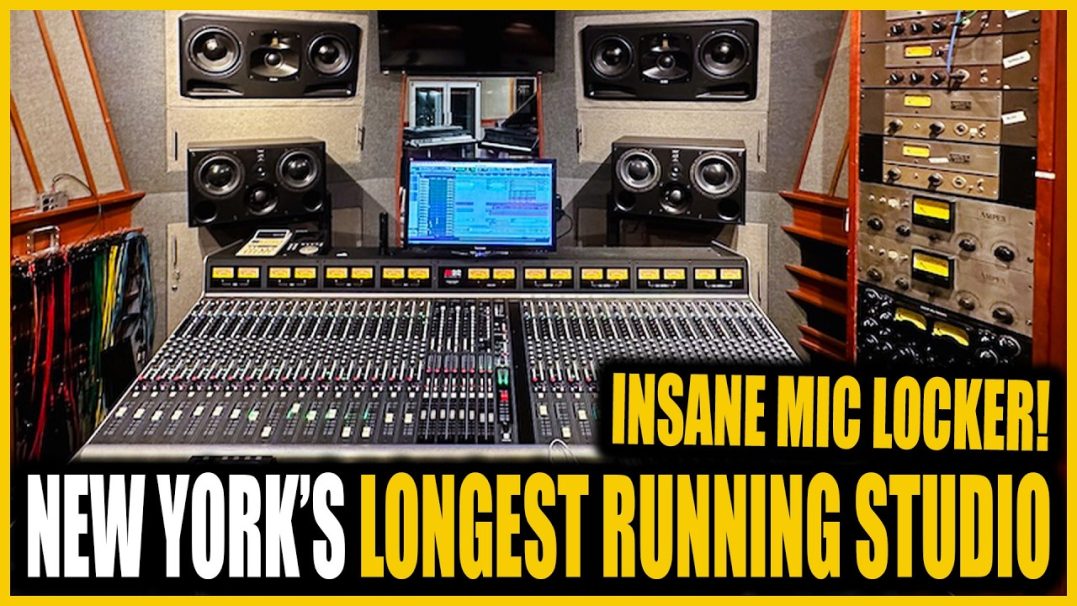
When Bob talks about having all the EQs, dynamics and effects sends in front of him, he is describing the console as an instrument.
That is not romantic exaggeration. Anyone who has worked for long periods on a large-format console understands this. You build muscle memory. You know where things are. Your hands move before you have fully verbalised the thought.
On a screen, we are often opening windows, selecting channels, paging through controls, assigning parameters and focusing on one thing at a time. Again, this is not wrong. Many brilliant records are mixed that way.
However Bob’s point is that the console gives him simultaneous access. He can see and touch many parts of the mix at once. The relationship between the music and the physical surface is immediate.
For a mixer whose sound depends so heavily on movement, that matters.
What We Can Learn From Bob
The lesson here is not that everyone needs an SSL console.
Most people will never have one. Many mixers are making incredible records entirely in the box. The point is deeper than gear.
Bob Clearmountain reminds us that mixing is not just processing. It is performance. It is taste in motion. It is the art of knowing when something needs to lift, when something needs to disappear and when the listener’s ear needs to be guided somewhere new.
The tools matter because they either support that instinct or get in the way of it.
Bob’s loyalty to his console is not about refusing to move forward. It is about protecting the musical connection between what he hears, what he feels and what his hands can do instantly.
That is why, for him, the automation is not a technical feature. It is part of the emotional engine of the mix.
And that is why Bob Clearmountain still does not mix completely in the box.