Albert Gene Collins was a renowned American electric blues guitarist, vocalist and songwriter known for his unique guitar technique who stands as a towering figure in the realm of Blues, particularly Texas Blues, of which he was a pioneer. His unique sound and dynamic performances have left an indelible mark on the music world. His use of a capo, unconventional tunings and a powerful, sharp and ferocious right hand technique using his thumb and index finger to pluck the strings created a unique ‘Ice Pick’ like sound, giving him the nickname of ‘The Iceman’ and his defining use of the Fender Telecaster also earned him the moniker “The Master of the Telecaster”.

Albert Collins was born in Leona,Texas, on October the 1st, 1932. He was introduced to the guitar at family gatherings by his cousin the influential Country Blues Singer and Guitarist Lightnin’ Hopkins. His family moved around Texas from Leona to Marquez in 1938, they then settled in Houston in 1941, where Albert attended the Jack Yates High School. Starting with piano lessons, his love of the guitar soon took over. His cousin Willow Young, taught him the altered tuning that became a signature of his style an open F-minor chord (FCFA♭CF), often using a capo at the 5th, 6th, or 7th fret this combination, also later with an open D-minor chord (DADFAD), became one of the most important elements of his unique sound and after hearing “Boogie Chillen’’ by John Lee Hooker at the age of sixteen, Collins decided to fully dedicate himself to mastering the guitar.
Collins’ rise to international blues stardom was not a rapid or easy one, like many Blues musicians of the time and despite his burgeoning talent, Collins worked full time jobs to support himself, he worked as a painter, for four years at a Ranch in Normangee, Texas and 12 years as a Truck driver. In 1971, at 39 years old, even after touring extensively, releasing several acclaimed albums and helping shape blues guitar playing of the era, he worked in construction in order to make ends meet.
Starting his own band, the Rhythm Rockers at the age of 18, Collins honed his craft using an Epiphone electric. In 1952, upon witnessing Clarence “Gatemouth” Brown perform using a Fender Esquire, Collins was so impressed with Clarence’s remarkable clean, sharp, precise and articulate sound that he made the decision to acquire a Fender guitar. Although he initially desired a Telecaster, he opted out of necessity for the more affordable Esquire later adding a Telecaster neck pickup which was installed by the Parker Music Company in Houston. Collins continued to use his modified Fender Esquire, including recording his classic, signature tune “Frosty” until he relocated to California in 1972.
In 1954, 17-year-old Texas Blues guitarist and singer Johnny Copeland joined the 22 year old Collins in the Rhythm Rockers. Johnny had recently departed from the Dukes of Rhythm, a band he had formed with Houston blues musician Joe “Guitar” Hughes. Johnny and Albert would later collaborate again with Robert Cray for 1986’s Grammy Award winning Album “Showdown!”.
In 1958 at the age of 25 years old Collins got to record his first single, although he still didn’t get to release an album until 1965’s “The Cool Sound of Albert Collins”. Collins had began playing regularly at Shady’s Playhouse in Houston, performing at the “Blue Monday” jams, he would join James “Widemouth” Brown (brother of Clarence “Gatemouth” Brown”) and other renowned Houston blues musicians and by the mid-1950s, he had solidified his reputation as a talented local guitarist and was a regular performer at Walter’s Lounge in the Fifth Ward with Big Tiny and the Thunderbirds. In 1958, Henry Hayes, a local saxophonist and music teacher had heard about Collins from Joe “Guitar” Hughes. Henry was impressed with Collins after watching him perform live and he brought Collins to Kangaroo Records, a label he had co-founded with M. L. Young. Collins recorded “Freeze”, along with “Collins Shuffle” at Gold Star Studios in Houston in the spring of 1958., Hayes played saxophone. Texas blues bands frequently included horn sections during this era and Collins acknowledged Hayes for teaching him how to arrange for horns, a skill he subsequently used to great effect.
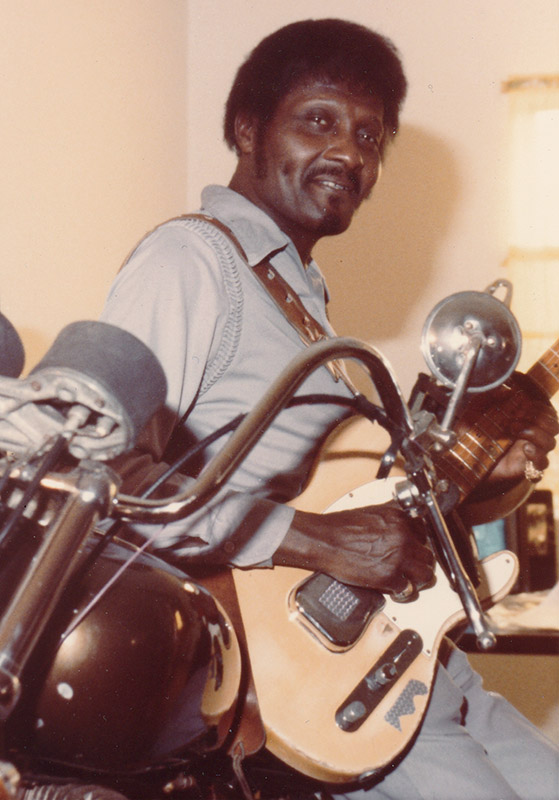
Albert Collins recorded one of the most important blues instrumental songs ever written, one of his own compositions “Frosty” at Gulf Coast Recording Studio in Beaumont, Texas for Hall Records in 1964. Bill Hall, the owner of Hall Records, had signed Collins based on the recommendation of Cowboy Jack Clement, a songwriter and producer who had worked with Jerry Lee Lewis and Johnny Cash at Sun Records. The debut album, “The Cool Sound of Albert Collins”, said to be a favourite album of Jimi Hendrix’s was released in 1965 on the TCF Hall label. Along with the 1964 single “Frosty” the album featured a total of nine previously released instrumentals, recorded in 1962 and 1963, such as “Thaw-Out”, “Sno-Cone”, and “Don’t Lose Your Cool”. “Icy Blue”, “Kool Aide”, and “Shiver ‘n Shake” date to April 1965 sessions. Collins sings on “Dyin’ Flu” which is possibly his first recorded vocal performance.
On the 19th June 1968, the group Canned Heat was playing at the in Houston at The Music Hall, when they heard from a friend of that Collins was playing at the Ponderosa Club. They were huge fans and went down to the show and after Collins had finished playing, they introduced themselves and offered to help secure an agent for him as well as an introduction to the record label Imperial Records in California. Armed with the offer of a record deal and regular live work, Collins decided to move, firstly relocating, in July 1968 to to Kansas City, where he played in keyboardist Lawrence Wright’s organ trio and then in November ’68 he moved to Palo Alto, California. For his 1968 Imperial album, Collins chose the title Love Can Be Found Anywhere (Even in a Guitar), from the lyrics of Canned Heat’s “Fried Hockey Boogie”, in honour of Canned Heat and their lead singer Bob Hite who wrote the liner notes for the album.
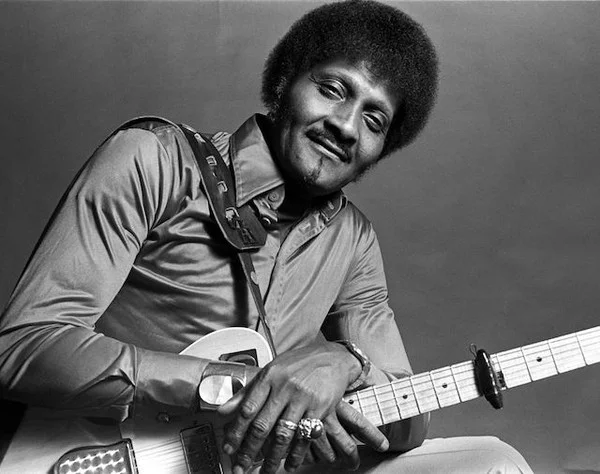
In the spring of 1969 Collins was hired by Bob Krasnow to play on the Ike and Tina Turner’s album “The Hunter”, which was released by Krasnow and former A&M Records executives Tommy LiPuma and Don Graham “Blue Thumb Records”. Collins’ move to California proved fruitful, solidifying his presence on the West Coast circuit. playing at the Fillmore West and the Whisky A Go Go and at the Newport ’69 festival in Northridge, in June 1969, opening for the Grateful Dead at the Family Dog on the Great Highway in San Francisco in early August, 1969. and the Gold Rush Festival at Lake Amador, California in October. In December 1969, “Blue Thumb Records” re-issued his debut album, The Cool Sound of Albert Collins, as “Trucking’ With Albert Collins”.
In November 1971, Albert Collins released the album “There’s Gotta Be a Change” on the Denver label Tumbleweed Records, founded by Larry Ray and producer Bill Szymczyk. The Produced and Engineered by Szymczyk, the album was the labels in augural release, and featured a host of A list musicians such as Jim Keltner, Jesse Ed Davis, Jim Horn, Dr John and many more. In February 1972, the single “Get Your Business Straight” from the album was released although unfortunately due to financial issues Tumbleweed closed its doors in 1973.
Collins worked in construction to make a living, until with encouragement from his wife, Gwen, he transitioned back to music in the late 1970s. In 1978 he found a new home at Alligator Records, under the guidance of Bruce Iglauer and the recommendation of Dick Shurman. His debut release, “Ice Pickin’,” recorded in Chicago, was a testament to his artistry and dedication to his craft.
 Noteworthy milestones continued for Collins, including his first international performance in February 1978 with the Dutch band Barrelhouse. The concert, captured for the Dutch TV show Tros Sesjun, highlighted his magnetic stage presence and musical prowess. This memorable event was later released on vinyl in 1979, solidifying Collins’s impact beyond borders.
In 1983 Collins won a W.C Handy Award in the Best Contemporary Blues Album category for his Alligator release Don’t Lose Your Cool.. In 1985 he performed at the Live Aid concert in Philadelphia playing with George Thorogood and the Destroyers. As the only Black blues artist at the event, Collins brought his distinctive sound to a global audience watched by an estimated 1.5 billion people across 150 countries. This made it one of the most-watched television events in history.
In December 1986, Collins appeared in a concert alongside Etta James and Joe Walsh at the Wiltern Theater in Los Angeles. This memorable event was captured on video and released as Jazzvisions: Jump the Blues Away.
Also in 1986, Collins won a Grammy Award with Robert Cray and Johnny Copeland for their album “Showdown!”. In 1987 Collins received a Grammy nomination for Best Traditional Blues Recording for ‘Cold Snap” his seventh album on Alligator released in 1986 which featured Jimmy McGriff, one of Collins’ early musical idols, with whom Collins had played with in Kansas City, Missouri, in 1966.
On the 12th February 1987, Collins appeared as a musical guest on the NBC talk show Late Night with David Letterman. Later that same year, he made a cameo appearance in the comedy film Adventures in Babysitting. Additionally, in 1987, he collaborated with the talented American composer John Zorn on a suite titled “Two-Lane Highway,” which was later released on Zorn’s album Spillane.
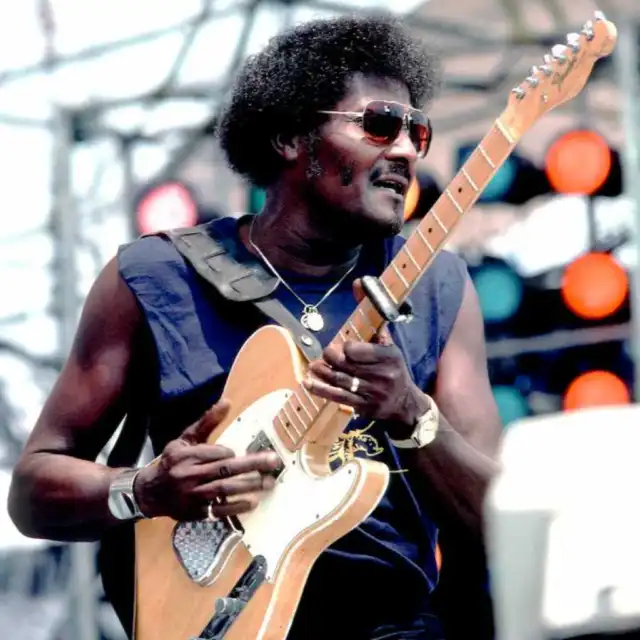 On April 22nd, 1988, Albert Collins performed at the New Orleans Jazz and Heritage Festival alongside B.B. King, Eric Clapton, and Stevie Ray Vaughan. The group played aboard the steamboat “President” as it cruised along the Mississippi River, honouring the rich musical heritage of New Orleans. This tribute celebrated legendary artists like Fate Marable, Louis Armstrong, and Red Allen, who had once entertained passengers on the Streckfus brothers’ fleet of riverboats.
In 1991, Albert Collins signed with Point Blank Records, a subsidiary of Virgin Records, and released the album “Iceman” that same year. Bruce Iglauer, founder of Alligator Records, expressed disappointment at Collins’ departure but acknowledged that their arrangement had always been on a record-to-record basis. On October the 15th, in 1991, Collins performed alongside Robert Cray, Steve Cropper, and Dave Edmunds at the Guitar Legends event in Seville, a series of concerts promoting the upcoming Seville Expo ’92. On October 28, Collins was filmed in concert for the television program Austin City Limits; the performance aired on February 21, 1992, and was later released on DVD in April 2008 as Albert Collins: Live From Austin, TX. In 1993, Collins played at the Point Blank Borderline Blues Festival in London, which ran from March 17 to March 27, marking his final UK appearance.
While performing at the Paléo Festival in Nyon, Switzerland, in July 1993, Collins fell ill. He was diagnosed with lung cancer in mid-August, which had spread to his liver, with an expected survival time of four months. Tracks for his final album, Live ’92/’93, were recorded during performances that September. Collins passed away on November 24, 1993, at the age of 61. His final album was posthumously nominated for Best Contemporary Blues Album at the 38th Grammy Awards in 1996.

In 1992, he was invited to play at the Legends of Guitar Festival at the World Expo, further cementing his reputation as a guitar virtuoso. His performances during this period were characterised by a raw intensity that captivated audiences and left a lasting impression.
Awards and Recognition
———————-
Collins’ contributions to the blues genre have been widely recognised. He received a WC Handy Award for Best Blues Album and won a Grammy for his album “Showdown.” These accolades reflect not only his talent but also the impact he had on the music industry as a whole. His innovative approach to guitar playing and songwriting continues to inspire new generations of musicians.
Health Challenges and Legacy
—————————-
Despite his success, Collins faced significant health challenges later in life. In 1993, after falling ill during a show in Switzerland, he was diagnosed with lung cancer. This diagnosis was a devastating blow, and he passed away shortly thereafter at the age of 61. His death marked the end of an era, but his legacy lives on through his music.
Albert Collins was buried at the Davis Mora Park in Las Vegas, Nevada, where fans continue to pay tribute to the Ice Man. His music, characterized by its emotional depth and powerful guitar work, remains influential in the blues community and beyond.
Musical Style and Contributions
——————————-
Collins’ musical style was defined by his exceptional guitar skills and his ability to fuse traditional blues with a modern edge. His guitar cords often stretched as long as 100 feet, allowing him to move freely around the stage while maintaining a strong connection with his audience. This unique approach to performance set him apart from his contemporaries.
He was known for his distinctive voice, which conveyed a wide range of emotions. Songs like “I Ain’t Drunk, I’m Just a Drink” exemplified his ability to blend humour with poignant storytelling. Collins’ lyrics often reflected his own life experiences, resonating with listeners on a personal level.
Influence on Future Generations
——————————-
The impact of Albert Collins on the blues genre cannot be overstated. His innovative guitar techniques and powerful performances have inspired countless musicians. Artists across various genres cite Collins as a major influence, highlighting his contributions to the evolution of blues music.
Collins’ legacy is evident in the work of contemporary blues artists who continue to draw inspiration from his style. His ability to connect with audiences through his music has paved the way for future generations to explore and expand upon the blues tradition.
Conclusion
———-
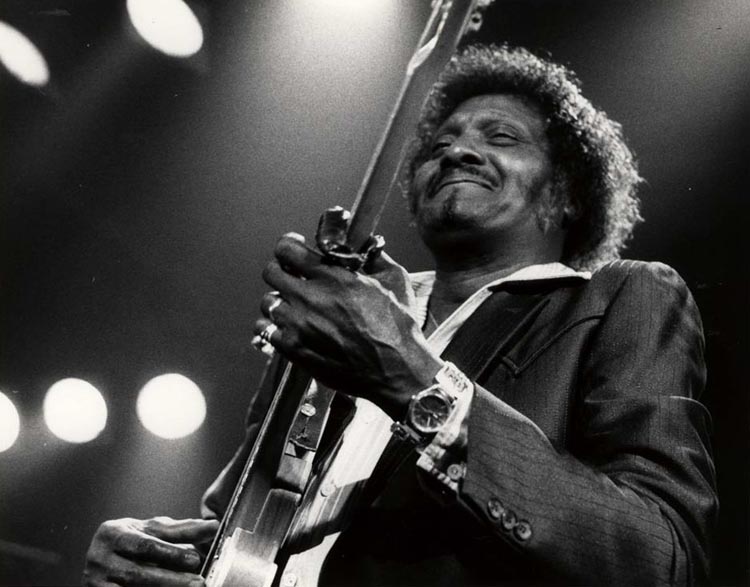
Albert Collins, the Ice Man of Texas Blues, remains a legendary figure in the music world. His journey from Leona, Texas, to international fame is a testament to his talent, determination, and passion for music. Through his remarkable career, Collins not only left a lasting legacy but also helped to shape the future of blues music.
As we reflect on his life and contributions, we are reminded of the power of music to transcend boundaries and connect people. Albert Collins’ story is one of resilience and artistry, and his music will continue to inspire and resonate with audiences for generations to come.
Seeing Albert Collins live at the Town & Country Club in 1990 was one of the greatest shows I’ve ever seen. Albert was amazing on stage his engagement with the audience was so genuine, in retrospect it feels like this was his natural habitat, the place he felt most comfortable, completely in his element where he called the shots and where he held the audience in the palm of his hands. I had heard that he would leave the stage while still playing in order to fully interact with the crowd, he didn’t disappoint, using an extended guitar cable he ventured into the crowd, it was exhilarating! Albert’s voice, guitar playing, songwriting and his innate command of the audience during the show is etched indelibly on my mind. Thank you for the great music Albert Collins! If you don’t know him or his music rectify that now and check him out!