There are engineers who accumulate credits.
And then there are engineers who quietly shape modern music from behind the glass.
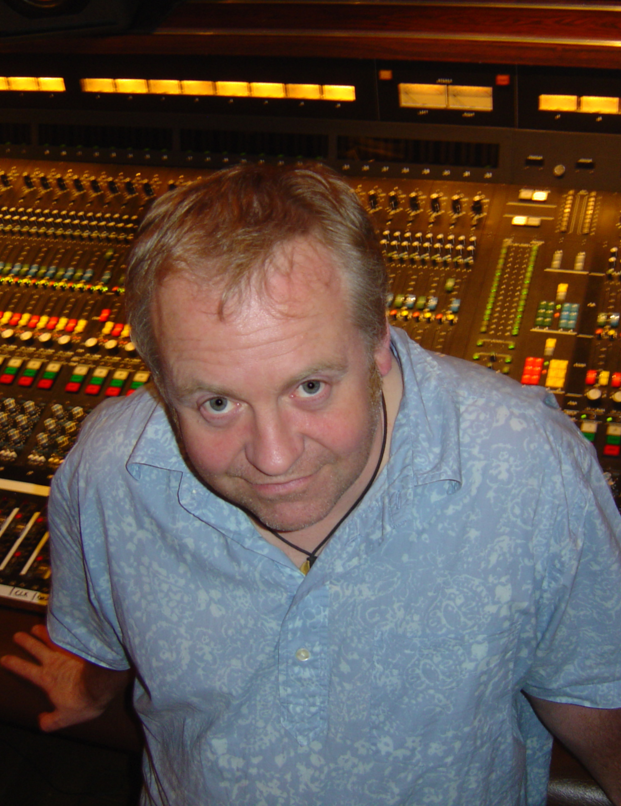
Cameron Craig is firmly in the latter category.
Australian-born and now London-based, Cameron has built an extraordinary career as a producer, mixer, and engineer, working with artists including Adele, Grace Jones, Annie Lennox, U.N.K.L.E., Suzanne Vega, Duffy, Björk, Amy Winehouse, Suede, Joe Strummer, Christina Aguilera, Ed Harcourt, Sia, Jarvis Cocker and Pulp.
He is also a two-time Grammy winner, including:
-
Album of the Year for his contribution to 25 by Adele
-
Best Engineered Album, Non-Classical for Beauty & Crime by Suzanne Vega
Alongside Grammy recognition, he has received multiple nominations from the Music Producers Guild, including Recording Engineer of the Year, and an ARIA nomination for Engineer of the Year during his Australian years.
However, awards only tell part of the story.
Australia – Training the Right Way
Cameron’s career began in Australia in the mid-to-late 1980s.
Like many engineers of his generation, he started in bands, gravitating naturally toward the technical side. At just 18, he found himself working in a professional studio environment where he was properly mentored. Instead of watching from the sidelines, he was shown phase relationships, signal flow, console technique, and decision-making in real time.
He worked on everything:
-
Advertising sessions
-
Albums
-
Film scores
The studio ran a Harrison console with MCI tape machines, reflecting strong American influence in Australian studios at the time.
By his early twenties, Cameron was already freelancing. In 1995, he earned an ARIA nomination for Engineer of the Year, a clear sign that his reputation was growing fast.
However, comfort was not enough.

London – Starting Again
In 1995, Cameron moved to the UK, returning permanently in 1996 at age 30. Starting again in a new country is no small feat, especially in an industry built on relationships.
He worked across London studios, gradually rebuilding momentum. A turning point came at a valve-based studio environment where the conventional 1980s recording approach simply did not work. It forced him to rethink mic placement, gain staging, and tonal decisions from the ground up.
That reinvention led directly to his collaboration with James Lavelle and the creative world of UNKLE.
UNKLE, Soundtracks, and Cultural Crossovers
Working with James Lavelle meant blending electronic programming with live musicianship, building cinematic textures, and constructing songs through experimentation.
This period included work connected to Sexy Beast and later projects that intersected with major film culture.
Cameron’s soundtrack work expanded significantly over the years, contributing to productions including:
-
The Hunger Games: Mockingjay – Part 1
-
Citizen K
-
Fighting with My Family
-
Trust
-
Lost in London
-
Grace Jones: Bloodlight and Bami
These projects demonstrate his adaptability across genres and formats, from art-pop to mainstream cinema.
 Grace Jones and Long-Form Craft
 Grace Jones and Long-Form Craft
His work with Grace Jones represents a particularly immersive chapter. Entire studio spaces were built to complete the record. Mixing stretched over months. Albums took years.
It was a reminder of a time when records were allowed to breathe.
The Modern Mixer – Hybrid, Precise, Efficient
Today, Cameron’s workflow is largely hybrid.
-
Thermionic Culture EQ
-
Smart compressor on the mix bus
-
Neve hardware inserts
-
In-the-box flexibility
Modern mixing is rarely just balancing levels. It often involves arrangement refinement, performance enhancement, and what might fairly be called “finishing production.”
As Cameron puts it, artists hire you for one role knowing you bring the knowledge of all the others with you.
Advocacy and Industry Leadership
 Advocacy and Industry Leadership
Beyond the studio, Cameron plays a vital leadership role.
He serves as Executive Director of the Music Producers Guild.
You can learn more about the MPG and its work here:
https://mpg.org.uk
The MPG began as a small collective of producers meeting in a pub and has grown into a recognised voice in UK music policy.
Cameron is also a board director of UK Music, the umbrella organisation representing the UK music industry.
One major focus has been advocating for fair business rate classification for recording studios. The pandemic exposed how financially fragile many studios are. By working to define studios properly within government frameworks, the MPG aims to secure targeted relief and long-term sustainability for professional recording facilities.
This is quiet, structural work that benefits the entire production community.
Philosophy: Make It Your Favourite
Cameron’s discography is extraordinarily varied.
Some records become personal creative investments. Others are professional assignments. His approach is consistent:
If the music is not immediately your favourite, make it your favourite. Put yourself into it. Deliver excellence regardless.
That mindset, combined with technical depth, adaptability, and decades of experience across continents, is why Cameron Craig remains one of the UK’s most respected producers and engineers.
From Harrison consoles in Sydney to Grammy-winning albums in London, from cinematic UNKLE soundscapes to Adele’s global success, Cameron Craig represents something increasingly rare:
A career built on reinvention, craft, and service to the music.
And perhaps most importantly, a producer who still genuinely loves recording