Hi everybody, hope you’re doing marvellously well.
We recently had the chance to spend some time with IK Multimedia’s new ARC ON•EAR at Modern Air, and it brought up one of the biggest questions in modern music production: can you really mix properly on headphones?
It’s a question that comes up constantly now. More and more of us are working in smaller rooms, untreated rooms, home studios, hotel rooms, tour buses, bedrooms, spare rooms, and anywhere else we can make music. Headphones have become a huge part of the way we record, edit, mix, and even master. However, headphones have always had one major problem, they are not the same as listening to a pair of monitors in a room.
 That is where ARC ON•EAR gets interesting.
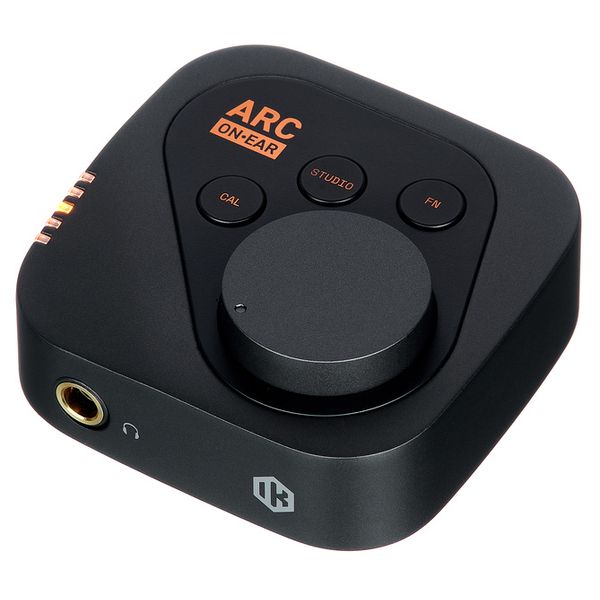 That is where ARC ON•EAR gets interesting.
The idea is simple, however very powerful. ARC ON•EAR corrects the frequency response of your headphones and gives you a more consistent, reliable reference point. It also adds what IK calls Studio Simulation, which is not simply a room reverb or a fake ambience. It is more about recreating the stereo experience of sitting in front of ideal monitors in an ideal room, set up in front of you rather than trapped inside your head.
That distinction is important.
When we listen on headphones, left is hard left, right is hard right, and the centre image can feel unnaturally locked in the middle of your skull. That can make panning decisions, balances, mid side information, and stereo width much harder to judge. Anyone who has mixed on headphones for long enough knows that feeling, you get something sounding exciting in cans, then you play it on speakers and suddenly the balances do not behave the way you expected.
ARC ON•EAR is designed to help with that.
During the demo, we started with a pair of Denon AH-D7200 headphones. These are beautiful, expensive hi-fi headphones, and that was part of the point. There is a common misconception that expensive headphones automatically equal accurate headphones. Of course, more expensive headphones can offer better build quality, better materials, more comfort, and often a more enjoyable listening experience. However, that does not automatically make them a flat or reliable studio reference.
With ARC ON•EAR bypassed, the Denons sounded good, however not necessarily like a neutral mixing tool. When the calibration was switched in, the difference was immediate. It felt like a blanket had been lifted off the vocal and the mix opened up. The guitars panned left and right suddenly became clearer, the stereo image felt wider, and the elements that had felt slightly dull or tucked away started to make sense.
That is one of the biggest things I noticed, ARC ON•EAR does not simply make everything brighter for the sake of excitement. It helps reveal what is already there. When the sides of the mix become clearer, the whole stereo picture feels more alive.
What I also appreciated was that ARC ON•EAR does not completely erase the identity of the headphones. It is not trying to make every pair feel exactly the same. You still hear the quality of the headphone, the construction, the drivers, the comfort, and the general character. However, you are hearing it through a more useful reference curve, which is exactly what we need when making decisions.
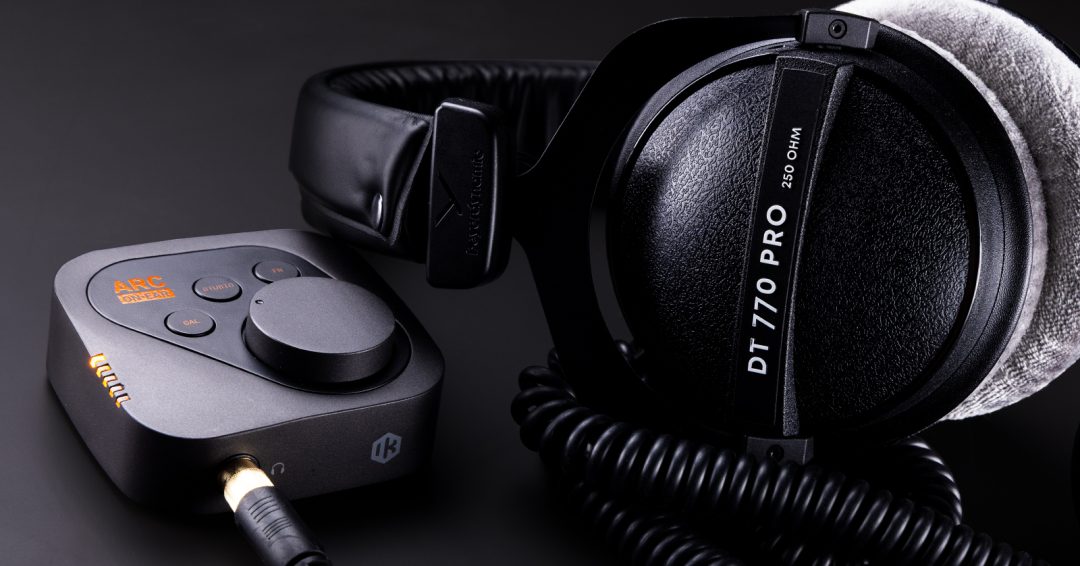
That became even more obvious when we talked about the Sennheiser HD 650s.
I have to admit, I never fully understood the love for the HD 650s. So many friends of mine use them, and I always thought, “Yeah, they’re okay.” However, when we tried them with ARC, I had a completely different reaction. We had gone through a bunch of different headphones, taking the correction in and out, and with the HD 650s there really was not that much correction needed. That told me something very important, my ears had already been hearing that they were closer to neutral than I had realised.
With ARC ON•EAR, I gained a new appreciation for them. Suddenly I understood why so many people trust them. They are not flashy, they are not hyped, they are just very usable. That is incredibly valuable.
Then, of course, we tried the Beyerdynamic DT 100s.
Now, if you grew up in studios in England, you know the DT 100s. Abbey Road had them. Loads of studios had them. They were everywhere. Why? Because they are practical, robust, and completely modular. If something breaks, you replace the part and keep going. For a commercial studio, that is incredibly useful.
Sonically, though, the nicest thing you can say about them is that they are like a pair of NS-10s strapped to your head. They are all mid-range. You do not get a huge amount of low end, you do not get sparkling top end, however you do get something that cuts through when tracking. For vocalists, drummers, guitar players and session work, they have always made sense.
For mixing? Not so much.
With ARC ON•EAR, the transformation was enormous. It did not magically turn them into the greatest mix headphones in the world, however it took them from “no way” to “maybe”. Haha. That is actually a massive compliment. Taking a pair of headphones that you would never normally consider for balancing a mix and making them even potentially usable is quite impressive.
That is where headphone correction can be genuinely helpful. It is not about pretending that every pair of headphones becomes a perfect mastering-grade reference. It is about giving you a better chance of making decisions that translate.
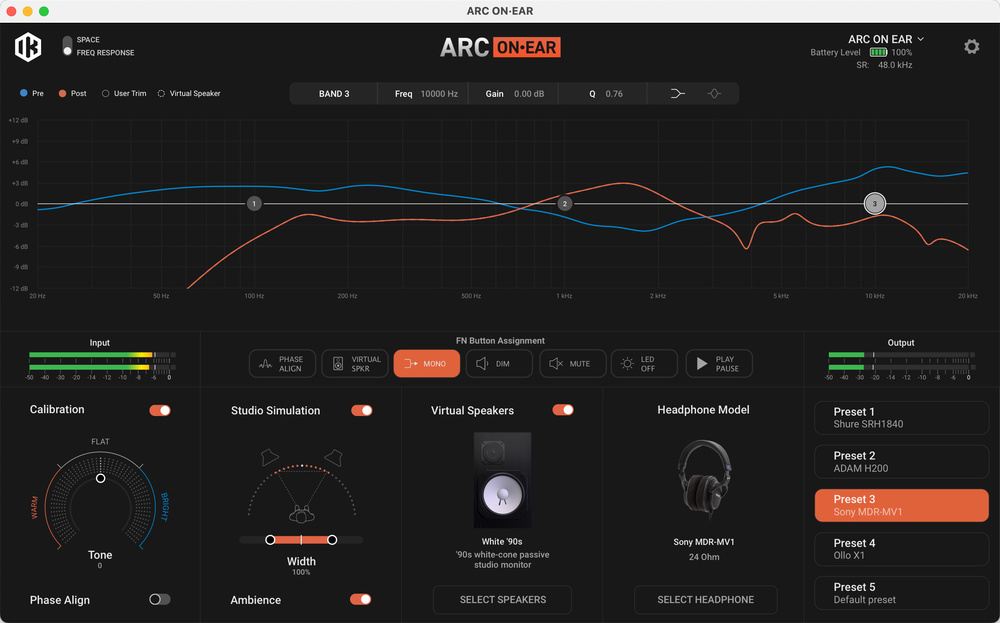
The other part of ARC ON•EAR that really stood out was Studio Simulation.
For me, this is at least half the product. The frequency correction is obviously important, however the Studio Simulation is what helps headphones feel less like headphones. It is subtle, and that is why it works. It does not feel like someone has slapped a room reverb across your mix. It simply helps the panning and stereo information sit in a way that feels more familiar, more like listening to monitors.
That matters enormously when you are balancing a mix.
If you are very experienced working on headphones, you can learn how to compensate. Many great mixers do it. You learn the quirks, you check against references, you listen on multiple systems, and you build up a mental map. However, even then, headphone mixing can make certain decisions harder than they need to be.
The engineer from IK made a great point during the demo. Without some kind of speaker-like perspective, balancing mid side information and panning on headphones can be difficult to get right first time. You often have to double check on monitors, export the mix, listen elsewhere, come back, revise, and repeat.
ARC ON•EAR helps reduce that friction.
It also changes the experience of simply listening to music. When you know a track really well, you remember where things sit. You remember the panning, the width, the vocal position, the feel of the drums. On some headphones, that memory does not quite match what you are hearing. Things feel too wide, too narrow, too hyped, too dull, or just slightly wrong. With the Studio Simulation engaged, familiar music can feel more natural again.
That is a big deal, because referencing is one of the most important skills in mixing. If your favourite records feel strange on your headphones, it becomes harder to use them as a compass.
Of course, ARC ON•EAR is not a substitute for learning your monitoring. No piece of technology removes the need to listen critically. You still need to know your room, your headphones, your references, and your own habits. However, what this does is give you a more consistent starting point.
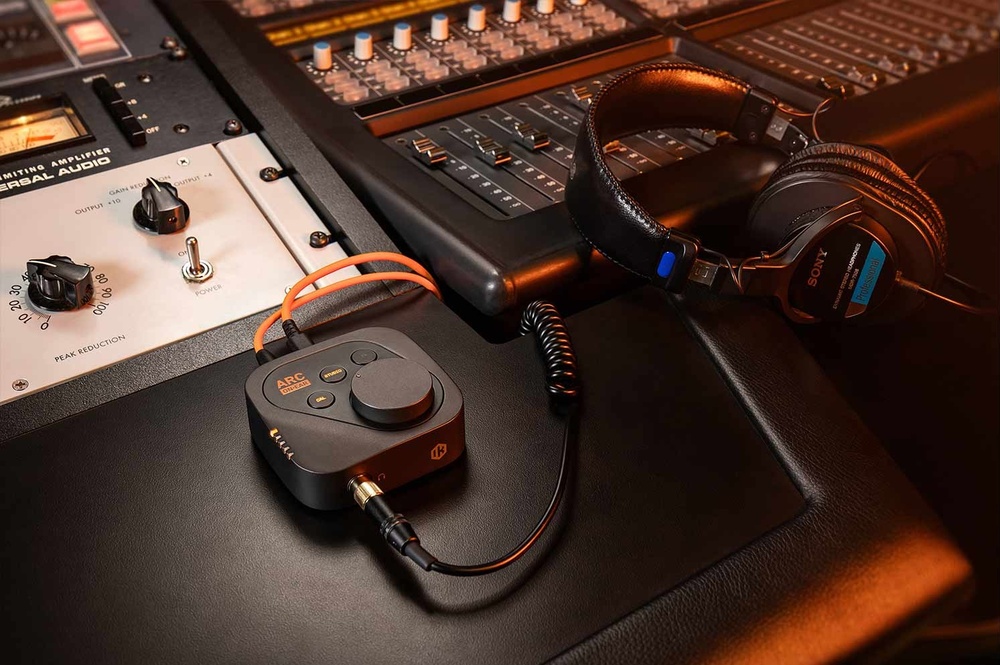
That is especially useful for modern producers.
Many people are mixing in headphones because they have to. They might not have the space for full range monitors. They might have neighbours. They might be working late at night. They might be travelling. They might be editing vocals on a laptop, comping guitars in a hotel room, or finishing a production while the family is asleep.
In those situations, a reliable headphone reference is not a luxury, it is essential.
What I like about ARC ON•EAR is that it is not just trying to flatter your headphones. It is trying to make them more honest. That is the key. We do not need our monitoring to impress us, we need it to tell us the truth. Sometimes that truth is flattering, sometimes it is brutal, however it always helps us make better decisions.
The Denons showed how a very good hi-fi headphone could become more reference-like.
The HD 650s showed how a trusted headphone could reveal just how close to neutral it already was.
The DT 100s showed how even a very mid-forward, old-school tracking headphone could be pushed into a much more useful place.
That is a pretty compelling range of results.
For me, the real value of ARC ON•EAR is translation. Can you make a better balance? Can you judge the low end more reliably? Can you hear the sides of the mix without exaggerating them? Can you make panning decisions that hold up when you listen on speakers? Can you work faster without second guessing every move?
Those are the questions that matter.
We had a lot of fun trying it, and the results were genuinely impressive. It made some headphones more usable, it made others reveal why people love them, and it reminded me just how much our monitoring affects every creative and technical decision we make.
Headphones are not going away. In fact, they are becoming more central to the way music is made. So anything that helps us make better choices on headphones is worth paying attention to.
ARC ON•EAR is one of those tools.
Have a marvellous time recording and mixing.