There are few places in the world that carry the weight, history and sheer romance of Abbey Road Studios.
You walk into that building and you are not just walking into a studio. You are walking into a living, breathing piece of recorded music history. The Beatles, Pink Floyd, Elgar, film scores, orchestras, rock bands, pop records, experimental sessions, classical recordings, all of it seems to hang in the air.
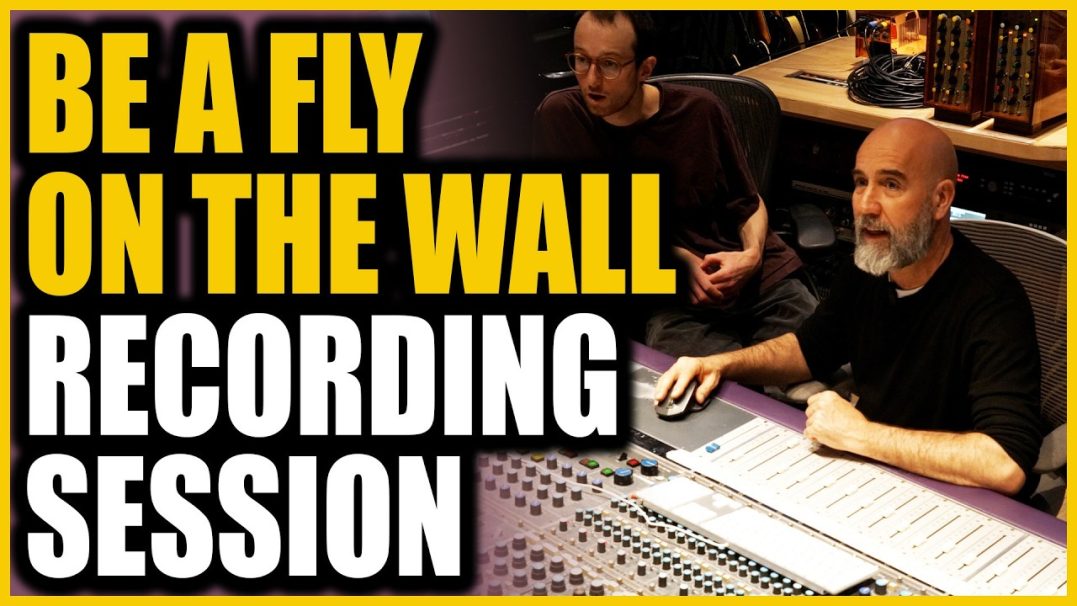
So, sitting down with Mirek Stiles at Abbey Road, in the Curve Bender room no less, felt like the perfect opportunity to ask some of the questions we ask every great producer, engineer and mixer.
Mirek has been part of Abbey Road since 1998. He started as the studio’s first dedicated runner and worked his way into the heart of one of the most important recording environments in the world. His perspective is wonderful because he has seen the transition from tape to Pro Tools, from fully analogue workflows to modern hybrid production, all while working inside a building that still treasures its own extraordinary engineering history.
And, of course, like every great Abbey Road conversation, this one started with microphones.
If You Could Only Use Two Microphones…
The first question was the classic one:
If you could only choose two microphones to record a band, however you could have ten of each, what would they be?
Mirek immediately went wonderfully impractical.
His first choice was the RCA KU2A, an old ribbon microphone from the 1930s. It is the kind of microphone that looks as cinematic as it sounds. Mirek described it as a microphone used on old Hollywood soundstages, the sort of mic that physically appears in vintage film trailers, dropping into frame with all the drama and atmosphere of another era.
Abbey Road has one RCA KU2A. Just one.
Mirek said it is nicknamed “the skunk” because of the big white stripe on the back. It is not necessarily the most practical microphone for every single modern recording situation, however it has character, vibe and identity. In his words, it is a “proper vibe mic.”
That is such an important distinction. Some microphones are chosen because they are neutral, reliable and predictable. Others are chosen because they immediately impose a personality on the recording. The KU2A clearly falls into that second camp.
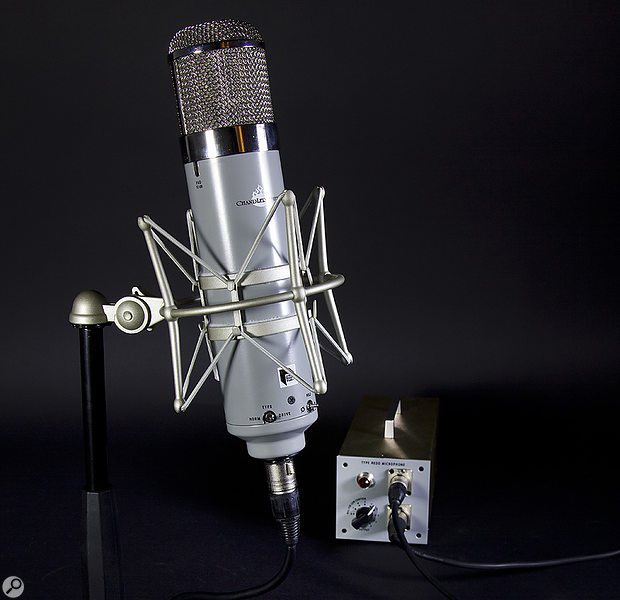
His second choice was the Chandler REDD Microphone, Abbey Road’s collaboration with Chandler Limited. This one is much more versatile. It can be clean, it can be dirty, it has a preamp built into it and it has that bold, big, unmistakably Abbey Road inspired tone.
Mirek described it as a proper workhorse. He has heard it used on vocals, drum overheads and even as a Decca Tree style array over an orchestra. That says a lot. A microphone that can flatter a singer, capture the excitement of a drum kit and hold up over an orchestra has to be doing something very right.
It also reflects Abbey Road’s whole philosophy, the best of the old and the new. A 1930s RCA ribbon sitting alongside a modern Chandler tube microphone inspired by Abbey Road’s own REDD heritage. That is the magic of the place.
Phase Alignment: Don’t Lose the Moment
Abbey Road is famous for recording musicians live in rooms. When you have a band or orchestra playing together, microphone bleed is not a problem to be eliminated, it is part of the sound. However, when multiple microphones are picking up the same source at different distances, phase relationships become incredibly important.
Mirek’s answer was refreshingly musical.
He admitted that he is not always traditional about phase alignment. For him, the priority is often capturing the moment first. That is such a great reminder. We can all get obsessed with technical perfection, however the emotional performance is still the thing.
That said, Mirek absolutely does explore phase alignment after the fact.
On a drum recording with, say, twelve microphones, he may zoom right in and start shifting things around. A classic example would be room microphones placed at the back of the room. Those mics might have an amazing sense of space, however they can also create a kind of “slappiness” against the close mics. By nudging those room mics closer in time to the kick drum, then checking polarity, maybe flipping the phase 180 degrees, you can often tighten the low end dramatically.
That is the key point. Phase alignment is not just a visual exercise. You are listening for the moment when the low end gels, when the kit tightens up and when the recording starts to feel more solid.
He also mentioned orchestral recordings. Even though it may not be the most traditional approach, he will sometimes experiment with moving room microphones in time, bringing them slightly closer to the source while retaining the bloom of the room. That is a very modern, practical way to think about ambience. You do not necessarily want to lose the room, however you may want the room to support the source rather than smear it.
The same applies to reamping through guitar pedals. Mirek loves going out of the box, sending sounds through pedals and recording them back into the DAW. However, pedals can easily return a signal that is out of phase. So again, check polarity, line up the waveform and listen. The sound often becomes tighter and more focused when the phase relationships are right.
It is not always appropriate. It does not always work. However, it is always worth exploring.
Reverb on the Master Bus?
One of the more fun questions was whether Mirek had ever mixed a song with reverb on the master bus.
His immediate response?
No. That sounds insane.
Haha.
However, like every creative engineer, he quickly moved from “no” to “never say never.”
The idea of putting reverb directly across the master bus might sound extreme, however there are situations where adding a shared ambience to an entire production can make sense. I mentioned a project where the band had recorded with ambience on individual tracks. Once the mix became more polished, some of that atmosphere started to disappear. The solution was not exactly putting reverb on the master bus, however it was close in spirit: taking a feed of the whole mix, sending it into a reverb and blending it back in.
Mirek had seen similar ideas used. For example, creating an ambience return from the whole track, then putting a stereo spreader across that ambience so the main mix remains focused while the reverb wraps around the outside. Almost like a room wrapper.
That is a brilliant concept. You are not washing out the centre of the mix. You are creating an atmospheric halo around it.
It is also a reminder that rules are useful until they stop serving the song. If a band wants a huge blended ambience and it makes the record feel better, then that is the right choice. The job is not to obey rules. The job is to make the artist’s vision work.
Standing Inside the London Symphony Orchestra
One of the most beautiful moments in the interview came when Mirek talked about a memorable session from his assistant engineer days.
He could not remember the exact date or the specific project, however he remembered the feeling perfectly.
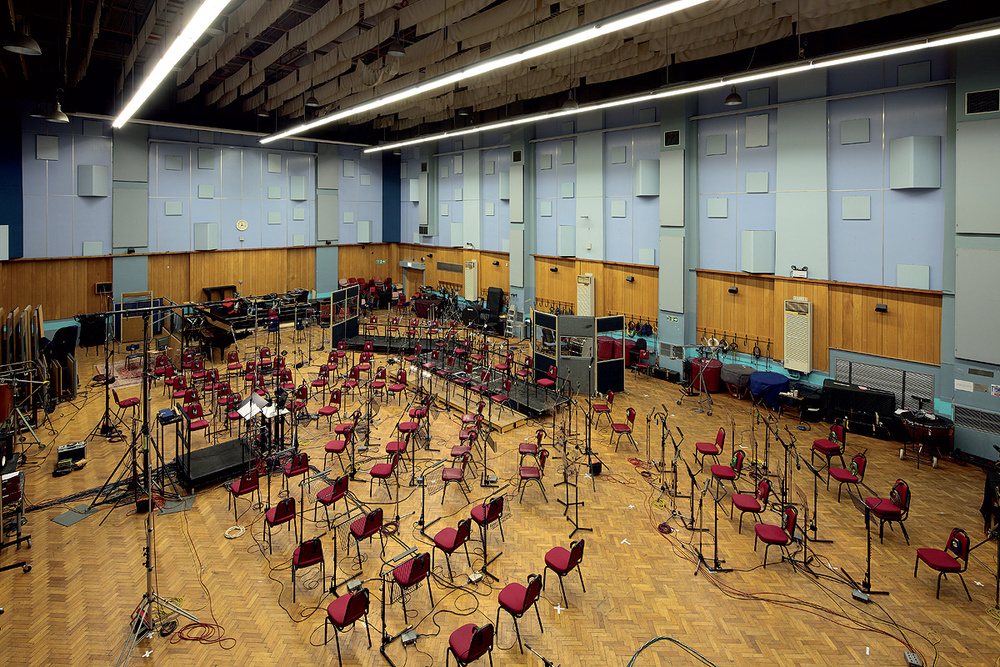
He was in Abbey Road Studio One, assisting on what he believed was an LSO session, probably for a film cue. During the rehearsal, a microphone in the second violins started having a problem. The engineer asked him to go and replace it, so Mirek grabbed a spare Neumann KM84 and walked out into the room.
Imagine that.
You are weaving your way through the London Symphony Orchestra in Studio One, trying not to get poked by a bow, while they are rehearsing.
As he was changing the microphone, he had one of those extraordinary moments of realisation: who else gets to experience this?
Most people who stand in the middle of the LSO while they are playing are members of the LSO. For a young assistant engineer, standing there in Abbey Road Studio One, surrounded by that sound, it was unforgettable.
That is true immersion. Not just Atmos, not just surround, not just “six degrees of freedom” as Mirek joked, however the real thing: standing inside an orchestra while it is making music.
Those are the kinds of experiences that make studio life so special. They may only last a few seconds, however they stay with you forever.
Abbey Road in 1998: Tape, Runners and One Pro Tools Rig
Mirek started at Abbey Road in 1998 as a runner. In fact, he was the first runner at Abbey Road.
Before that, assistant engineers had to do everything. They were running the tape machines, helping with the session and also going to get the coffees. As Mirek explained, you cannot be in two places at once. Peter Cobbin, who was the senior head engineer at the time, apparently asked the very sensible question: why does Abbey Road not have a runner?
Mirek became that runner.
At that time, Abbey Road was still very much a tape based studio. When Mirek arrived, there was only one Pro Tools system in the building. It was Pro Tools version three, housed with a huge CRT monitor and wheeled around the building when someone requested it, which was not very often.
He remembered having to wheel it up into the Studio Three control room. There was a ramp, and the CRT was so large and heavy that if it had fallen on him, it probably would have done some real damage.
That image says everything about the era. Pro Tools existed, however it had not yet become the centre of the studio universe.
Rock, pop and hip-hop sessions were generally recorded to Studer 24 track machines, including A80s, A800s and A820s. Classical and film sessions often used Sony DASH digital tape machines, such as the 3348. Those 48 track digital tape machines were the professional standard for a lot of large format work at the time.
The transition to Pro Tools was gradual. Around 2000 and 2001, Abbey Road entered a crossover period where Pro Tools rigs and tape machines would often run in tandem. Pro Tools was useful, however not yet fully trusted as the sole recording medium for major orchestral sessions. If your DAW crashed while recording an orchestra, that was not a small inconvenience. That was a very expensive problem.
So, for a while, they ran both systems together. Pro Tools would record, however a Sony digital tape machine might also be running as a backup. Eventually, by the early 2000s, Pro Tools became stable enough for the studio to fully trust it.
Mirek also mentioned a Lord of the Rings panel at SXSW where he was reminded that the first film score was recorded to Sony digital tape. For a production of that magnitude, that created its own set of challenges.
Nothing is ever perfect. Tape has limitations. Digital has limitations. However, once large scale recording moved fully into the DAW, it made many people’s lives a lot easier.
The REDD.17 Console: A Stereo Desk That Still Sings
Abbey Road is famous not only for the records made there, however also for the equipment developed there. As part of EMI, Abbey Road was home to its own engineering culture. The gear was not just bought in. Much of it was designed, built, modified and refined for the specific needs of the studios.
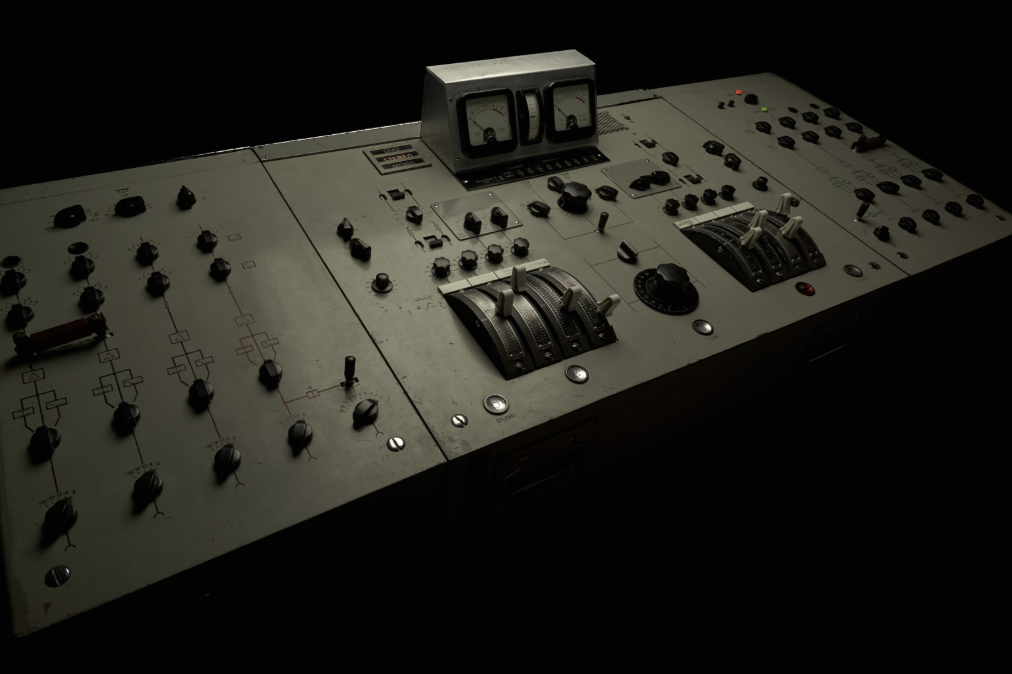
Sitting in front of a REDD.17 console is a slightly surreal experience. This is not simply a piece of vintage equipment. It is a piece of recording history.
When asked which classic piece of Abbey Road equipment still gets the most use, Mirek first pointed to the microphone collection. U47s and M50s are used day in, day out. That makes sense. Those are foundational microphones for vocal, orchestral and room recording.
However, from his own personal point of view, the REDD.17 is one of the great pieces.
Built in 1958, the REDD.17 was Abbey Road’s first proper stereo console that looked like a console in the modern sense. Before that, many desks were built with rotary controls. The REDD.17 had faders. It had EQ on every channel. It was eight inputs to stereo out, with an echo send that could technically provide a third output.
By modern standards, it is basic. However, that is part of the charm.
Mirek described it as built like a tank, and when you crank the high and low EQ, then push the level, the desk starts to sing. That is what we all love about great analogue equipment. It is not just passing signal. It reacts. It has a sweet spot. Push it in the right way and it gives something back.
Abbey Road still uses the REDD.17 for processing sounds and samples, and it occasionally finds its way back into the bigger rooms. Mirek mentioned Andrew Dudman using it in Studio One for a session where they were chasing a more old school sound. Along with vintage ribbon microphones, the desk helped create that sense of period character.
That is the beauty of a studio like Abbey Road. The equipment is not just in glass cases. It still gets used.
EMI RM1B Ribbons, J37 Tape Machines and the Abbey Road Sound
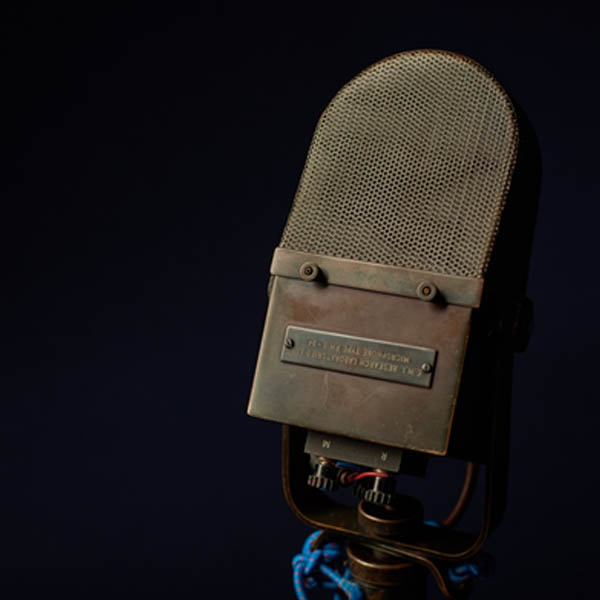
Mirek also talked about the EMI RM1B ribbon microphones, another extraordinary part of the Abbey Road collection. As far as they know, only four exist in the world and Abbey Road has two of them.
That is almost absurd.
These microphones are not just rare because they are old. They are rare because they represent a specific engineering culture. EMI was building tools for its own studios, for its own engineers, for its own musical needs. That gives the equipment a very different feeling from gear designed for a broad commercial market.
The J37 tape machine also still sees a lot of action. Of course, the J37 is forever tied to the Abbey Road mythology because of its association with The Beatles era, however it remains useful because it sounds incredible. Tape is not just nostalgia. It is compression, saturation, transient shaping and tone all happening together in a way that still inspires engineers.
Mirek also mentioned the REDD preamps, the Curve Benders, the RS127 EQs and the RS124 compressors. These pieces remain part of the Abbey Road language. They are still used because they still do something musically valuable.
That is the real lesson. Vintage gear is not automatically better because it is old. It is valuable when it continues to serve the music.
The Best of Old and New
Mirek summed up Abbey Road beautifully: it is the best of old and new.
That is exactly why the building remains so important. It is not trapped in the past. Yes, it has incredible historical equipment, legendary rooms and decades of recorded music history, however it also embraces cutting edge technology. Modern DAWs, immersive audio, advanced monitoring, new microphones, hybrid workflows, software, reamping, editing and everything else that contemporary production demands.
The magic is in the combination.
You can record with an RCA ribbon from the 1930s, run a sound through a 1958 REDD console, print to a J37 tape machine, bring it back into Pro Tools, manipulate the phase relationship, send it out through guitar pedals, return it into the DAW, then build a modern mix around it.
That is not nostalgia. That is creativity.
Abbey Road’s history matters because it gives artists and engineers access to sounds, spaces and tools that still have emotional power. However, the future matters just as much, because every generation needs to make its own records in its own way.
That is what came through so clearly in this conversation with Mirek. The history is there, however the mindset is still experimental. Try things. Break rules. Listen. Move the room mics. Check the phase. Use the old ribbon. Use the new Chandler. Put reverb around the whole mix if it makes the song feel right.
The point is not to recreate the past perfectly.
The point is to use everything available, old and new, to capture something that feels alive.
And that, really, is the Abbey Road tradition.