Standing before Jeff Wayne’s beautiful Georgian home, it’s impossible not to feel the weight of history. This is the home of the man who brought The War of the Worlds to life—a record that blurred the lines between rock, classical, and cinematic storytelling. Jeff welcomes me warmly at the door and leads me toward the heartbeat of his creative world: his studio.
The Studio That Never Sleeps
Inside, the first thing you notice isn’t the grandeur but the energy. Gear lines the walls, racks of vintage and modern equipment intermingling—each piece with a story. “Sorry for the clutter,” Jeff smiles, “we just finished the arena tour in April, and we’re always working.” It’s exactly the kind of “mess” you want to see: cables, keyboards, and creativity in full motion.
Among the many treasures sits the Thunderchild, a synthesiser Jeff designed in the late ’70s. “It was made by our company, Jeff Wayne Music Electronics,” he explains. “We’re actually re-releasing it soon, this time with MIDI and a rackmount version.” Originally released around 1978, it was a genuine competitor to the major synth brands of the day, known for its “fat bass and atmospheric textures.” Jeff even brought it back on a recent arena tour—proof that the sounds that shaped The War of the Worlds remain timeless.

The Steinway That Started It All
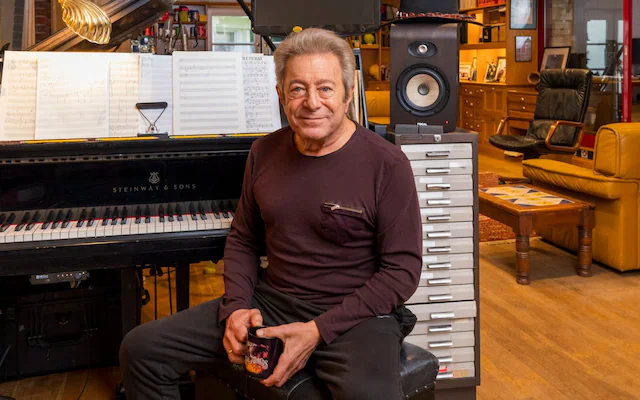
In the corner stands a magnificent Steinway Model D concert grand, the piano upon which The War of the Worlds was composed. Jeff bought it just as he began writing the album. “It was a promise I made to myself,” he says. “One day, I’d walk into Steinway on Wigmore Street, point, and say, ‘That one.’”
At the time, it cost just under £9,000—a small fortune then, though a fraction of what it would be today. “It’s my favourite personal item,” he says fondly, demonstrating how he integrated a custom MIDI box beneath the keyboard to trigger orchestral textures as he composed. “When I’m writing, I want to feel the atmosphere of the arrangement. Playing the piano this way inspires the score as I go.”
Jeff still scores by hand. “Strings, I always write on paper,” he tells me. “If you do it on a keyboard, it sounds like a keyboard arrangement. The human nuance comes from the pen.”
From A Tale of Two Cities to Martians
Before The War of the Worlds, Jeff composed music for the West End musical A Tale of Two Cities—produced by his father, who also wrote the lyrics. “It was the height of nepotism,” he laughs, “but he wouldn’t take no for an answer. I was teaching tennis and playing keyboards in California at the time. I told my students I’d be back in six months. They’re still waiting.”
That show drew Jeff back to England, setting the course for everything that followed. Soon came Rock On with David Essex—produced and arranged by Jeff, featuring Herbie Flowers on that iconic sliding bass line. “There are no chordal instruments on Rock On—no guitars, no keyboards. The bass was the lead instrument.”
It was a time when Jeff worked with legends like Ray Cooper, Julie Covington, and David Essex—relationships that naturally evolved into the cast of The War of the Worlds. “By then, they were friends,” he explains. “But I didn’t presume anything. I did full demos of every role. They came in, listened, and decided for themselves.”
Recording History: Abbey Road and Beyond
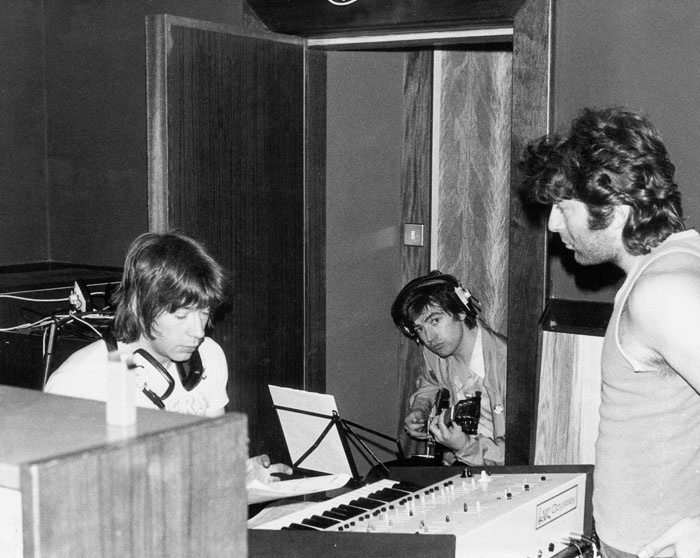
Jeff began composing The War of the Worlds in 1976 after acquiring the rights from H.G. Wells’ son. Within months, he’d booked studio time—an act of “madness,” he admits. Most sessions were at Advision Studios, but for strings, there was only one choice: Abbey Road Studio One.
“I had a 48-piece string section,” he recalls. “That sound—there’s nothing like it.” He laughs remembering his first day there, dropping his scores on the Abbey Road steps only to look up and see Paul McCartney. “He said, ‘I’ve got one of those,’ pointing to my sheepdog, Ollie. He’d written Martha My Dear for his own sheepdog, Martha. What a way to meet him.”
The Voice of the Martians
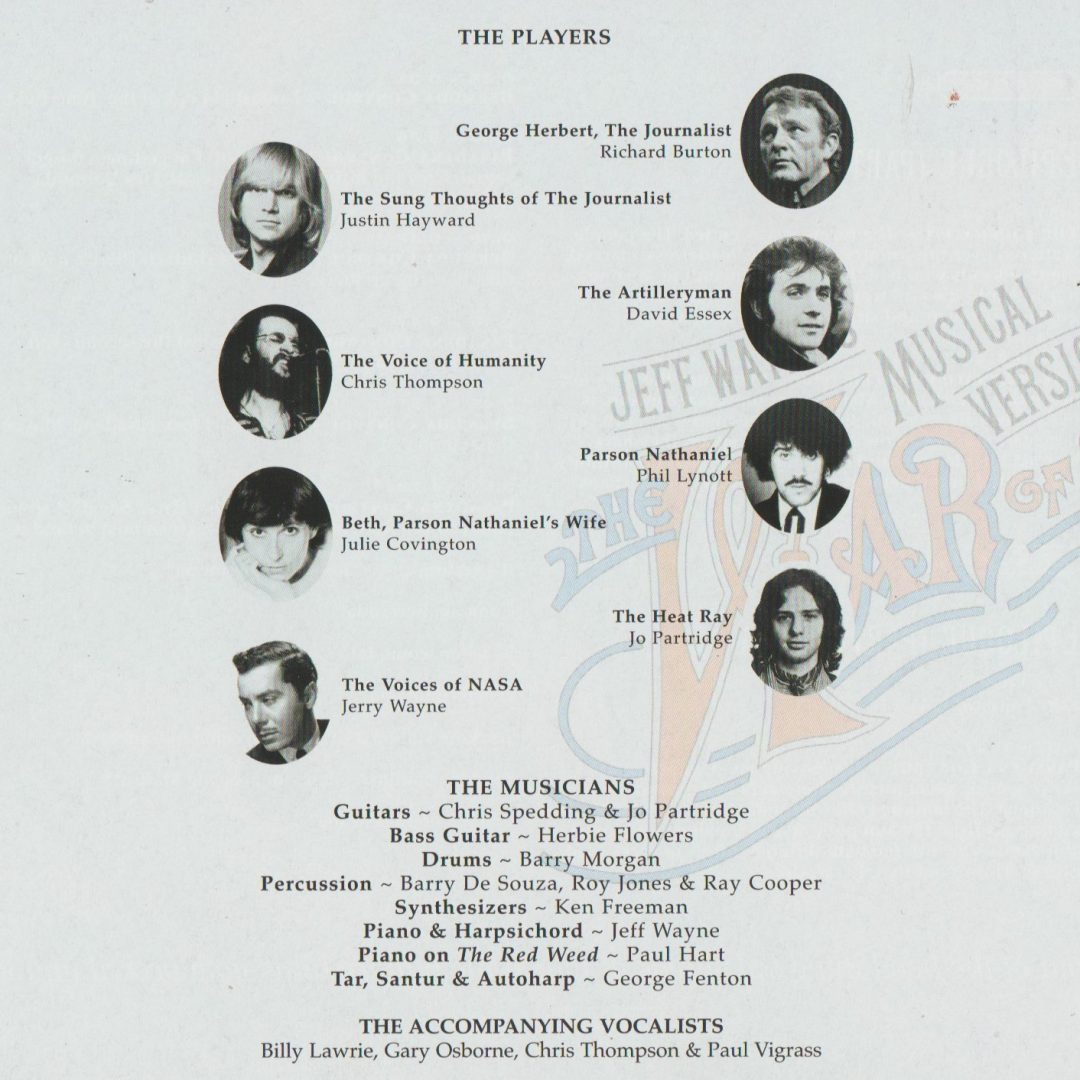
Casting The War of the Worlds was as visionary as the music. Richard Burton became the narrator, the thread through humanity’s downfall and defiance. Phil Lynott of Thin Lizzy was cast as the tormented Parson Nathaniel. “I wanted a voice that jolted you,” Jeff says. “Phil’s was commanding and emotional. He was perfect.”
Opposite him, Julie Covington played Beth, the voice of reason trying to pull Nathaniel back from madness. Their duet, The Spirit of Man, remains one of the album’s most moving moments. “It’s twelve minutes long,” Jeff notes, “and their voices couldn’t be more different—but that contrast is what makes it powerful.”
Against the Grain
When The War of the Worlds was released in 1978, punk was exploding and disco ruled the airwaves. “Nobody knew if there’d be an audience for it,” Jeff says. “A double concept album with a Welsh actor narrating and rock singers playing Victorian characters? It was madness.”
Yet it became an instant phenomenon. “I said I’d be happy if it reached the album charts for one week,” Jeff laughs. “It stayed for 338 consecutive weeks.”
The record’s fusion of symphonic writing, rock performance, and early electronic textures was revolutionary. “When the story is told from the Martians’ perspective, I used aggressive rock and electronic sounds,” Jeff explains. “When told through human eyes, it’s strings and acoustic instruments. It’s like musical ping-pong between worlds.”
From Vinyl to Virtual Reality
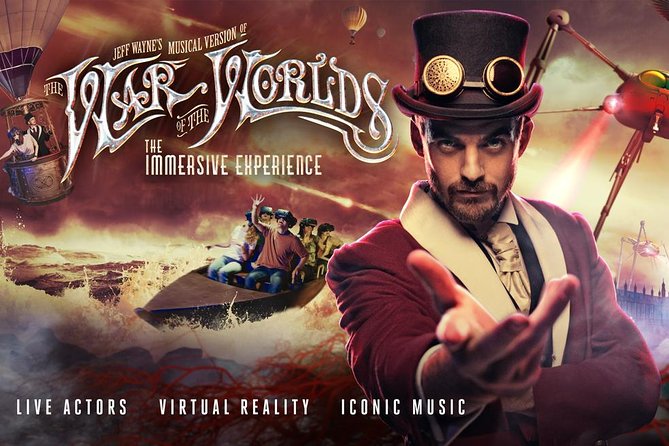
The War of the Worlds continues to evolve. The Jeff Wayne’s Musical Version of The War of the Worlds: The Immersive Experience—a London-based live adventure blending performance, VR, and sound design—has run for over six years and holds a Guinness World Record for the most performances of a musical immersive theatre production (over 31,000).
“There are 24 rooms,” Jeff explains, “each about ten minutes long, each telling a different part of the story. Audiences don’t realise they’ll become part of it—they have to work for it a bit!”
Meanwhile, his arena tours have been running since 2006. “Every tour, we reinvent it,” he says. “I promised myself I’d never take it out of the box and do it the same way twice.”
The Studio Today
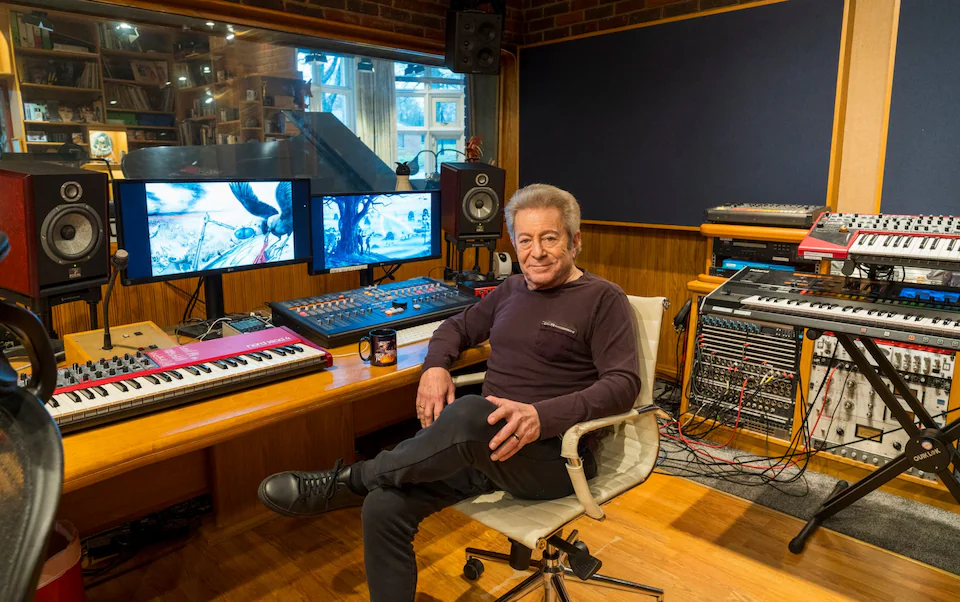
Jeff’s control room remains a hybrid of vintage soul and modern precision. There’s a TR-808, an SSL Nucleus, Focusrite pres, vintage Pultec EQs, Amek EQs, and an enviable mic collection: Neumann U87s and FET 47s, AKG D12s, Calrec condensers, and a Neumann M149 for modern vocals.
He mixes in 5.1 surround, with plans to refit the room for Dolby Atmos next year. “It’s thrilling to place sound anywhere,” he says. “You’re not just listening to the music—you’re inside it.”
Looking Ahead
Between Martians, immersive shows, and orchestras, Jeff is now composing a new musical with three of his four children. “We’re each contributing our own skills,” he shares. “My son Zeb’s producing and programming, my daughters are writing and performing. We’ll announce it within the next year.”
Even after nearly five decades, Jeff Wayne remains as creative and curious as ever. His legacy isn’t just The War of the Worlds—it’s the fearless blending of worlds: orchestral and rock, analogue and digital, human and alien.
As we wrap up, I tell him something personal. My father only allowed classical and jazz in the house. The War of the Worlds was the first record that bridged that gap for me. It was the gateway from Bach to Bowie, from orchestras to rock guitars.
Jeff smiles. “That’s lovely to hear,” he says.