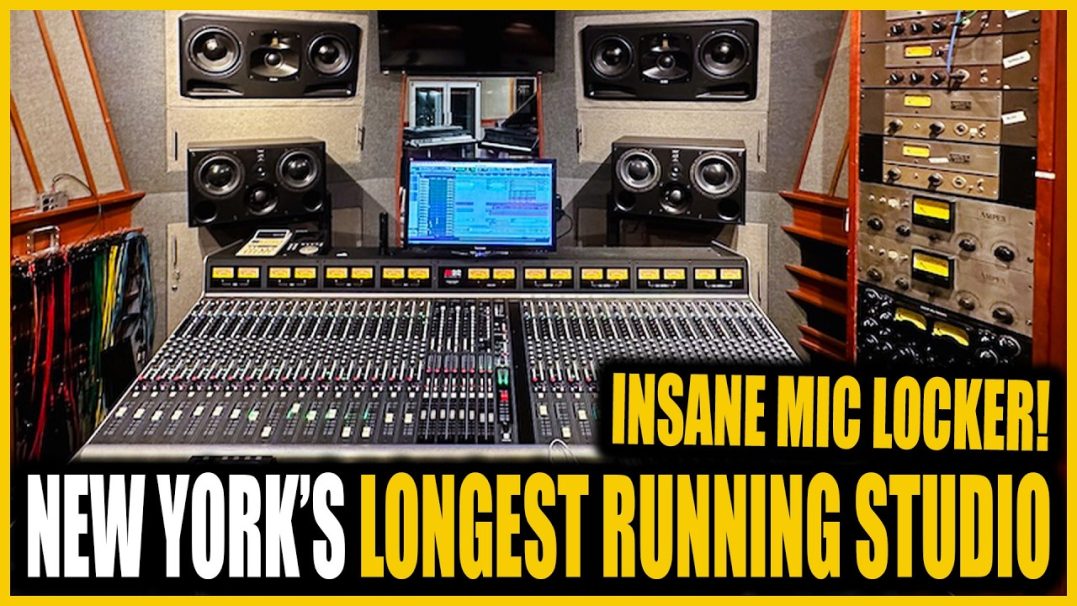
There is something wonderfully revealing about walking into a studio that has been shaped not just by taste, equipment choices and acoustic theory, however by the hands of the person who uses it every day.
Soundmine, the studio owned and operated by producer, mixer and engineer Dan Malsch, is exactly that kind of place. Tucked away in the Poconos, surrounded by trees, space, a nearby stream and almost five acres of land, it feels less like a commercial facility dropped into a building and more like a creative world Dan has built from the ground up.
Quite literally.
Dan comes from a family with a construction background, and that experience shows everywhere. The walls, the rooms, the sightlines, the treatment, the lounges, even the bathrooms, all carry the feeling of a studio designed by someone who understands what artists actually need when they are trying to make a record. This is not a sterile technical showroom. It is a working studio, a destination studio and, perhaps most importantly, a place where bands can get away from the noise of everyday life and focus entirely on the music.
Check out Dan Malsch Mixing Monolith’s “Mother Martyr” here:
https://promixacademy.com/course/dan-malsch-mixing-monoliths-mother-martyr/
Includes multitracks.
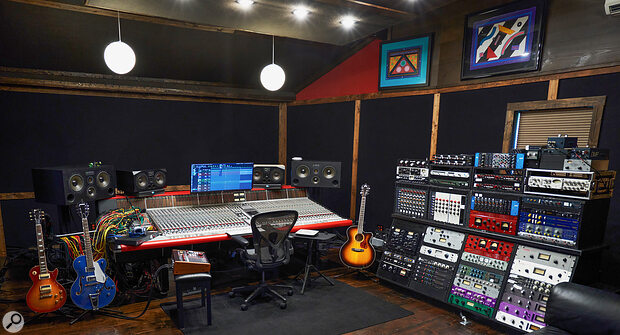
The Heart of Studio A
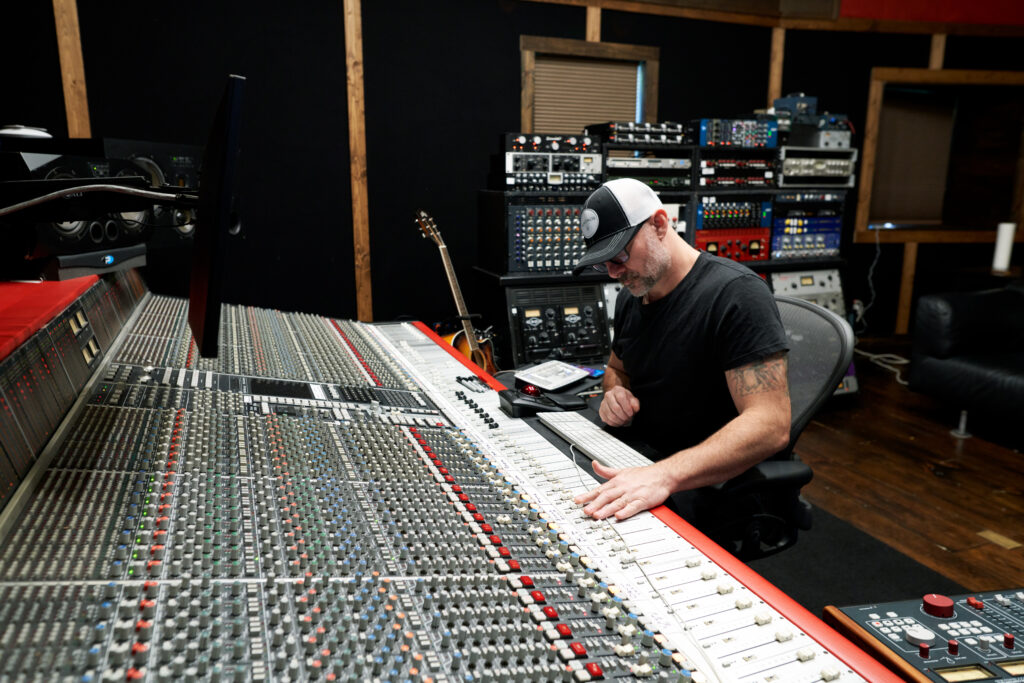
The centrepiece of Studio A is Dan’s SSL 4000 E Series console with a G+ computer, a desk he has owned for around 15 to 20 years. It still has working automation, which, as any SSL owner will tell you, is no small thing. This is the console used on major projects including Ghost, Gojira and Avenged Sevenfold, and Dan speaks about it with the affection of someone who knows every quirk, strength and occasional frustration of a long-term relationship.
“It works,” is the simple verdict.
That may sound understated, however this SSL has clearly earned its place. Dan tracks through it, mixes through it and pushes it hard. He is quick to challenge the idea that SSLs are somehow only mix consoles. As he points out, many of the classic records of the 1980s and 1990s were tracked on SSL desks. The EQs sound great, the compression is useful and the console gives him a familiar, muscular platform for rock records.
When he is not mixing through the SSL, Dan also works through 32 channels of Neve summing. It gives him a different tone, a different feel and another way of getting music out of Pro Tools and into analogue circuitry. Rather than treating one approach as “right” and the other as a compromise, Dan embraces both. That seems to be one of the recurring themes of Soundmine, use what works, trust your ears and do not get trapped by the price tag or the mythology.
One Pair of Monitors, One Decision
Dan’s monitor philosophy is refreshingly focused. He does not constantly switch between bigs, smalls and multiple reference systems. Once he is working on a pair of monitors, that is where he stays.
For years, he used Adam monitors, including S4XH mains and older S3As. Then a pair of KSD monitors came into the room during a Bowling For Soup project, and everything changed. Usually when monitors arrive for testing, they go up briefly, come down quickly and the old speakers go straight back into place. These stayed.
Dan loved the low end, the top end and the fact that he could listen to them for long periods without fatigue. He does not feel the need for a sub with them, and he is now considering an even larger pair, although space behind the console is becoming the obvious problem.
It is another reminder that, in a professional room, the best choice is not always the most complicated one. It is the one that lets you make decisions with confidence.

The Outboard Philosophy
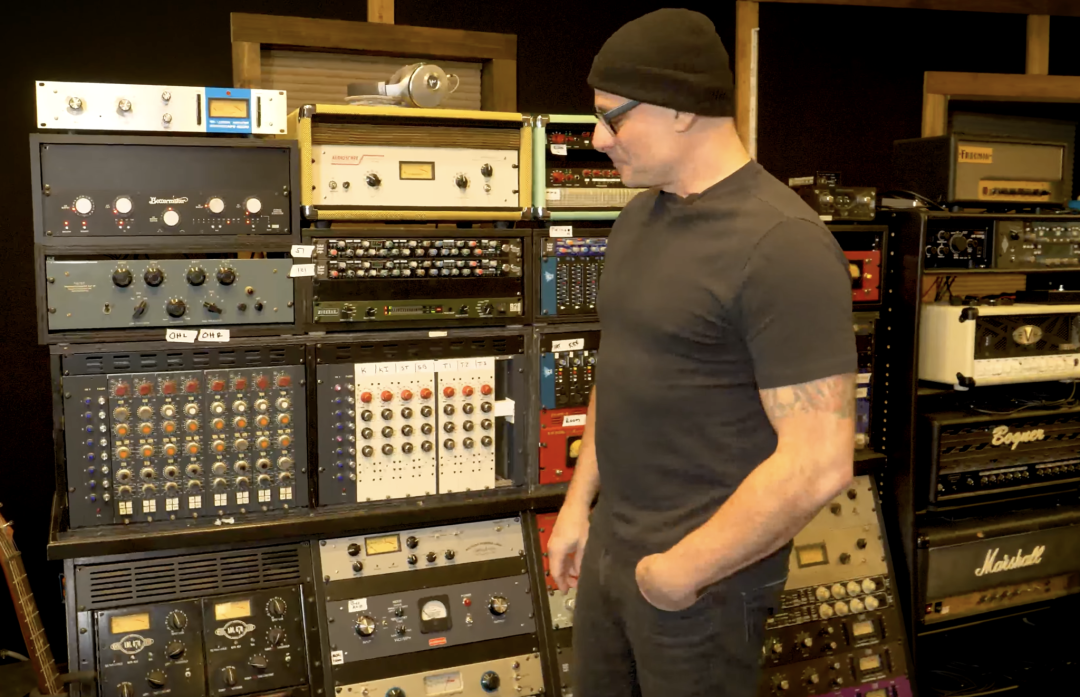
Soundmine’s outboard collection is substantial, however it is not there for decoration. This is gear that gets used.
There are vintage Neve 1081s, Wonder PQ2s, a Bettermaker passive EQ on the mix bus, a DW Fearn VT7 tube compressor that lives on Dan’s master bus, vintage LA-2As, old 1176 blackfaces, Distressors, Audioscape compressors, SSL bus compression and a collection of API, BAE and Brent Averill pieces.
Dan’s vocal chain reveals a lot about his taste. One of his main vocal preamps is built from vintage Neve 1073 parts racked by Brent Averill, followed by classic compression choices like LA-2As and 1176s. For bass DI, he often reaches for a BAE DMP, which gives him that familiar 1073-style weight and authority.
There is a strong SSL theme throughout the room, including SSL Revival 4000 channel strips. Dan describes them as sounding like what his console used to sound like, which is both funny and revealing. The SSL console is still the heart of the room, however newer SSL hardware gives him another way of getting that sound with reliability and consistency.
A Rock Studio That Understands Guitars
The amp collection at Soundmine makes it very clear that Dan is deeply rooted in rock production. There is a Friedman, EVH 5153, Bogner Uberschall, early 1980s Marshall JCM800, Mesa Dual Rectifier and a very rare Bogner Caveman head. The Friedman was used on the Bowling For Soup record as the centre guitar in the choruses, sitting between the left and right Marshall parts.
There is also a Red Seven Amp Central EVO cab simulator and, naturally, a Kemper. Like the rest of the studio, the guitar setup feels practical rather than precious. Real amps, great cabinets, useful digital tools and plenty of options for finding the right part in the track.
The guitar collection follows the same logic. Dan has many more guitars than are kept out at the studio, simply because keeping everything in tune, strung and session-ready becomes impractical. The instruments that are out are the staples, including a Nick Huber Orca 59 that Dan describes as basically the Les Paul you always wanted, a Paul Reed Smith Mira, several Telecasters and a collection of useful acoustics and electrics.
The Live Room: Big, Controlled and Hand-Built
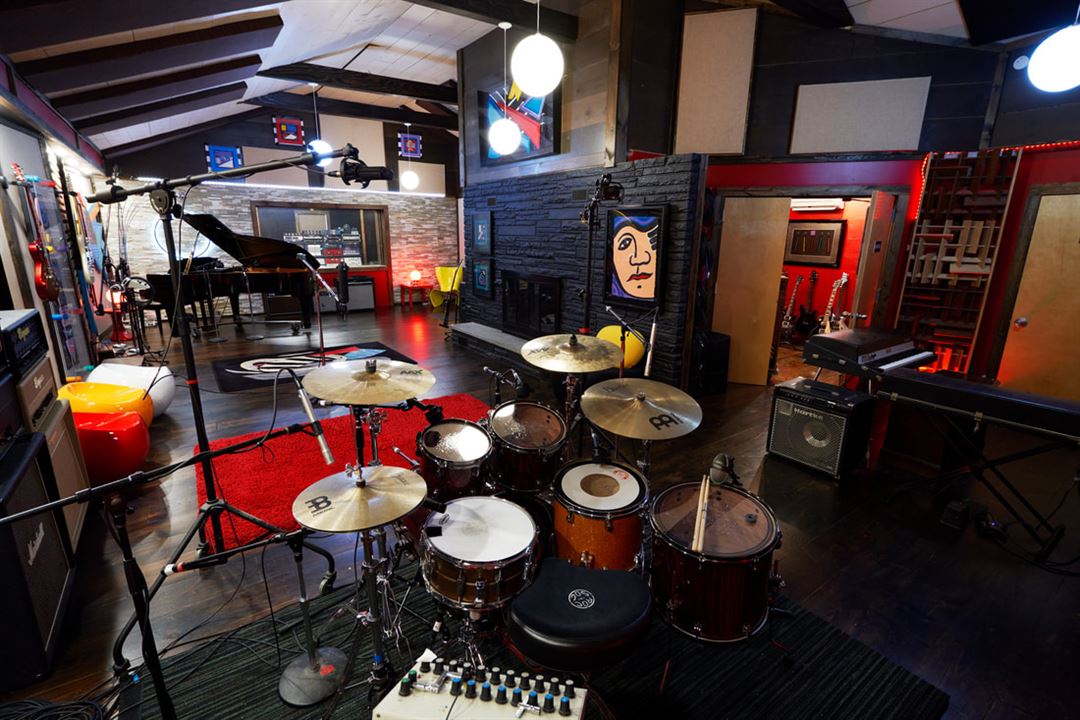
The live room at Soundmine is almost 40 feet long, with angled walls, thick false walls, deep air spaces and plenty of diffusion. Dan built it himself, with help from his brother Eddie, and the construction is serious. One wall is roughly four feet thick with a large air gap, while another is around two and a half feet thick. Nothing is straight. Everything has been designed to avoid obvious reflections and standing waves.
The result is a room that feels alive without being uncontrolled.
A large stone fireplace adds natural diffusion and character, even if Dan admits he does not actually use it as a fireplace. The room also houses a Hammond C3, a Kawai GS50 grand piano, a Fender Rhodes, a Wurlitzer and a collection of amps and cabinets. It is a room designed for full-band tracking, drums, piano, vocals, guitar amps and anything else a record might need.
The piano has an interesting story. Dan originally went looking for a Yamaha or Steinway, however the seller at Northeast Piano in Allentown pointed him towards the Kawai, saying it would be perfect for the kind of music Dan makes. Bright enough, enough attack and a great recording tone. The only issue is tuning, especially with the local weather, meaning it needs attention multiple times a year if it is going to stay session-ready.
Drum Sounds and Ribbon Mics
Dan uses a lot of ribbon microphones in the live room, especially for drums. An AEA stereo ribbon sits as a mid-room mic, while Lewitt 640s serve as far room mics. Dan mentions that he used to use Neumann M149s for this role, however the Lewitts sounded great and cost a fraction of the price. Again, it is not always about the most expensive choice. It is about the right choice.
One of his favourite room mics is the Rupert Neve-designed SE ribbon, which he uses as a mono drum room mic. He is surprised it did not catch on more widely, because he clearly loves the sound.
For overheads, Dan uses Myburgh M1 microphones, which became favourites and never left the position once he tried them. The rest of the drum setup includes practical, reliable choices, including SE microphones on snare and toms, a FET 47 outside the kick and a boundary mic inside the kick. A classic Shure SM57 and Royer R-121 pairing is used on guitar cabinets, clipped together for phase alignment.
This blend of high-end, vintage, boutique and affordable tools says a lot about Dan’s working method. There is no snobbery. If it sounds good, it stays.
The Vocal Room That Found Its Purpose
One of Soundmine’s vocal rooms was originally intended to be a piano room. Then a session came in, vocals were cut there and the room simply worked. So it stayed a vocal room.
That is often how great studios evolve. The drawing may say one thing, however the record tells you something else.
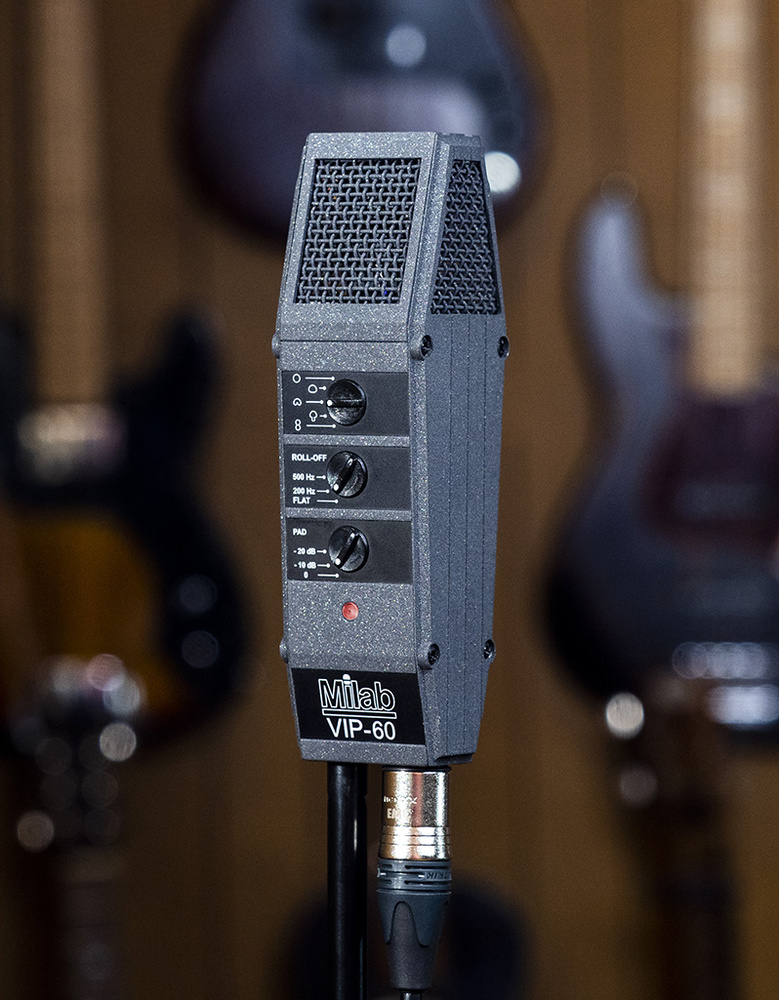
The room has good sightlines into the control room and a comfortable, vibey feel. Dan keeps a Manley Reference Cardioid set up, a microphone that seems to work on session after session. A newer favourite is the Myburgh VIP-60, which Dan and AJ describe as having a creamy top end, handling aggressive vocals well and feeling extremely solidly built.
The room is dead enough to control the vocal, however not so dead that it feels strange. That balance matters. Singers need to feel comfortable, not trapped inside a padded cupboard.
Multiple Rooms, Multiple Sessions
Soundmine is not just one control room and a live room. It is a facility built to handle real-world workflow. Dan and AJ mention that they are often running several sessions at once, sometimes three or four. There is a mobile Pro Tools Carbon rig with mic pres and compression that can be moved where needed. The newer barn outside can also be used for recording, including drums.
There are additional iso rooms, amp rooms and sightlines between spaces. Singers can see each other. Musicians can remain connected. The rooms feel designed around the practical needs of making records, not around a brochure layout.
The Atmos Room
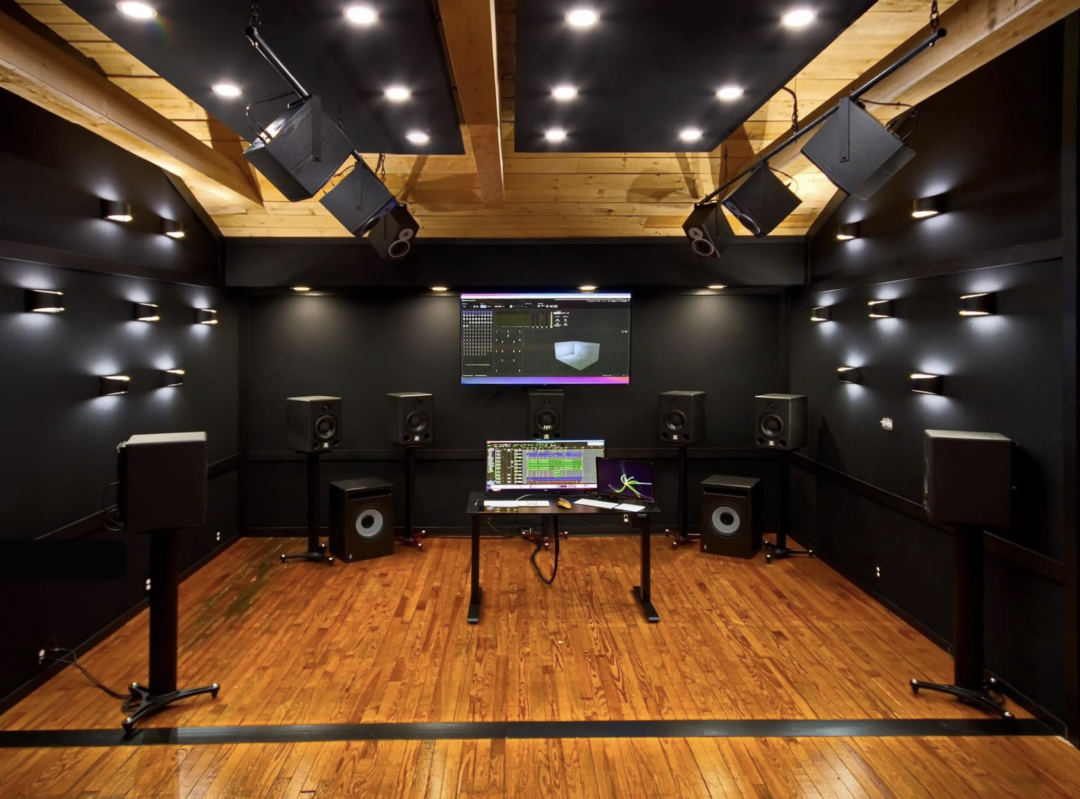
Upstairs, the former Studio B has been transformed into a large Dolby Atmos room. Dan is particularly proud of this space because, again, he built it himself. The room was designed by his friend Daryl Leman, who also tuned the system.
The monitoring is built around Quested speakers, with KRK subs and Dynaudio height speakers. Dan is refreshingly pragmatic about the fact that the height speakers are not the same brand as the main system. At the time, Quested did not have a speaker small enough for the ceiling positions, the Dynaudios sounded close enough and, once tuned, the room worked.
The room is highly accurate. AJ mentions being able to hear tiny panning moves, which is exactly what you want from an immersive mix environment. However, it is not only an Atmos room. They also mix stereo there and track vocals and overdubs. It is another working space, not a museum piece.
The upstairs recording chain is simple and effective: API 312 preamps, an Audioscape 76D, an Avalon, an LA-610 and a Soyuz microphone that Dan and AJ both love. They describe the combination of the Soyuz, API and Audioscape 76 as a winning chain, open, clear and finished-sounding.
The Mic Locker
Downstairs, the mic locker shares space with another lounge and Dan’s gym. It is a very Soundmine sort of detail, half professional facility, half lived-in creative headquarters.
The mic collection includes a Telefunken 47, Flea 47, Neumann M149s, Coles ribbons, 421s, U87s, Peluso P49, Rupert Neve SE microphones, Austrian Audio mics and multiple Shure KSM32s. Dan is particularly enthusiastic about the Peluso P49, describing it as a microphone that can handle screaming vocals and still sound great. He also loves the KSM32, an affordable microphone he considers one of his all-time favourites.
That point is worth emphasising. Dan has access to expensive vintage and boutique microphones, however he is perfectly happy to praise an affordable Shure if it does the job. He mentions that the most expensive microphones are not always the ones set up upstairs, because sometimes they simply are not the best choice for the song, singer or instrument.
That kind of honesty is one of the most valuable parts of the tour.
A Destination Studio
Soundmine’s location is part of its identity. This is a studio in the Poconos, surrounded by nature, with space to breathe. There is a stream nearby, a walking park, a lake up the road and Airbnbs close enough for bands coming in to make a record.
Dan describes it as a destination studio, and that feels exactly right. Bands can come in, get away from distractions, track an album and turn the process into something closer to a creative retreat. In an era where so much music is made in bedrooms, laptops and quick remote sessions, there is still something incredibly powerful about getting a group of musicians into a great-sounding room for a focused period of time.
That is what Soundmine offers.
Built for Work, Not for Show
One of the most charming things about the tour is that the studio is clearly busy. There is gear out. There are rooms in use. There are notes, marks, labels, instruments, drums, amps and microphones ready for work. It is not spotless in a showroom sense, because it is not trying to be. It is a working studio moving from session to session.
That matters.
Soundmine is not impressive because it contains a long list of classic gear, although it certainly does. It is impressive because every piece of gear seems to have a reason to be there. The SSL has made major records. The live room works. The vocal room found its purpose. The Atmos room is accurate. The mic choices are based on results, not price. The amps are there because Dan makes guitar records. The lounges, kitchen and bathrooms are there because musicians need to be comfortable when they are spending long days making music.
Most of all, Soundmine reflects Dan Malsch himself. It is practical, serious, funny, unpretentious and deeply committed to the craft of making records.
Learn Dan’s Modern Rock Mixing Workflow
Of course, seeing the studio is only part of the story. The real magic is hearing how Dan takes all of that experience and turns it into a finished modern rock mix.
That is exactly what he does in his Pro Mix Academy course, Dan Malsch Mixing Monolith’s “Mother Martyr.”
In this three-hour course, Dan opens the actual mix session for Monolith’s “Mother Martyr,” a dense, aggressive modern rock track featuring Mike Mangini on drums. Rather than speaking in theory, Dan walks through the real decisions behind the final mix, showing how he builds impact, width, energy and control inside a huge live-band production.
The song features live drums, distorted bass, layered guitars, powerful vocals, heavy automation and hybrid analogue mix processing. Dan starts from the loudest section of the track and builds the mix outward, showing how he manages the energy of the song without losing the feel of the performance.
You will see how he approaches drum mixing, sample blending, bass control, guitar width, vocal automation, mix bus processing and section-to-section dynamics. One of the biggest takeaways is how much movement there is in a professional modern rock mix. The drums, vocals, guitars, effects and buses are all being shaped constantly so the track grows, lifts and hits harder in the right places.
The course also gets into Dan’s hybrid mix bus workflow, including Neve Orbit summing, SSL Bus Plus, Bettermaker EQ, DW Fearn VT-7, Burl B2 Bomber, SSL Fusion, The God Particle, loudness metering and mastering preparation.
Monolith’s “Mother Martyr” is the perfect kind of production for Dan to break down. The band features Mike Mangini, Hernán “Motley” Rodríguez and Andy Barrow, blending modern rock and metal with Afro-Cuban and Latin rhythmic influences. With Mangini’s incredibly detailed live drum performance at the centre, Dan shows how to enhance and control a world-class drummer without replacing what makes the performance special.
If you mix rock or metal, or if you want to understand how dense, modern guitar music is actually put together by one of the best in the field, this is a fantastic look inside the process.
Check out Dan Malsch Mixing Monolith’s “Mother Martyr” here:
https://promixacademy.com/course/dan-malsch-mixing-monoliths-mother-martyr/
Includes multitracks.
Have a marvellous time recording and mixing!