The name Neve has become synonymous with the pinnacle of analogue audio quality, and for good reason. At the heart of that legacy stands Rupert Neve himself, a visionary whose influence on the sound of modern music is incalculable. Through the 1960s and 70s, Neve’s groundbreaking designs, such as the 1073 preamp and EQ module and the 80-series consoles, reshaped the landscape of professional audio. Built for precision, warmth, and durability, these consoles became the backbone of classic records across genres and decades.
Among the most coveted of Rupert Neve’s creations is the Neve 8028, a rare and powerful console that embodies the golden era of recording. Today, we get an intimate look at one such console thanks to Jeff Ehrenberg, co-founder and CEO of Providence Sound and Vision, a pro audio dealership in Atwater Village, Los Angeles. Jeff walks us through the story, structure, and sheer brilliance of a particularly special 8028.

A Console Born for Legends
This particular Neve 8028 was originally built for RCA Studios in Hollywood. It’s a 40-input large format desk, custom designed for RCA’s demanding tracking sessions. Its sibling still resides in EastWest Studios Studio 2, one of the world’s most iconic tracking spaces.
Ehrenberg notes that in those days, consoles weren’t selected from a catalogue, they were bespoke builds. “You weren’t picking a 16 channel desk with eight buses off the shelf. You were working with Rupert Neve to design a console that fit your studio’s exact needs.”
The 8028 features an extraordinary 24 bus system, which allowed engineers to route multiple sources to multitrack tape or now to DAWs like Pro Tools. With facilities to quickly bus multiple mic inputs together (for example, a top and bottom snare mic), it was built to keep massive sessions moving efficiently, a crucial advantage when studio time cost thousands of dollars per hour.
The Heart: Classic 1073 and 2074 Modules
At the core of this desk lie classic Neve 1073 modules, still considered the gold standard for mic preamps and EQ. These modules use a high quality stepped rotary switch with gold plated contacts and discrete resistor networks, allowing perfectly matched stereo input gains and precise recall. As Jeff explains, “It’s a more expensive and time consuming way to build a preamp, but it’s the best way.”
Also featured are 2074 modules, similar in EQ topology to the 1073, but designed as line amplifiers rather than mic preamps. Some have been modified over the years to accommodate mic transformers, effectively turning them into 1073 style units at a lower cost. The desk even contains rare 1073M modules, which add midrange Q control and selectable high frequencies, features commonly associated with the 1084, but with a leaner filter section.

Built for Function, Flexibility, and Feel
The console’s eight auxiliary sends are further expanded by a unique 24 channel matrix mixer, a custom request from RCA to handle extensive cue mixes, especially for orchestra or string section sessions. Behind this matrix? A staggering 70 Neve 1272 line amps, many of which could be repurposed into rackmount mic pres. It’s no wonder this console is considered both a historical artefact and a parts goldmine.
Other features include a dedicated control room section, metering for FX returns, and AFL/Cut functions, Neve’s terminology for solo and mute, making it easy to navigate large scale mixes with total control.
A Time Capsule of Iconic Music
Producer Dennis Herring owned this console for over two decades and made some truly remarkable records with it: To Pimp a Butterfly by Kendrick Lamar, The Delivery Man by Elvis Costello, Sweet Tea by Buddy Guy, This Desert Life by Counting Crows, and I Left the Zoo by Jars of Clay, two of which earned Grammys.
Before Herring, the console also passed through Aspen Film Society, a reminder of how multifaceted its career has been, from RCA’s golden age to modern masterpieces.

Preserving the Legacy, One Channel at a Time
As of now, the full console is being consigned for sale through Providence Sound and Vision. Due to its size, weight, and cost (valued at over $700,000), it’s difficult to find a modern studio ready to house it in full. The decision has been made to potentially part it out, allowing over 100 engineers and producers around the world to own a slice of this sonic history.
Each module is being carefully racked in custom Marquette Audio Labs enclosures, complete with phantom power, proper DI circuits, XLR I/O, and power supplies, essentially turning individual channels into high end studio gear ready for modern workflows.
“It’s bittersweet,” Jeff says. “We’d love to see it live on as a complete desk, but helping 100 people get the sound of this console into their studios is still a win.”
A Showroom Built on Experience
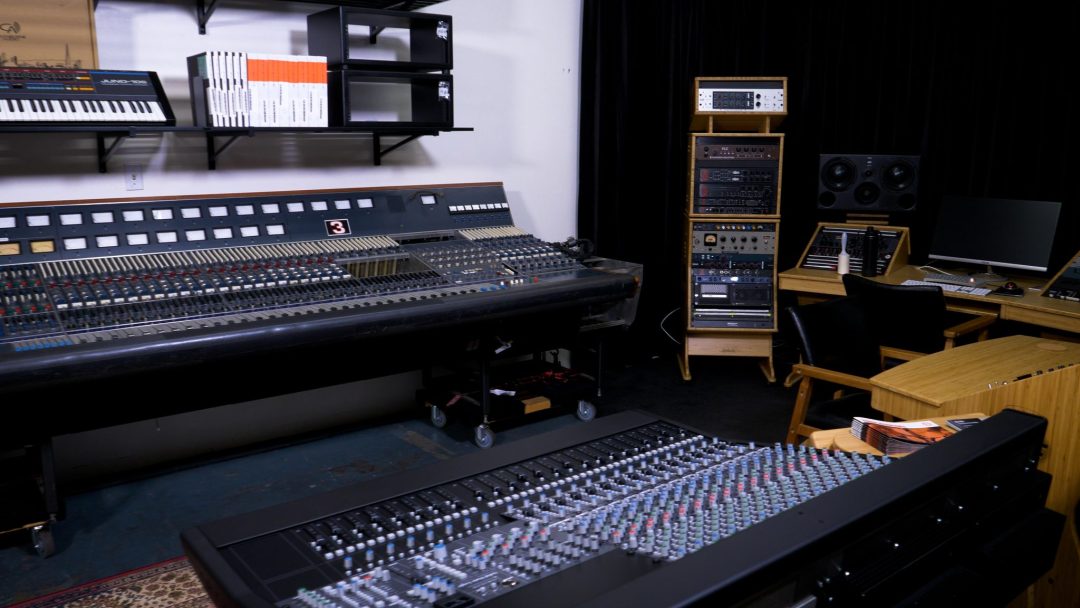
Providence Sound and Vision is far more than a gear dealer. Staffed by veteran engineers like Jeff, the shop is a haven for hands on demos and curated guidance. Whether you’re looking for vintage mojo or modern reliability, their goal is to match each client with gear that will last a lifetime.
As Jeff puts it, “I stepped away from full time engineering to be present for my kids, but this lets me stay connected to the music and help others find their sound.”
For more on the Neve 8028 and to explore what’s in the racks today, visit: www.provsb.com
🎛️ A console like this isn’t just a piece of gear, it’s a piece of music history.