Emre Ramazanoglu and Ken Scott have mixed David Bowie’s 1972 album The Rise and Fall of Ziggy Stardust and the Spiders from Mars in Dolby Atmos at RAK Studios, London. David Bowie’s 1972 album The Rise and Fall of Ziggy Stardust and the Spiders from Mars was Produced by Ken Scott and David Bowie, Engineered and Mixed by Ken Scott.

Having Ken create the Atmos version with world renowned mixer and Atmos specialist Emre Ramazanoglu brings a set of ears and understanding that only the original producer can give.
This landmark album includes iconic tracks such as “Starman,” “Moonage Daydream,” “Ziggy Stardust,” “Five Years,” and “Suffragette City,” was Bowie’s first major success, reaching number five on the UK charts in 1972. “Starman” also became a top 10 hit single.
This Blu-ray release marks the first-ever Dolby Atmos mix of a Bowie studio album and includes:
•2024 Dolby Atmos Mix
•2024 Stereo Mix (96/24)
•Original 1972 Stereo Mix – 2012 Remaster (192/24)
•Original 1972 Stereo Mix – 2012 Remaster (48/24)

Making Of A MasterPiece – History Of The Rise and Fall of Ziggy Stardust and the Spiders from Mars
After touring the U.S. in early 1971, Bowie returned to England and wrote numerous songs, many inspired by American genres. Some of these tracks appeared on Hunky Dory, Bowie’s fourth album, and Ziggy Stardust. Bowie recorded early versions of “Moonage Daydream” and “Hang On to Yourself” with his short-lived band Arnold Corns before reworking them for Ziggy Stardust.
Hunky Dory was recorded at Trident Studios in mid-1971, with the same musicians who would form the Spiders from Mars. Although the sessions for Hunky Dory and Ziggy Stardust were nearly back-to-back, the band realised most Hunky Dory tracks weren’t suitable for live performances, prompting the need for a follow-up album. RCA Records signed Bowie to a three-album deal after hearing Hunky Dory, although the album initially sold poorly despite critical acclaim.
Considered a loose concept album and rock opera, Ziggy Stardust centres around Bowie’s fictional alter ego, Ziggy Stardust—an androgynous, bisexual rock star sent to Earth as a saviour before a looming apocalypse. Ziggy gains fame but is ultimately destroyed by his own ego. The character drew inspiration from various musicians, most notably Vince Taylor. Though the album’s overarching story emerged after most of the songs were recorded, its glam rock and proto-punk sound was influenced by artists like Iggy Pop, the Velvet Underground, and Marc Bolan. The lyrics delve into themes of rock’s artificiality, politics, drugs, sexuality, and fame.
Recording and Production
Co-produced by Bowie and Ken Scott, it features Bowie’s backing band, the Spiders from Mars, which included guitarist Mick Ronson, bassist Trevor Bolder, and drummer Mick Woodmansey. The album was recorded between November 1971 and February 1972 at London’s Trident Studios.
The first track recorded for Ziggy Stardust was a cover of Ron Davies’ “It Ain’t Easy” in July 1971, initially intended for Hunky Dory. Formal recording sessions for Ziggy Stardust began on November 8, 1971, using the same personnel as Hunky Dory minus Rick Wakeman. Bowie worked decisively, guiding Mick Ronson’s guitar solos when necessary. Most of the tracks were recorded live, with first-take vocals from Bowie. The band worked swiftly, often re-recording songs until they achieved the desired sound. Recording wrapped in early February 1972, with the addition of the single “Starman” after RCA requested a more commercial song.
Concept and Themes
Though not initially intended as a concept album, Ziggy Stardust tells the story of a bisexual alien rock star, Ziggy Stardust, who rises to fame as Earth faces destruction. Bowie’s portrayal of Ziggy was influenced by musicians like Iggy Pop and Lou Reed, blending glam rock with elements of theatre, pantomime, and science fiction. The character’s androgyny and flamboyant style captured the rebellious spirit of the time, with provocative lyrics touching on issues like sexuality, drugs, and the superficiality of stardom.
Tracks like “Five Years” and “Rock ‘n’ Roll Suicide” bookend the narrative, chronicling Ziggy’s rise and fall. Ziggy starts as a messianic figure, offering hope through music, but eventually succumbs to the pressures of fame and ego, leading to his downfall.
Musical Style and Influences
Ziggy Stardust is often categorized as glam rock, with elements of proto-punk, blues, and pop. Ronson’s guitar work, coupled with Bowie’s acoustic guitar, defines the album’s sound. Tracks like “Moonage Daydream” and “Suffragette City” highlight the band’s rock energy, while ballads like “Lady Stardust” reflect a more subdued, emotional tone. Bowie drew inspiration from American rock and pop, blending influences from Chuck Berry, Little Richard, and the Velvet Underground with his own theatrical flair.
First Single, Album Release and Introduction To Ziggy
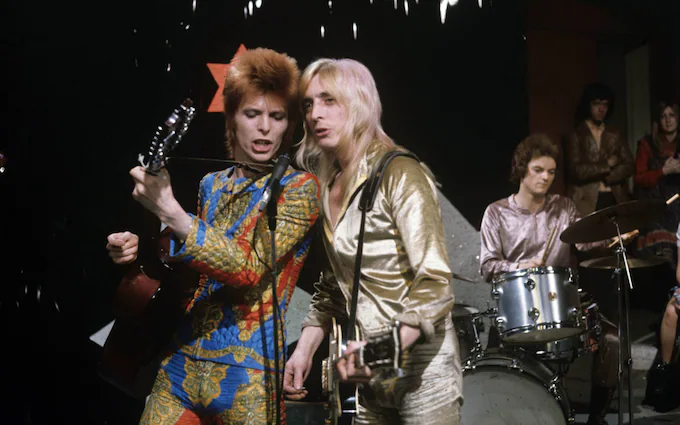
The Album was preceded by the single “Starman” and reached the top five on the UK Albums Chart. Critical reactions were largely positive, with some praising its musicality and others struggling with its concept. Bowie’s performance of “Starman” on Top of the Pops in July 1972 catapulted him to stardom, and he continued to embody the Ziggy character throughout the Ziggy Stardust Tour.
Ziggy Stardust, the fifth studio album by David Bowie, was released on June 16, 1972, in the UK by RCA Records.
The iconic album cover, shot in monochrome and later colourised, was taken outside the “K. West” furriers shop in London.
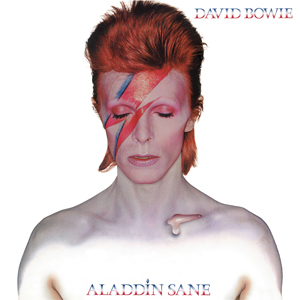
Performances from the tour have been featured on live albums and a concert film. Bowie described the follow-up album, Aladdin Sane, as “Ziggy goes to America.”
Legacy
Ziggy Stardust has been repeatedly celebrated as one of the greatest albums in rock history, frequently appearing on lists of the best albums ever made. Its influence extended beyond music, shaping fashion, performance, and culture. Bowie had considered creating a musical based on the album, but the idea never materialised. Some concepts were later integrated into his 1974 album Diamond Dogs. Though Bowie moved away from the Ziggy persona after Aladdin Sane, the character’s impact on pop culture remains undeniable. Ziggy Stardust has become one of Bowie’s most celebrated works. Ziggy Stardust has been reissued multiple times, with a 2012 remaster celebrating its 40th anniversary and in 2017, the album was added to the U.S. Library of Congress’ National Recording Registry, recognised as “culturally, historically, or aesthetically significant. Now the album has a Blu-Ray version with a Dolby Atmos mix by Ken Scott and Emre Ramazanoglu.