In the world of music production, reverb plays a critical role in shaping the emotional landscape of a track. LiquidSonics has established itself as a leading manufacturer of reverb plugins, with their latest offering, Cinematic Rooms, promising to add depth and character to recordings. This blog will explore the intricacies of using this plugin, focusing on how reverb can influence not only the spatial characteristics of a sound but also its emotional impact.
Understanding Reverb: The Basics
Reverb is an essential element in music production, impacting how we perceive sound in space. It creates an illusion of depth and distance, which can significantly affect the listener’s emotional response. When selecting a reverb, producers often consider two primary aspects: the spatial and the emotional.
Spatial Characteristics: This refers to how reverb can position sounds within a three-dimensional space. For example, using hall reverb can create a sense of distance, while plate reverb tends to sound closer.
Emotional Impact: The emotional qualities of a reverb can shape the listener’s perception of the sound source. Different reverbs can evoke various feelings, and understanding this can enhance the overall emotional delivery of a track.
Choosing the Right Reverb for Vocals
Vocals are often the centerpiece of a track, and the choice of reverb can significantly influence their impact. In the case of a dramatic vocal performance, the goal is to complement the emotion conveyed by the singer.
To illustrate, let’s consider a vocal track with a powerful and emotive delivery. The reverb choice should enhance the drama without overshadowing the vocal clarity. A good starting point is to engage with the reverb plugin and listen to how it interacts with the vocal nuances, especially the breaths that carry emotional weight.
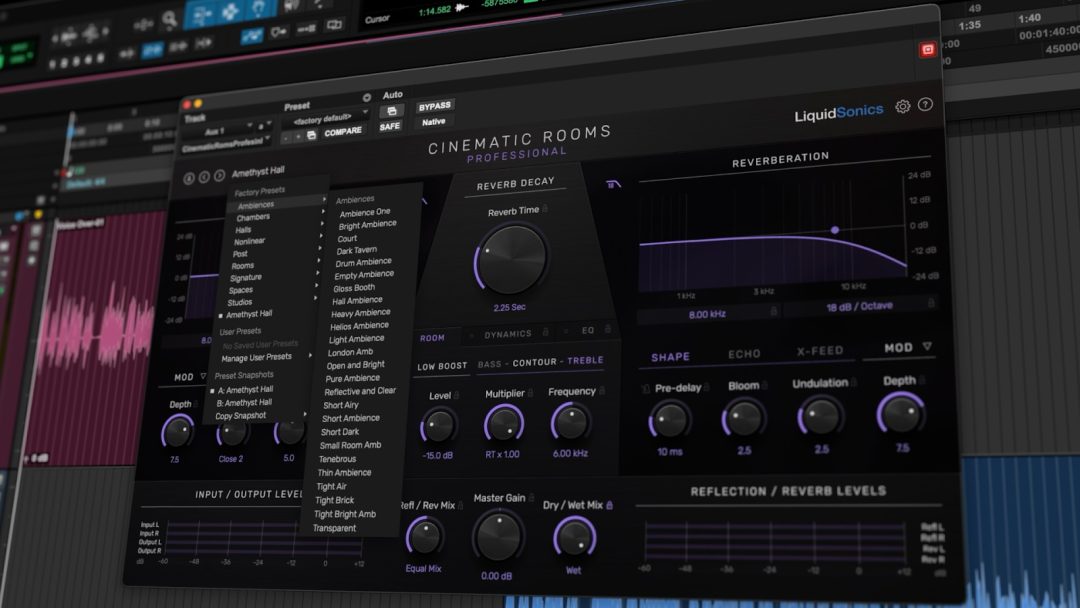
Experimenting with Cinematic Rooms
When using LiquidSonics’ Cinematic Rooms, the initial step is to explore its various presets. Each preset can evoke different atmospheres, allowing the producer to align the reverb with the emotional tone of the vocal. For instance, choosing a high diffusion reverb can create a boundless feel, which might be ideal for a soaring vocal performance.
Additionally, adjusting parameters such as the attack time and early reflections can further refine the reverb’s character. A longer attack can create a more expansive sound, while a shorter one might keep the vocal more present in the mix.
Integrating Reverb with Instrumentation
Beyond vocals, reverb choices must also consider the instrumentation within a track. A cohesive sound can be achieved by aligning the reverb settings across different elements, ensuring they blend seamlessly.
Creating Cohesion Between Vocals and Drums
When working on a mix, it’s beneficial to have the vocal reverb active while adjusting the drum reverb. This technique helps ensure that both elements complement each other, creating a unified sound. For instance, if the vocal reverb is spacious, the drum reverb can also be adjusted to maintain a similar feel, whether through a tighter or more expansive setting.
In practice, this might mean selecting a room or plate reverb for the drums that mirrors the emotional weight of the vocal reverb. The goal is to create a sonic environment where all elements feel like they belong together.
Exploring Different Reverb Types
LiquidSonics Cinematic Rooms offers a variety of reverb types, each with unique characteristics. Understanding these types can help producers make informed choices based on their sonic goals.
Halls: Ideal for creating a sense of space and grandeur. Halls can add depth to vocals and orchestral/cinematic music because it complements the natural acoustics of these genres. It enhances the depth and grandeur of orchestral arrangements, making them feel more authentic.
Plates: Often provide a brighter, more immediate sound. They are perfect for adding clarity to vocals and snare drums. Plates don’t have the flutter or unevenness that some other types of reverb might exhibit.
Rooms: Tighter spaces that can give a more intimate feel. Great for enhancing the presence of instruments without overwhelming them.
Crafting the Perfect Atmosphere
The emotional qualities of reverb can transform a track. When selecting a reverb, consider not just the spatial attributes but also how it complements the mood of the music.
Utilising Unique Features of Cinematic Rooms
Cinematic Rooms includes features that can add character to the reverb sound. For instance, the ‘bloom’ control can shape the build-up of echoes, giving them a more dynamic feel. Experimenting with these features can lead to unique soundscapes that enhance the overall track.
For example, using a darker reverb setting can counterbalance a bright vocal, lending a more dramatic tone to the performance. This approach can create a rich emotional texture that resonates with listeners.
Final Touches: Mixing and Compression
Once the reverb settings are in place, it’s crucial to consider how they sit within the overall mix. Applying compression to the reverb can help control its impact, ensuring it enhances rather than overwhelms the mix.
Compression can add a sense of cohesion, allowing the reverb to blend seamlessly with the dry signal. Adjusting the attack and release times can shape how the reverb interacts with the other elements, creating a more polished final product.
Conclusion: The Art of Reverb in Music Production
Reverb is more than just a technical tool; it’s an artistic choice that can significantly impact the emotional delivery of a track. LiquidSonics Cinematic Rooms provides a versatile platform for exploring these possibilities, allowing producers to craft sounds that resonate deeply with listeners.
By understanding the interplay between reverb types, settings, and the emotional context of a piece, producers can create immersive sonic experiences. Whether it’s through the expansive halls of a grand performance or the intimate space of a small room, the right reverb can elevate a track to new heights.
As you explore the world of reverb, remember to trust your ears and experiment boldly. The right choices will not only enhance the sound but also evoke the desired emotional response, making your music truly impactful.