Inside My Collaboration with David Bennett at Spitfire Studio London
There are certain projects that feel less like “work” and more like a shared musical journey. Mixing Under an Empty Skywith David Bennett was exactly that.
David is not only a fantastic musician and songwriter, he is deeply curious about the why behind every decision. So instead of simply delivering mixes, we sat down together at Spitfire Audio HQ to go through the album in detail, instrument by instrument, decision by decision.
What followed was one of those wonderfully nerdy, inspiring deep dives where creativity and technique meet.
A Philosophy First, Not Just Plug-ins
Before we even touched a single EQ, the goal was clear:
Serve the song, not the soloed track.
This album lives in a beautifully intimate space, piano-led, emotionally driven, with subtle arrangements. That meant restraint was key. Nothing hyped unnecessarily, nothing fighting for attention.
Every move had to earn its place.
Acoustic Guitars – The Power of the Midrange
One of the first things we explored together was the acoustic guitar.
A common mistake is chasing brightness. However, if a guitar is well recorded, it already has all the top end it needs.
So instead:
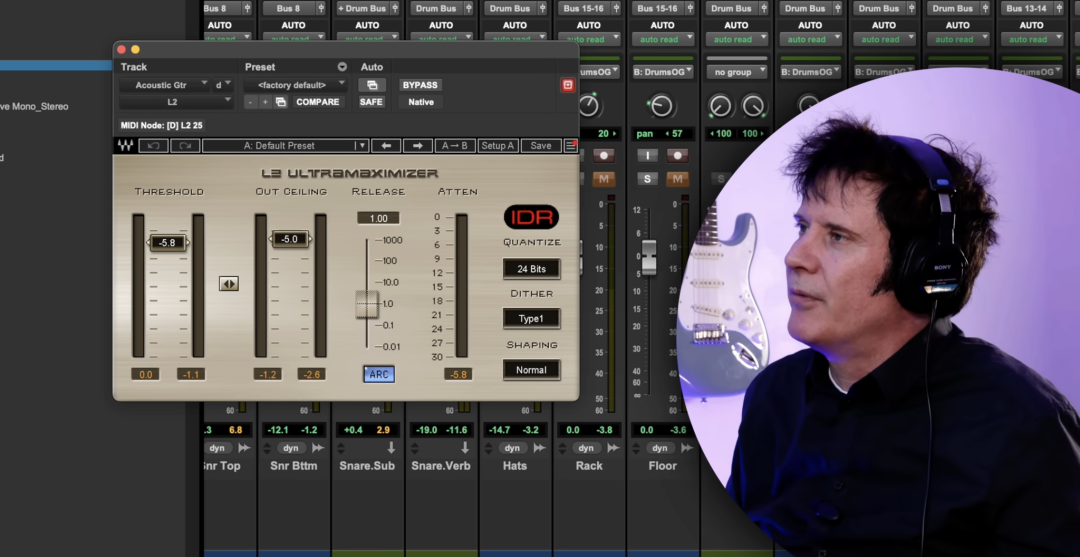
- I boosted around 1kHz
- High-passed unnecessary low end
- Added light compression, just 1 dB or so
- Used a limiter to gently catch transients
That midrange push brings the guitar forward, giving it presence without harshness.
And importantly, the acoustic becomes almost percussive, acting like a rhythmic glue in the track.
Vocals – Control Before Compression
With multiple singers across the album, there was no one-size-fits-all approach.
The biggest takeaway we discussed:
Clip gain before compression.
Instead of forcing a compressor to deal with wildly uneven levels:
- I manually raised quiet words and phrase endings
- This allowed the compressor to work evenly
- Result: natural dynamics without over-compression
Chain highlights:
- De-esser first, always
- Subtle EQ cuts around 500 Hz to remove muddiness
- Gentle compression, 1 to 2 dB
- A second stage limiter just catching peaks
Reverb was heavily controlled too, compressed before being sent, so it remained a consistent “shimmer” rather than jumping in and out.
Cello – Emotion Needs Consistency
The cello on this record often doubles as both a melodic and low-end instrument.
Challenges:
- Notes disappearing
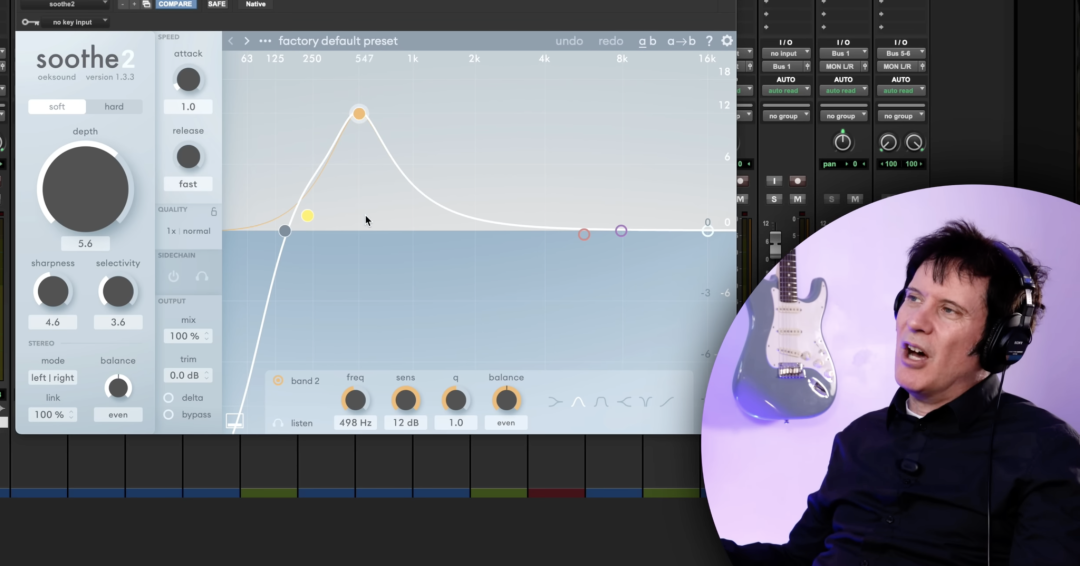
- Harsh upper mids around 2.5 to 3kHz
Solutions:
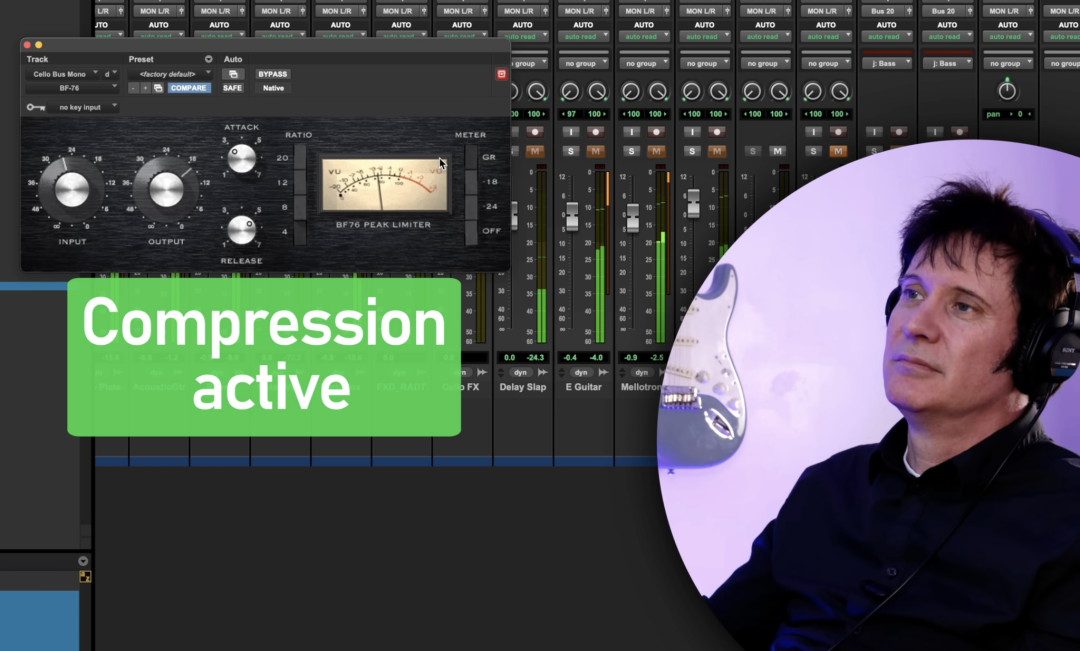
- Dynamic resonance control to smooth harsh frequencies
- Compression to stabilise performance
- And the secret weapon: low-level upward compression
This brings out quiet details without making the track louder overall.
The result is a cello that feels present and emotional throughout.
Bass – The Tim Palmer Trick
This is a technique I’ve used for years, learned from Tim Palmer.
Split the bass into two worlds:
- DI = clean low end
- Amp = character, distortion, midrange
Then blend them.
Add to that:
- Sub harmonic enhancement for depth
- Careful filtering to avoid mud
- Slight cuts around 80 to 100 Hz to leave room for the kick
It’s simple, musical, and incredibly effective.
Piano – Let It Lead
David’s piano is the heart of the record.
The goal wasn’t to reinvent it, just to support it:
- Slight high-mid boost for articulation
- Dynamic control to even out performance
- Reverb used as level support, not just space
That’s an important concept:
Reverb can make something feel louder without turning it up.
Drums – Restraint and Character
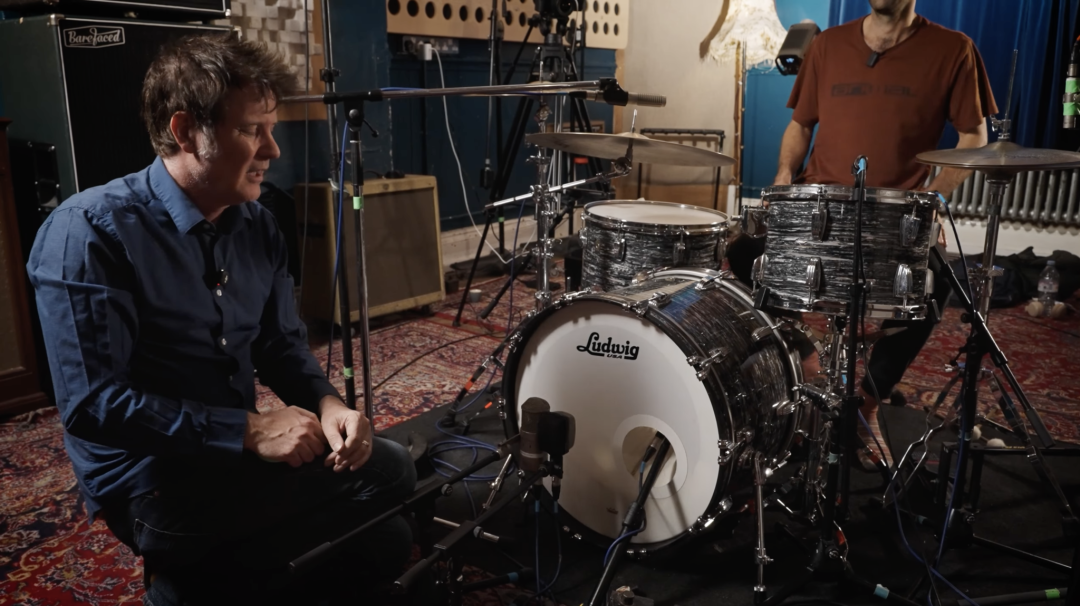
We tracked drums together at Brighton Electric Studios, aiming for a 70s-inspired feel.
That meant:
- Softer, more supportive drums
- No overhyped snares
- Controlled ambience
Key techniques:
- Blended room mics with added reverb to simulate space
- Multiple kick mics:D112 for attackD12 for vintage toneFET for sub frequencies
Each mic had a job. Together, they created a complete picture.
Mellotron and Texture Element
The Mellotron, beautiful as it is, comes with built-in quirks.
So:
- Problematic resonances were carefully removed
- Compression helped it sit consistently
- It was tucked into the arrangement rather than dominating
The Bigger Picture
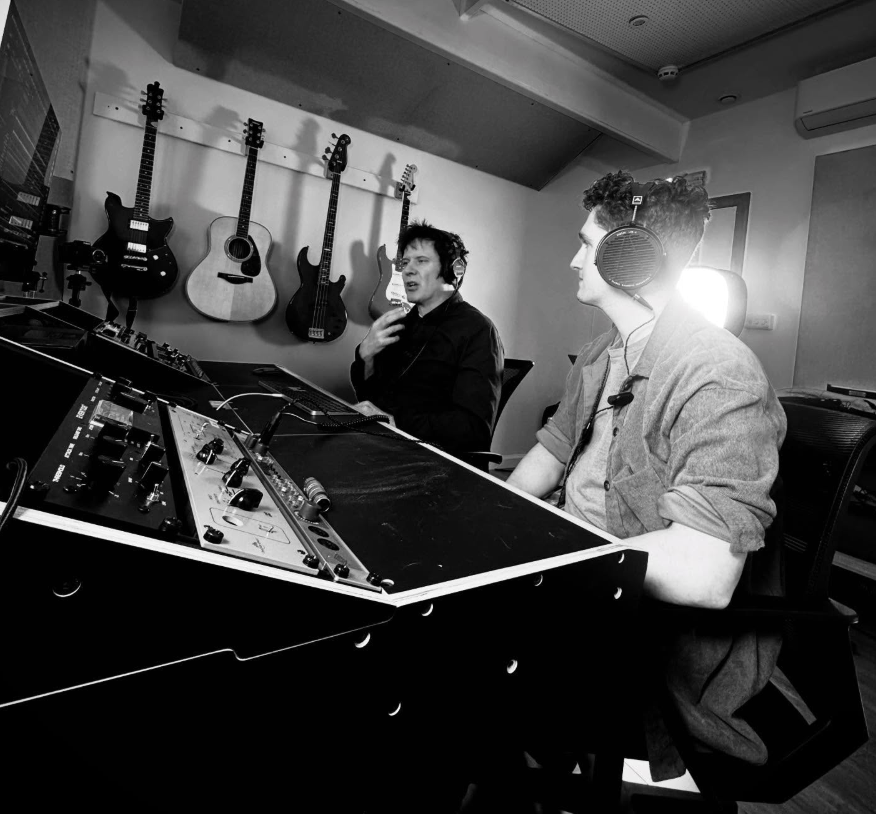
Sitting together at Spitfire, going through these mixes, what stood out most wasn’t any individual technique.
It was this:
Mixing is about perspective.
David brought incredible musicality and arrangement clarity. My role was to enhance that, not overwrite it.
Every EQ move, every compressor, every reverb choice was in service of the song’s emotion.
Final Thoughts
Working on Under an Empty Sky was a reminder of why collaboration matters.
When you sit in a room together, listen critically, challenge ideas, and stay open, something special happens.
You stop mixing tracks.
You start shaping a story.
And that’s what this album is.
If you haven’t heard it yet, I highly recommend diving into Under an Empty Sky. It’s a beautifully crafted record, and it was an absolute privilege to be part of it.
Have a marvellous time recording and mixing.