This article contains Sweetwater affiliate links. If you purchase through one of these links, Produce Like A Pro may earn a commission at no additional cost to you.
Hidden among the venues, bars and crowded streets of Manhattan’s Lower East Side is a recording studio with an extraordinary history.
EastSide Sound was founded in 1968 and has remained part of New York’s recording community for nearly six decades. The studio has moved and evolved over the years but its connection to the city’s music scene has never disappeared.
The studio is now owned by composer and producer Andres Pollak, who purchased EastSide Sound from its founder Lou Holtzman three years ago. Andres has continued the studio’s remarkable legacy while bringing in equipment from his previous studio in Chile, including an extensive collection of microphones and outboard gear.
Pre Order Marc’s amazing Ribbon/LDC Mic designed with JZ Microphones here: https://intshop.jzmic.com/products/mu-1?srsltid=AfmBOoq2hUcNHmVgSLkZhX8cto8BjKnXggRlhhvH_UbT3yYD_pUXFTB5
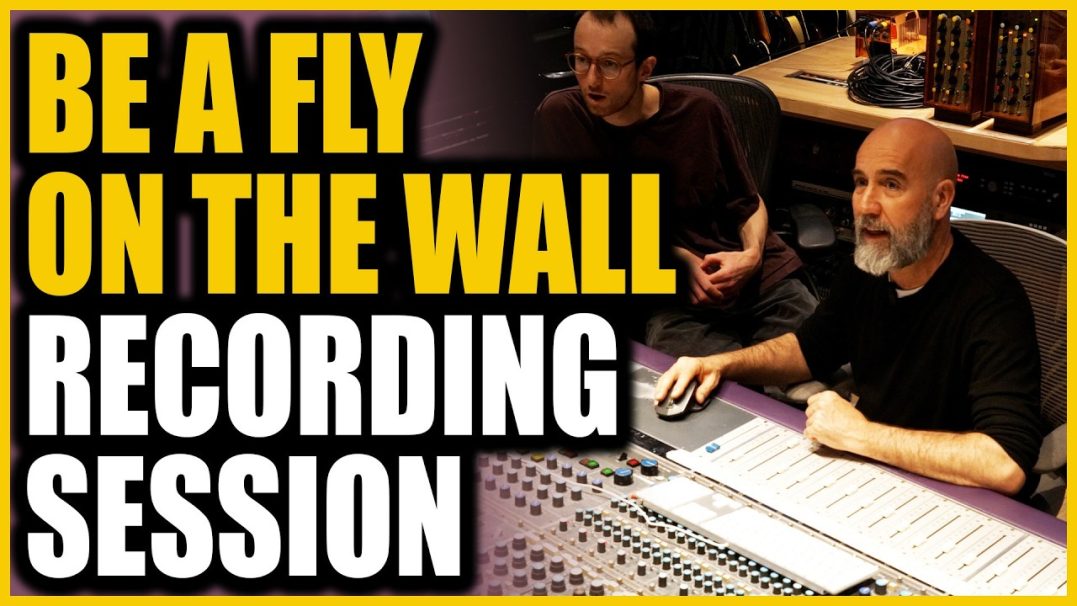
During my recent visit to New York, Grammy-winning engineer and producer Marc Urselli took me inside EastSide Sound to explore its history, control room, live room and one of the most remarkable microphone collections I have ever seen.
Marc’s relationship with the studio goes back to 1999 when he arrived in New York and sought out an internship at EastSide Sound, which was then located just a couple of blocks from its current location.
By 2001, the studio had moved into a new raw space. Marc worked alongside founder Lou Holtzman to design, wire and build the facility from the ground up.
More than 25 years later, Marc remains closely connected to the studio and continues to record projects there alongside his work at his own facility, Audio Confidential.
Nearly Six Decades of New York Recording History
EastSide Sound was founded by engineer and studio owner Lou Holtzman.
Photographs displayed throughout the studio document its evolution from a relatively modest recording room with a half-inch four-track machine to a major New York facility filled with professional recording equipment.
Lou described moving from four-track recording to a Scully one-inch eight-track machine before eventually acquiring larger consoles and multitrack tape machines.
During the 1980s and 1990s, EastSide Sound became closely associated with Harrison consoles.
The studio was reportedly the first facility in New York to install a Harrison Series 10, an advanced analogue console with digitally controlled automation and recall.
Although the audio path remained analogue, the console allowed engineers to automate and recall detailed mix moves with remarkable accuracy. At a time when many engineers were still cautious about digitally controlled recording equipment, the Series 10 offered a glimpse of the workflows that would later become standard in modern DAWs.
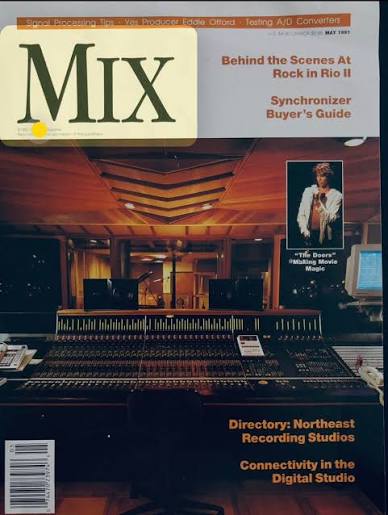
The studio later installed a Neve console with a particularly historic background. According to Marc and Lou, it carried serial number 13 and was one of the early 16-bus Neve desks associated with sessions including Led Zeppelin’s Physical Graffiti.
Marc first entered this world as an intern. He pulled cables, helped wire rooms and worked alongside Lou as the current EastSide Sound facility took shape.
As Lou explained during the tour, the studio was built with blood, sweat and tears. Through the good times and difficult periods, Marc remained part of the EastSide Sound family.
A New Harrison Console for a Historic Control Room
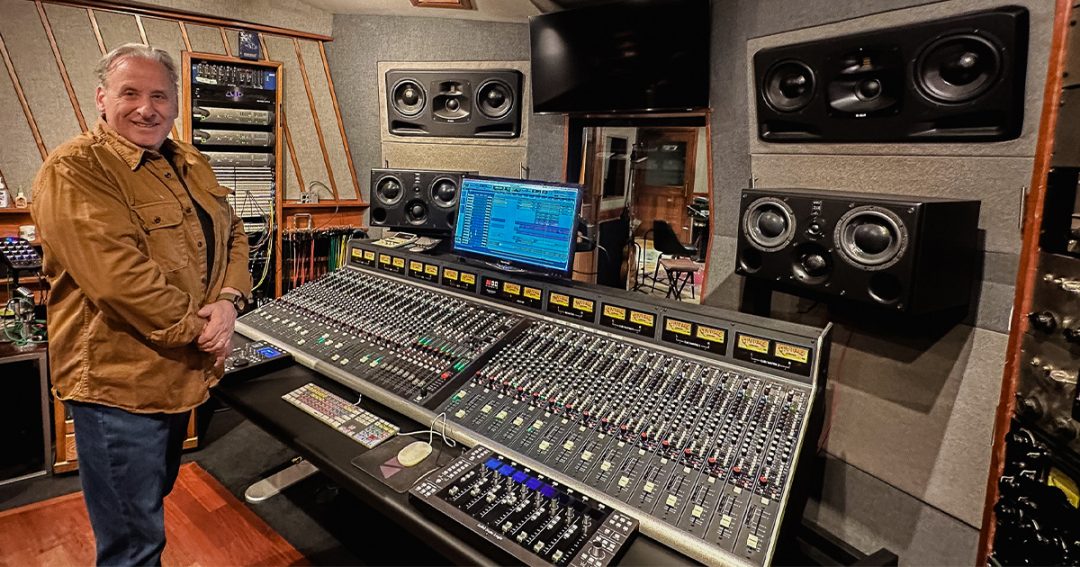
The centrepiece of EastSide Sound’s current control room is the Harrison Audio 32Classic console.
The desk represents a return to the Harrison heritage that has been part of EastSide Sound for decades. It offers an analogue signal path alongside modern digital connectivity including Dante integration.
The studio can therefore work completely in the analogue domain, move audio digitally between the Harrison desk and Pro Tools or combine the two approaches depending on the needs of the session.
For engineers who want access to the Harrison sound without installing a full-format console, Harrison also offers the rackmount 32Classic MS Channel Strip.
Monitoring is handled by soffit-mounted ADAM Audio S5H studio monitors with ATC monitors used as midfields.
The surrounding racks are packed with an enormous selection of analogue equipment.
Marc points out a pair of Universal Audio Teletronix LA-2A compressors alongside several Empirical Labs Distressors.
There are also several Manley processors, Focusrite units, vintage Ampex equipment, Trident B-Range channels and a substantial selection of API microphone preamps and 500 Series modules.
Marc also points out several pieces of Chandler Limited TG equipment and comments on how much he loves the classic TG designs.
One especially interesting unit is the Harrison Lineage rack. It contains preamps based on four different generations of Harrison console design including the 32C, MR Series, Series 10 and Series 12.
EastSide Sound also retains a tape machine although Marc acknowledges that relatively few clients are now willing to absorb the additional cost and time involved in recording to tape.
The machine is nevertheless available for sessions that require it.
The Avid Pro Tools MTRX II is used to connect the studio’s Pro Tools system with the Harrison console and Dante network. This gives the control room a flexible combination of analogue and digital routing.
Despite being built around 2001, the control room has a warm 1970s feeling. Part of that character comes from woodwork, racks and doors salvaged from earlier versions of EastSide Sound.
The control room was designed by respected studio designer Frank Comentale, whose work included rooms at Avatar Studios as well as facilities for Queen Latifah and Wyclef Jean.
Frank had sadly passed away only weeks before our visit and both Marc and Lou spoke warmly about his contribution to the studio community.
A Live Room Designed for Real Musicians
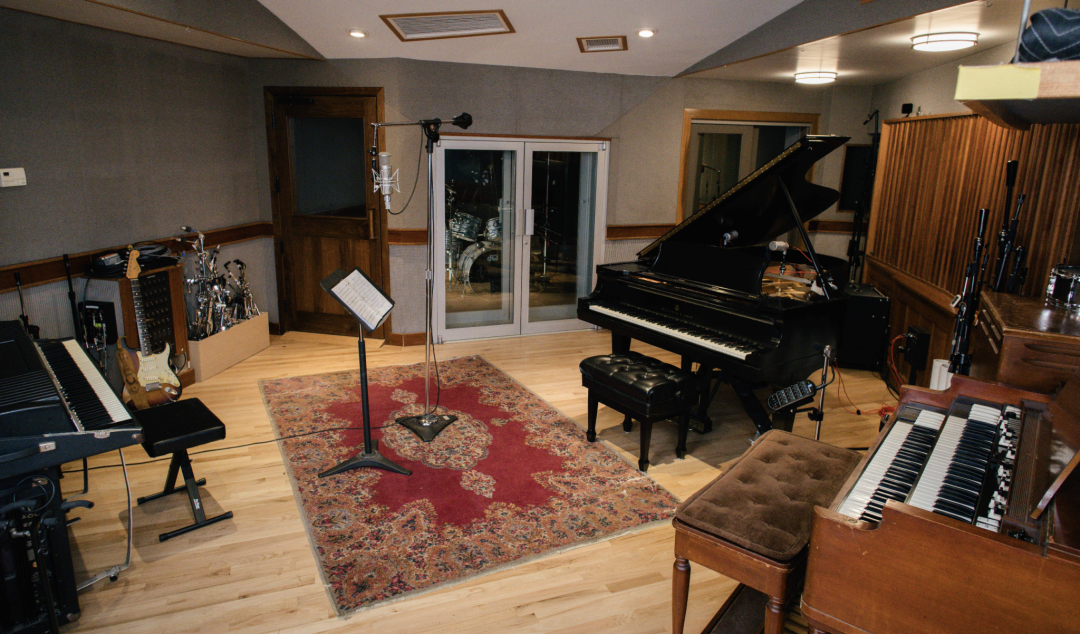
The live room at EastSide Sound was designed by Marc and Lou around the changing needs of recording musicians at the beginning of the 2000s.
They recognised that editing and isolation were becoming increasingly important but they did not want musicians to lose eye contact or the feeling of performing together.
Their solution was to construct six isolation booths around the main live room.
Everywhere you see a window or doorway, there is another recording space.
According to Marc, it is extremely unusual to find a Manhattan studio with six genuine isolation booths.
The largest booth can accommodate a full drum kit or the studio’s Steinway B grand piano. Large doors were later added so the piano could be moved more easily without having to turn it onto its side.
For rock sessions, the drums can be placed in the main room while the piano remains isolated. For jazz sessions, the upright bass player, drummer and pianist can perform simultaneously while maintaining visual contact.
Other booths can accommodate singers, horn players, percussionists and guitar amplifiers.
Even the airlock between the control room and live room is wired so it can be used as an additional recording space.
This flexibility allows EastSide Sound to capture the energy of musicians playing together while still providing enough separation for editing, balancing and mixing.
The ceiling is carefully shaped to break up reflections and the ventilation system was designed with separate supply and return paths.
Marc also installed hooks in the ceiling during a period when he was recording large percussion ensembles with John Zorn. Microphone cables could be suspended from above rather than running across the floor where musicians might step on them.
It is a practical idea born from years of real recording experience.
Vintage Drums, a Steinway and a Hammond B3
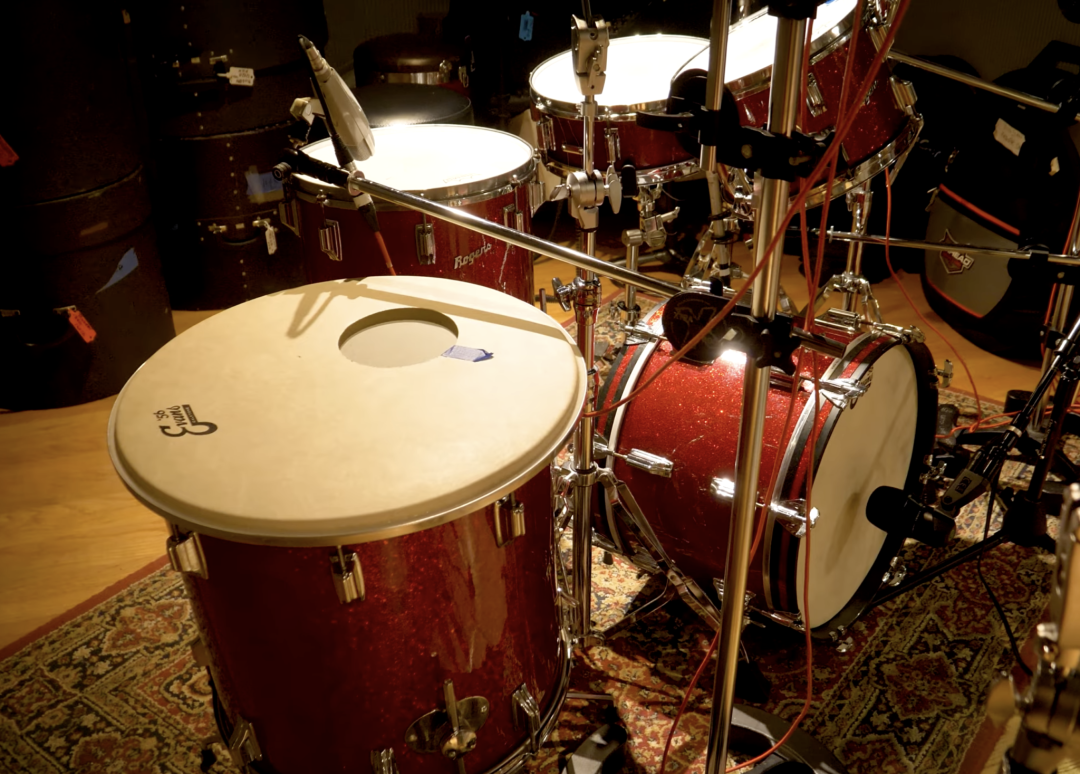
The studio is home to a large collection of vintage Rogers drum kits assembled by Lou Holtzman.
These kits include several extremely rare shell sizes such as a 14-by-14-inch floor tom and other pieces that serious drum collectors may spend years trying to locate.
A modern DW drum kit is also available for players who want a more contemporary sound.
The main drum setup during our visit included vintage Sennheiser MD 421 microphones and AKG C414s.
Marc identifies a Microtech Gefell M 940 on the hi-hat and comments on how great it sounds.
He also demonstrates the LEWITT DTP 640 REX, one of his favourite dual-element kick drum microphones. It combines a dynamic capsule and condenser capsule inside the same body, allowing the engineer to balance the attack and weight of the kick drum.
The live room contains a Steinway B grand piano from approximately 1988.
Marc explains that having access to both EastSide Sound and Audio Confidential gives him two very different pianos to offer clients. A pianist can compare the Steinway at EastSide Sound with the Yamaha at Audio Confidential and choose whichever instrument suits the production.
The studio also houses a Hammond B-3 organ, giving Marc another reason to bring certain projects to EastSide Sound.
A Guitar Amp Booth Built for Experimentation
One of the smallest isolation rooms has been converted into a dedicated guitar amplifier booth.
Different amplifier heads can be stored on shelves while multiple cabinets remain permanently available below.
Tie lines connect the amp room to the rest of the facility. A guitarist can therefore perform from the control room or another isolation booth while selecting different combinations of heads and cabinets.
A player might use a Chandler Limited amplifier head with a Fender cabinet or quickly compare several different combinations without moving equipment around the studio.
It is an efficient setup that encourages experimentation without disrupting the creative flow of the session.
More Than 200 Microphones
The original EastSide Sound microphone cupboard was eventually overwhelmed by the size of the collection.
When the studio owned around 50 microphones, each mic had an assigned position marked by a diagram. Once the combined collection grew to approximately 200 microphones, a dedicated microphone room became essential.
Marc has organised the new locker by microphone type, manufacturer and historical significance.
The studio’s collection of affordable utility microphones includes the Shure SM57 and Electro-Voice RE20.
The Neumann shelves alone contain an extraordinary selection including original U 47s, U 67s, M 49s, U 87s, an M 70, a UM 57 and several Telefunken ELA M microphones.
Marc shows two modern Neumann M 49 V microphones alongside the vintage models.
Several Neumann U 87 Ai microphones are also part of the collection.
An original Neumann U 67 sits among the vintage microphones. The current Neumann U 67 reissue is the closest new equivalent.
The current Neumann U 47 FET also continues one of Neumann’s most important microphone designs.
Vintage ELA M microphones appear throughout the collection while the modern Telefunken ELA M 251E offers a current production version of the classic design.
However, Marc’s particular passion is ribbon microphones.
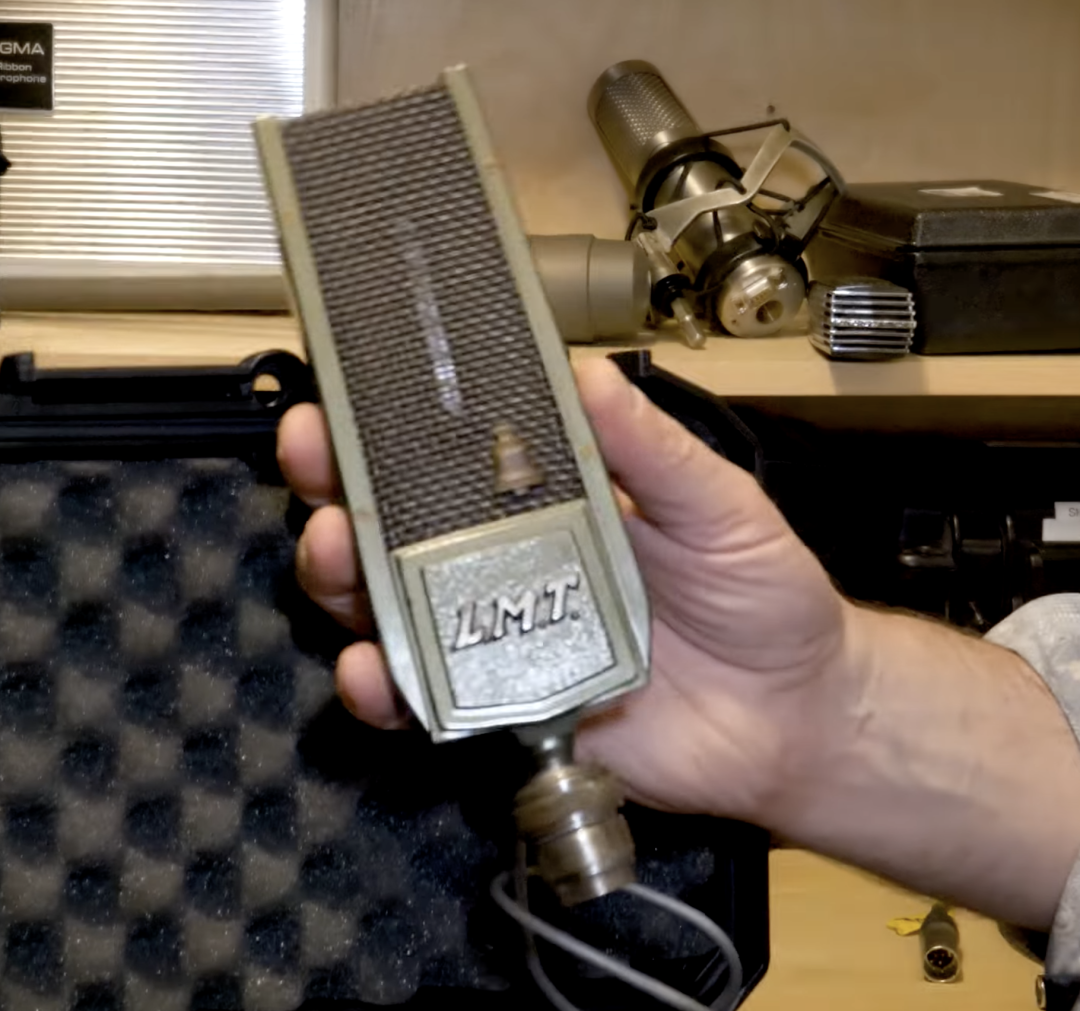
The collection contains ribbon microphones from the United States, Britain, France, Poland, Italy, Sweden and Japan. Some are well-known studio standards while others are exceptionally rare examples of early broadcast and recording technology.
Marc Urselli’s Love of Ribbon Microphones
Among the American ribbons are several RCA models including RCA 44s, BK-5s, KU-2As and KU-3As.
One RCA 44 has a gold finish and carries an NBC identification number. Marc believes darker broadcast finishes were often selected because highly reflective silver microphones could cause problems under television lighting.
The RCA KU-2A is sometimes referred to as the “skunk” microphone because of the stripe running along its body. The microphone even has the word “back” marked twice to prevent engineers from accidentally recording into the wrong side.
EastSide Sound also has an anniversary edition of the AEA R88 stereo ribbon microphone, produced to celebrate AEA founder Wes Dooley.
British ribbon microphones include several Coles 4038s, the rarer handheld Coles 4015 and a collection of Reslo microphones.
Reslo ribbons became particularly famous after being used as vocal microphones by The Beatles during performances at Liverpool’s Cavern Club.
Marc owns a number of restored Reslo microphones and has used them on string quartets, guitars and other acoustic sources.
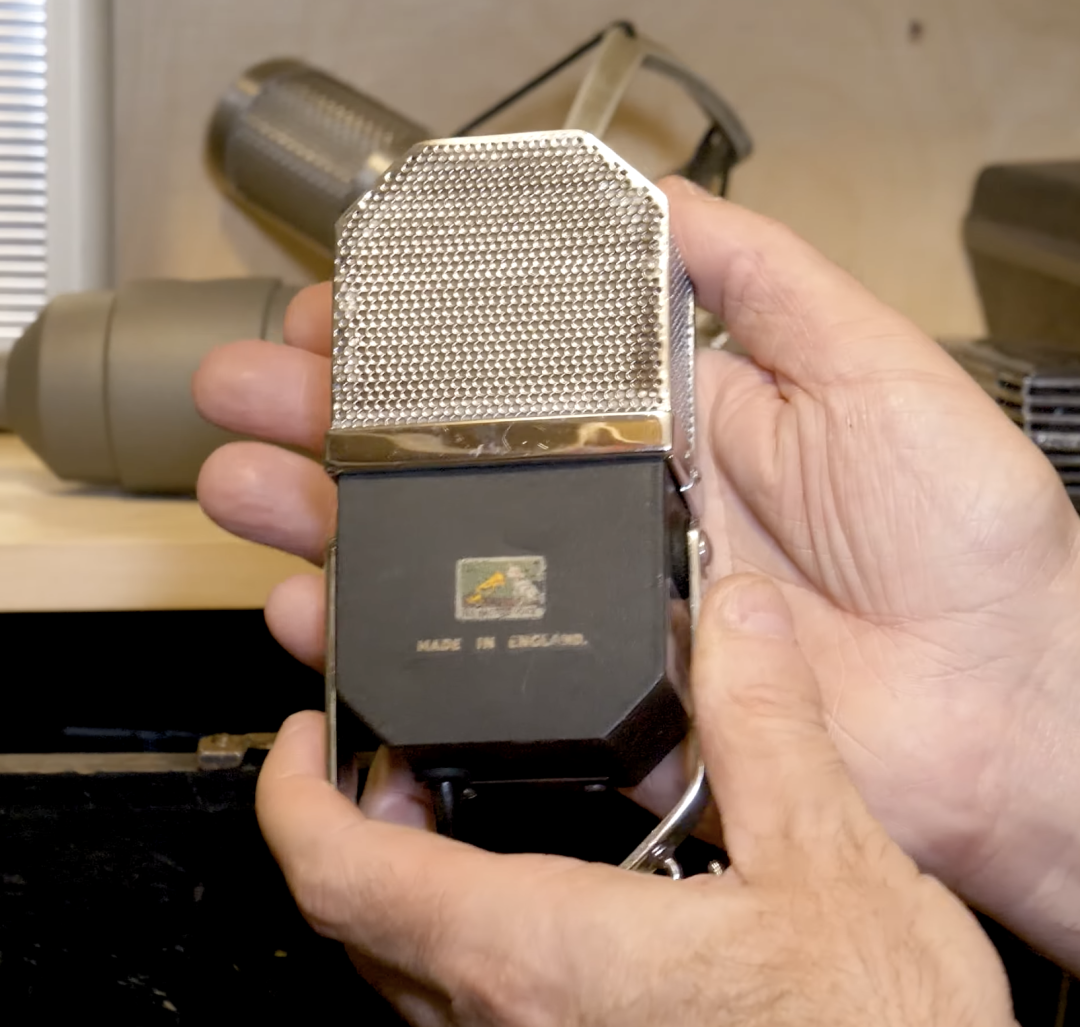
The locker also contains historic EMI and HMV microphones as well as modern British ribbons from Extinct Audio.
EastSide Sound keeps several Cloudlifter CL-1 mic activators available to provide additional clean gain for its ribbon microphone collection.
Marc also shows the variable Cloudlifter CL-Z, which offers adjustable impedance, gain and filtering options.
Rare French and Polish Microphones
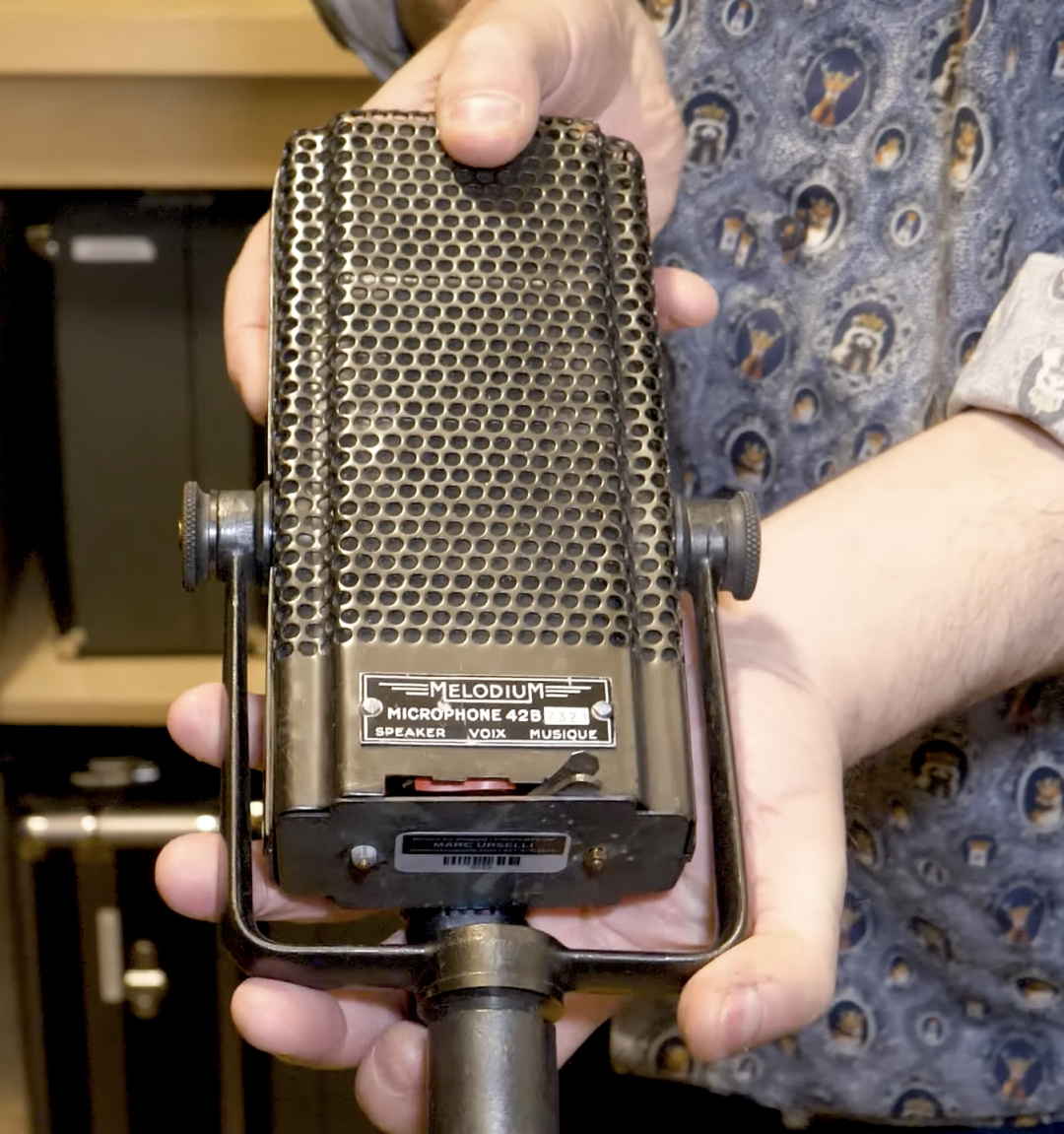
One of the most striking French microphones is the Melodium 42B.
The 42B was created as a French alternative to the RCA 44 and uses a proprietary three-pin connector rather than a modern XLR connection.
Its front panel includes French settings for speech, voice and music. Marc normally leaves the microphone in its music position although the voice setting appears to introduce a high-pass filter.
Because the Melodium microphones are extremely heavy and valuable, safety cables are used to prevent them from hitting the floor if a stand is knocked over.
Another standout is the Polish HUM Audio RS-2 ribbon recording system.
The microphone can operate in stereo or mid-side configurations and arrives with its own preamplifier and power supply. A remote control connected by XLR allows engineers to adjust gain, polarity, high-pass filtering, air boost and mid-side decoding from a distance.
Marc has used the RS-2 for room recording, piano and percussion and considers it one of his favourite ribbon microphones.
Italian Microphone History
Some of the rarest items in the collection come from Italy.
Italian companies including CGE, Geloso, Magneti Marelli and Allocchio Bacchini produced microphones using designs or patents influenced by RCA.
These microphones were often manufactured for Italian radio and television companies that needed locally produced alternatives to importing American equipment.
The CGE ribbon microphones feature beautiful decorative finishes designed to resemble wood.
The Geloso microphones use an unusual dual-ribbon design and feature an especially charming Italian switch. Rather than being marked “on” and “off,” the controls are labelled with the Italian equivalents of “yes” and “no.”
Magneti Marelli is now better known as an automotive component manufacturer but the company once produced ribbon microphones. Marc owns an early Magneti Marelli ribbon that visually resembles the RCA 74B.
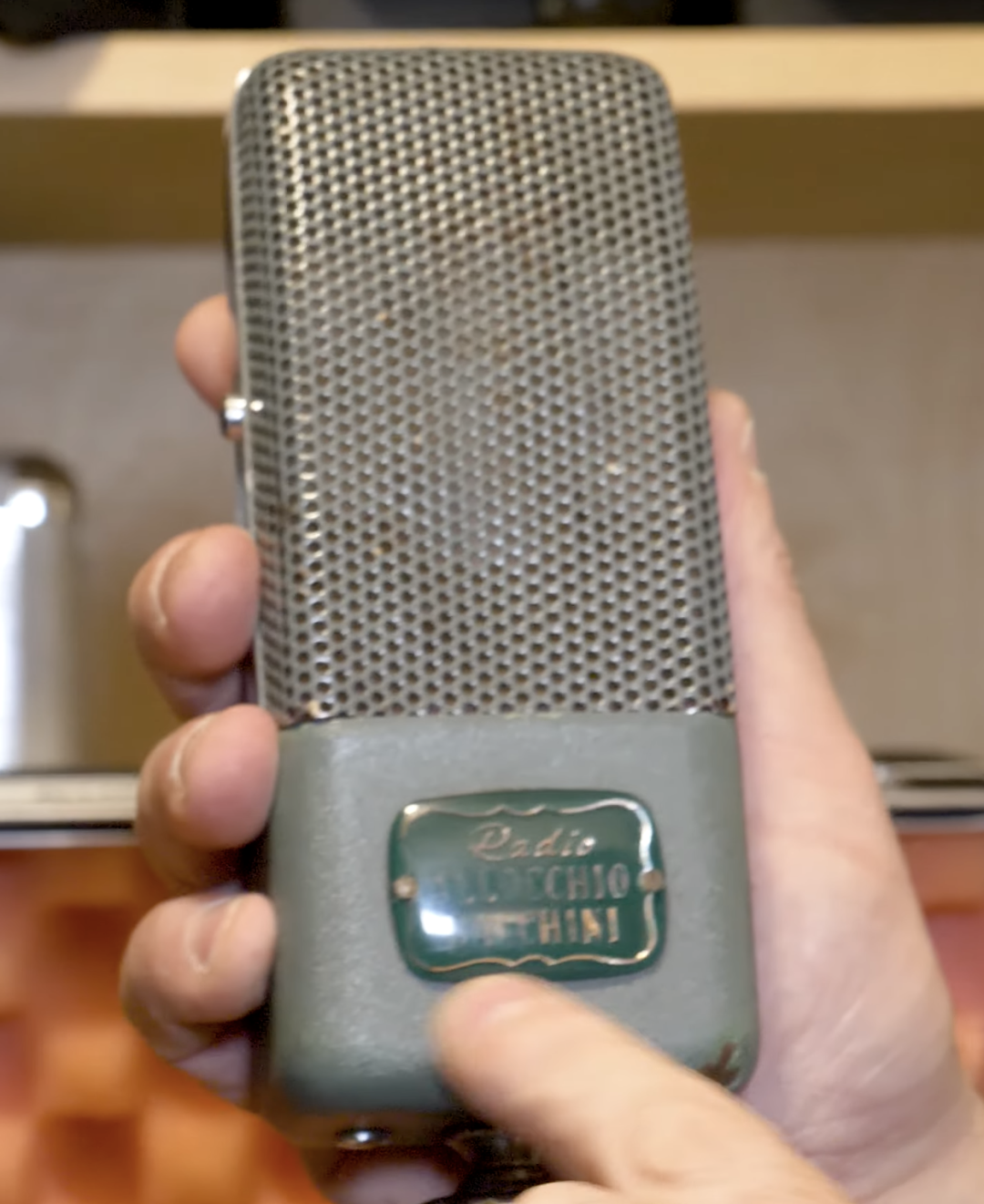
Perhaps the rarest Italian microphones in the collection were made by Allocchio Bacchini in Milan.
The company originally produced radios and microphones but was forced to concentrate on military equipment during the Second World War. Its facilities were later destroyed and very few examples of its microphones are known to survive.
Marc owns two Allocchio Bacchini microphones including a large RCA 44-style ribbon and an elegant green model with a beautifully detailed grille.
Finding modern stand adapters for these microphones presented its own challenge. Marc had to combine several pipe and brass thread adapters before he could mount them safely on a conventional microphone stand.
From Vintage Italian Ribbons to the MU-1
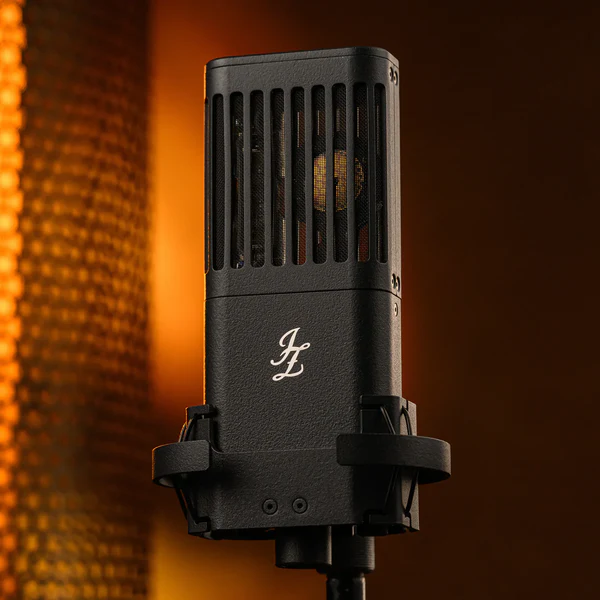
Marc’s interest in Italian microphone design also connects directly to the development of his own MU-1 microphone.
Modern Italian microphone maker Teo Pizzolante of Braingasm Lab helped Marc create the first MU-1 prototype.
Marc approached Teo because Braingasm had experience designing both condenser and ribbon microphones.
The MU-1 grew from Marc’s desire to combine different microphone characteristics and create a flexible studio tool inspired by the sounds he had collected and used throughout his career.
The EastSide Sound locker contains several Braingasm microphones including the Ferro condenser, the Multi-D-Lux and the Nastro ribbon.
There are also unusual omnidirectional microphones with bodies that look more like small sculptures than conventional recording equipment.
The JZ Microphones Behind Major Sessions
Marc’s JZ Microphones collection has its own dedicated section.
He owns two original JZ Microphones Black Hole microphones and describes the Black Hole capsule as an important influence on his love of large-diaphragm gold-sputtered condenser microphones.
Marc used JZ microphones while recording U2 in New Orleans.
A Black Hole was used for vocals while a pair of BT201 microphones were used as drum overheads and later on The Edge’s acoustic guitar.
Marc loved the Black Hole so much that he asked JZ Microphones to build a custom stereo version.
The result is a unique microphone that Marc calls the Butterfly.
It combines two Black Hole capsules in a Flamingo-style body. The capsules can be rotated and angled to create different stereo configurations.
Marc has used the Butterfly on acoustic guitars, congas, drum overheads and numerous other sources. It has become one of his most frequently used stereo microphones.
Japanese Interpretations of RCA Designs
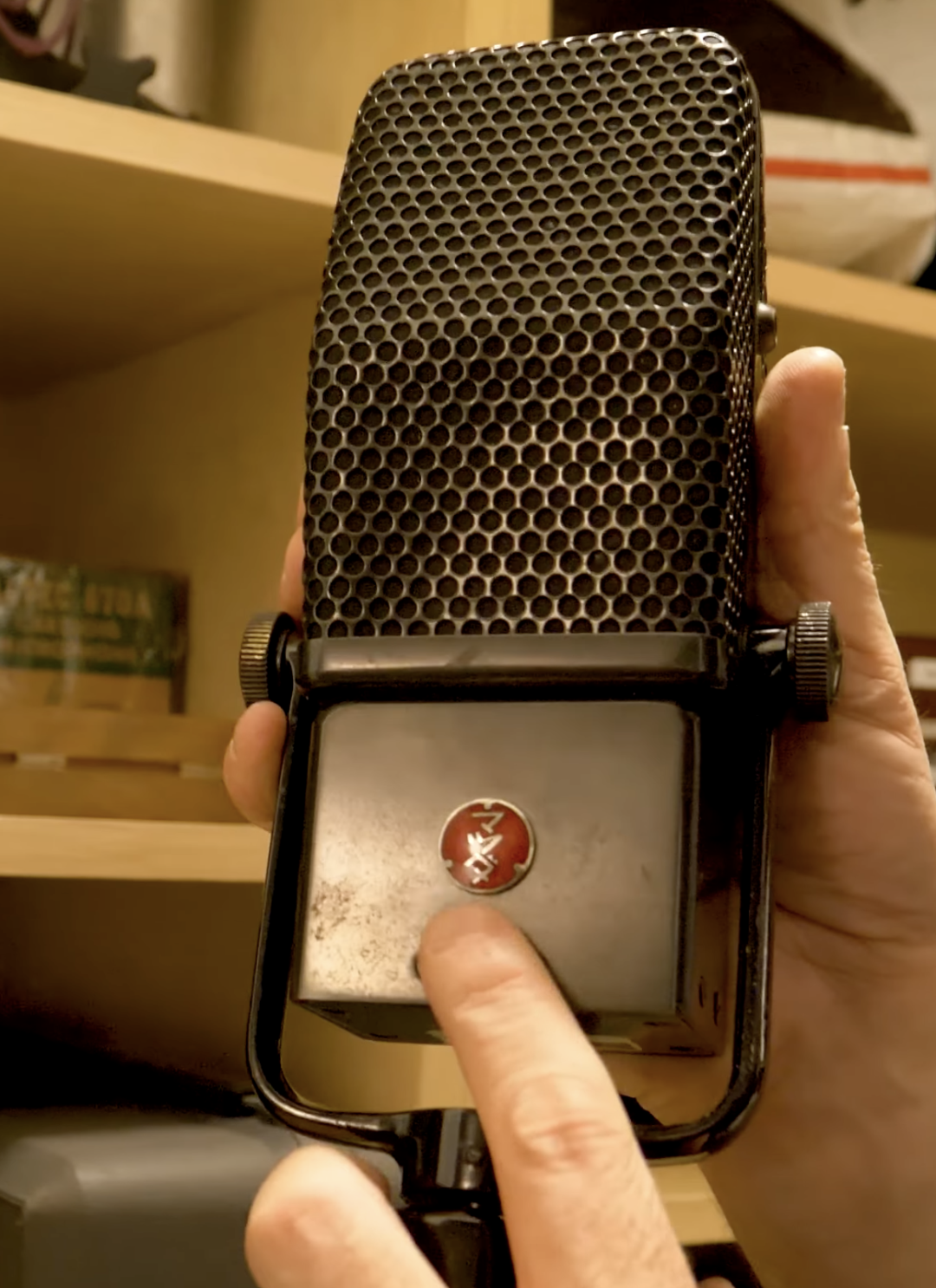
The collection also includes several Japanese ribbon microphones inspired by RCA technology.
A Toshiba Type A from 1952 is essentially a Japanese interpretation of the RCA 44 and is stored in an original wooden case with Japanese markings.
Later versions include the Toshiba Type B from 1961 and the more commonly encountered Type G from 1963.
Marc also shows an NHK broadcast ribbon microphone based on the RCA BK-5A.
NHK is Japan’s public broadcasting organisation, making its historical position roughly comparable to the BBC in Britain or NBC in the United States.
These microphones reveal how influential RCA designs became throughout the world. Rather than importing costly American microphones, broadcasters and manufacturers often licensed or adapted existing technology for their domestic markets.
A Studio Built Around Music Rather Than Fashion
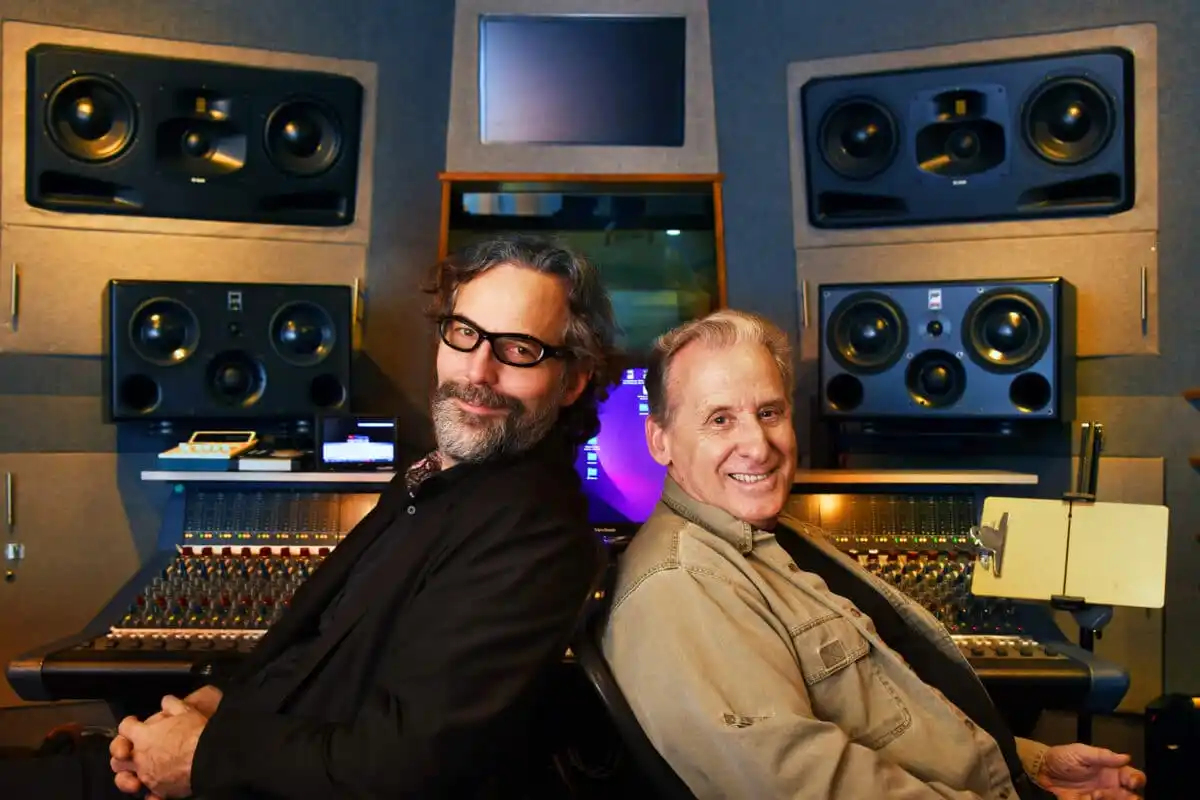
EastSide Sound is filled with rare equipment but the most impressive part of the studio is not any single microphone, console or compressor.
It is the way the entire facility has been designed around musicians.
The isolation booths allow players to see each other while maintaining separation. The amplifier room makes experimentation easy. The cable hooks keep floors clear during complicated percussion sessions. The control room combines classic analogue equipment with modern Dante and Pro Tools workflows.
Even the lounge tells the studio’s story.
Photographs cover the walls showing Lou, Marc and many of the artists and engineers who have passed through EastSide Sound. There are images of Nile Rodgers, Buddy Guy, Jack DeJohnette, Bernard Purdie and Les Paul.
The studio also displays two Grammy Awards connected to the Les Paul tribute album Les Paul & Friends: American Made World Played.
One photograph carries a particularly appropriate message from Les Paul to Lou Holtzman.
He signed it, “To Lou, a fellow victim.”
As Lou explained, that was Les Paul’s joke about the shared experience of being a studio owner.
EastSide Sound has survived enormous changes in recording technology, musical styles and the economics of operating a studio in Manhattan.
Yet it remains a place where musicians can record together, hear one another and create performances in a room built by people who understand how records are made.
That combination of history, personality and practicality is what makes EastSide Sound so special.
Pre Order Marc’s amazing Ribbon/LDC Mic designed with JZ Microphones here: https://intshop.jzmic.com/products/mu-1?srsltid=AfmBOoq2hUcNHmVgSLkZhX8cto8BjKnXggRlhhvH_UbT3yYD_pUXFTB5