Choosing the right studio monitor is crucial for achieving the best sound in your recordings. Kali Audio offers two popular options, the IN-8 and LP-8, each designed to meet different needs and budgets. In this guide, we’ll compare the Kali Audio IN-8 vs. LP-8 and highlight what sets each monitor apart, helping you find the perfect fit for your studio.
Kali Audio IN-8 vs. LP-8: Two Powerful & Capable Studio Speakers With Plenty To Offer
When selecting studio monitors, Kali Audio presents two strong contenders: the IN-8 and the LP-8. These monitors are designed to cater to different needs, whether you’re outfitting a professional studio or setting up a home recording space.
The Kali Audio IN-8 is recognized for its advanced design and exceptional audio clarity, making it a popular choice in professional environments. On the other hand, the Kali Audio LP-8 offers a budget-friendly option without sacrificing essential features. This makes it ideal for those looking to achieve great sound quality at a more accessible price point.
Understanding each monitor’s distinct features, performance, and applications can help you determine which one best suits your needs.
Kali Audio IN-8 Review: What Does It Have To Offer?
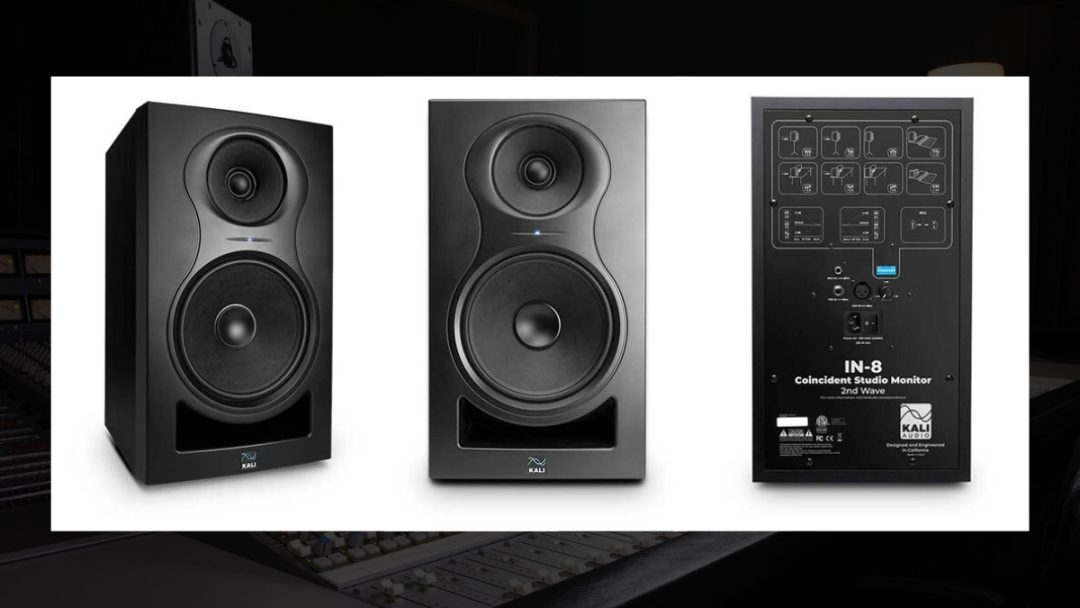
The Kali Audio IN-8 is known for its advanced design and the ability to deliver detailed and accurate sound. This monitor is particularly popular among professionals who require precise audio reproduction, making it a go-to speaker in many studios.
The IN-8’s unique features set it apart, offering a reliable tool for those who demand high fidelity in their audio work.
Innovative Design and Build Quality Highlights
The IN-8 speakers are engineered with a focus on precision, which makes them a dependable choice for critical audio work. The monitor’s design reduces distortion and enhances the overall listening experience.
Key design and build features of the IN-8 include:
- 3-Way Design: Separates the audio spectrum into distinct frequency bands, reducing distortion and enhancing clarity.
- Coaxial Configuration: Aligns the midrange and tweeter drivers on the same axis for superior imaging and phase coherence.
- Professional-Grade Cabinet: Minimizes resonance and coloration to ensure true-to-source sound reproduction.
- Front-Firing Port: Allows flexible placement within studio environments, reducing the impact of boundary coupling.
The IN-8’s build quality contributes significantly to its performance, ensuring that the sound remains true to the source across various studio environments.
Performance Insights: How the IN-8 Shapes Your Sound
The Kali Audio IN-8 is designed to offer detailed sound, which is crucial for professional audio work. Its 3-way design, which includes dedicated drivers for specific frequency ranges, allows for a more refined and clear reproduction of the audio spectrum.
This design ensures that every element of a mix, from deep bass to intricate highs, is delivered with precision.
One of the IN-8’s most notable aspects is its ability to create an immersive soundstage. The coaxial alignment of the midrange and tweeter drivers plays a key role in this, providing accurate placement of sound elements within the stereo field.
This feature is particularly beneficial in complex mixes, where spatial accuracy can greatly enhance the listening experience.
The IN-8 is also engineered to maintain sound integrity even at high volumes. Its high SPL handling at 117 dB ensures that dynamic ranges are represented accurately without introducing distortion.
This capability allows producers to push their mixes confidently while preserving the quality of the audio.
Additionally, the monitor’s extended low-frequency response provides depth in bass-heavy genres without compromising the clarity of higher frequencies. This makes the IN-8 versatile enough to handle a wide range of musical styles, ensuring that every detail is captured and reproduced faithfully.
Practical Applications: Where the IN-8 Excels
The IN-8 monitors perform well in a wide range of studio applications. Their design and performance make them dependable choices in various studio environments.
- Mixing and Mastering Studios: The IN-8 touts a “ruler-flat frequency response,” which makes it ideal for critical listening tasks. Engineers can trust that their decisions will translate well across different playback systems, ensuring consistency in their mixes.
- Post-Production: The IN-8’s accurate imaging and detailed soundstage are invaluable in editing and sound design. Its ability to handle complex audio elements ensures that every aspect of a mix, from subtle effects to detailed arrangements, is presented clearly.
- Immersive Audio Setups: The IN-8 is a strong choice for Dolby Atmos and other multi-channel configurations. Its consistent performance across a wide listening area makes it ideal for use in surround and height channels, providing an immersive audio experience.
- Flexible Placement: With its solid build and front-firing port, the IN-8 can be placed in various studio settings without losing sound quality. This flexibility ensures reliable performance, regardless of room acoustics or setup constraints.
Kali Audio LP-8 Review: Unbelievable Sound at an Unbeatable Price
The Kali Audio LP-8 is part of the company’s Lone Pine series, designed to offer high-quality sound at an accessible price point. The LP-8 is tailored for those who need reliable performance without breaking the bank.
It’s popular among home studio owners, beginner producers, and professionals looking for an affordable yet powerful monitoring solution.
What Sets the LP-8 Apart

The Kali Audio LP-8 offers a compelling value proposition, providing features and performance that rival more expensive studio monitors. The LP-8 is equipped with a large 8-inch woofer and a front-firing port, both of which contribute to its wide frequency response and deep bass extension.
These elements make the LP-8 capable of handling a wide range of tasks, from mixing and mastering to casual listening.
In addition to these core features, the LP-8 incorporates several advanced technologies that enhance its performance further:
- Cutting-Edge Waveguide Design: The LP-8’s innovative waveguide design minimizes unwanted reflections, which can otherwise interfere with the stereo image. By controlling these reflections, the LP-8 ensures that the soundstage remains clear and well-defined, allowing listeners to pinpoint the exact location of instruments within the mix’s stereo field. This precision in imaging is particularly valuable for detailed audio work, enabling faster mixing and better overall results.
- Low-Noise Port Tube: The LP-8 features a specially designed low-noise port tube that eliminates the turbulence often associated with traditional port designs. This port tube ensures that air exits at a consistent velocity, resulting in clean, punchy bass without the distracting noise that can obscure low-end details in your mix. This design helps maintain clarity in the bass frequencies, which is crucial for accurate sound reproduction.
- Boundary EQ for Optimal Sound: Understanding that a speaker’s position in a room affects its sound, Kali Audio integrated a Boundary EQ feature into the LP-8. This EQ provides presets tailored to common speaker placements, allowing users to optimize the monitor’s response, whether it’s placed near a wall, on a desk, or in another challenging position. This ensures that the LP-8 delivers consistent, high-quality sound in a variety of environments, making it adaptable to different studio setups.
Sound Capabilities: The LP-8 in Action
With a flat frequency response, the LP-8’s ability to reproduce sound accurately ensures that what you hear is a true representation of your mix.
This is absolutely essential for making informed decisions during the mixing and mastering process.
The LP-8 is particularly effective in untreated rooms, where its design minimizes the impact of poor acoustics. This makes it a reliable option for home studios or spaces that aren’t acoustically optimized.
Additionally, the LP-8 boasts a wide sweet spot, ensuring that listeners across a broad area experience consistent sound quality. This characteristic is especially valuable in larger studios or environments where multiple people need to hear the mix accurately.
Who Is The LP-8 Ideal For?
The LP-8 is ideal for home studios, beginner producers, and budget-conscious users who need quality without a high price tag. Its compact design and reliable performance make it suitable for smaller setups and untreated acoustic environments.
This monitor offers professional-level audio, making it a versatile choice for those new to music production or looking for a dependable secondary monitor. The LP-8 delivers exceptional value, combining affordability with high-quality sound reproduction.
Whether setting up your first studio or upgrading, the LP-8 provides the performance you need at a competitive price.
Analyzing the Key Differences Between IN-8 and LP-8
When comparing the Kali Audio IN-8 vs. LP-8, both monitors offer unique strengths and cater to different needs and budgets.
Comparing Price & Functionality
The Kali Audio LP-8 is an attractive option for those seeking high-quality sound at a budget-friendly price. Priced at $249 (USD) per monitor, the LP-8 offers professional-level audio performance at a fraction of the cost of higher-end monitors like the IN-8.
With a total cost of $498 (USD) for a pair, the LP-8 is $300 (USD) less per pair than the IN-8, making it an excellent choice for budget-conscious users or as a secondary monitor in a more comprehensive setup.
The Kali Audio IN-8, priced at $399 (USD) per monitor, brings advanced features that justify its higher cost. Its 3-way design and coaxial configuration provide unmatched clarity and imaging, making it a preferred choice in professional studios where precise audio reproduction is essential.
Despite its higher price, many professionals choose the IN-8 because it can accurately translate mixes across different listening environments.
Expanding Your Possibilities
The IN-8 and LP-8 can be used together in studio setups, particularly in immersive audio configurations like Dolby Atmos. In such systems, the IN-8 excels when used for the front channels (left, center, and right), with the highest demand for detailed and accurate sound.
The LP-8, with its strong performance and affordability, is well-suited for surround and height channels to complement your front channels. This combination provides a balanced and cost-effective solution, saving approximately $150 per channel compared to using IN-8s for all positions.
Using the LP-8 as a “B” speaker alongside the IN-8 offers additional flexibility. It allows for different perspectives during mixing and mastering. This is a great perk for checking how a mix translates across different speaker systems.
By leveraging the strengths of both monitors, you can create a versatile and dynamic studio environment that meets a wide range of audio production needs.
Conclusion: Which Monitor Should You Choose for Your Studio?
Choosing between the Kali Audio IN-8 vs. LP-8 depends on your needs, budget, and studio environment. Both monitors offer distinct strengths but cater to different users.
The Kali Audio IN-8 is ideal for professionals who require precise audio reproduction. Its 3-way design and coaxial configuration make it perfect for mixing and mastering tasks. The IN-8 excels in environments where imaging accuracy and detail are critical.
The IN-8’s clarity justifies the higher price if your work involves complex audio projects.
The Kali Audio LP-8, however, offers significant value at a lower cost. It’s a great choice for home studios, beginners, and budget-conscious users who still need reliable monitoring. The LP-8 performs well in untreated rooms and offers a wide sweet spot, making it versatile for different studio setups.
Combining both monitors can also be beneficial. The IN-8 can serve as the primary reference monitor, with the LP-8 as a secondary option. This combination is ideal for immersive audio configurations, where the IN-8 handles front channels, and the LP-8 manages surround and height channels.
You should consider your specific requirements and budget to choose the monitor that best fits your studio needs.