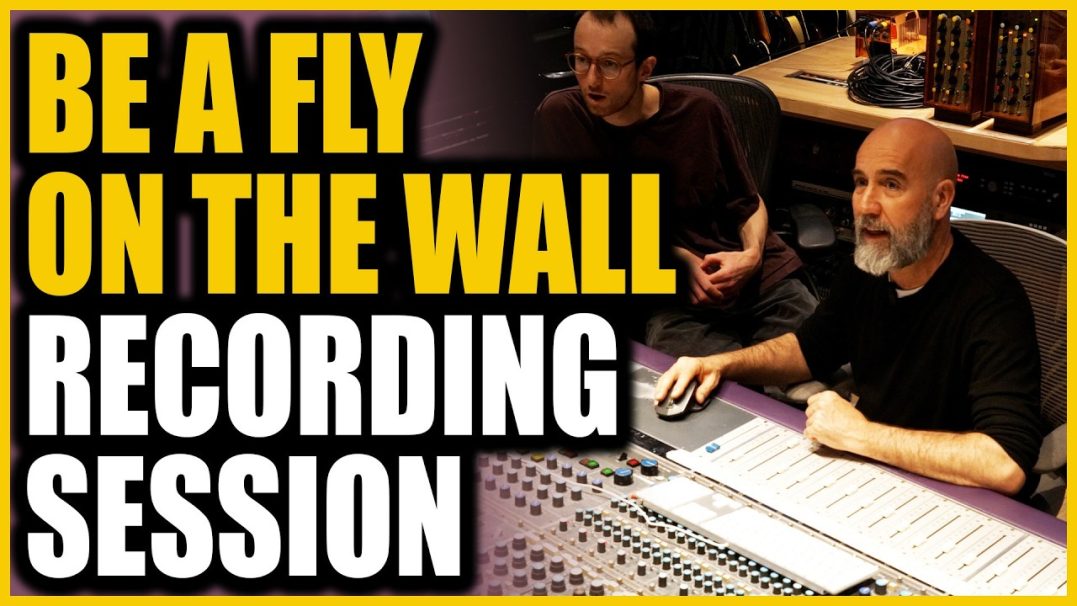
We filmed this FAQ Friday during our Rockfield masterclass in Monmouthshire, Wales. The conversation ranged from mix-bus decisions to Atmos workflows, from why legacy rooms still matter to the real value a mastering engineer brings. Here are the key takeaways, shaped by the questions in the room and years of making records with artists across genres.

Should you mix into your master bus processing
It depends. Genre and intent lead the decision. For a slamming modern track I will often mix through gentle bus compression and a touch of top and low end from the start so I hear the record as a record. When I mixed hybrid on SSL, the bus compressor tapped a dB or two and a Pultec-style EQ added a hint of 10 kHz and 60 Hz. That sound is part of the aesthetic and thousands of records have been finished that way.
If I am working on a piano vocal or a jazz ensemble I will leave heavy lifting to the end. I might add a kiss of sweetening to tame what could not be fixed upstream. In the box I am more conservative. Unless the music is meant to be aggressive I will do the shaping late. The rule is simple. Know what you are making and choose the tools and timing that serve it.

Stereo first or build for Atmos from the ground up
There is no single right answer. We have spoken to mixers like Dave Way, Hans-Martin Buff, and Emre Ramazanoglu who each approach it differently.
- When the recording already sounds like the record On projects tracked and produced with strong intent, like the Ken Scott era multitracks, you can bring up the faders and it already feels finished. In Atmos that often becomes a placement exercise. Little or no extra compression, just musical panning of the actual multitracks.
- When the sound lives in the stereo mix bussing Some productions rely on the glue and colour of the stereo mix engine. In those scenarios you may need to print stems, sometimes printed through the master bus, so the Atmos version retains the identity of the stereo record.
- Purpose-built immersive Hans-Martin Buff’s work on Peter Gabriel’s i/o is a great example. The Atmos mix was created as the final statement in itself. Stereo had already been released, so immersive became its own art.
Long term more people will plan stereo and Atmos together. If you are the recording and stereo mixer and also the Atmos mixer, you can make decisions that translate both ways. Let the project tell you which path to take.
Will modern tech make classic studios obsolete
No. The digital revolution is not new. Ten years ago we were already talking about the democratisation of music creation. Yet rooms like Rockfield, Abbey Road, AIR, Sunset Sound, Power Station keep thriving because their history, acoustics, and workflow deliver results you cannot fake. Film and game scoring demand spaces that handle large ensembles. Games now outgross many films which means serious budgets and serious craft. If you are cutting a rock record, making it at a studio that birthed A Night at the Opera, 2112, Paranoid and Hemispheres brings inspiration and focus that artists feel the moment they walk in.
For new studios the lesson is to build boutique, not bloated. Curate a musical room, a characterful console or summing path, a handful of great microphones and outboard, and the skills to capture performances. As AI grows the human, imperfect, performance-driven approach is going to feel even more compelling. Lean into that.
Why artists still benefit from going to a studio
Everyone starts at home. Four tracks became ADATs, then laptops, now fully featured DAWs in backpacks. The constant is collaboration. Artists who want to grow seek partners who elevate them. Your job is to make that path obvious. Be discoverable, show your work clearly, provide a safe environment, and demonstrate that you can guide performances and songs. Even Paul McCartney works with producers. Everyone is a fan of someone. The right collaborators make you better.
A quick reality check on careers
Nick, who started at Rockfield at sixteen, was assisting and recording major records before most people finish school. He worked 100-hour weeks in the Britpop boom and still hustled for opportunity. The budgets were bigger, the work ethic had to be bigger too. If you love this, commit. If you want a quick way to make money, choose a different field.

Mastering Q&A with Josh Hills
We invited mastering engineer Josh Hills to field questions about finishing records in 2025.
What does a mastering engineer bring that AI cannot Access to accurate monitoring, refined rooms, and most of all perspective. Thousands of masters teach judgement you cannot download. Beyond sonics there is curation, album flow, metadata, and delivery optimisation for vinyl and digital platforms which AI does not truly handle.
Hot mixes on delivery Level is not the issue. Balance is. If a mix is well balanced and simply loud, a mastering engineer can lower the gain and work. If the compression across the mix is fighting the song, it is better to fix it in the mix.
Mix bus processing If you mix into a bus compressor and it shapes the groove, that is fine. Avoid mixing into a limiter if you plan to send your work out for mastering. Limiters can contort the frequency balance and dynamics. When you remove them the mix can fall apart. Always send a reference of what you have been hearing so the mastering engineer understands your intent.
Stems for mastering For strong mixes, stereo is enough. Stems make sense when the mixer is inexperienced or a specific problem cannot be solved any other way. Good mastering practice is to ask the mixer for tweaks before requesting stems. The best mastering engineers help you become a better mixer.